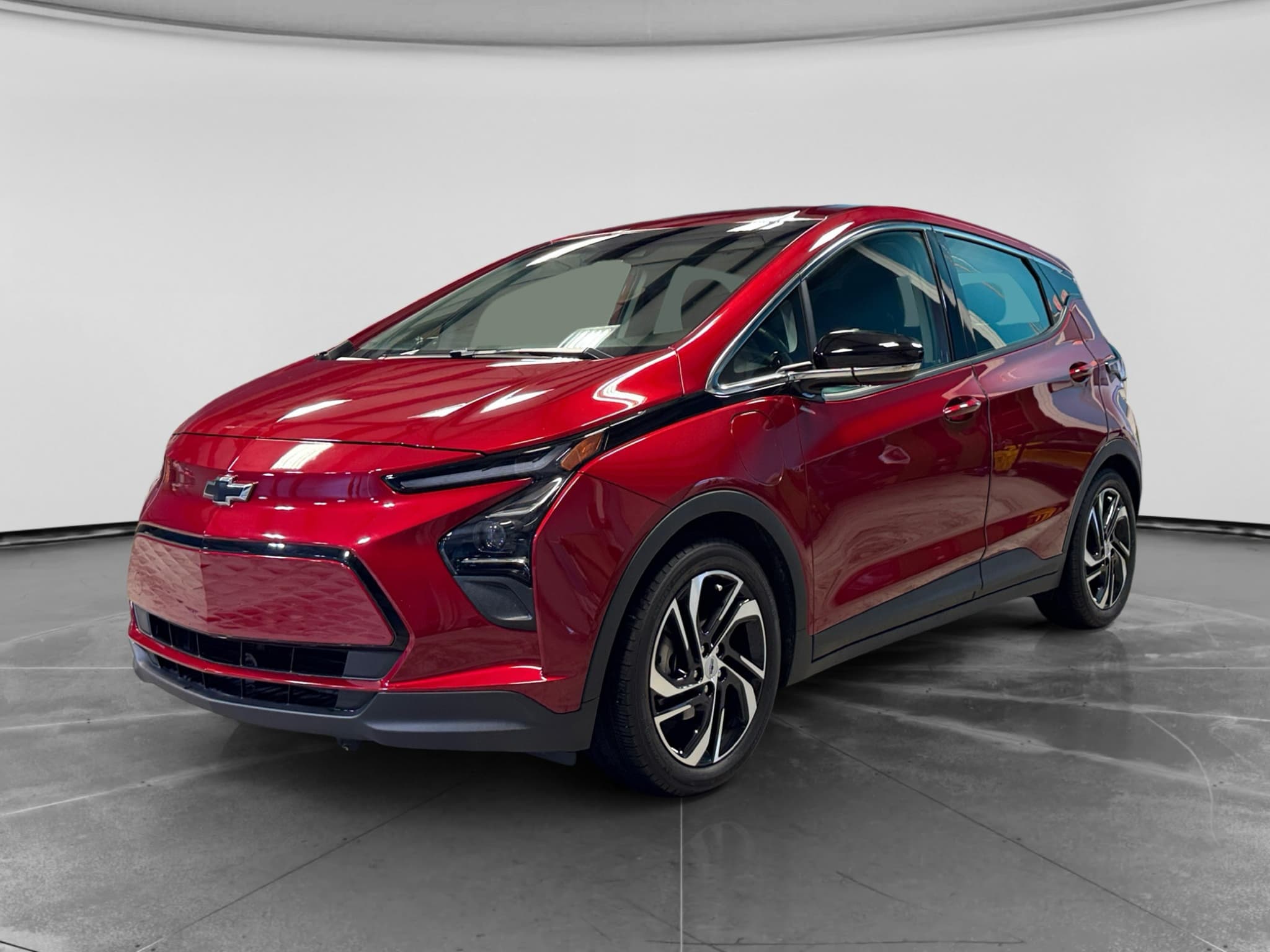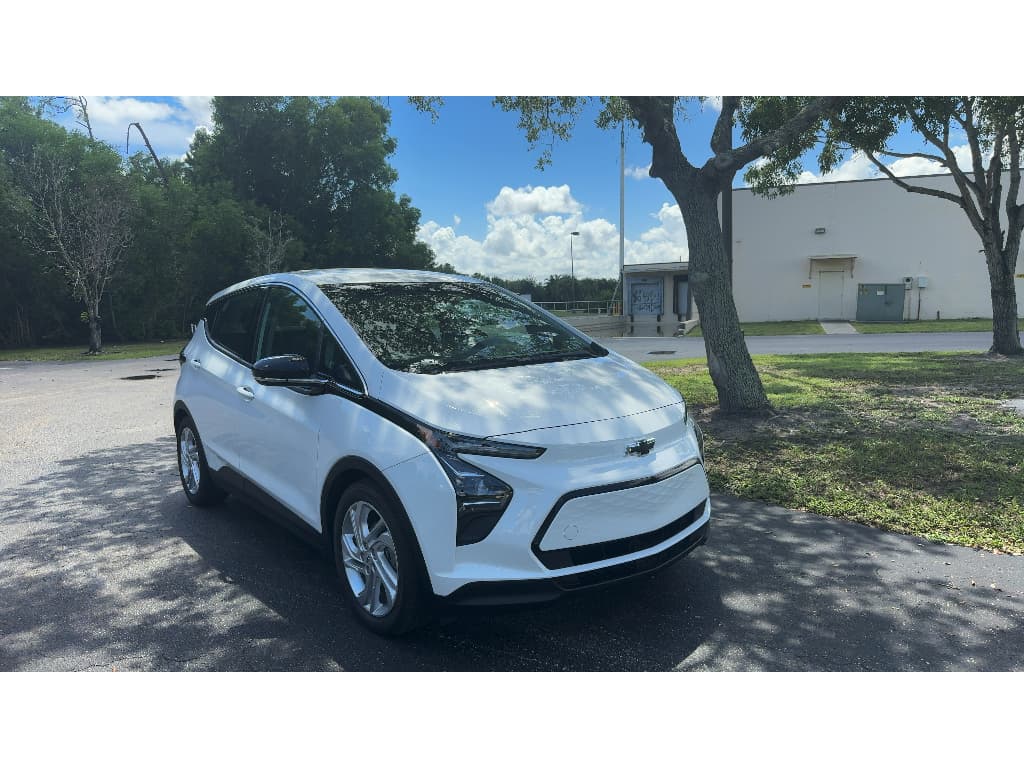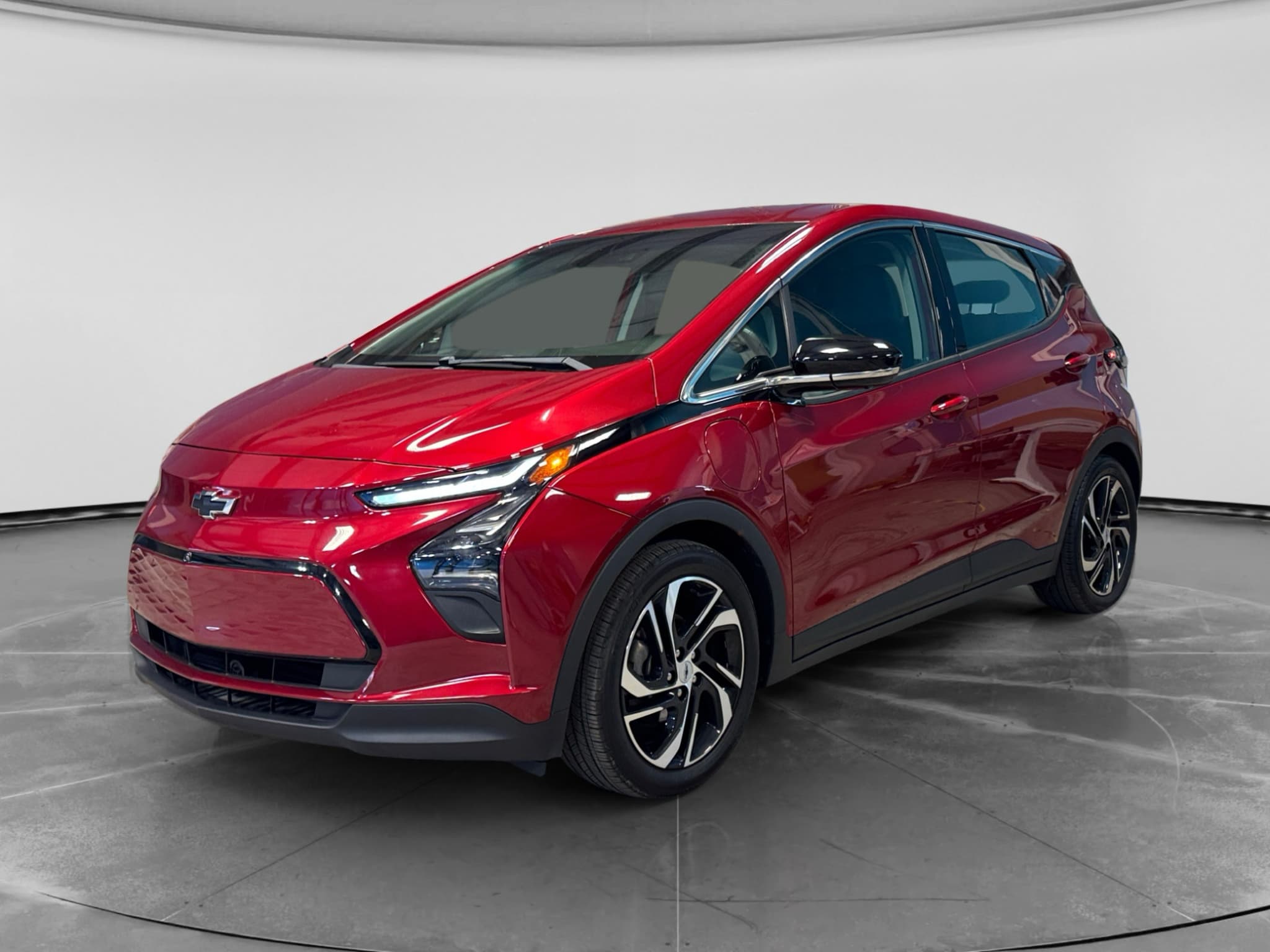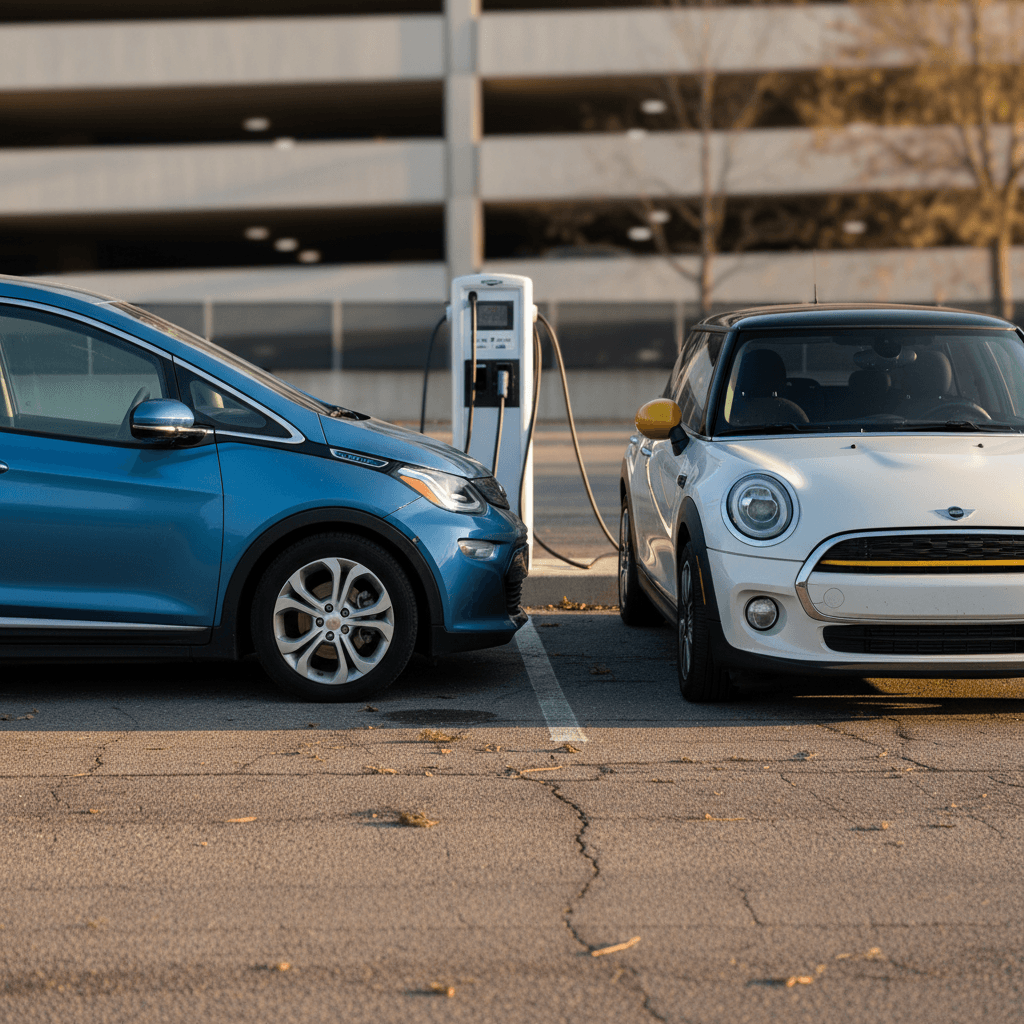
These compact EVs solve different problems. The Chevrolet Bolt EV makes the stronger case when you need useful range, documented battery performance, and current pricing evidence; the Mini Cooper SE appeals when you want an electric car that still looks and feels unmistakably like a Mini. Your decision should start with daily mileage, charging access, and a verified battery report, not styling alone.
The Bolt wins on range; the Mini wins on character
The Bolt EV is the range-first choice, while the Mini Cooper SE is the style-first choice for a shorter, predictable driving routine. Recharged battery diagnostics give the Bolt a clear evidence advantage, whereas our featured Mini was described as delivering around 100 miles. The Mini counters with a distinctive circular dashboard theme, a familiar Mini driving environment, foldable rear seats, and compact dimensions, but its two-door layout makes rear-seat access less convenient.
Bolt EV vs. Mini Cooper SE at a glance
The evidence that matters most when choosing between these two used EVs.
| Decision factor | Chevrolet Bolt EV | Mini Cooper SE | Edge |
|---|---|---|---|
| Range evidence | 234-mile tested average | Around 100 miles featured | Bolt EV |
| Battery evidence | 86 Recharged inspections | Check individual car | Bolt EV |
| Cabin character | Range-first choice | Circular Mini design | Mini |
| Rear-seat access | Evaluate exact car | Through front doors | Bolt EV |
| Current price evidence | $14,472–$24,274 listed | No current snapshot | Bolt data clearer |
Recharged data applies to inspected or currently listed Bolt EVs; Mini observations come from Recharged vehicle features.
The table points to a simple distinction: buy the Bolt for broader driving flexibility and consider the Mini when your mileage is modest enough that design can lead the decision. The Mini’s rear seats and fold-down cargo area add some versatility, but you still have to reach those seats through the front doors. If you regularly carry passengers, bring them along for the test drive.
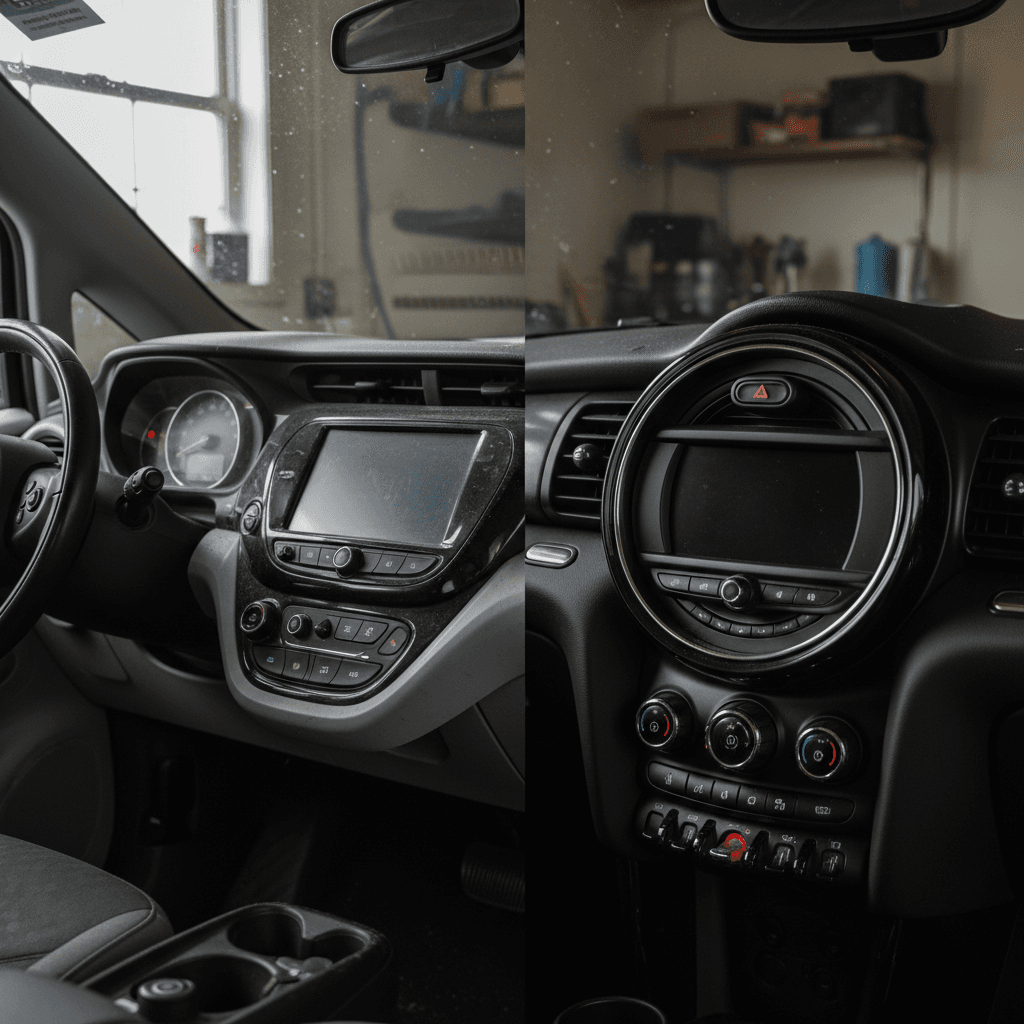
Inside, there is nothing that makes the Cooper SE feel like anything other than a Mini. It looks and feels like a gas-powered Mini Cooper, but it’s fully electric.
What Recharged data says about the Bolt EV
Recharged data shows that inspected Bolt EV batteries have retained substantial capacity and delivered consistent tested range. Across 86 Recharged Score inspections, tested remaining capacity averaged 91.1% of original capacity, with a 90.9% median and results spanning 84.2% to 99%. Tested real-world range averaged and had a median of 234 miles, while individual results ran from 214 to 252 miles. The takeaway is not that every Bolt will match the average; it’s that a battery inspection can show you where a specific car falls within that range.
Current pricing is also easier to establish for the Bolt EV. Among seven Bolt EVs listed on Recharged at the time of this snapshot, asking prices ran from $14,472 to $24,274, with an average of $19,561 and a median of $18,999. Those are current retail asking prices rather than guarantees for every car, so compare mileage, condition, battery health, equipment, and vehicle history before deciding whether a listing is fairly priced. For more context, review our used electric car buying guide before you shop.
Don’t subtract an expired federal credit
Recharged data
Used Chevrolet Bolt-EV battery health
91%
avg remaining capacity
From Recharged battery inspections, not manufacturer estimates.
- Lowest
- 84%
- Median
- 91%
- Highest
- 99%
- Est. range
- 234 mi avg
- Cell balance pass
- 98%
Average cell imbalance: 6.9 mV
Based on vehicles Recharged tested
Recharged data
Used Chevrolet Bolt-EV prices at Recharged
$18,999
median list price
Current list prices for matching inventory at Recharged.
- Lowest
- $14,472
- Average
- $19,561
- Highest
- $24,274
Average Recharged Score on these listings
4.5 / 5
Range
4.3 – 4.6
Based on available listings
Every EV is battery-tested with a Recharged Score. Nationwide delivery.
Which EV fits the way you drive?
Choose the Bolt EV if this will be your primary car or your daily distance changes frequently; choose the Mini if your routine comfortably fits its shorter observed range and you value its design more. The Bolt’s 234-mile average tested range provides more breathing room between charges, based on Recharged inspections. The Mini can still make sense for a short commute, local errands, or a household with another vehicle, especially when you can charge regularly. If most of your driving is urban, compare it with other options in our guide to used city EVs.
- Favor the Bolt EV when range flexibility is your leading requirement.
- Favor the Mini Cooper SE when distinctive design and compact two-door packaging matter more.
- Test the Mini’s rear-seat entry and cargo area with the people and bags you normally carry.
- Match tested range to your longest routine day, not merely your average commute.
- Confirm that your home or public charging plan works before buying either car.
With a used EV, the individual battery result should settle the argument. Model-level averages are useful, but the car you’re buying needs to prove its own capacity and tested range.
Inspect the individual car, not just the badge
A battery-health report, charging test, and real-world usability check should decide which individual car is worth buying. Recharged includes a Recharged Score Report with verified battery health so you can compare tested condition rather than relying only on the dashboard estimate. Our used-EV battery-health guide explains what remaining capacity means and why two cars of the same model can perform differently.
What to check before you buy
Verified battery capacity
Compare tested remaining capacity with original capacity and with results from similar cars.
Tested real-world range
Make sure the individual car can cover your longest normal day with a practical reserve.
Charging operation
Test the charge port and included equipment. Recharged’s featured Mini supported Level 2 and fast charging; verify the exact car.
Passenger and cargo fit
Try the Mini’s two-door rear access and fold-down seats using your normal passengers and bags.
Price and vehicle history
Compare condition, mileage, battery results, history, and financing, not the asking price alone.
Level 2 means the faster AC charging commonly used at home and at public destination chargers, while fast charging is intended for shorter stops during longer trips. Charging capability and hardware condition should be verified on the exact used vehicle. If you’re planning home charging, start with our Level 2 and DC fast-charging comparison.
Instant offer, trade-in, or consignment. Pickup available.
Frequently asked questions
The verdict
The used Chevrolet Bolt EV is the better all-around choice because Recharged inspections support its case with a 234-mile average tested range, 91.1% average remaining capacity, and a clear set of current listing prices. The Mini Cooper SE is the more characterful alternative when your driving routine fits around its shorter observed range and you’re comfortable with two-door access. Whichever model you prefer, let the individual battery report, charging test, condition, and price make the final call.