If you’re shopping for an affordable, practical electric crossover in 2026, a used Chevrolet Bolt EUV should be on your shortlist. It offers real-world 230–250 miles of range, a surprisingly roomy cabin, and modern safety tech at prices that undercut most newer EVs. This used Chevrolet Bolt EUV buying guide for 2026 walks through pricing, battery health, the battery recall story, charging performance, trims, and what to inspect before you buy, especially if you’re shopping online or out of state.
Quick facts: Chevy Bolt EUV (2022–2023)
Why the Bolt EUV is interesting used in 2026
What makes a used Bolt EUV compelling
Three angles that matter more than the spec sheet
Serious value
Because GM ended production after the 2023 model year, used Bolt EUVs sit in a sweet spot: modern range and tech without new‑EV prices. Depreciation has already done a lot of work for you.
Efficient daily driver
The 65 kWh pack plus a compact, efficient platform means excellent miles per kWh. For most commuters, you’ll only need to charge at home a few times a week.
Good enough fast charging
Its 55 kW max DC rate won’t impress spec hunters, but for coffee‑and‑restroom stops on road trips it’s workable, especially if you plan charging stops around 20–70% state of charge.
Important 2026 context
Chevy Bolt EUV basics: specs that actually matter
Core Bolt EUV specs (2022–2023 U.S. models)
Chevy Bolt EUV specs that shoppers care about
Simplified spec snapshot for 2022–2023 Bolt EUV in the U.S.
| Spec | Bolt EUV Value | Why it matters |
|---|---|---|
| Model years | 2022–2023 | All U.S. Bolt EUVs on the used market today |
| Battery | ~65 kWh usable | Drives both range and long‑term degradation risk |
| EPA range | 247 miles (new) | Plan around ~200–230 miles as the pack ages and in real‑world conditions |
| DC fast charging | CCS, ~55 kW peak | Defines how long road‑trip charging stops take |
| AC charging | J1772, up to 11.5 kW | Determines home and workplace charging speeds |
| Drive layout | FWD, 200 hp | Plenty of power for city and highway driving |
| Driver assist | Available Super Cruise | Only on some trims; check options list carefully |
These are the specs worth focusing on when you’re comparing used Bolt EUVs to other compact EVs.
Spec sheet sanity check
Used Bolt EUV pricing in 2026: what to expect
Exact prices will vary by mileage, trim, region, and used‑EV incentives in your state, but by 2026 the Bolt EUV generally sits in the budget end of the EV crossover market. High‑mileage fleet or rideshare examples trade hands at the low end; well‑optioned, low‑mileage RS trims with Super Cruise sit at the top.
Typical price bands (2026 U.S. market)
- Value / high‑mileage (70k–110k+ miles): often the lowest‑priced usable EVs on the market, ideal for short‑range commuters who can charge at home.
- Mid‑mileage sweet spot (30k–70k miles): tends to offer the best balance of price, remaining battery warranty (if any), and everyday usability.
- Low‑mileage / loaded (under ~30k miles): commands a premium, especially RS trims with Super Cruise or rare colors.
What moves the price needle most
- Battery warranty coverage remaining by time and miles.
- Confirmed recall completion and battery replacement history.
- Presence of desirables like Super Cruise, sunroof, or upgraded wheels.
- Documented accident history and repair quality.
- Local EV demand and incentives, some states heavily favor used EVs.
Because the Bolt EUV is no longer produced, expect pricing to stabilize rather than collapse, especially for clean, well‑documented examples.
How Recharged approaches pricing
Battery health on a used Bolt EUV
Range is the whole reason you’re buying an EV, so understanding battery health is non‑negotiable. The good news: post‑recall Bolt packs have generally held up well when treated decently. The challenge is verifying that on a specific used car, especially if it’s been fast‑charged hard or lived in hot climates.
- Expect some degradation by 2026. A typical 2022 Bolt EUV might show **5–10% loss** from its original 247‑mile EPA figure under similar conditions.
- Real‑world highway range at 70+ mph is usually lower than city range; plan for something like **180–210 miles** on a full charge depending on conditions and driving style.
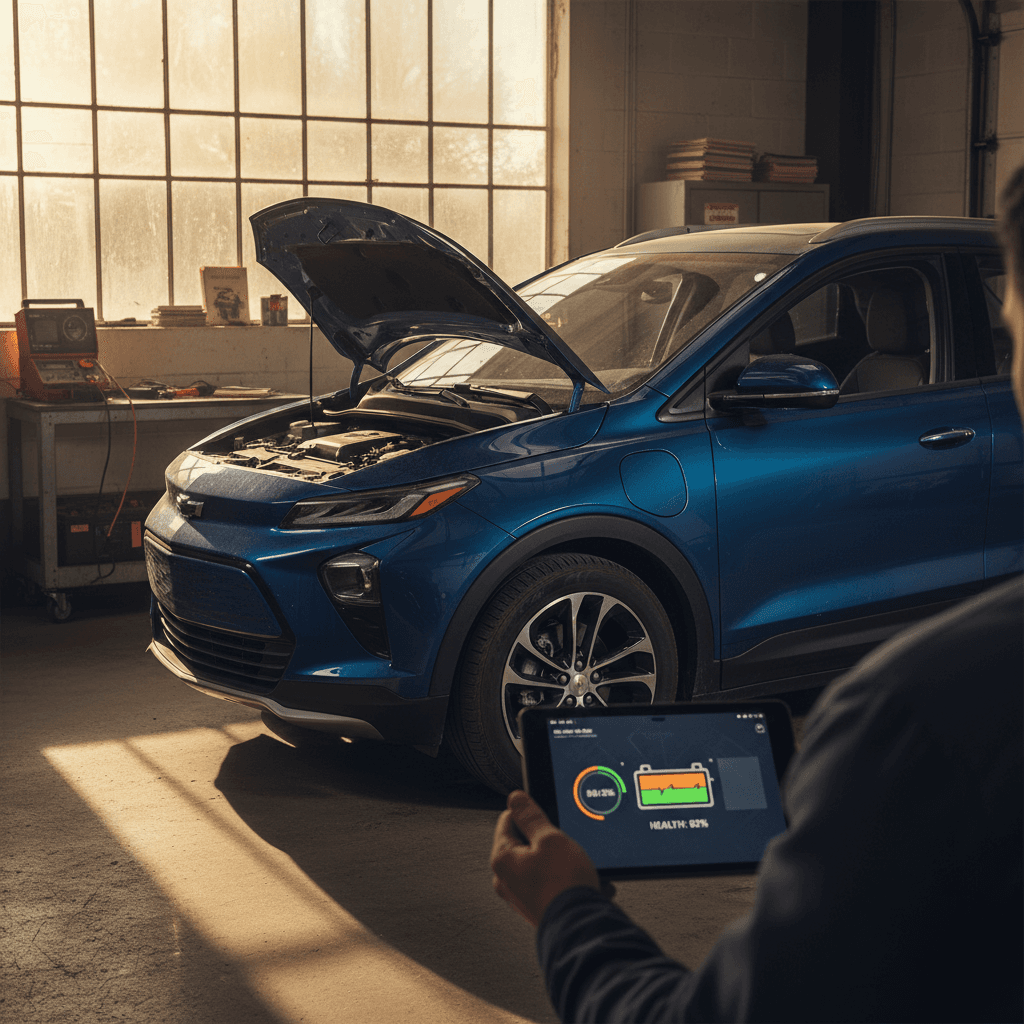
- Battery health isn’t shown as a clean percentage in the dash, so you need either data logging, a specialized scan, or a trusted third‑party battery report.
How Recharged measures Bolt EUV battery health
Battery health checks before you commit
Ask for a recent 100% charge estimate
Have the seller provide a photo of the dash at 100% with the estimated range in similar weather to your climate. Compare that to the original 247‑mile EPA rating to get a rough sense of degradation.
Look at how it was charged
Ask whether the Bolt EUV was mostly <strong>Level 2 home‑charged</strong> or DC fast‑charged. Occasional DC use is fine; constant fast‑charging and very high mileage should push the price down.
Check climate history
Hot climates accelerate degradation. A car that lived in Phoenix and was parked outside deserves closer scrutiny than one from the Pacific Northwest or New England.
Verify warranty status
Bolt EUV batteries came with an 8‑year / 100,000‑mile (approximate) warranty from the in‑service date. Confirm in‑service date and mileage to see how much coverage remains, if any.
Don’t ignore the recall history
Bolt battery recall: what 2026 buyers must check
Earlier Bolts (2017–2022, including early Bolt EUVs) were recalled due to a manufacturing defect in LG‑supplied battery cells that, in rare cases, could lead to fires when charged to or near 100%. GM ultimately expanded the recall to cover essentially all Bolts of those years and replaced battery modules or entire packs. By 2026, most U.S. Bolt EUVs you’ll see on the market should have had the recall work completed, but you need to confirm, not guess.
How to confirm Bolt EUV recall status
Use this process for any Bolt EUV you’re considering, even if the seller claims it’s been taken care of.
| Step | What to Do | What You’re Looking For |
|---|---|---|
| 1. Get the full VIN | Ask the seller for the 17‑digit VIN or grab it from listing photos. | You can’t check recall status accurately without the VIN. |
| 2. Check GM’s recall portal | Use Chevrolet’s official recall‑lookup tool and enter the VIN. | Status should show recall completed with dates; screenshot for your records. |
| 3. Ask for service records | Request a dealer invoice or service record showing the battery work. | Look for mention of battery module replacement or full pack replacement. |
| 4. Inspect charge behavior | On a test drive, note whether it charges near published speeds on a known good DC fast charger. | Drastically slow charging may indicate an issue, or just a weak charger; interpret in context. |
Verify recall completion before you negotiate price; an open recall may mean extra hassle or delay, and in rare cases indicates the car has been neglected.
Bonus: post‑recall packs can be a positive
Charging a Bolt EUV: home and road-trip realities
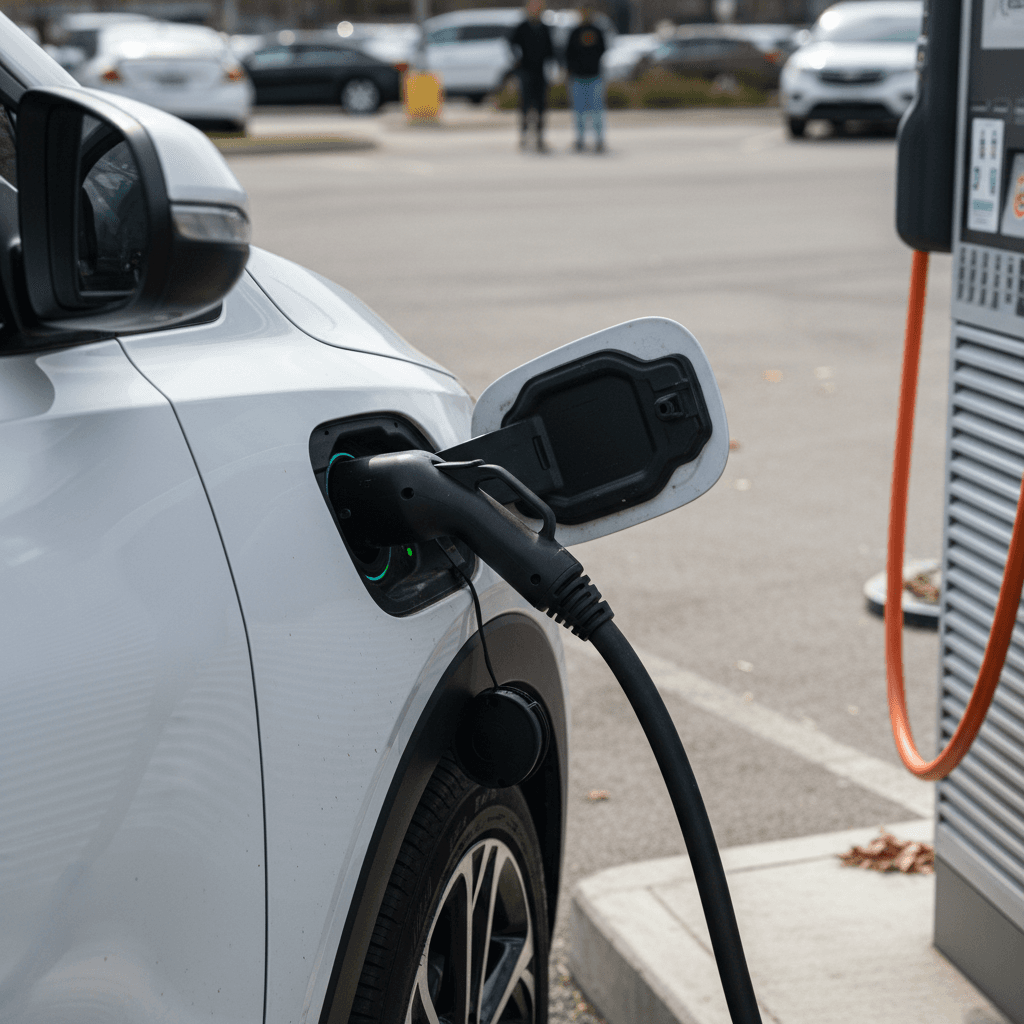
On paper, the Bolt EUV’s 55 kW DC fast‑charge limit looks underwhelming in a world of 150–350 kW chargers. In practice, it’s fine for most U.S. driving patterns as long as you’re realistic about road‑trip expectations and have a plan for home or workplace charging.
Bolt EUV charging overview
What to expect at home and on the road
Home Level 2 (11.5 kW max)
With a 40–48 A, 240 V Level 2 charger, a Bolt EUV can typically go from low to full in 6–8 hours. Most owners simply plug in at night and wake up to a full battery.
Public Level 2
Think garages, workplaces, and slower public stations. Expect roughly 20–30 miles of range per hour of charging, depending on the station’s power and your state of charge.
DC fast charging
On a healthy CCS fast charger, you’ll often see 45–55 kW from around 10–50% state of charge, with a taper after that. Plan on roughly 60–75 minutes for a 10–80% session on road trips.
Set expectations for road trips
Before you buy, think hard about where the car will live. If you have access to a 240 V outlet or can install a dedicated Level 2 charger, the Bolt EUV is an easy daily driver. If you’ll depend on DC fast charging for most of your energy, consider whether the slower fast‑charge rate is acceptable, or whether a newer‑generation EV better fits your use case.
How Recharged helps with charging setup
Ready to find your next EV?
Browse VehiclesTrim levels, packages, and options to know
The Bolt EUV lineup is simpler than many crossovers, but there are still meaningful differences between trims and options. Knowing what you care about up front will make shopping smoother and help you compare listings on a true apples‑to‑apples basis.
Common Bolt EUV trims and options
Features vary a bit by model year and market, but this table captures the big picture for U.S. 2022–2023 cars.
| Trim / Option | What it adds | Worth paying extra? |
|---|---|---|
| LT (base) | Cloth seats, standard safety tech (automatic emergency braking, lane‑keeping, etc.), basic audio. | Good value if you don’t need fancy features; focus more on battery health than trim name. |
| LT with Convenience/Comfort packages | Heated seats/steering wheel, power driver’s seat, some cosmetic upgrades. | Often worth a modest premium in colder climates or if you care about comfort. |
| RS | Sportier styling, unique wheels, slightly different interior trim; often bundles more features. | Worth it if you like the look; no major mechanical difference. |
| Super Cruise (option) | Hands‑free driver assistance on mapped highways. | Rare and desirable; just make sure you understand subscription requirements and coverage maps. |
| Sunroof / panoramic roof | More light, potential headroom trade‑off. | Purely preference; check carefully for leaks or wind noise on used cars. |
Always confirm options with the VIN build sheet or an in‑person inspection, especially for Super Cruise and driver‑assist packages.
Trim vs. condition vs. battery
Common issues and ownership quirks
Beyond the widely discussed battery recall, the Bolt EUV has been a relatively straightforward EV mechanically. Most of what you’ll encounter are EV‑typical wear items and a few platform quirks rather than chronic mechanical failures.
- Infotainment glitches: Occasional frozen screens or Bluetooth hiccups. A software update or infotainment reboot usually resolves them, but check that the screen is free of burn‑in and that touch response is consistent.
- DC fast‑charge variability: Real‑world charge rates can be lower than the theoretical 55 kW if the station is weak, the battery is cold, or your state of charge is already high. Compare what you see to other EVs using the same station.
- Tire wear: Like many EVs, the Bolt EUV’s instant torque can chew through front tires quickly if driven aggressively. Uneven wear can signal alignment issues or hard use.
- Interior wear: Fleet or rideshare service shows up as worn seat bolsters, shiny steering wheels, or scratched plastics. Treat heavy cosmetic wear as a pricing lever, even if the mechanicals are sound.
Watch for neglected recall cars
Inspection checklist for a used Bolt EUV
Pre‑purchase checklist for any used Bolt EUV
1. Pull the full history
Get a vehicle history report and look for accidents, lemon buybacks, or repeated electrical complaints. A single well‑repaired accident is usually fine; multiple hits or structural damage are not.
2. Verify recall and software status
Use the VIN to check GM’s recall site and ask a dealer to confirm all <strong>battery and software campaigns</strong> have been completed. Request documentation where possible.
3. Inspect charging hardware
Check the charge port for damage, corrosion, or loose feel. Confirm that the included charge cord works on a standard outlet and, if possible, test on a Level 2 or DC fast charger.
4. Test real‑world range
On a long test drive or short trip, reset the trip meter and watch energy use. You’re looking for wildly abnormal consumption or range estimates that don’t line up with the state of charge.
5. Evaluate tires and brakes
Uneven tire wear can indicate poor alignment or hard use. Even though EVs use regen a lot, the friction brakes should feel smooth and linear when you press them.
6. Listen for suspension and wind noise
On rough roads and at highway speeds, listen for clunks, squeaks, or excessive wind noise around doors and the sunroof (if equipped).
7. Confirm charging fit for your life
Before signing, make sure you have a concrete plan for where and how you’ll charge: home outlet, Level 2 installation, workplace, or reliable DC network nearby.
Skip the guesswork with Recharged
Should you buy a used Bolt EUV in 2026?
If you want a practical, efficient EV that delivers real electric‑car benefits without a luxury‑car payment, a used Chevrolet Bolt EUV is still one of the most rational choices in 2026. You’re getting a mature platform, respectable real‑world range, and an easy‑to‑live‑with compact crossover shape. The trade‑offs are modest DC fast‑charge speeds and the baggage of the earlier battery recall, but for many buyers, those are acceptable compromises given the price.
The key is to be deliberate: verify recall completion, understand the battery’s health, set realistic expectations about charging, and buy based on condition rather than just trim or paint color. If you’d rather not navigate all of that alone, Recharged can help you compare Bolt EUVs against other used EVs, interpret battery reports, arrange financing and trade‑ins, and deliver your next EV, Bolt EUV or otherwise, to your driveway.