If you’re shopping for a used vehicle, you’ll see the phrase used car certification everywhere, on window stickers, dealer websites, and now even on big e‑commerce platforms. It sounds reassuring, but what does it actually mean, how does it differ from a factory certified pre-owned (CPO) program, and how should you think about it if you’re buying a used electric car rather than a gas model?
Quick definition
What is used car certification, really?
In the broadest sense, used car certification is any program where a vehicle is inspected, reconditioned if needed, and then sold with some level of guarantee about its condition. That umbrella covers everything from rigorous, automaker-backed certified pre-owned (CPO) programs to minimal in‑house dealer “certified” labels that might amount to little more than an oil change and a fresh detail.
Most buyers assume “certified” means the car is better than a typical used car, that it’s been thoroughly checked, and that problems will be covered if something goes wrong. Sometimes that’s true. Sometimes it isn’t. The key is understanding who is doing the certifying, what standards they’re using, and what happens if their inspection missed something.
Used car and certification market context
Certification isn’t standardized
How certified pre-owned car programs work
When most people say “certified,” they actually mean certified pre‑owned (CPO), programs run by vehicle manufacturers and executed by their franchised dealers. These are the gold-standard version of used car certification.
- The vehicle must meet age and mileage limits (for example, under 5–7 years old and under 60,000–80,000 miles, depending on the brand).
- It goes through a multi‑point inspection, typically 100–200 individual checks covering mechanical systems, body, interior, electronics and road test.
- The dealer performs required reconditioning with OEM or equivalent parts to bring it up to the brand’s standards.
- The automaker provides a factory-backed warranty extension, often adding limited bumper‑to‑bumper coverage and extra powertrain protection beyond the original warranty.
- Programs usually include extras such as roadside assistance, rental reimbursement, and sometimes free maintenance for a limited period.
How to confirm a car is truly factory CPO
Factory CPO is popular because it aligns everyone’s incentives: the manufacturer wants to protect its brand reputation, the dealer wants to sell more late‑model used cars at a premium, and you want a used car that behaves more like a new one in terms of risk. The trade‑off is price: you’re paying for that warranty, reconditioning, and brand halo.
Used car certification vs regular used cars
Certified or CPO vehicles
- Pros: Newer, lower mileage, detailed inspection, warranty coverage, roadside assistance, easier financing.
- Cons: Higher upfront price, limited selection, stricter eligibility (fewer high‑mileage or older vehicles qualify).
Non‑certified used vehicles
- Pros: Lower purchase price, wider variety of vehicles, more room to negotiate.
- Cons: Condition can vary widely, usually sold "as‑is" or with a short warranty, more homework required (inspection, history, etc.).
Used car certification vs regular used cars at a glance
How a typical factory CPO program compares with an ordinary used car from a dealer or private seller.
| Feature | Factory CPO / strong certification | Ordinary used car |
|---|---|---|
| Inspection | 100–200+ point checklist, documented | Dealer may do a basic safety check, private sales often none |
| Who backs it? | Automaker plus dealer | Dealer only, or no one in private sale |
| Warranty | Extended factory warranty, often with extras | Original warranty if still active, otherwise limited or none |
| Pricing | Higher, reflects reconditioning and warranty | Lower upfront price but more risk |
| Vehicle age/miles | Strict limits (typically newer, lower miles) | Any age or mileage |
| Roadside assistance | Usually included | Usually not included |
Details vary by automaker and state law, so always read the specific program terms.
Watch for look‑alike “dealer certified” labels
The EV twist: why certification works differently for electric cars
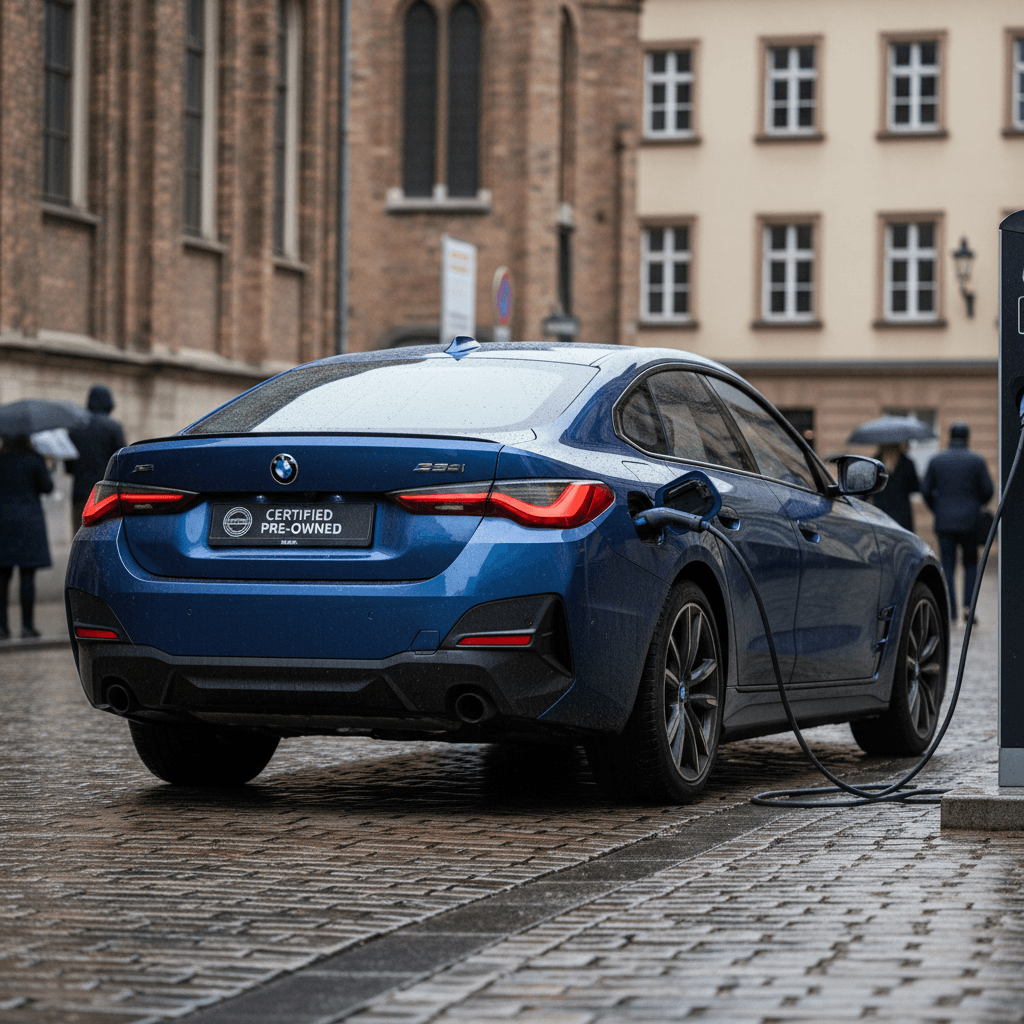
Traditional used car certification evolved in a world where engines, transmissions and oil leaks were the main reliability concerns. Electric vehicles flip that equation. The EV drivetrain has fewer moving parts, but the high‑voltage battery is both the most expensive component and the one that ages in complex ways.
How EVs change the certification equation
What matters more, and less, when the vehicle is electric, not gasoline.
Battery health is central
Charging history & fast‑charging
Software & electronics
Why gas-era CPO checklists fall short for EVs
This is where Recharged comes in. Instead of relying on a generic used car certification label, every vehicle on the platform includes a Recharged Score Report with verified battery diagnostics, fair market pricing data, and an EV‑specific inspection that focuses on what actually fails on electric cars.
What a quality used car certification should include
Whether you’re considering a factory CPO vehicle, a dealer‑certified used car, or a used EV from a specialist like Recharged, a credible used car certification program should hit the same core notes.
- Clear eligibility standards: Age, mileage, accident history and title criteria written down, not just “we look them over.”
- Documented inspection: A checklist you can actually see, ideally signed by the technician with the date and odometer reading.
- Transparent reconditioning: Itemized work performed to bring the car up to standard (tires, brakes, software updates, cosmetic repairs, etc.).
- Meaningful warranty: Coverage that lasts long enough to matter, with clear deductibles and exclusions written in plain language.
- Disclosed history: Vehicle history reports, open recall checks and proof the title is clean and lien‑free.
- Easy claims process: Simple instructions for where you take the car, who authorizes repairs, and how quickly claims are paid.
For EVs, add these non‑negotiables
Checklist: key questions to ask about used car certification
10 questions to ask before you pay extra for “certified”
1. Who is actually certifying this car?
Is it the vehicle manufacturer’s official CPO program, the dealer’s in‑house program, or a third‑party warranty? Factory‑backed programs usually offer the most robust protection.
2. Where can I see the inspection checklist?
Ask for a copy of the completed inspection sheet with technician signatures. If they can’t show it to you, assume the inspection was minimal, or never happened.
3. What exactly does the warranty cover?
Clarify term and mileage, what components are covered, and whether wear items and electronics are included. Get it in writing, not just in the finance office pitch.
4. How much more am I paying for certification?
Compare similarly equipped non‑certified cars and be honest with yourself about the price premium. Sometimes it’s worth it, sometimes it’s just packaging for a high‑margin warranty.
5. For EVs: how is battery health measured?
Ask for a quantified battery state of health, not just “it passed.” With Recharged, this is built into the Recharged Score so you can compare vehicles side‑by‑side.
6. What reconditioning work was actually done?
Request the internal repair order or a summary: tires, brakes, fluids, software updates, cosmetic fixes. A car that needed nothing is either exceptionally well‑kept, or not looked at closely.
7. Where do I go if something breaks?
Do warranty repairs require returning to the selling dealer, or can you use any franchised dealer? What about if you move out of state?
8. Are there deductibles or caps?
Many third‑party warranties and some CPO programs include per‑visit deductibles or total payout caps. Those details matter more than the marketing headline.
9. Can I see the vehicle history and title status?
Always review a history report and confirm the title isn’t branded as salvage, rebuilt, flood or lemon. Most factory CPO programs won’t certify branded‑title cars.
10. What’s the return or exchange policy?
Some states and dealers offer short return windows. Online retailers and platforms like Recharged build flexible, consumer‑friendly policies into the buying process, use them.
When paying extra for used car certification makes sense
Situations where certification is usually worth the premium
You’re not just buying peace of mind, you’re buying real risk reduction.
You’re risk‑averse
You’re buying a complex EV
You plan to keep the car
How to do the math
When you’re better off skipping certification
Signs certification might not be worth it
- The car is still well within the original factory warranty, and the CPO warranty doesn’t extend it by much.
- The “certified” label comes from a dealer program with thin documentation and a short in‑house warranty.
- The certification premium is so high that it pushes you into a weaker overall deal (higher APR, longer term, or stripped‑down trim level).
What to do instead
- Pay for an independent pre‑purchase inspection by a mechanic or EV specialist you choose.
- Use vehicle history reports and title checks, then negotiate as if the car weren’t certified.
- Consider platforms that build inspection and transparency into the price, like Recharged for used EVs, instead of paying extra to retrofit a generic certification on top.
Don’t let certification hide a bad deal
How Recharged thinks about “certification” for used EVs
Recharged was built on the assumption that used EV buyers don’t need more buzzwords, they need better data. Instead of selling a generic used car certification, every vehicle on the platform includes a Recharged Score Report that does three things traditional CPO programs often don’t:
- Runs deep battery diagnostics, so you see quantifiable battery health and projected range, not just “it passed.”
- Benchmarks each car against fair market pricing, so you know whether the asking price reflects its age, mileage, battery health and equipment.
- Wraps the whole experience in EV‑specialist support, from helping you understand the report to choosing between vehicles and arranging financing, trade‑in and delivery.
From CPO badge to EV‑first experience
If you want the predictability of certification but also the pricing transparency and convenience of a fully digital purchase, you can browse used EVs on Recharged, get an instant, no‑obligation pre‑qualification decision, value your trade‑in, and arrange nationwide delivery, or visit the Experience Center in Richmond, VA if you prefer to see cars in person.
Used car certification FAQ
Used car certification: frequently asked questions
The bottom line on used car certification
Used car certification can be a valuable tool, but only when it represents real standards, real inspection and real accountability, not just a logo on a windshield. Factory CPO programs can reduce your risk on late‑model gas cars, while EV‑focused platforms like Recharged apply the same idea to the factors that actually matter for modern electric vehicles, especially battery health.
As you shop, treat “certified” as the start of the conversation, not the end. Ask who’s standing behind that word, insist on documentation, and compare the certification premium to the protection and data you’re actually getting. And if you’re exploring a used EV, lean on tools like the Recharged Score Report, expert EV guidance, and online pre‑qualification so you can make a decision that’s grounded in evidence, not just marketing.