If you’re wondering when is the best time to buy a used EV, you’re asking the right question. Electric vehicles don’t just depreciate differently than gas cars, they’re also affected by incentives, new model launches, and rapid tech changes. Get the timing right and you can save thousands; get it wrong and you can end up overpaying for yesterday’s tech.
Quick answer
Why timing matters more with used EVs
Used EVs follow a different rhythm than used gas cars. Price swings are driven not only by mileage and age, but also by technology leaps, battery health concerns, and headline-grabbing price cuts on new models. That’s why it’s smart to think in terms of when you buy, not just what you buy.
- EVs typically lose around 25–35% of their value in year one and about 50–60% by year three, often steeper than comparable gas cars.
- Major price cuts on new EVs (like the across-the-board reductions we’ve seen from Tesla and Hyundai) tend to drag used prices down within months.
- Battery health, range, and charging speed create a larger gap between a “good deal” and a money pit than on a gas car, so knowing the right age and mileage window really matters.
Don’t just chase the lowest price
The big picture: 2026 used EV market at a glance
Key used EV trends going into 2026
The headline for 2026: the window of fire‑sale used EV prices that opened in 2023–2025 is still open, but narrowing. Big new‑car price cuts and heavy incentives pushed a lot of nearly new EVs into the used market, especially Teslas and popular crossovers. But as production slows and incentives fade, that oversupply won’t last forever.
What this means for you
Best time of year to buy a used EV
Let’s zoom in from years to seasons. Just like gas cars, used EV prices and selection follow a yearly rhythm. Here’s how the calendar typically breaks down in the U.S.
Season-by-season: When used EV deals tend to be best
Weather, demand, and dealer incentives all play a role
Late fall & winter (Best overall)
October–January is often the best time to buy a used EV.
- Colder weather amplifies range anxiety, so fewer casual shoppers are in the market.
- Dealers push to hit year‑end sales targets.
- Lease returns from spring and summer start showing up, giving you more 2–4‑year‑old options.
Result: You’ll often see softer prices and more room to negotiate.
Spring (Great for selection)
March–May typically brings a wave of off‑lease EVs.
- Three‑year leases written in early EV boom years are expiring.
- Shoppers trade in older EVs for the latest tech and longer‑range models.
- Weather warms up, making test drives and road trips easier to plan.
Result: Excellent selection and variety, but prices can be a bit firmer.
Summer (Convenient, not cheapest)
June–August is peak road‑trip season.
- More people shopping for EVs to save on fuel.
- Dealers know demand is higher and may discount less.
- Inventory can move quickly in popular markets.
Result: Good for convenience, but you may pay a premium.
Early fall (Watch for model‑year deals)
September–early October can bring strong deals on "old" model‑year inventory.
- New model years start shipping, nudging down prices on 1–2‑year‑old EVs.
- Drivers who want the latest ADAS or interior updates trade in slightly newer cars.
Result: Good timing if you want nearly new tech for less.
Practical move for 2026
How tax credits and incentives shape timing
From 2023 through September 30, 2025, many used‑EV shoppers in the U.S. could claim up to a $4,000 federal Previously‑Owned Clean Vehicle Credit. For 2026 buyers, that’s largely gone: federal purchase credits for new and used EVs are no longer available for vehicles acquired after September 30, 2025, with only narrow exceptions for contracts signed before that date.
What changed after Sept. 30, 2025
- No new federal used‑EV credits for vehicles acquired on or after that date.
- New‑EV credits under the same program also ended, which indirectly pushes more buyers toward used.
- Federal home charging hardware credits still exist into 2026 but are set to end after mid‑year.
What still matters in 2026
- State and local incentives: Rebates, HOV access, reduced registration fees.
- Utility programs: Bill credits or rebates for buying an EV or installing a charger.
- Sales‑tax rules: Some states treat EVs or used cars more favorably.
These can easily swing your total cost by $1,000 or more, so they’re worth planning around.
Timing tip: work backwards from incentives
Mileage, age, and the EV depreciation “sweet spot”
The other big timing question isn’t about months on the calendar, it’s about how old the EV is when you buy it. Most EVs shed value fastest in the first three years, then depreciation slows down. Your goal as a buyer is to let the first owner take that big hit, without waiting so long that you inherit an aging battery or obsolete tech.
Typical EV depreciation curve
Exact numbers vary by model, but most EVs follow a similar pattern.
| Vehicle age | Typical depreciation from new | What this means for buyers |
|---|---|---|
| Year 1 | 25–35% | Often still too expensive vs. new; good only if you need the latest tech. |
| Years 2–3 | 50–60% | Prime buying window: big discount, but modern range and features. |
| Years 4–6 | 60–70% | Great prices, but battery health and warranty coverage become critical. |
| Years 7–10 | 75–85% | Lowest prices, but range loss and repair costs can outweigh savings for many drivers. |
Use this as a guide, then look at real market prices for your target model.
The sweet spot for most buyers
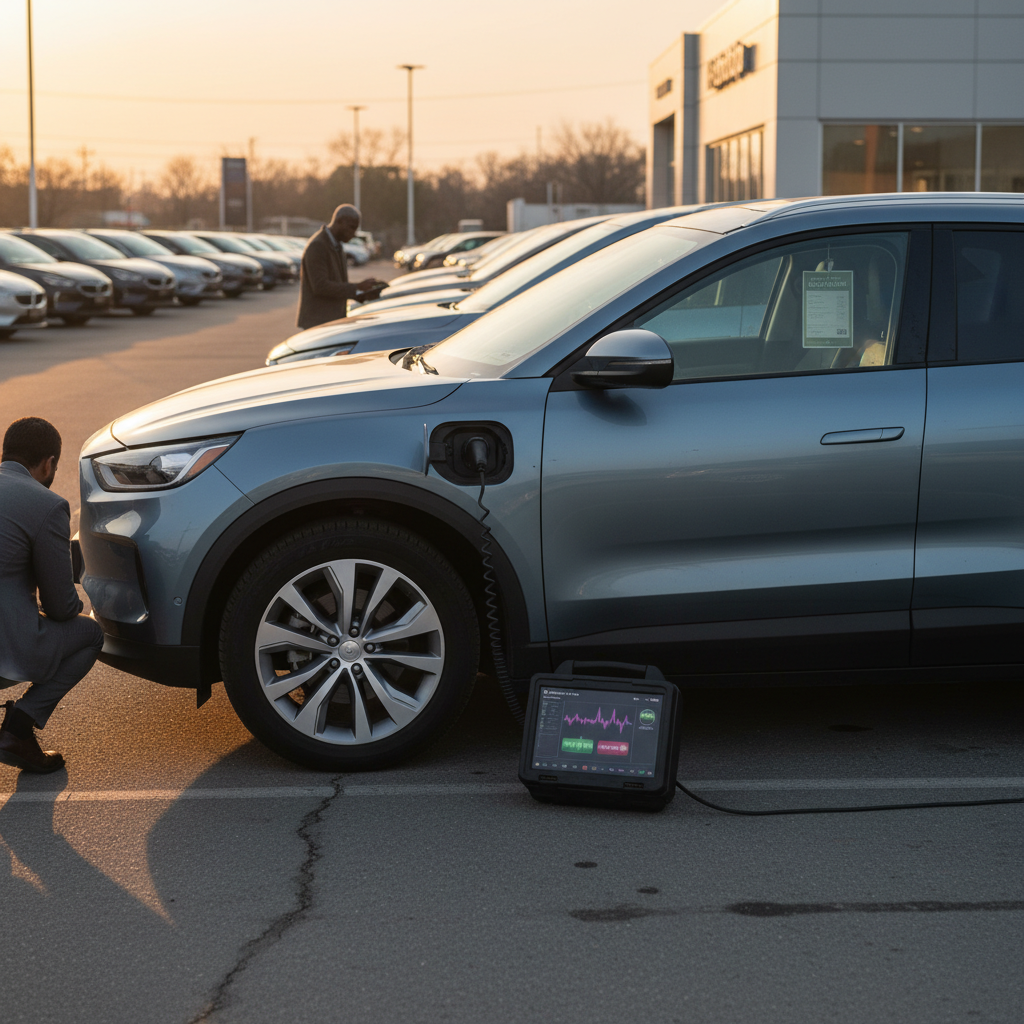
This is exactly why Recharged puts so much emphasis on verified battery health. Our Recharged Score Report goes beyond odometer readings, using advanced diagnostics to show you usable capacity, fast‑charging history, and how the pack compares to similar vehicles. That way, you’re not guessing whether the “deal” you see lines up with what’s under the floor.
Model cycles, price cuts, and new tech releases
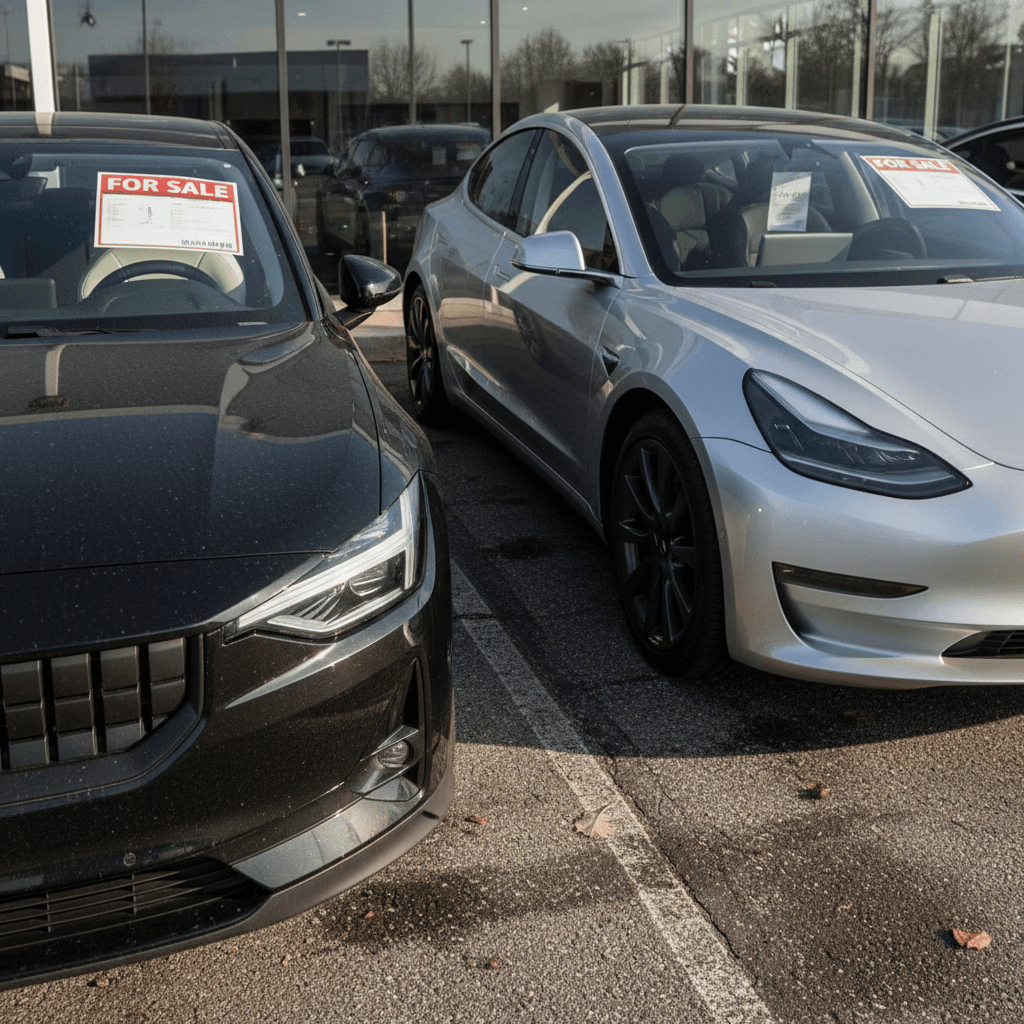
EV technology is moving quickly. Range, charging speed, and driver‑assist systems are advancing year by year, and big price cuts on new EVs can ripple through the used market in a matter of weeks. That creates both opportunities and risks for your timing.
Three timing patterns to watch
These events often move used EV prices more than the seasons do
New‑model launches
When a popular EV gets a major refresh, longer range, faster charging, or a big interior update, prices on the outgoing generation often dip within a few months.
Watch for:
- New battery chemistry or larger pack.
- Significant styling or interior tech updates.
- Announcements of a cheaper or longer‑range trim.
Big price cuts on new EVs
When an automaker slashes prices on a new model year, used prices typically follow.
- Sellers adjust asking prices to stay competitive.
- Lease residuals reset lower, improving future used deals.
- Today’s slightly older models suddenly look less special.
This is often a great time to buy 1–3‑year‑old versions of that model.
Tech “step changes”
Occasionally, a new generation brings a dramatic jump, for example, doubling fast‑charge speed or adding a widely adopted connector.
In those cases, it can be worth either:
- Waiting for the new tech to show up used, or
- Buying the prior generation at a steep discount once the new one is on sale.
Compatibility caution
When it’s better to wait, and when to buy now
Signs you should consider waiting
- You know a major refresh of your target model is arriving in the next 6–12 months.
- Your state or utility has announced a new or bigger rebate starting soon.
- You don’t urgently need a car, and your current vehicle is running fine.
- Battery diagnostics on the cars you’re seeing today look marginal, suggesting better examples will surface as more leases end.
Signs you should act sooner
- Your commute or family needs are changing in the next 3–6 months.
- You’ve found a car that’s in the age/mileage sweet spot with an excellent battery report.
- Your local incentives are ending soon, or utility rebates are being reduced.
- You drive enough each month that continued fuel and maintenance costs on your gas car will quickly eat up any benefit from waiting.
Run the math, not just the calendar
How to time your used EV purchase: step-by-step
A practical timing game plan
1. Define your “must‑have by” date
Start by deciding when you truly need the car, say, before next winter, or before a new job starts. Count backward 60–90 days so you have time to research, test‑drive, and arrange financing.
2. Pick your ideal age and mileage window
For many buyers, that’s a <strong>2–4‑year‑old EV</strong> with mileage that matches normal use (around 10,000–15,000 miles per year). Adjust up or down based on your budget and how long you plan to keep the car.
3. Map your timing to the calendar
If you want that sweet‑spot car by November, start actively shopping by late summer. If you’re aiming for maximum selection, target spring; if you’re chasing every dollar, lean toward late fall and early winter.
4. Check upcoming incentives and deadlines
Look at state, local, and utility programs for any upcoming start or end dates. If a rebate ends December 31, for example, you’ll want to be under contract well before then.
5. Get pre‑qualified and line up trade‑in options
Secure financing and explore trade‑in or instant‑offer options <strong>before</strong> you start test‑driving. With Recharged, you can get an instant EV offer or trade‑in estimate and pre‑qualify for financing online with transparent terms.
6. Use battery health to break ties
When you’re choosing between similar cars, pick the one with the <strong>healthiest battery and best charging performance</strong>, even if it’s a few hundred dollars more. Over years of ownership, that almost always wins.
How Recharged helps you buy at the right time
You can’t control the entire market, but you can stack the odds in your favor. Recharged is built specifically around the realities of used EV ownership, including timing, battery health, and transparent pricing, so you’re not guessing when you click “buy.”
Why timing your purchase with Recharged feels different
Tools and support built around EV buyers, not generic used‑car shopping
Recharged Score battery health diagnostics
Every vehicle on Recharged includes a Recharged Score Report with verified battery health, charging performance, and usage history. That lets you spot the true value cars, especially in that crucial 2–4‑year window.
Fair, data‑driven pricing
Our pricing leans on real‑world market data, depreciation patterns, and battery condition, not just mileage. You see how the price compares to similar EVs nationwide, so you know if this week’s deal is actually a deal.
Shop on your schedule
Because Recharged is a fully digital retail experience, you can watch pricing trends, save favorites, and move when the timing is right, without spending weekends at dealerships.
Nationwide delivery & trade‑ins
Found the right car in another state? Our nationwide delivery and easy trade‑in or instant‑offer options mean you don’t have to settle for what’s within a 10‑mile radius this week.
EV‑specialist guidance
Our EV specialists can help you interpret battery reports, depreciation, and incentives so you’re not timing your purchase in the dark.
Experience Center in Richmond, VA
If you’re near Virginia, you can visit the Recharged Experience Center in Richmond to see vehicles in person, ask questions, and test‑drive before you lock in your timing.
Best time to buy a used EV: FAQ
Frequently asked questions about timing your used EV purchase
The bottom line on timing your used EV purchase
There’s no single magic date circled on the calendar as the absolute best time to buy a used EV. But in 2026, you can tilt the odds firmly in your favor by shopping late in the year, targeting 2–4‑year‑old vehicles, and paying close attention to state incentives and battery health. Let the first owner take the big depreciation hit; you focus on buying the right EV at the right moment.
If you’d like that process to be simpler, and a lot more transparent, Recharged is built for exactly this decision. With verified battery diagnostics, fair market pricing, expert EV guidance, and nationwide delivery, you can spend less time worrying about timing tricks and more time making sure the car you choose actually fits your life.