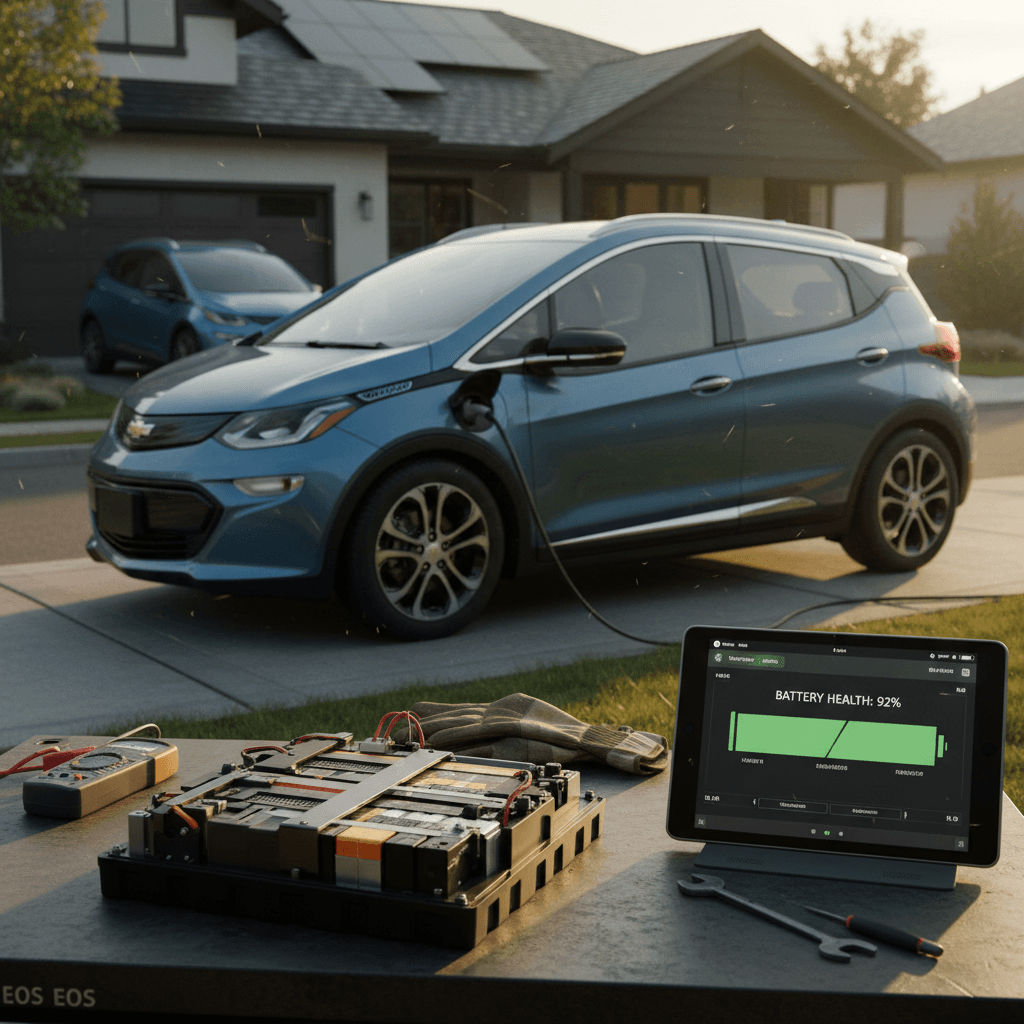
If you’re shopping for a used Bolt, you’re looking at one of the most affordable long‑range EVs ever sold in the U.S. A used Chevy Bolt EV or Bolt EUV gives you 230–260 miles of rated range, hatchback practicality, and low running costs, often for less than many used hybrids. But between the high‑profile battery recall, changing incentives, and the Bolt’s 2023 production stop (and upcoming revival), you want to go in with eyes wide open.
Quick takeaway
Why a used Chevy Bolt is so popular
What makes the used Bolt such a smart buy?
Four pillars of its appeal in today’s used‑EV market
Genuinely affordable
Real range
Practical hatchback
Mature tech
The other reason you see so many people shopping for a used Chevy Bolt is simple: new EV prices have crept up, incentives keep shifting, and the Bolt filled a rare niche, long range at an economy‑car price. With first‑generation production running from model year 2017 through 2023, there’s now a deep used market with plenty of choice on years, miles, and price points.
Context: the Bolt is coming back
Bolt generations, trims and key model years
Before you pick a specific used Bolt, it helps to understand how the lineup evolved. All 2017–2023 cars are first‑generation, but there are meaningful year‑to‑year changes.
Chevy Bolt EV & Bolt EUV: model‑year snapshot
High‑level differences that matter when you’re choosing a used Bolt.
| Model years | Body style | Approx. EPA range | Notable changes |
|---|---|---|---|
| 2017–2019 | Bolt EV hatchback | 238 mi | Launch years, fewer driver‑assist features, original battery modules recalled in many cars. |
| 2020 | Bolt EV hatchback | 259 mi | Software updates, slight efficiency improvement, more standard safety tech. |
| 2021 | Bolt EV & Bolt EUV | 259 EV / 247 EUV | EUV crossover body introduced with more rear legroom and available Super Cruise. |
| 2022–2023 | Bolt EV & Bolt EUV | 259 EV / 247 EUV | Major interior refresh, updated styling, big price cuts, most value‑oriented new Bolts now hitting the used market. |
All EPA ranges are approximate and vary by wheel size and trim.
Bolt EV (hatchback)
- Shorter, easier to park, slightly more efficient.
- Better choice if you prioritize range and city maneuverability.
- Rear seat is adequate but not spacious for adults on long trips.
Bolt EUV (crossover)
- Longer wheelbase with more rear legroom and a more SUV‑like stance.
- Available with GM’s Super Cruise hands‑free driver assistance on some trims.
- Slightly lower range, but still very usable for daily driving.
Model‑year sweet spots
Real-world range and efficiency on a used Bolt
On paper, most used Bolts offer roughly 238–259 miles of EPA‑rated range for the EV and about 247 miles for the EUV. In practice, your range will depend on speed, temperature, terrain and how you drive, just like any EV.
What really affects your range in a used Bolt?
Think in terms of conditions, not just the sticker number.
Weather
Speed & driving style
Battery age & health
Rule of thumb
If you’re coming from a gas car, the key mindset shift is that you’ll mostly charge where you park, overnight at home or during the day at work. For typical commutes under 60 miles a day, even a used Bolt that’s lost some range will feel effortless as long as you have reliable Level 2 charging access.
Battery recall, replacements and warranty coverage
Any conversation about a used Chevy Bolt has to address the high‑profile battery recall. GM identified a manufacturing defect in certain LG battery cells that could, in rare cases, lead to thermal runaway and fires. The fix involved replacing battery modules (or entire packs) and pushing updated diagnostic software to every affected Bolt EV and EUV.
What the Bolt battery recall means for you
Simplified breakdown of how the recall interacts with a used purchase.
| What happened? | Which Bolts? | What GM did | Why buyers care |
|---|---|---|---|
| Manufacturing defects in LG battery cells created a rare but real fire risk. | Most 2017–2022 Bolt EVs and EUVs, plus some 2023 builds. | Replaced modules or full packs, and installed new monitoring software. | Many used Bolts now have newer battery packs and extended parts warranties. |
| Temporary charging limits and parking guidance were used while GM developed fixes. | All affected vehicles worldwide. | Progressive rollout of replacement parts and diagnostics via dealers. | You want proof the recall work is completed on any car you’re considering. |
Always confirm recall status by VIN at the official GM or NHTSA recall lookup tools before you buy.
Upside for used buyers
It’s crucial to distinguish between the standard 8‑year/100,000‑mile EV component warranty and any additional warranty attached to a recall replacement battery. The standard warranty clock starts when the car was first sold new. In some recall scenarios, GM has also attached a separate parts warranty to the newly installed battery modules or packs. The details can vary, so you always want documentation for the specific VIN.
How to verify recall status on a used Bolt
1. Run the VIN through GM’s recall tool
Use the official GM recall lookup or NHTSA tool to confirm whether recall campaigns are marked as completed for that specific Bolt.
2. Ask for recall service records
Request dealer invoices or digital service records that show what was done: full pack replacement, module replacement, or software‑only updates.
3. Confirm the battery warranty in writing
Have the seller or a Chevy dealer print the current warranty status tied to the VIN, including any special 8‑year/100,000‑mile replacement‑battery coverage.
4. Look for the "battery warranty certificate"
Many owners received a certificate when their pack was replaced as part of the recall; it’s a useful extra document to have in your records.
Don’t skip the recall check
How to judge used Bolt battery health
Even with recall replacements and warranties, you still want to understand the actual battery health of any used Bolt. Unlike a gas car, battery capacity is your fuel tank size, so it directly affects range and value.
Battery health: what’s typical?
The challenge is that the Bolt, like most EVs, doesn’t expose a simple "state‑of‑health" percentage on the main screen. You have to infer health from a combination of remaining range, state of charge, and how the car behaves under load.
Practical ways to assess battery health on a used Bolt
Check range vs. state of charge
On a warm day after the car has been driven a bit, note the state of charge and estimated range. A 90% charge showing ~210–225 miles on a 259‑mile car is generally healthy.
Ask about charging habits
Cars that were mainly charged on Level 2 at home tend to age more gently than those fast‑charged to 100% every day.
Look at pack age, not just car age
A 2018 Bolt with a 2023 replacement battery may be a better bet than a newer car with its original pack, all else equal.
Use professional diagnostics when possible
At Recharged, every vehicle gets a <strong>Recharged Score</strong> with verified battery health data pulled from the car, removing the guesswork from shopping.
Lean on objective battery data
Used Chevy Bolt pricing in 2025
Used EV pricing has been volatile over the last few years, and the Bolt is no exception. Broadly, used Bolt EVs and EUVs tend to undercut many competing EVs on price while still offering long range. Exact numbers will depend heavily on mileage, trim, recall status and local demand, but there are clear patterns you can use when evaluating a listing.
How different used Bolts tend to be priced
These relative relationships help you sanity‑check asking prices in your local market.
| Typical configuration | Relative price band | Why it costs more or less |
|---|---|---|
| 2017–2018 Bolt EV, higher miles, original pack or software‑only recall | Lower | Oldest model years; may have more cosmetic wear and shorter remaining warranty. |
| 2019–2020 Bolt EV with documented replacement pack | Medium | Solid value if the replacement battery and warranty are clearly documented. |
| 2021–2023 Bolt EV, moderate miles, good options | Medium–Higher | Newer styling, more tech; often still within both EV component warranty and bumper‑to‑bumper. |
| 2022–2023 Bolt EUV with Super Cruise or top trims | Higher | Crossover body style, desirable driver‑assist features, and strong demand from families. |
All price bands are approximate and vary by region, mileage, and condition.
Think total cost, not just sticker
When you’re comparing one used Bolt against another, weigh the whole package: model year, mileage, battery history, driver‑assist features, and whether the seller is providing clear documentation. A slightly higher asking price can be a bargain if it comes with a newer battery, more remaining warranty, and verified battery health data.
Charging, maintenance and total cost of ownership
One of the Bolt’s biggest strengths is that it’s cheap to keep. There’s no oil to change, no timing belt to replace, and far fewer moving parts than an engine and transmission. Most of your "maintenance" will be cabin air filters, brake fluid at long intervals, tires, and the occasional software update.
Why a used Bolt is inexpensive to run
Three big cost centers where you come out ahead vs. gas.
Home charging is cheap
Minimal scheduled service
Regenerative braking
Plan for your charging situation
- If you own your home, consider installing a 240‑volt Level 2 charger or having an electrician check if you can safely use a 240‑volt outlet you already have (like a dryer plug).
- If you rent, look for workplace charging, nearby public Level 2 stations, or landlords who are EV‑friendly.
- DC fast charging is great for road trips and occasional top‑ups, but regular daily fast charging isn’t ideal for battery longevity on any EV, including the Bolt.
Checklist for inspecting a used Bolt EV or EUV
When you’re standing in front of a used Chevy Bolt, use a structured checklist so you don’t miss anything important. You’re looking at this like an appliance you’ll rely on every day, not a weekend toy.
On-the-ground inspection steps
1. Exterior and tires
Walk around the car looking for accident repairs, mismatched paint, or corrosion. Check tire tread depth and age; uneven wear can hint at alignment issues.
2. Interior wear and electronics
Sit in every seat, test the infotainment, cameras, climate controls, and all windows/locks. Excessive wear in a low‑miles car can be a red flag.
3. Charging hardware
Inspect the charge port door, plug in to a Level 2 charger if possible, and confirm you receive the expected charge rate. Ask whether the original portable charge cord is included.
4. Road test behavior
Listen for suspension noises, check that the car tracks straight, and confirm regen and one‑pedal driving feel smooth. Watch for error messages or warning lights.
5. Recall and warranty documentation
Before you get attached, verify recall completion, ask for service records, and confirm remaining EV and battery warranty in writing.
6. Battery health and range check
If possible, drive the car long enough to see how quickly the range estimate drops relative to miles driven. Combine that with pack age and any available battery health report.
Bring a Bolt‑specific checklist
How Recharged simplifies buying a used Bolt
Most used‑car processes weren’t built for EVs. That’s why Recharged focuses specifically on used electric vehicles like the Bolt EV and EUV. Instead of guessing about battery health or decoding incomplete recall notes, you get transparent data and EV‑literate support from start to finish.
What you get when you buy a used Bolt through Recharged
Designed around the realities of EV ownership, not gas‑car habits.
Recharged Score battery report
Flexible financing & trade‑ins
Nationwide delivery & support
Ready to find your next EV?
Browse VehiclesShop your way
Used Chevy Bolt FAQ
Frequently asked questions about buying a used Bolt
A used Chevy Bolt remains one of the most efficient ways to get into long‑range EV ownership in 2025. If you verify the recall work, understand the battery’s real condition, and choose the right model year for your needs, it can deliver years of quiet, low‑maintenance driving at a fraction of the cost of a new EV. Take your time, ask for documentation, and lean on EV‑first retailers like Recharged when you want a used Bolt that’s already been checked, scored and fairly priced.