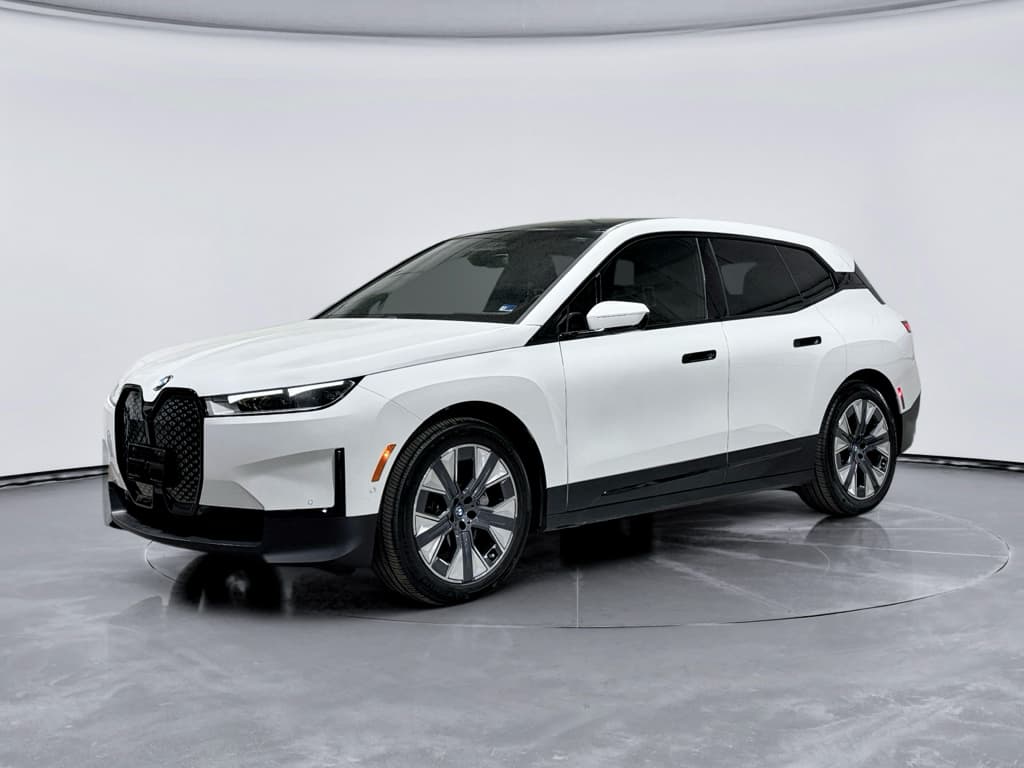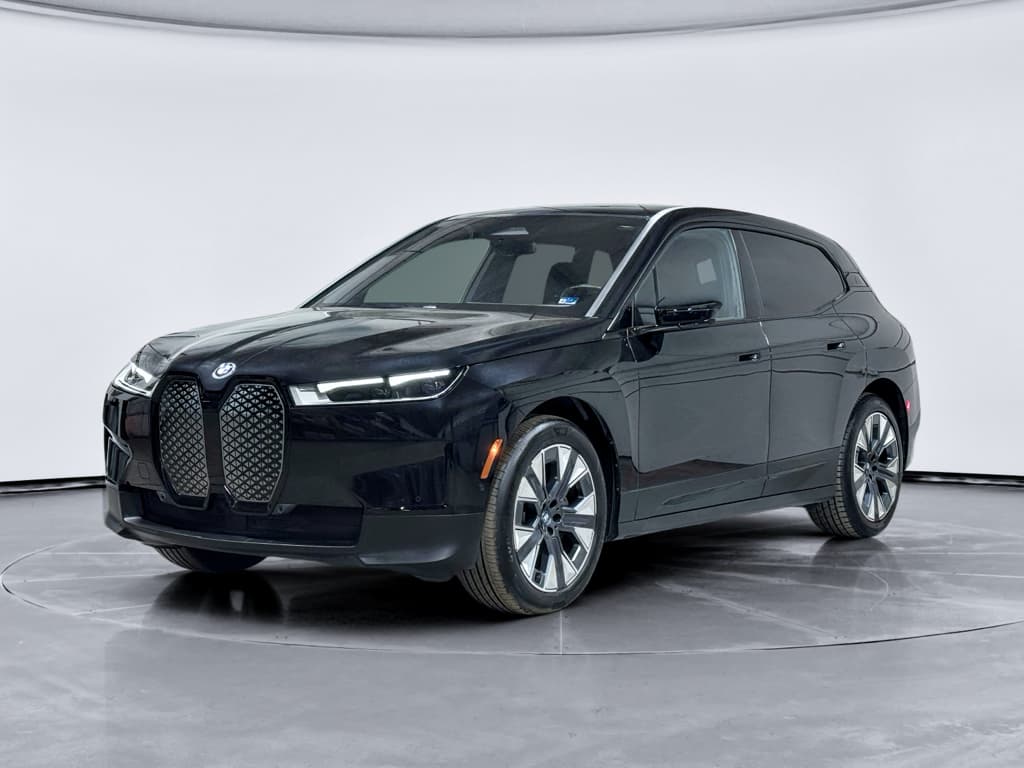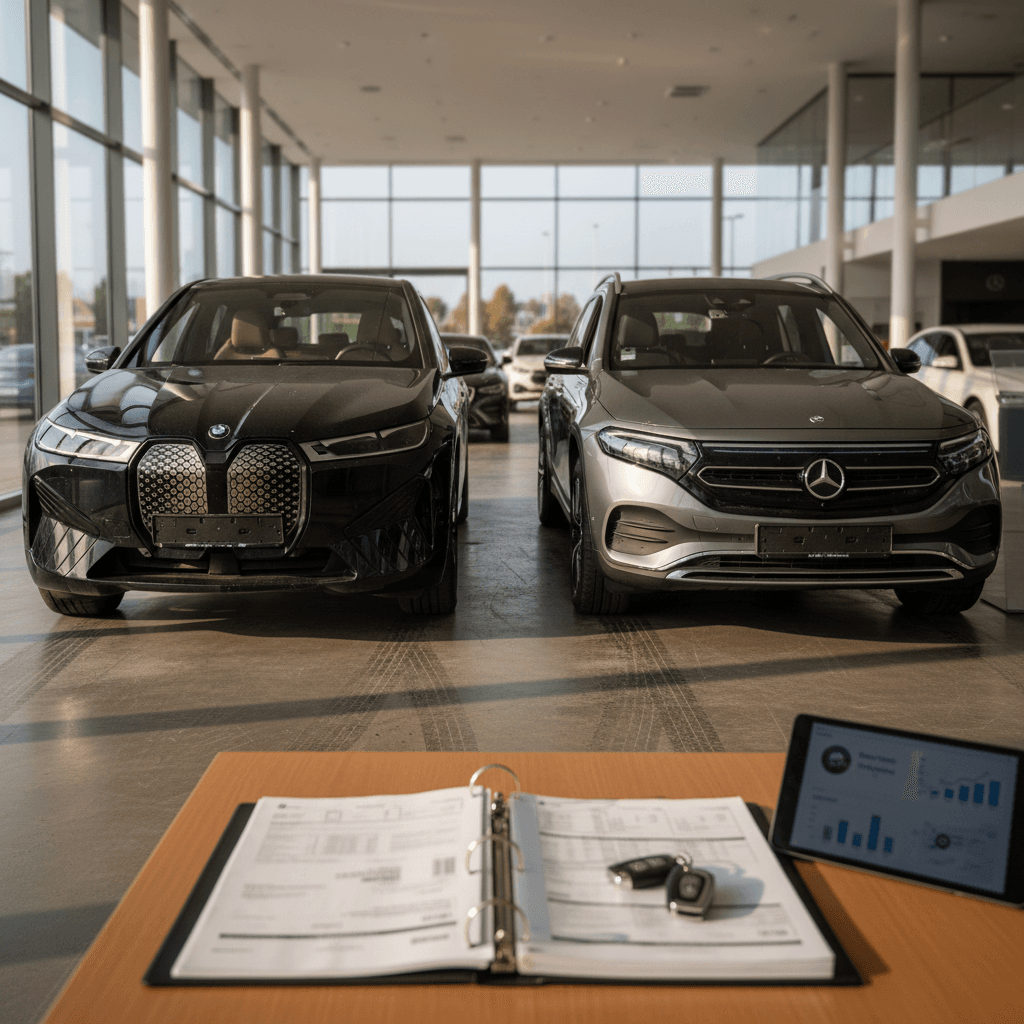
You don’t cross-shop a used BMW iX and a Mercedes EQB by accident. One is BMW’s techno-flagship spaceship SUV; the other is essentially a Mercedes GLB that’s gone vegan. But if you’re shopping used luxury EVs, you’ll quickly notice that clean, low‑mile examples of both now live in similar price neighborhoods, and that raises the question: used BMW iX vs Mercedes EQB, which one actually makes sense?
Same badge, very different briefs
BMW iX vs Mercedes EQB: who each SUV really suits
At a glance: which used EV fits your life?
Think in use cases, not just badges and batteries.
Used BMW iX: best for…
- Long‑range commuters who do regular highway miles and want 300+ miles of rated range on many trims.
- Luxury SUV shoppers cross‑shopping X5, Audi Q8 e‑tron, or Tesla Model X.
- Drivers who care about quiet, long‑legged comfort more than tight city maneuverability.
- Owners who plan to keep the car a long time and value a larger battery buffer.
Mercedes EQB: best for…
- Urban and suburban families who like the GLB’s upright, boxy practicality.
- Buyers who want a smaller footprint and easier parking than the iX.
- Households that occasionally need 7 seats (kids only in row three).
- Shoppers prioritizing lower upfront cost over maximum range or performance.
The core story: a used BMW iX is the more serious road‑trip and luxury machine, while a used Mercedes EQB is a compact premium runabout with the bonus of optional seven‑seat flexibility. From there, it’s about how you actually drive week to week.
Quick specs: used BMW iX vs Mercedes EQB
Key specs: typical U.S. trims you’ll see used
Exact numbers vary by model year and trim; these are representative figures shoppers commonly encounter on the used market.
| Spec | Used BMW iX (xDrive50 / xDrive60) | Used Mercedes EQB (250+ / 300 / 350) |
|---|---|---|
| Size class | Midsize luxury SUV | Compact luxury SUV |
| Seats | 5 | 5 (optional 7) |
| Battery capacity (gross) | ~105–113 kWh, depending on model year | ~70 kWh |
| EPA range (selected trims) | ~300–360 miles, model/year dependent | ~221–245 miles |
| 0–60 mph (quicker trims) | Low 4s to high 3s seconds | ~6–7 seconds |
| Drive | Dual‑motor AWD (most U.S. cars) | FWD (250+) or AWD (300/350) |
| DC fast‑charge peak | Typically up to ~195 kW on many iX | Around 100 kW |
| Onboard AC charger | 11 kW | 11 kW |
| Cargo (rear seats up) | Around 500 L class | Just under 500 L class |
| Typical used price (US, early‑mid mileage) | Higher: think premium X5 money | Lower: closer to GLB / Model Y money |
BMW iX is in a higher segment than EQB, keep that in mind when comparing prices.
Don’t comparison‑shop on specs alone
Space and comfort: family vehicle vs city slicker
BMW iX: lounge on wheels
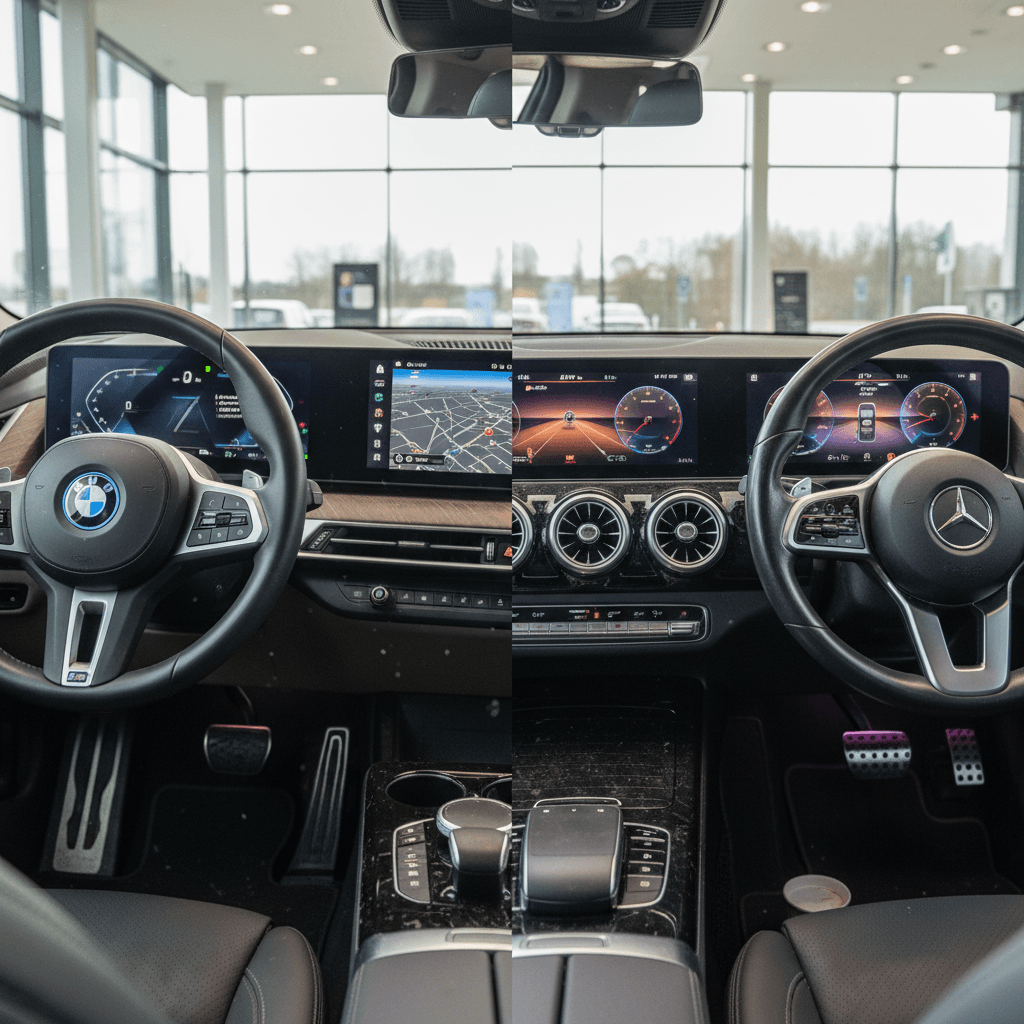
- Interior feel: Minimalist, airy, almost concept‑car‑like. Flat floor, big glass, and available wool‑blend fabrics feel more high‑end furniture than car.
- Space: Plenty of adult‑friendly space in both rows. It’s a genuine family hauler for four adults plus luggage.
- Cargo: Around 500 liters with the rear seats up and well over 1,700 liters folded. Wide opening, flat load floor.
- Noise & ride: Exceptionally quiet and composed on the highway. Even on big wheels, it reads more “electric S‑Class” than “sporty SAV.”
Mercedes EQB: boxy and clever
- Interior feel: If you’ve sat in a GLB, you know this cabin. Turbine vents, twin screens, and a more traditional SUV vibe.
- Row three: Optional two‑seat third row makes the EQB a 7‑seater, but it’s strictly for kids or very short hops.
- Cargo: Just a hair under the iX on paper, but the more upright tailgate makes the EQB easy to load with strollers and bulky stuff.
- City friendliness: Narrower and shorter than the iX, which makes threading tight streets and garages far less stressful.
Think parking, not just passengers
Range, battery and charging: real‑world usable miles
Range and charging at a glance
On the used market, you’ll mostly see EQBs with a roughly 70 kWh pack and EPA ranges in the low‑ to mid‑200‑mile bracket. The iX, by contrast, carries a much larger battery, on the order of 100+ kWh depending on year and trim, so it simply goes farther on a charge and gives you a bigger buffer against cold‑weather losses and degradation.
- BMW iX: Better suited to long‑distance driving, cold climates, and owners who can’t or don’t want to charge every day.
- Mercedes EQB: Perfectly fine for daily suburban life and occasional 150‑mile weekend trips, but you’ll stop more often on cross‑country routes.
Cold‑weather reality check
On AC, both offer around 11 kW onboard charging, which means roughly 0–100% in 7–9 hours on a 240V Level 2 home charger. On DC fast charging, the iX’s higher peak rates and larger battery make it a better match for modern high‑power stations, while the EQB tops out around 100 kW, acceptable, but not class‑leading.
Driving experience: luxury EV couch vs electric GLB
BMW iX: quietly outrageous
- Power: Even the “regular” dual‑motor trims serve up sports‑car acceleration. The hotter versions are absurdly quick for something this big and soft.
- Character: Think silent, instant‑torque grand tourer. It’s more about effortless pace than playful cornering.
- Steering & ride: Light steering, plush suspension, and a sense that the car weighs about as much as a bank vault, because it does.
Mercedes EQB: familiar and unfussed
- Power: The EQB’s output ranges from adequate (EQB 250+) to brisk (EQB 350), but it never aims for “wow” the way an iX does.
- Character: Feels like a GLB that happens to be electric: upright seating, good visibility, and predictable responses.
- Ride: Shorter wheelbase and less mass mean it can feel busier over bad pavement, but also a bit more tossable in town.
Performance vs sanity
Tech, safety and features: what you actually live with
Cabin tech and safety highlights
Both SUVs are loaded, but they express that tech in very different ways.
Infotainment
BMW iX: Curved dual‑screen setup with BMW’s latest iDrive. Hugely capable, occasionally fussy.
EQB: Uses Mercedes’ MBUX interface with twin screens and voice assistant. More traditional layout, plenty of menus.
Safety & driver assist
Both offer adaptive cruise, lane‑keeping assist, automatic emergency braking, blind‑spot monitoring and more on most trims.
Availability of advanced packages varies a lot by year and original spec, so don’t assume every used example is fully loaded.
Comfort & trim
iX: More avant‑garde options: glass controls, open‑pore wood, wool‑blend seats.
EQB: Feels like contemporary Mercedes: ambient lighting, familiar switchgear, and optional AMG‑line trim pieces.
For daily life, the bigger differentiator isn’t that one has more screens or radars; it’s how you get along with each system. BMW’s iDrive in the iX layers a lot of features into menus and widgets, while Mercedes’ MBUX in the EQB leans heavily on a conventional cluster plus central touchscreen and a capable “Hey Mercedes” voice assistant.
When you test‑drive, live in the menus
Ownership costs and depreciation: iX vs EQB used
On the new market, the BMW iX sits a full price class above the Mercedes EQB. That carries over used: like‑for‑like years, the iX will generally cost you more to buy, insure, and maintain, but you’re also getting a larger, more powerful, longer‑range SUV.
Cost and value considerations
High‑level comparison of how these SUVs behave as used purchases. Exact numbers depend on your market, mileage, and trim.
| Factor | Used BMW iX | Used Mercedes EQB |
|---|---|---|
| Purchase price | Higher; flagship EV pricing even used | Lower entry point; closer to compact luxury crossovers |
| Insurance | Typically higher due to price and performance | Generally lower; smaller, less powerful |
| Electricity vs fuel | Substantially cheaper than premium gas | Same electric advantage; smaller battery means slightly lower full‑charge cost |
| Maintenance | No oil changes, but big tires and advanced suspension can be pricey out of warranty | Slightly simpler package, smaller wheels and tires on many trims |
| Depreciation | Large‑battery luxury EVs have already taken a big new‑to‑used hit; good time to let the first owner pay for the experiment | Also depreciated, but started from a lower MSRP; can represent strong value if range fits your life |
Both benefit from lower running costs vs gas luxury SUVs, but the iX carries bigger‑SUV bills.
Where Recharged fits in
Buying used: what to check on an iX or EQB
Essential used‑EV checks for BMW iX and Mercedes EQB
1. Battery health and fast‑charging history
Ask for a battery health report where possible and look for signs of unusual degradation. A car that lived its life on DC fast charging may show more wear than one that mostly charged at home. Recharged’s battery diagnostics are designed to surface exactly this story.
2. Software updates and recalls
Both SUVs are software‑heavy. Confirm that recall work and major over‑the‑air or dealer updates have been performed. An iX or EQB that’s behind on software can feel glitchy or miss important safety fixes.
3. Suspension, tires, and brakes
The iX is a heavy, powerful SUV; test for clunks, uneven tire wear, and brake vibrations. On the EQB, listen for suspension noises over bumps, especially on higher‑mileage city cars that have met every pothole in town.
4. Charging hardware and ports
Inspect the charge port door, pins, and cable lock operation. Plug into a Level 2 charger during the test drive if possible to confirm normal charging speeds and that no warning lights appear.
5. Interior wear and tear
Luxury EVs often do school‑run duty. Check the iX’s fancy materials for stains and damage and the EQB’s third‑row hardware and seat mechanisms for abuse.
6. Driver‑assist calibration
On your test drive, deliberately exercise adaptive cruise and lane‑keeping. If the car pulls to one side, pings you constantly, or throws driver‑assist warnings, budget for an alignment or camera/radar calibration.
Beware of unloved early adopters
Which one should you buy: BMW iX or Mercedes EQB?
Choose a used BMW iX if…
- You want a true flagship EV experience with big‑battery range and serious acceleration.
- Your life includes regular highway trips, mountain drives, or cold‑climate winters where range buffer matters.
- You’re comfortable with higher insurance and tire costs in exchange for more space and performance.
- You value a cabin that feels closer to a concept car than a conventional SUV.
Choose a used Mercedes EQB if…
- You mostly drive in town and suburbs and rarely exceed 150–180 miles in a day.
- You want an easy‑to‑park, upright SUV with optional kid‑friendly third row.
- You prefer traditional Mercedes styling and ergonomics over futuristic minimalism.
- You’d rather save on upfront price and monthly costs than chase maximum range and speed.
If you strip away the marketing gloss, the decision is surprisingly simple: the BMW iX is the better car in almost every objective sense, range, refinement, performance, cabin ambiance. The Mercedes EQB is the better appliance for people who live in crowded places, own short commutes, and prize easy parking and a familiar Mercedes feel over headline numbers. Neither answer is wrong; there’s only the one that fits the life you actually lead.
Turn research into the right car
Ready to find your next EV?
Browse Vehicles