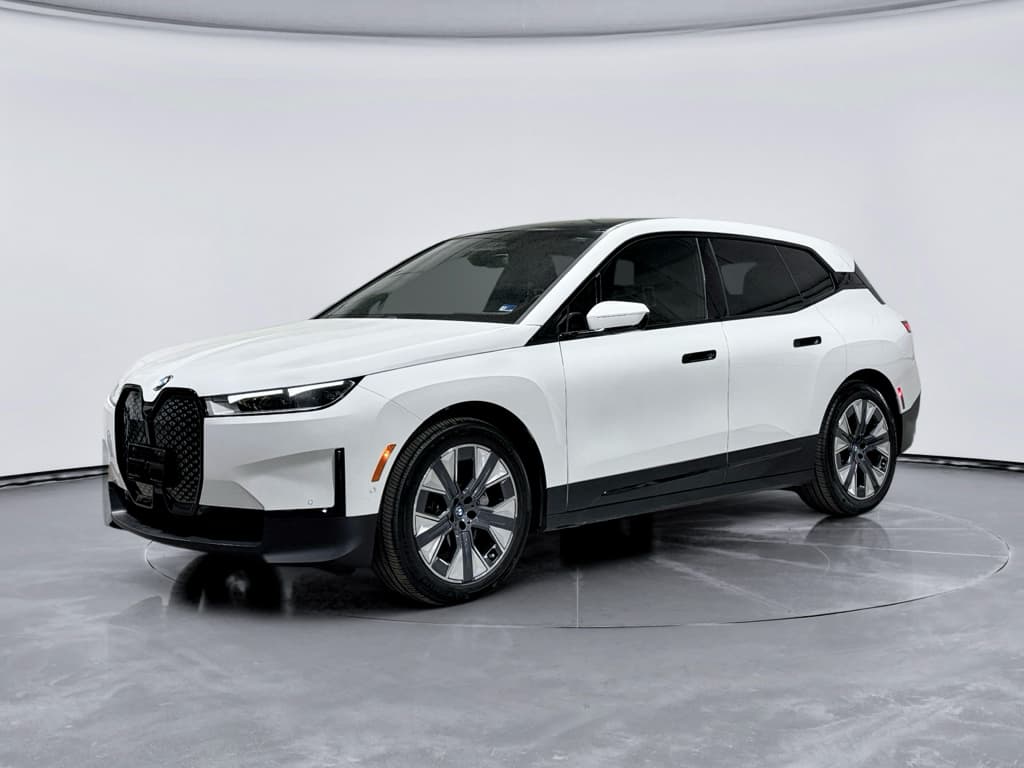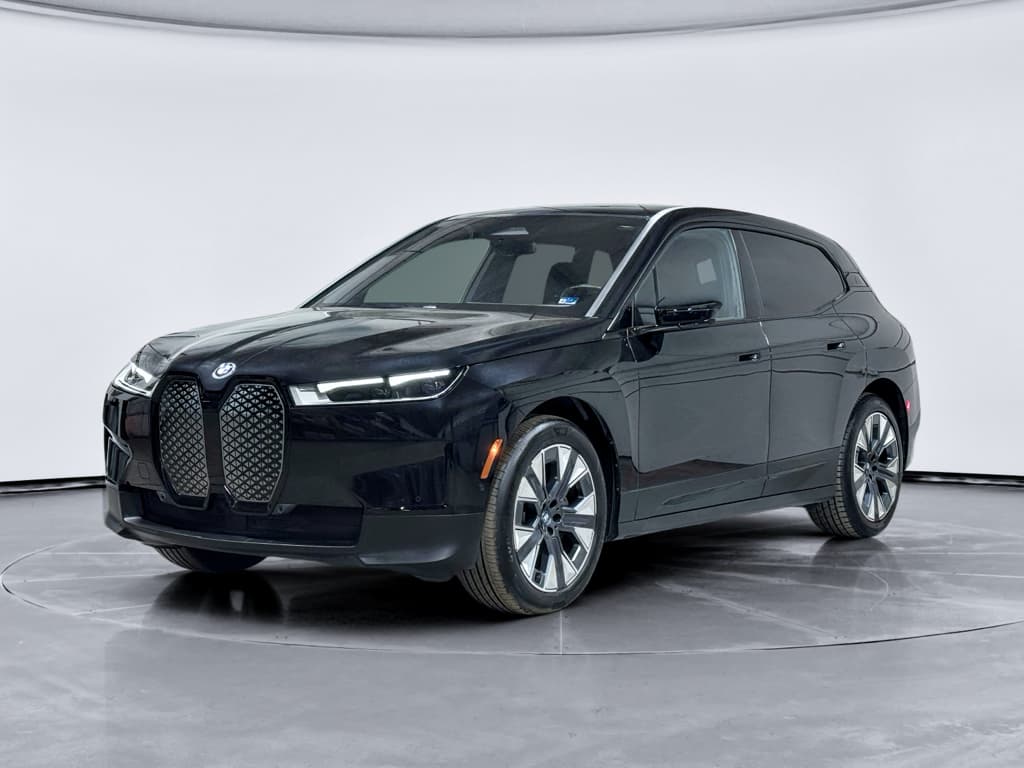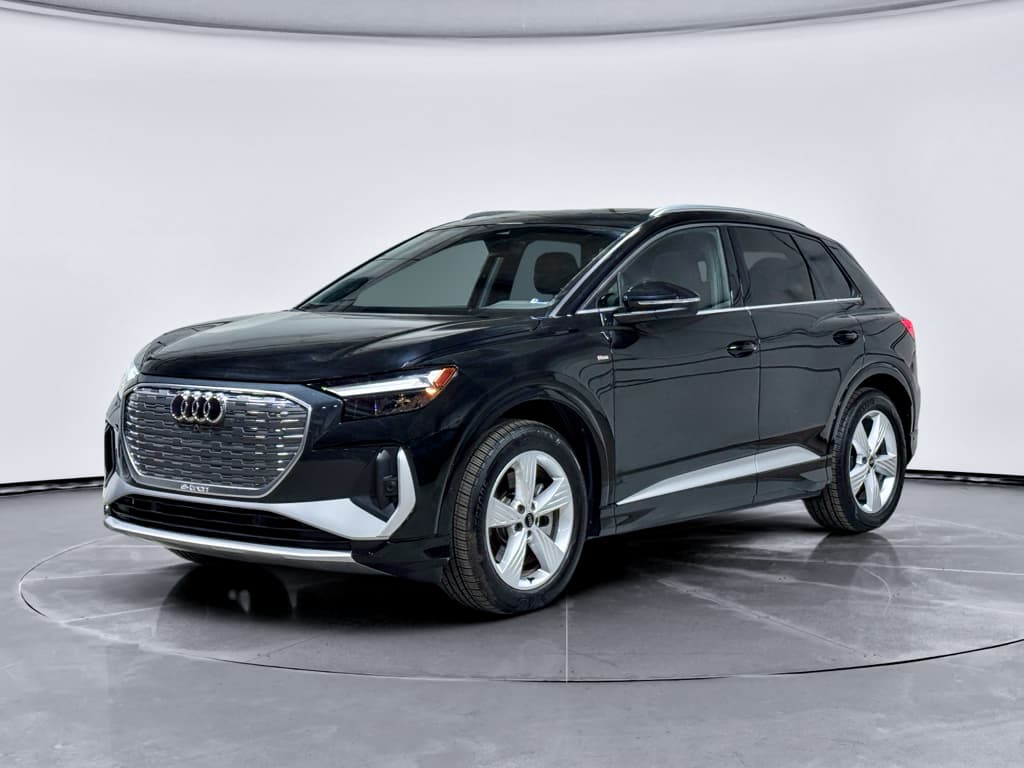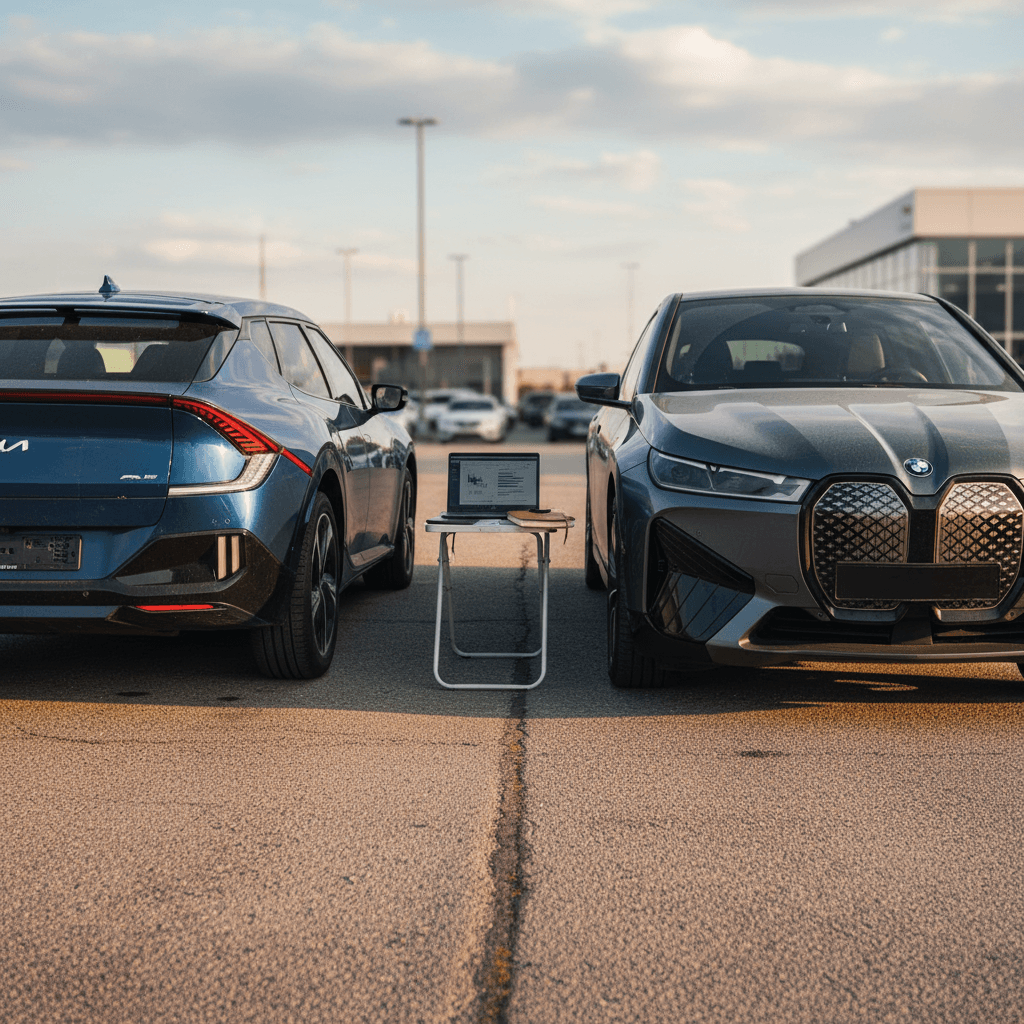
If you’re shopping for a **used luxury electric SUV**, your browser history probably looks like a tug of war: used BMW iX vs Audi Q8 e-tron. One is a spaceship on stilts, the other a stealth limousine with a plug. Both promise comfort, quiet, and guilt-reduced speed. The question is: which one makes more sense used, once real-world range, depreciation, and battery health enter the chat?
The short version
Overview: Who Should Consider a Used BMW iX vs Audi Q8 e-tron?
Think of the **BMW iX** as the avant‑garde tech loft and the **Audi Q8 e-tron** as the quiet corner office. They’re aimed at the same buyer, affluent, EV‑curious, SUV‑committed, but with very different personalities.
Who the used BMW iX fits best
- You want maximum range and strong DC fast‑charging for road trips.
- You like bold design and futuristic interiors more than subtlety.
- You’re okay trading a little efficiency for big‑EV power and presence.
- You plan to keep the car a long time and care deeply about battery health reports.
Who the used Audi Q8 e-tron fits best
- You prefer a classic luxury SUV look that doesn’t shout “EV.”
- Your driving is mostly urban/suburban, under 200 miles a day.
- You care about comfort and quiet more than raw range or speed.
- You want a seamless step-up if you’re coming from a gas Audi Q7/Q8.
Used EV pro move
Quick Specs: Used BMW iX vs Audi Q8 e-tron
Core Specs Comparison (Typical U.S. Models)
Key specs you’ll actually feel day-to-day in a used BMW iX vs Audi Q8 e-tron.
| Spec | Used BMW iX xDrive50 | Used Audi Q8 e-tron 55 (SUV) |
|---|---|---|
| Usable battery | ~105 kWh | ~106 kWh |
| EPA range (best-case trims) | Up to ~309–324 miles | Up to ~285–296 miles |
| Typical used real-world range | ~260–290 miles | ~220–260 miles |
| Max DC fast charge | Up to 195 kW | Up to 170 kW |
| 0–60 mph | ~4.4 s | ~5.4–5.6 s |
| Drive | Dual‑motor AWD | Dual‑motor AWD |
| Onboard AC charger | 11 kW | 9.6–11 kW (19.2 kW optional) |
| Cargo volume (rear seats up) | ~35.5 cu ft | ~28–29 cu ft |
| Towing rating (when equipped) | Up to ~5,500 lbs | Up to ~4,000 lbs |
Figures are typical for 2022–2024 model years commonly found on the used market.
Used spec trap
Range & Battery: How Far Will They Go as Used EVs?
Range isn’t just a number on a Monroney sticker; it’s emotional security. On the used market, the way these two SUVs handle electrons is one of the biggest deciding factors.
Range & Battery Character
Broadly similar pack sizes, very different personalities.
BMW iX: Big pack, strong road-trip legs
The iX xDrive50 carries a usable battery of around 105 kWh and is EPA‑rated in the low‑300‑mile range when configured for efficiency. In independent testing, it can still deliver close to 290 miles at highway speeds – unusually good for such a large SUV.
In the real used world, with some degradation and normal driving, expect ~260–290 miles from a healthy pack, depending on wheels, weather, and speed.
Audi Q8 e-tron: Adequate, not heroic
The updated Q8 e-tron 55 uses a ~106 kWh usable battery and typically carries EPA ratings up to the high‑200‑mile range. It’s a big improvement over the original e-tron but still short of the best from BMW.
In daily mixed driving, used examples commonly deliver ~220–260 miles when the battery is in good health.
How battery age affects you
Battery & Range: What to Look for on a Used Listing
1. Ask for a recent battery health report
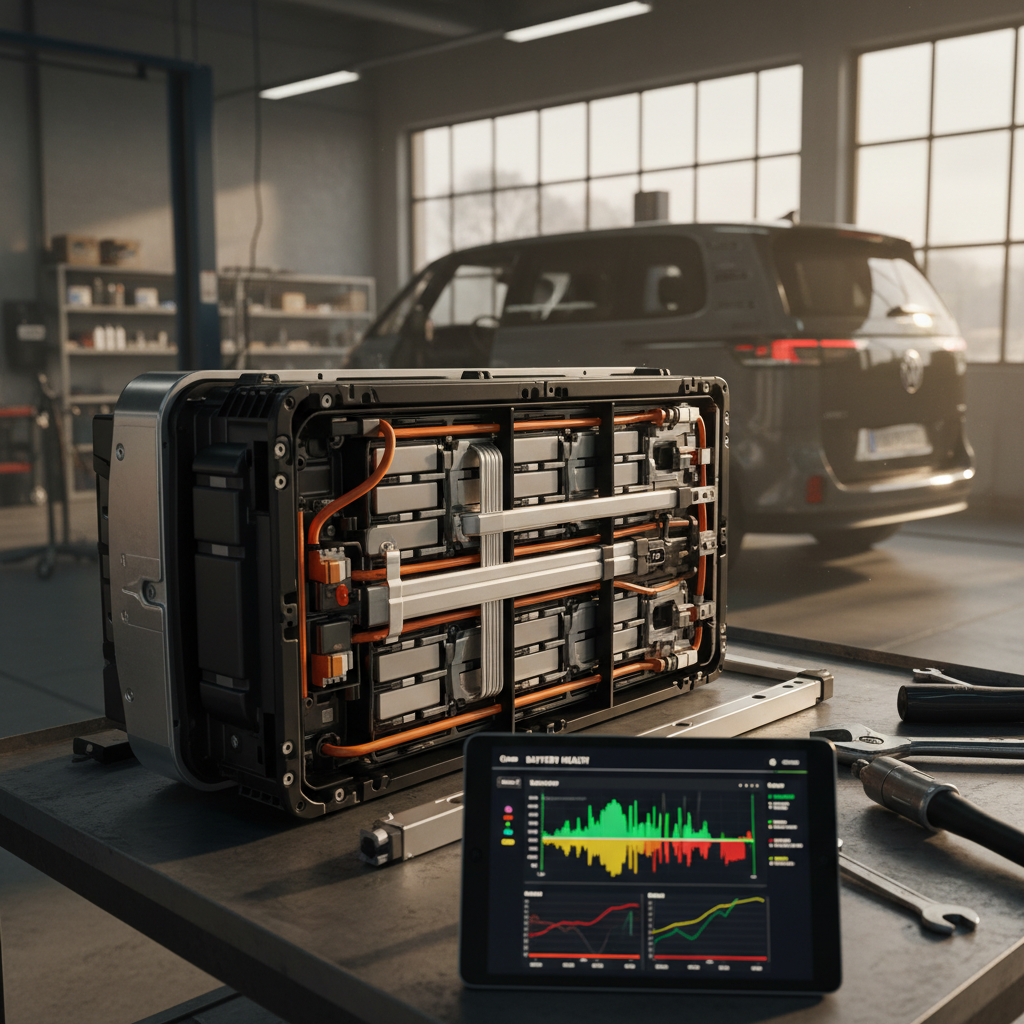
Look for quantified state‑of‑health (SoH) rather than guesswork. Recharged includes a <strong>Recharged Score battery report</strong> so you can see how much usable capacity remains before you buy.
2. Check the EPA range for that exact trim
An iX xDrive50 on 20‑inch wheels has more range than one on 22s. The same goes for Q8 e-tron Ultra vs. sportier S or SQ8 versions. Don’t rely on a generic “up to” number.
3. Consider your cold‑weather reality
Both SUVs lose range in winter. If you live in a northern climate, mentally knock 20–30% off the official figure and make sure the lower number still works for your daily life.
4. Look at mileage and charging behavior
High mileage plus heavy DC‑fast‑charging can accelerate degradation. A highway commuter who mostly Level‑2 charges at home is often a safer bet than a short‑trip, always‑fast‑charging owner.
Charging: Which SUV Is Easier to Live With?
On paper, both SUVs can DC fast‑charge from roughly 10–80% in around half an hour. In practice, the **BMW iX tends to pull ahead**, literally, thanks to a higher peak charge rate and slightly better road‑trip efficiency.
Charging At a Glance
- Both use the North American CCS standard on used 2022–2024 models, so they’ll work with major networks (Electrify America, EVgo, ChargePoint, etc.).
- The Q8 e-tron often came with Electrify America free charging promos when new; on a used car, those benefits may or may not transfer, so check the fine print.
- BMW’s charging partnerships are more fragmented, but the iX’s higher peak rate means that on a good station it spends less time loitering by the sandwich shop.
Home charging reality check
Comfort, Space & Design: Living With Each SUV
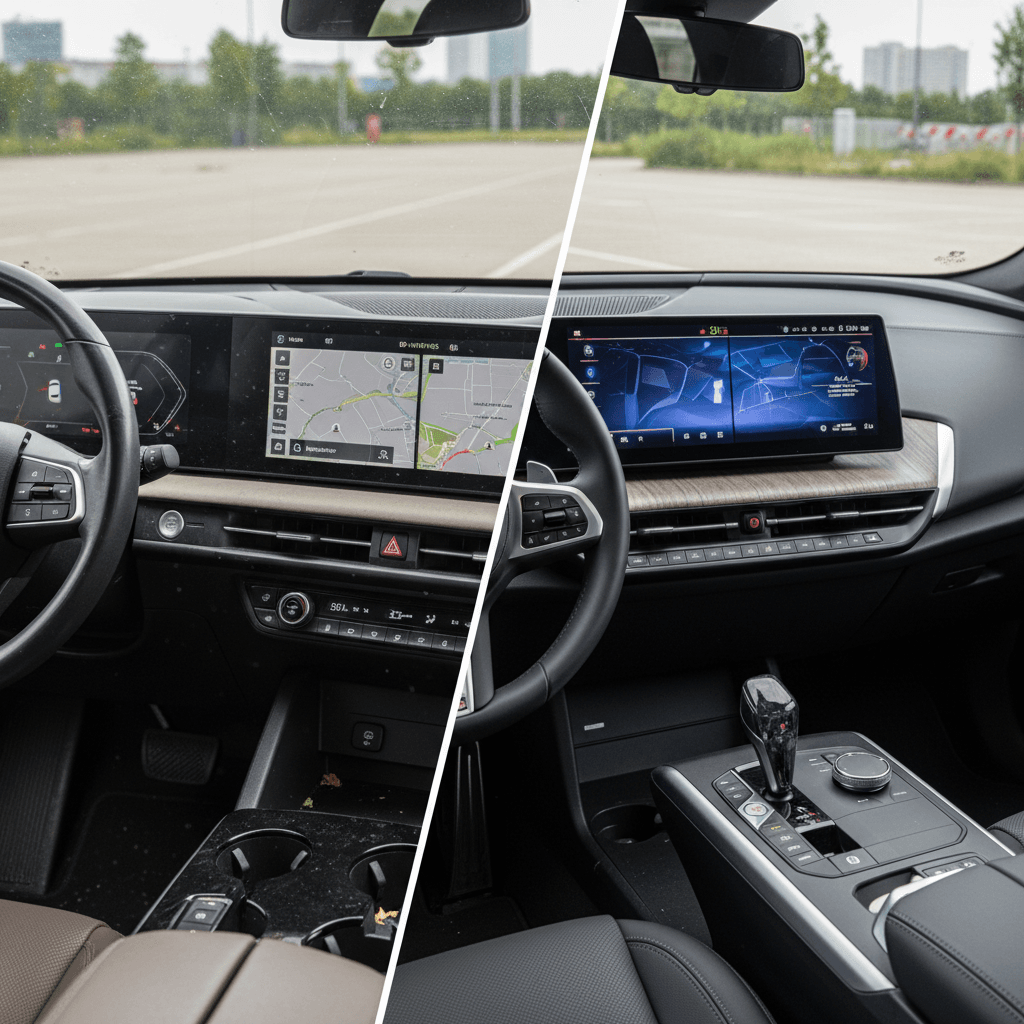
Inside, these two take very different approaches to luxury. The iX is a lounge in a Björk video; the Q8 e-tron is a well‑tailored navy suit.
Cabin & Practicality
Where you’ll spend your time matters more than 0–60.
BMW iX: Lounge on wheels
- Spacious cabin with a flat floor and airy greenhouse feel.
- Striking materials: open‑pore wood, glass controls, wool‑blend seats in some trims.
- Cargo space is generous at roughly 35.5 cu ft behind the rear seats; plenty for family duty.
- Styling is polarizing: some love the bold grille and surfacing, others…don’t. You already know which camp you’re in.
Audi Q8 e-tron: Classic Audi cocoon
- Looks and feels almost identical to Audi’s gas SUVs, great if you prefer understated luxury.
- Cabin is whisper‑quiet with excellent seats and familiar Audi switchgear.
- Cargo area is a bit tighter at roughly 28–29 cu ft with rear seats up.
- From the driver’s seat, the transition from a Q7 or Q8 feels nearly frictionless.
Family‑friendly both ways
Tech, Safety & Driving Feel
Neither of these SUVs is trying to be a Nürburgring hero; they’re tuned for composure and confidence. Still, they land in slightly different places.
BMW iX: Effortless speed, light steering
- Dual‑motor xDrive50 makes over 500 hp; even the “base” car is indecently quick.
- Steering is light but accurate; it feels like a big, well‑insulated hot hatch more than a traditional SUV.
- Standard driver‑assist tech includes lane‑keeping, blind‑spot monitoring, and strong adaptive cruise; higher trims add advanced highway‑assist features.
Audi Q8 e-tron: Calm, collected cruiser
- Standard dual‑motor setup makes a bit over 400 hp in common U.S. trims, plenty, but never shouty.
- Ride quality is superb, especially on smaller wheels; optional air suspension can make it feel like an electric A8 on stilts.
- Audi’s driver‑assist suite is polished and predictable, with unobtrusive lane‑keeping and well‑tuned adaptive cruise.
Both of these are quiet electric rooms on wheels. The BMW is the one that occasionally remembers it’s a BMW.
Depreciation, Reliability & Running Costs
Here’s where the used EV game gets interesting. Early luxury EVs took a **steep depreciation hit**, and you, the second owner, get to enjoy the upside, if you buy wisely.
Depreciation reality
Ownership Costs: How They Compare
You’re swapping fuel bills for electrons and tires.
Purchase price
On today’s used market, you’ll often find similar‑year Q8 e-trons priced a bit below comparable iX models, especially high‑spec Audis that dropped harder from a lofty MSRP.
Maintenance
As EVs, both skip oil changes and many wear items of gas SUVs. Expect brakes, tires, cabin filters, coolant service for the battery. The iX’s big wheels can be tire‑hungry; the Audi’s weight does it no favors either.
Reliability & warranty
Both carry 8‑year/100k‑mile (approx.) battery warranties when new, which often remain in effect for used buyers. You’re mostly watching for software gremlins, air‑suspension wear (Audi), and cosmetic/electronic quirks.
Don’t skip a proper inspection
Used Checklist: What to Inspect on Each Model
BMW iX & Audi Q8 e-tron: Model‑Specific Used Buying Checklist
BMW iX – wheels, tires & alignment
Huge wheels and instant torque are hard on rubber. Inspect for <strong>uneven wear, curb rash, and any signs of alignment issues</strong>. Replacing 21–22 inch tires is not a small expense.
BMW iX – software, cameras & sensors
Cycle through all driver‑assist features, cameras, parking sensors, and the infotainment system. A glitchy screen or broken surround‑view camera can get expensive out of warranty.
BMW iX – charging behavior history
Ask how often the car was DC fast‑charged vs. home‑charged. Ideally you want an owner who used <strong>Level 2 at home most of the time</strong> and only fast‑charged on trips.
Audi Q8 e-tron – air suspension & ride height
If equipped with air suspension, listen for <strong>compressor noise</strong>, pay attention to clunks or floatiness, and check that ride height settings work properly.
Audi Q8 e-tron – charging ports & EA history
Check that both AC and DC ports latch and unlock smoothly, and plug into a Level 2 and DC fast charger during inspection if possible. Early heavy use of DC fast charging plus high mileage warrants an especially close look at battery health.
Both – battery reports & warranty status
Confirm remaining <strong>factory battery warranty</strong>, check for any prior high‑voltage repairs, and review an objective battery health report (like the Recharged Score) rather than relying on the dash estimate alone.
How Recharged helps here
Used BMW iX vs Audi Q8 e-tron: Which Should You Buy?
Pick Your Winner
Boiled down to real‑world ownership priorities.
Choose a used BMW iX if…
- You want the best combination of range and performance in this class.
- You do frequent long drives or road trips and care about DC fast‑charging speed.
- You like bold, tech‑forward design and don’t mind standing out in the Whole Foods lot.
- You’re comfortable paying a bit more upfront for capability you’ll actually use.
Choose a used Audi Q8 e-tron if…
- You prefer a traditional luxury SUV look and feel.
- Your driving is mostly local and under ~200 miles a day.
- You’ve owned an Audi Q5/Q7/Q8 before and want the same vibe, just with electrons.
- You’d rather save some money on purchase price and can live with less range.
If you strip away the marketing and metal, the choice comes down to this: the BMW iX is the more capable EV, especially for distance and charging, while the Audi Q8 e-tron is the more conservative luxury SUV that happens to be electric. On the used market, that often means the iX costs a little more but gives you more long‑term flexibility. The right answer is the one that fits your daily miles, your charging reality, and, let’s be honest, what you enjoy seeing in your driveway. If you’d like help finding a vetted example of either, a Recharged EV specialist can walk you through battery reports, pricing, and nationwide delivery step by step.