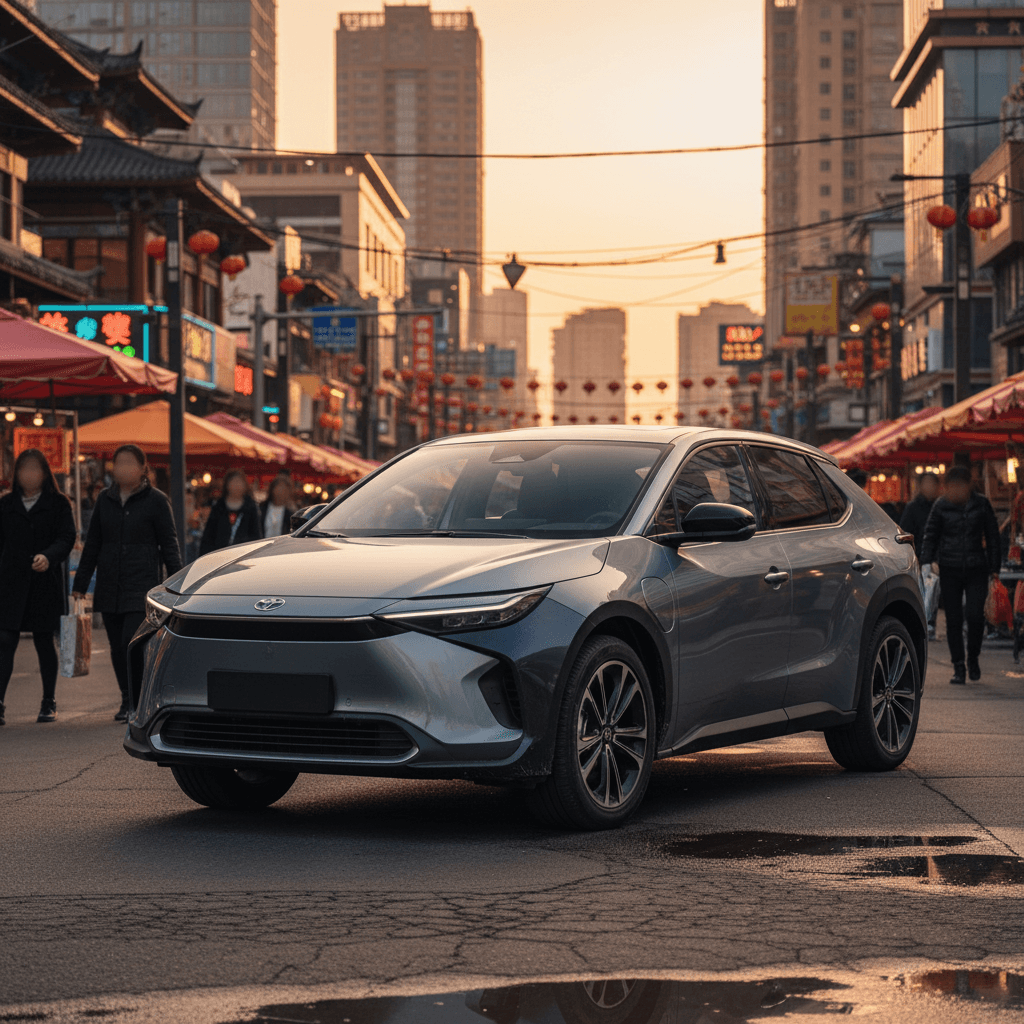
Toyota’s cheapest EV China launch has finally happened, and it was loud enough to crash a website. In March 2025, Toyota and its GAC joint venture rolled out the bZ3X, a compact electric SUV starting at around 109,800 yuan (roughly $15,000). Demand was instant, but the real story is what this ultra-cheap EV says about the broader EV market, and what it might mean for what you’ll pay for an electric car in the years ahead.
Quick snapshot
Toyota’s Cheapest EV in China: What Just Launched?
On March 6, 2025, GAC Toyota launched the bZ3X (Chinese name: Bozhi 3X) in China. It’s Toyota’s first “100,000-yuan-level” pure electric SUV, built squarely to take on homegrown players like BYD in the most cutthroat EV market on Earth. Entry trims were announced just over 109,800 yuan, and limited-time incentives briefly pushed some configurations as low as about 104,800 yuan, slotting the bZ3X well below most global EV price points.
bZ3X Launch by the Numbers
In a market where sub-$20,000 EVs are rapidly becoming the norm, Toyota is playing catch-up. But by launching the bZ3X at this price, it’s signaling that it understands the new rules of the China game: high tech, low margin, and no room for half-measures.
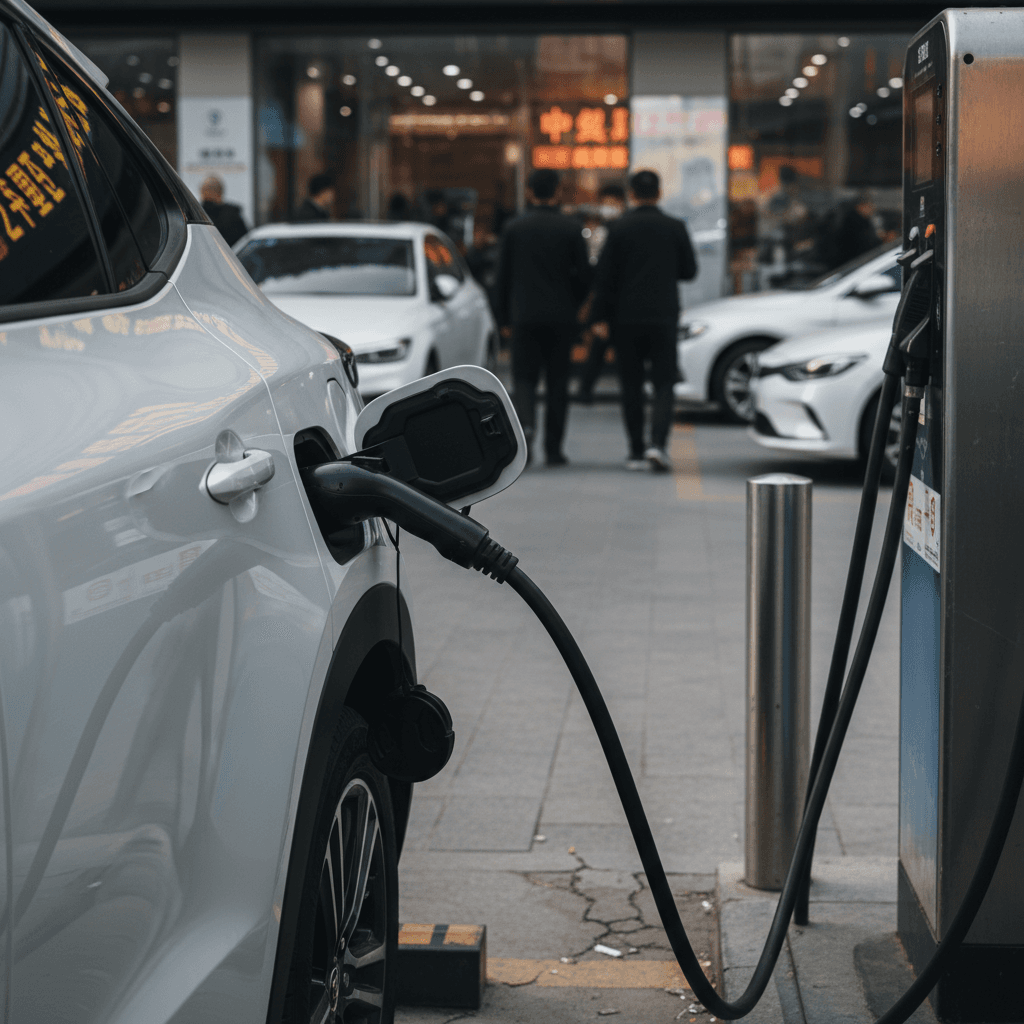
bZ3X Pricing, Specs, and Tech Highlights
Pricing is the headline, but the bZ3X isn’t just cheap, it’s aimed at being a credible daily driver in a very demanding market. Think “family crossover” more than bare-bones city pod.
Toyota bZ3X Launch Pricing in China
Approximate launch prices for bZ3X trims in China, based on GAC Toyota announcements and early incentives.
| Variant group | Key features | Launch price (RMB) | Approx. USD* |
|---|---|---|---|
| Entry trim | Standard range, no LiDAR, basic ADAS | 109,800 | ≈$15,000 |
| Mid trims | More equipment, longer range options | 119,800–139,800 | ≈$16,300–$19,300 |
| Top trims | LiDAR, Orin X chip, advanced smart driving | 149,800–159,800 | ≈$20,000–$22,000 |
Exact pricing may vary by city, incentives, and timing, but the structure is clear: aggressively undercut competitors while still offering smart-driving tech on higher trims.
About those prices
Key bZ3X Highlights
Cheap doesn’t have to mean crude, especially in China’s 2025 EV landscape.
Compact electric SUV
Modern battery tech
Smart-driving options
Exact performance numbers vary by trim, but the throughline is clear: Toyota used Chinese partners for batteries, electronics, and software to deliver a package that looks competitive in spec sheets while hitting a price point that would’ve been unthinkable from a Japanese OEM just a few years ago.
Why Toyota Went So Cheap in China
To understand why Toyota is willing to sell a tech-heavy EV for roughly $15,000, you have to zoom out from the car and look at the market. China’s EV sector in 2025 is in a full-blown price-and-software war. BYD is pushing advanced driver assistance into cars below $10,000. Local brands launch new models at a pace traditional OEMs can’t match. And margins are often razor thin.
- Toyota’s hybrid playbook doesn’t work as well in a market where full battery EVs already dominate new-energy-vehicle sales.
- Regulators and cities are pushing hard toward electrification, especially in larger metros where license plates for ICE cars are expensive or restricted.
- Chinese consumers now expect strong connectivity, over-the-air software updates, and advanced ADAS even in budget cars.
Why this matters beyond China
Short-term goal: survive the price war
Toyota has been late and cautious on pure EVs. To avoid getting boxed out of the world’s largest auto market, it needs volume and relevance now, even if profits per car are thin.
Long-term goal: export knowledge, not just cars
Even if the bZ3X itself never ships to the US, the underlying cost engineering, supply-chain learnings, and software partnerships can make future Toyotas cheaper and more compelling everywhere.
China’s $15k EV vs What You’ll Actually Pay Elsewhere
If you’re reading this from the US, a 100,000-yuan electric SUV sounds almost unreal. It’s tempting to assume we’re just a year or two away from $15,000 new EVs at local dealers. We aren’t, at least, not on the same terms.
Why you can’t buy a $15k bZ3X in the US (yet)
1. Different safety and regulatory requirements
US and European crash standards, software rules, and compliance costs add hardware and engineering overhead that doesn’t exist, or is cheaper, under Chinese regulations.
2. Tariffs and trade policies
Any hypothetical import of a China-built $15k EV would face tariffs that can easily add thousands of dollars, even before dealer margin and logistics.
3. Labor and distribution costs
Chinese joint ventures benefit from local labor structures and dense domestic supply chains. US retail adds dealership overhead, marketing, and more expensive labor.
4. Market positioning
Global brands tend not to undercut their own ICE and hybrid lineups too aggressively in developed markets, especially when they still rely on those products for profits.
The bZ3X’s price isn’t just about what it costs to build an EV; it’s a product of an entire ecosystem that China has been building for more than a decade. Instead of expecting $15,000 new EVs overnight, it’s more realistic to expect downward pressure on prices and better-equipped EVs at each price tier around the world.
What Toyota’s China Launch Means for US EV Shoppers
So if you can’t buy a bZ3X in Chicago or Charlotte, why should you care? Because moves like Toyota’s cheapest EV China launch are signals. They tell you where cost curves and corporate priorities are heading, and that has real consequences for what you’ll pay for an EV in the US, especially in the used market.
Three Takeaways for US EV Buyers
China’s price war won’t stay in China forever.
1. Price pressure on legacy brands
2. More competitive used EV pricing
3. Tech expectations ratchet up
Where Recharged fits in
Ready to find your next EV?
Browse VehiclesHow the bZ3X Compares to Today’s Used EV Deals
Let’s ground this in choices you can actually make right now. You may not be able to buy Toyota’s cheapest EV in China, but you can buy a used EV in roughly the same price band.
bZ3X vs. Typical Used EV Options in the US
High-level comparison of Toyota’s bZ3X pricing with what you might see in the US used EV market today.
| Vehicle example | Market | Typical price range (USD) | Pros for value-focused buyers |
|---|---|---|---|
| Toyota bZ3X (new) | China | ≈$15,000–$22,000 | Brand-new, local incentives, advanced ADAS on higher trims |
| 2019–2021 Nissan Leaf | US used | ≈$11,000–$17,000 | Low entry price, simple city EV with proven track record |
| 2018–2021 Chevy Bolt EV | US used | ≈$13,000–$20,000 | Solid range for the money; many post-recall packs carry fresh batteries |
| 2019–2022 Hyundai Kona/Kia Niro EV | US used | ≈$18,000–$26,000 | Longer range, crossover form factor closer to bZ3X |
| 2022+ Toyota bZ/bZ4X (used) | US used | Typically mid-$20,000s and up | Newer tech and safety; benefits from Toyota’s global EV learning curve |
Exact prices vary by region, mileage, incentives, and condition, but this snapshot shows how close used EVs are getting to China’s new-EV price points.
Viewed through this lens, the bZ3X isn’t an outlier so much as a benchmark. It shows where new EV pricing can go under extreme competition. The US used market is already circling those numbers, especially when you factor in dealer discounts or marketplace platforms that cut overhead.
Checklist: Shopping for an Affordable Used EV
If Toyota’s cheapest EV launch in China has you thinking, “Maybe I should finally go electric, but on a budget,” you’re not alone. Here’s how to approach the used market with the same level of discipline Toyota is applying in China.
Smart Steps to Buying a Budget-Friendly Used EV
1. Start with range you actually need
Work backwards from your real driving. If you drive 25–40 miles a day and rarely road-trip by car, a 150–200-mile EV may serve you perfectly and cost far less than a 300+ mile model.
2. Focus on battery health, not just mileage
Two EVs with the same mileage can have very different battery health depending on how they were charged and driven. Look for objective data, like a <strong>Recharged Score</strong> battery report, rather than guesses or verbal assurances.
3. Check charging compatibility
Confirm whether the car uses CCS or NACS and what adapters, if any, you might need. Make sure it fits your local fast-charging networks and any home charging you already have or plan to install.
4. Understand warranty status
Battery and drivetrain warranties can be 8 years or more. A used EV that still sits under factory coverage can dramatically de-risk your purchase.
5. Compare total cost, not just sticker price
Factor in home charging setup, electricity rates, insurance, and potential tax credits or state rebates. In many cases, an EV with a slightly higher price can be cheaper to own than a low-priced gas car.
6. Use specialist marketplaces
Platforms like <strong>Recharged</strong> focus specifically on EVs, providing verified battery diagnostics, fair pricing benchmarks, and EV-savvy advisors, advantages traditional dealers rarely offer.
Future Outlook: Will Toyota’s China Strategy Go Global?
Toyota’s cheapest EV China launch isn’t a one-off stunt; it’s part of a broader pivot. The company is already rolling out additional affordable EVs like the bZ5 in China, and in North America it’s cutting prices and adding NACS ports to its electric crossover lineup. The long-term trend is clear: more EVs, more competitiveness, and more pressure on pricing.
Where Things Likely Go From Here
In China
More Toyota EVs co-developed with Chinese partners and built on local supply chains
Ongoing price skirmishes with BYD and emerging brands as ADAS becomes table stakes
Potential exploration of exports to nearby markets where Chinese-built EVs already compete
In North America
Gradual improvements to range, charging, and pricing on Toyota’s global EVs
Increased use of NACS and access to broader fast-charging networks
Growing used supply of Toyotas and other EVs, pushing down entry prices for budget-focused buyers
Don’t wait for a mythical $10k EV
FAQ: Toyota’s Cheapest EV in China Launch
Frequently Asked Questions
Toyota’s cheapest EV China launch is more than a headline about a $15,000 SUV. It’s a milestone in a bigger story: EV technology getting cheaper, smarter, and more widely accessible, starting in the world’s toughest market and radiating outward. You don’t need to wait for the bZ3X to cross the Pacific to benefit. By paying attention to how EV competition in China reshapes pricing and features, and by shopping intelligently in the used EV market with tools like the Recharged Score, you can capture much of that progress today, without betting your savings on what might show up at dealerships tomorrow.