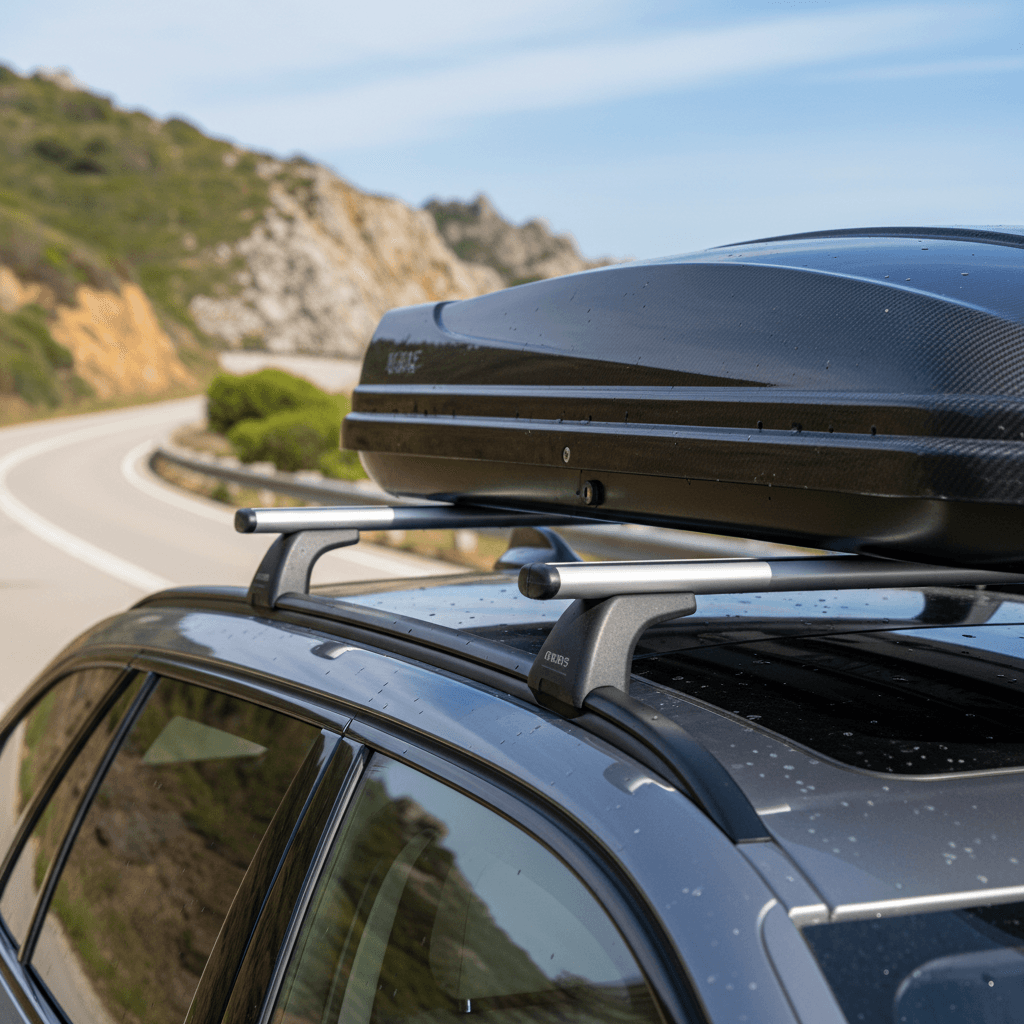
If you’re eyeing a cargo box, bike rack, or even a rooftop tent for your new BMW i5, the first thing you need to know is the **BMW i5 roof rack weight limit**. It’s not as simple as “whatever the crossbars are rated for.” The real number comes from BMW’s own roof load rating, and your accessories all have to live under that ceiling, rack, box, bikes, skis, tent, everything.
BMW’s own number, in plain English
BMW i5 roof rack weight limit: the quick answer
- BMW i5 Touring (G61) official roof load: **100 kg / ~220 lb** including crossbars and cargo.
- Most quality aftermarket crossbars for the i5 Touring: **75 kg / ~165 lb dynamic rating** while driving.
- Your safe working number is **the lower of the two**: in practice, often **75 kg / 165 lb** for a fully loaded rack.
- Static load (parked) will be higher, but BMW doesn’t publish a tent‑friendly number, so treat rooftop tents with caution.
If you’re just here for a practical rule of thumb: on a typical BMW i5 Touring with decent aero bars, plan around **120–140 lb (55–65 kg) of gear on the roof** once you subtract the weight of the bars and box or carriers themselves. That keeps you on the safe side of both BMW’s 100 kg limit and the common 75 kg bar ratings.
Official BMW i5 roof load specs (touring vs sedan)
BMW has been remarkably consistent for decades: most of its wagons and sedans top out at roughly 75–100 kg of roof load. The all‑electric i5 Touring is no exception. In BMW’s own technical data for the i5 Touring (G61), you’ll find a line that reads **“Permitted roof load … 100 kg”**, that’s the structural limit of the car’s roof when properly equipped with a compatible rack system.
BMW i5 roof rack weight limits at a glance
What BMW and typical rack manufacturers allow on the roof of the i5.
| BMW i5 variant / rack | Type of limit | Max load (metric) | Max load (US) | What’s included |
|---|---|---|---|---|
| i5 Touring (G61) – BMW spec | Vehicle roof load | 100 kg | ~220 lb | Crossbars + all cargo on roof |
| Typical aftermarket crossbars for i5 Touring | Rack dynamic rating | 75 kg | ~165 lb | Bars + all cargo while driving |
| OEM or Thule cargo box alone | Accessory rating | 50–75 kg | 110–165 lb | Box + cargo inside box |
| i5 Sedan (G60) with rails/crossbars* | Vehicle roof load (likely) | ~75–100 kg | ~165–220 lb | Crossbars + all cargo (verify in manual) |
Use these numbers as an upper bound. Always check your owner’s manual and the paperwork for your specific rack.
Always trust the lowest number
One quirk here is the **sedan**. BMW’s G60 i5 sedan can be ordered with roof mounting points and uses similar hardware to the touring, but in North America roof racks on sedans are less common and BMW’s documentation is thinner. If you have the sedan rather than the Touring, treat **75 kg / 165 lb as a hard ceiling** unless your owner’s manual explicitly says otherwise.
Rack vs. roof: which weight limit actually matters?
When people talk about the **BMW i5 roof rack weight limit**, they’re often mixing up two separate ratings: the **car’s roof load** and the **rack system’s rating**. You need both, and you obey the stricter one.
Two limits you must respect
Think of it as the weaker‑link principle: car vs. rack vs. accessory.
1. Vehicle roof load (BMW’s number)
This is BMW’s own limit for how much weight the body shell and roof structure can safely carry.
- i5 Touring: 100 kg / ~220 lb roof load.
- Includes: crossbars + box/rack + cargo.
- Set assuming normal driving, emergency maneuvers, and crash safety.
2. Rack & accessory ratings
Every set of crossbars and every cargo box, bike rack, or ski holder has its own limit.
- Aftermarket bars for i5: often 75 kg / 165 lb dynamic.
- Cargo boxes: commonly 50–75 kg (110–165 lb).
- Bike trays, ski racks: usually lower per‑item limits.
A simple way to add it up
Real‑world examples: boxes, bikes, skis and tents
Numbers on a page are one thing; a driveway full of camping gear is another. Here’s how typical BMW i5 setups look once you actually do the math. We’ll assume an i5 Touring with a 75 kg (165 lb)‑rated bar system and BMW’s 100 kg (220 lb) roof load.
Typical BMW i5 Touring roof loads
Example 1: Family cargo box for road trips
Say you install a sleek 16–18 cu‑ft cargo box on your i5 Touring. A typical premium box might weigh **40–45 lb (18–20 kg)**. Add **aero crossbars at 13–15 lb (6–7 kg)** and you’ve already used around **55–60 lb (25–27 kg)** of your allowance before a single duffel goes in the box.
- Rack + box: ~60 lb (27 kg).
- BMW roof limit: 220 lb (100 kg).
- Typical bar limit: 165 lb (75 kg).
- Remaining useful payload on the roof: roughly **105 lb (48 kg)**, but stay closer to **80–90 lb (36–40 kg)** for comfort.
Verdict: The i5 is an excellent cargo‑box car
Example 2: Two bikes on the roof
Modern e‑bikes are heavy; traditional road and gravel bikes are not. Most roof‑mount bike trays are rated in the **35–45 lb (16–20 kg) per bike** neighborhood, and BMW’s own accessories are built with that in mind.
- Bars: ~15 lb (7 kg).
- Two bike trays: ~22 lb (10 kg).
- Two 30 lb (14 kg) bikes: 60 lb (27 kg).
- Total: just under **100 lb (45 kg)** on the roof, comfortably under both BMW’s roof load and a 165 lb bar rating.
E‑bikes belong on a hitch, not the i5 roof
Example 3: Skis and snowboards
The winter‑sports use case is the one scenario where BMW’s roof limit feels generous. Skis are feathery by automotive standards.
- Bars: ~15 lb (7 kg).
- Six‑pair ski/board rack: ~15 lb (7 kg).
- Skis/boards for four people: 25–35 lb (11–16 kg).
- Total: **55–65 lb (25–30 kg)**. You’re well under any sane limit, even on the sedan.
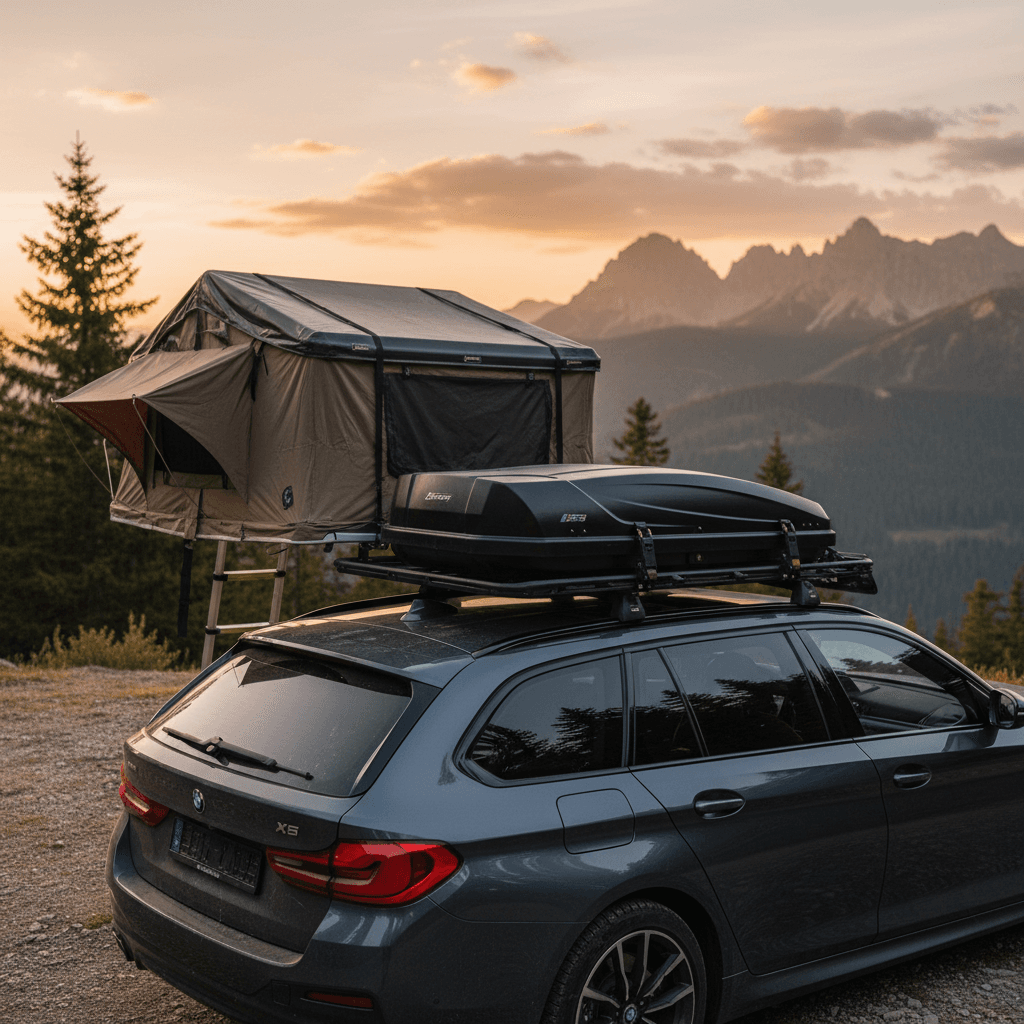
Can you run a rooftop tent on a BMW i5?
Here’s where things get controversial. The overlanding world will tell you, correctly, that static roof loads, when the car is parked, are several times higher than the published dynamic number. That’s how you can have a 160 lb tent and 400+ lb of humans sleeping up top on many SUVs whose dynamic rating is only 165 lb.
BMW, on the other hand, is conspicuously silent about static roof loads on the i5 and its siblings. The official documentation stops at the **100 kg roof load**, full stop. No camping exceptions, no asterisk for tents. Enthusiast forums are already full of i5 owners asking about rooftop tents and not getting a straight answer.
Why people are tempted
- Low, long roofline feels like the perfect tent platform.
- The i5 Touring’s body structure is robust, with a 100 kg roof rating.
- Static capacity is almost certainly higher than the published dynamic figure.
Why it’s still risky
- No official static load rating from BMW for rooftop tents.
- Small mistakes, wrong bars, bad mounting, uneven loading, get expensive fast.
- The i5’s glass area and panoramic roof options complicate the picture.
The conservative answer: skip the rooftop tent on an i5
If rooftop camping is non‑negotiable, you may be better served in the long run by pairing the i5 with a second vehicle that’s engineered and rated for tent duty, or by looking at EV SUVs and crossovers designed with published static ratings. That’s the kind of tradeoff our team at Recharged can walk you through if you’re cross‑shopping used EVs for weekend duty.
Packing and safety tips for your i5 roof rack
BMW i5 roof rack safety checklist
1. Start with the paper limits
Confirm the **roof load in your owner’s manual** and the **dynamic rating of your bars and box/rack**. Use the lowest number as your hard cap. Don’t rely on generic BMW or rack‑maker charts for other models.
2. Weigh more than you guess
Rack and box specs are easy; your gear is not. A cheap luggage scale or bathroom scale lets you weigh bikes, bags, and even the box itself. You’ll be surprised how quickly it adds up on an i5 Touring.
3. Keep heavy items low
Reserve the roof for light, bulky gear, sleeping bags, jackets, kids’ stuff, skis. Anything that feels like a kettlebell goes in the trunk or rear footwells, not above the glass.
4. Mount the rack correctly
Follow the crossbar manufacturer’s instructions on bar spacing, torque, and clamp position. The i5’s roof structure is strongest where BMW intended you to clamp; freelancing the positions can damage seals or sheet metal.
5. Re‑torque and re‑check
Before any long trip, check that **all clamps and bolts are torqued correctly** and that nothing has migrated on the bars. After the first 50–100 miles with a new setup, stop and inspect everything again.
6. Watch speed and crosswinds
Additional weight and frontal area on the roof magnify crosswind sensitivity and emergency‑maneuver drama. Drive a little slower than usual when fully loaded and leave extra space for braking.
Don’t forget range and efficiency
Buying a used BMW i5 that’s seen roof‑rack duty
The BMW i5 Touring has “family‑road‑trip” written all over it, so a lot of used cars will show up with tow hitches, rack mounts, or just ghost lines in the clearcoat where crossbars once lived. That’s not inherently a problem, but it’s worth a closer look.
How to vet a used i5 with roof‑rack history
A quick checklist before you fall for the paint color.
Inspect the roof skin
Look closely along the factory rails or mounting points:
- Any ripples or distortions in the sheet metal?
- Paint cracks, especially around clamp areas?
- Evidence of DIY drilling (walk away).
Check for water intrusion
Open all doors and look at the headliner and A/B‑pillars.
- Stains or water marks?
- Musty smell after rain?
- Wind noise around the windshield at speed?
Evaluate range history
If the previous owner did a lot of high‑speed driving with a cargo box, average consumption may be higher in the trip logs. That’s not a deal breaker, but it’s part of understanding how the car was used.
At Recharged, every used EV we sell, including BMW i5s as they start hitting the secondary market, comes with a **Recharged Score battery health report**, so you’re not guessing how those loaded‑up road trips impacted long‑term range. Our specialists can also talk you through realistic road‑trip planning, including when a roof box makes sense and when you’re better off packing lighter and using the cavernous Touring cargo area instead.
BMW i5 roof rack weight limit FAQ
Frequently asked questions about the BMW i5 roof rack weight limit
Bottom line: how much can you really carry?
For the BMW i5 Touring, the number that matters is **100 kg (220 lb) of total roof load**, straight from BMW. But because most crossbar systems for the car are rated at **75 kg (165 lb)**, your real‑world limit is usually that lower figure. Once you subtract the weight of the bars and box or carriers, you’re left with roughly **80–120 lb of useful cargo capacity on the roof**, depending on your setup.
Use that capacity wisely, **light, bulky items up high; heavy gear low and between the axles**, and the i5 will do what great wagons have always done: haul a family and their stuff across time zones without drama. If you’re considering a **used BMW i5** or another long‑roof EV, Recharged can help you find one with the right equipment, verify its battery health with a **Recharged Score report**, and talk honestly about how roof racks, range, and real‑world road‑tripping fit into your life.