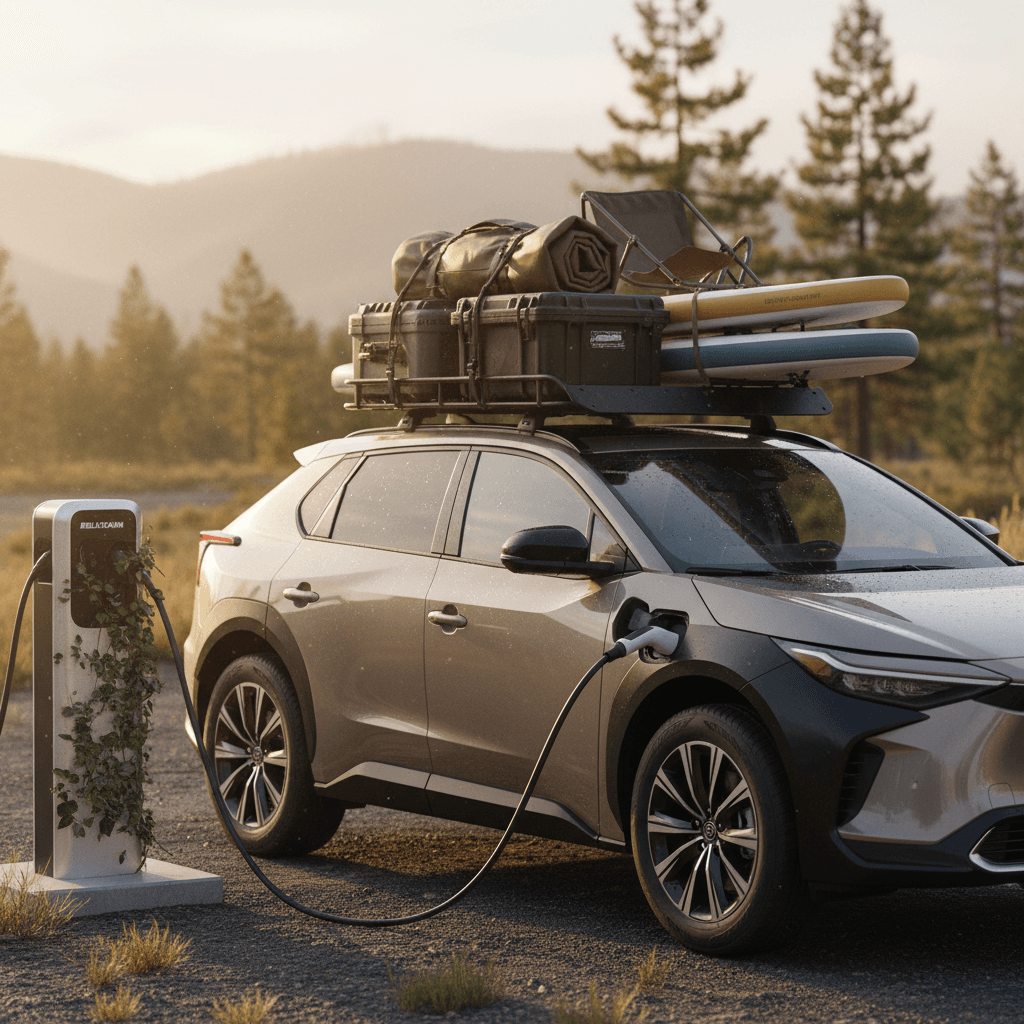
If you’re planning to haul bikes, a cargo box, or camping gear on your Toyota bZ4X, you need to know the **real roof rack weight limit**, not just what the accessory brochure says. With an electric SUV like the bZ4X, overloading the roof doesn’t just risk damage; it can also hurt range, stability, and your warranty.
The short version
Toyota bZ4X roof rack weight limit: the short answer
Toyota doesn’t always print a big bold number that says “roof rack weight limit” for the bZ4X the way you might expect. Instead, you’ll see references to maximum roof load in specification sheets and to the cross bar capacity in accessory documentation. Pulling those together, here’s what most owners can expect:
- A practical maximum roof load for the bZ4X is about 80 kg (176 lb) including everything on top of the roof.
- Toyota’s own accessory cross bars are commonly discussed around the 75–80 kg (165–176 lb) range when fitted correctly and used on-road.
- That total includes cross bars + rack/box + cargo, not just your bikes or luggage.
- You should also stay within the vehicle’s overall payload rating, which limits how much weight you and your gear can add to the car in total.
Watch the fine print
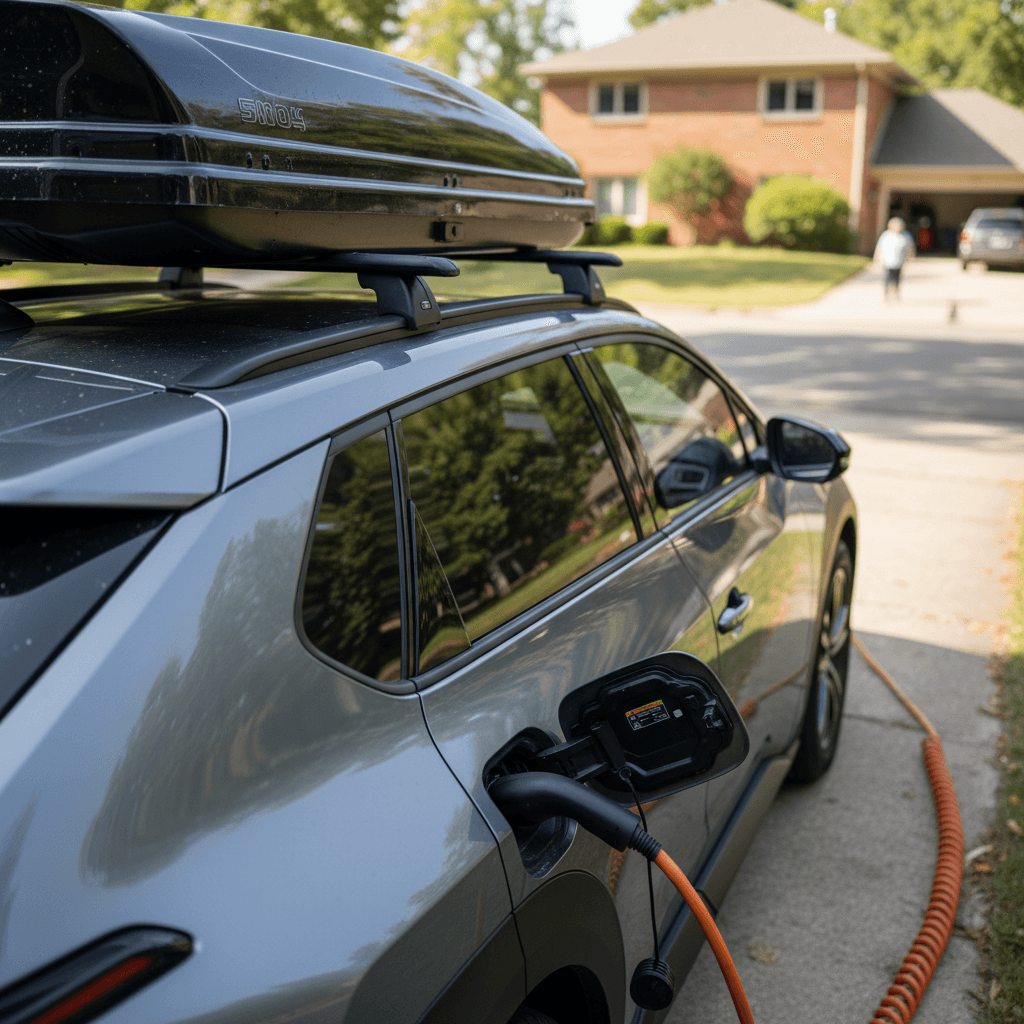
Roof load vs crossbar rating: what actually limits you
This is where a lot of people get confused. You might see an aftermarket heavy-duty rack system that claims a 220 lb capacity and assume that means you’re good to go. Not on a unibody EV like the bZ4X.
Three separate limits you must respect
Your true Toyota bZ4X roof rack weight limit is the lowest number in this stack
1. Vehicle roof load
This is the maximum weight the roof structure is designed to carry while driving. For the bZ4X, a realistic working number is about 80 kg / 176 lb including bars and cargo.
2. Foot pack / mounting
Clamps, fixed points, or flush rails have their own rating. If you’re using Toyota’s official cross bars, treat their stated capacity as a hard ceiling.
3. Cross bars & accessories
Bars, baskets, and boxes all have limits too. Even if they’re rated higher than the vehicle, you still can’t exceed your bZ4X’s roof load.
Think of it like tires on an EV. A tire might be capable of 168 mph, but if your car is limited to 112 mph, that’s the speed you live with. The Toyota bZ4X’s roof is the same story: the body structure and mounting points call the shots, not the most optimistic number in a catalog.
Easy sanity check
Real-world Toyota bZ4X roof rack setups
Numbers on paper are one thing; the way people actually use their bZ4X roof racks is another. Here are a few typical setups and how they stack up against that ~80 kg / 176 lb roof load.
Typical bZ4X roof rack configurations and weights
Approximate combined weights so you can see how quickly you approach the roof load limit. Always check the actual weights of your specific gear.
| Setup | Example hardware | Approx. hardware weight | Approx. cargo weight | Total roof load |
|---|---|---|---|---|
| Two bikes on roof | OEM or Thule cross bars + 2 upright bike trays | 35–40 lb (bars + trays) | 60–70 lb (2 modern MTBs or road bikes) | 95–110 lb |
| Large cargo box, family trip | Cross bars + 16–18 cu ft roof box | 45–55 lb (bars + box) | 80–100 lb (luggage, soft items) | 125–155 lb |
| Ski/snowboard trip | Cross bars + long ski rack | 30–35 lb (bars + rack) | 40–60 lb (4–6 skis/boards) | 70–95 lb |
| Light weekend load | Cross bars only or with empty box | 25–45 lb | 0–20 lb | 25–65 lb |
These are estimates meant for planning, not a replacement for your owner’s manual or product labels.
You can see how easy it is to flirt with the limit once you start loading heavy suitcases or multiple e‑bikes. The safest strategy with the bZ4X is to keep heavy items inside the cabin or on a properly rated hitch rack, and save the roof for bulky, lighter gear like clothing, sleeping bags, and skis.
How to calculate a safe roof load on your bZ4X
You don’t need engineering software to stay safe; you just need to add a few numbers and pick the most conservative limit. Here’s a simple way to work through roof rack math on your Toyota bZ4X.
Step-by-step: sizing your bZ4X roof load
1. Find your vehicle roof load
Check your owner’s manual, spec sheet, or the label on the door jamb for any mention of maximum roof load. If you can’t find a printed number, use <strong>80 kg / 176 lb as a conservative ceiling</strong> for planning.
2. Look up bar and rack ratings
Note the maximum load for your cross bars, foot pack, and any carriers (bike trays, cargo box, ski rack). If any of these are rated lower than the roof, <strong>that lower number is now your limit</strong>.
3. Weigh (or estimate) your hardware
Add together the weight of the cross bars, feet, and accessories. A typical setup for the bZ4X runs <strong>25–55 lb</strong>, depending on brand and box size.
4. Subtract hardware from roof load
Take the roof load limit and subtract your hardware weight. The result is the <strong>maximum cargo weight</strong> you should put in the box, on the rack, or on the bikes.
5. Count everything on the roof
Cargo weight means <strong>everything above the paint</strong>: box contents, skis, bikes, helmets, locks, even that shovel you forgot you strapped on. Don’t ignore the little stuff.
6. Stay under the vehicle payload too
Your bZ4X payload rating (people + cargo + accessories) still applies. If the car is packed with passengers and gear, be even more conservative with your roof load.
What “playing it safe” looks like
How a roof rack affects range, noise, and handling
An EV already tells you about every watt you use. Add a roof rack and you’ll feel it in your ears and see it on your range estimate.
What a roof rack can cost you
Roof boxes and bikes punch a big, messy hole in the air. On an efficient EV like the bZ4X, that extra drag turns into a steeper energy curve at highway speeds. If you’re planning a long trip with fast chargers that are already spaced far apart, build in a buffer of 15–20% more charging stops when the roof is loaded.
De-rack when you’re not using it
Safety tips for using a roof rack on a bZ4X
The bZ4X is a quiet, low-slung EV. That makes roof‑rack mistakes easier to hear, but also easier to avoid. Here’s how to keep things safe and drama‑free.
- Follow Toyota’s official installation instructions if you’re using the factory cross bars, including torque specs and placement in the designated roof points.
- If you go aftermarket, use a kit specifically listed for the bZ4X (or its Subaru Solterra twin) so the feet land on reinforced areas.
- Re‑check bar tightness and rack hardware after the first 25–50 miles and periodically on long trips.
- Keep long loads (kayaks, skis) centered and supported by two cross bars minimum, with bow/stern lines when appropriate.
- Respect speed recommendations on boxes and racks, many are rated to about 75 mph.
- Watch overhead clearance. With a box or bikes, your bZ4X is suddenly pickup‑tall at the drive‑thru and in garages.
- In heavy crosswinds or severe weather, slow down earlier than you think you need to. A tall load acts like a sail.
Don’t use roof loads as tie‑down points
When a hitch rack is better than the roof
If your main mission is hauling bikes, or you’re flirting with the roof load limit, it might be time to look at the back of the bZ4X instead of the top.
Why a hitch rack wins for bikes
- Less drag: Bikes sit in the slipstream, not out in the clean air on the roof.
- Lower lift: You’re not wrestling 40 lb e‑bikes over your head.
- Stability: Weight is carried closer to the ground, behind the rear axle.
- Easier access: Many modern hitch racks tilt out of the way for hatch access.
Roof still makes sense for light, bulky gear
- Skis and snowboards: Long but reasonably light; roof racks are perfect.
- Soft cargo: Sleeping bags, tents, and clothing in a roof box.
- Wet or dirty gear: Keep mud, sand, and snow out of the cabin.
- When you can’t add a hitch: Lease rules or local laws may limit hitch options.
Remember your tongue weight limit
Roof racks to consider when buying a used bZ4X
A surprising number of used Toyota bZ4X listings show some kind of rack system, especially in outdoorsy regions. That’s not automatically a red flag, but it does mean you should ask a few specific questions.
What to look for on a used bZ4X with a roof rack
You’re buying the whole story, not just the bars on top
Inspect the mounting points
Open the doors and look closely where the feet attach. You’re checking for crushed rubber, chipped paint, or rust that suggests over‑tightening or movement.
Ask how it was used
"We ran a light ski rack" is one story. "Four e‑bikes on the roof for a cross‑country trip" is another. Heavy roof use means heavier structural stress over time.
Check for leaks and wind noise
On your test drive, listen for whistling and look for signs of water intrusion at the A‑pillars and headliner, especially if aftermarket rails were fitted.
Review accessories and history
Factory cross bars installed by a Toyota dealer, and used within their ratings, are easier to trust than mystery hardware. Service records and original instructions are a plus.
Because the bZ4X is an EV, you also want to factor in how a previous owner’s roof‑rack habits may have affected range and charging patterns. Long, fast road trips with a roof box mean more DC fast‑charging sessions, which is something to weigh against the overall condition and price of the car.
How Recharged can help
Toyota bZ4X roof rack weight limit: FAQ
Frequently asked questions about the Toyota bZ4X roof rack weight limit
The Toyota bZ4X is more than capable of carrying bikes, skis, and a weekend’s worth of gear on the roof, as long as you respect its modest roof rack weight limit and remember that everything above the glass counts. Keep your total roof load around 80 kg / 176 lb or less, bias heavy items toward the cabin or a hitch rack, and be honest about what you’re asking this quiet, efficient EV to do. If you’re in the market for a used bZ4X or another electric SUV to outfit for road trips, Recharged can help you find one with the right history, the right battery health, and the right setup for the adventures you actually have planned.