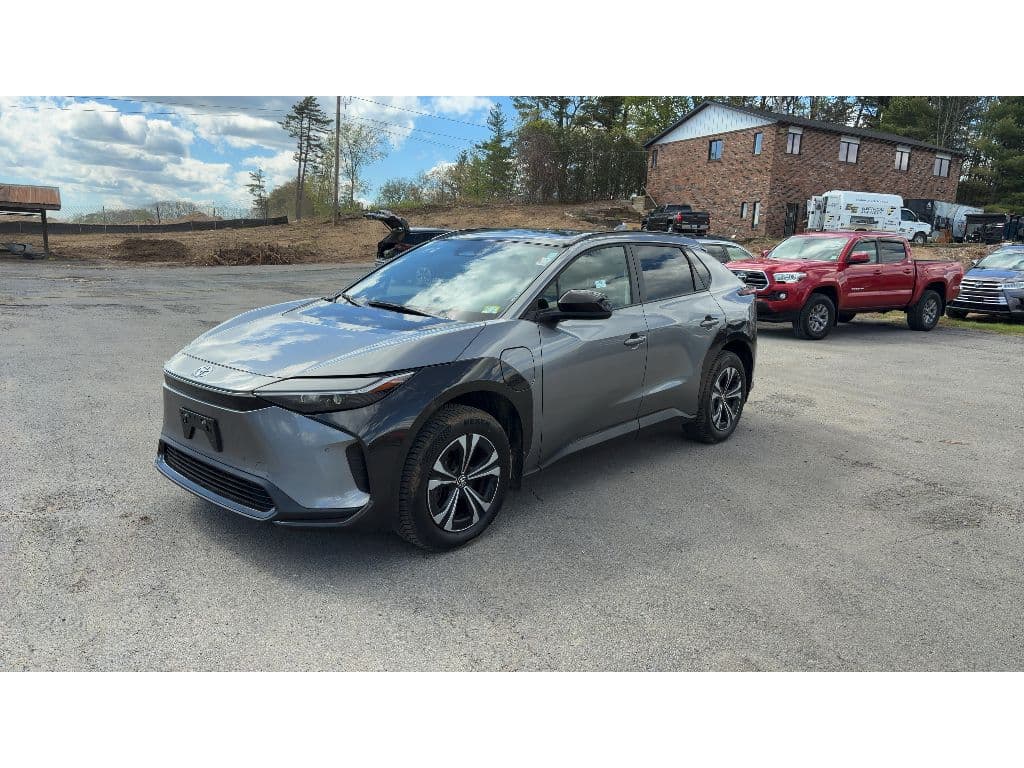
If you’re shopping for a used electric SUV or thinking about selling yours, the Toyota bZ4X depreciation rate matters a lot. Early data shows the bZ4X is dropping in value faster than most Toyotas, and even faster than some rival EVs, which can be bad news for first owners but a real opportunity if you’re buying used.
Quick take
Toyota bZ4X depreciation overview
What early data says about bZ4X depreciation
On paper, the bZ4X is a compact Toyota SUV with a familiar badge, but on the resale chart it behaves more like a typical first‑generation EV. Forecasts suggest a roughly 46–50% value drop over five years, versus the low‑to‑mid 30% range you’d expect from a comparable Toyota hybrid or gas model. In other words, the bZ4X depreciates faster than the brand’s reputation might lead you to believe, yet it’s not an outlier in today’s EV market.
How fast does the Toyota bZ4X depreciate?
Illustrative 5‑year depreciation curve for a Toyota bZ4X
Example based on a bZ4X with an original transaction price of $46,000 (including destination) and average mileage. Actual results vary by trim, region, incentives, and condition.
| Vehicle age | Approx. value | Value vs. original MSRP | Cumulative depreciation |
|---|---|---|---|
| New (MSRP paid) | $46,000 | 100% | , |
| Year 1 | $33,000–$35,000 | ≈72% | ≈24–28% |
| Year 3 | $23,000–$25,000 | ≈50–54% | ≈46–50% |
| Year 5 | $20,000–$22,000 | ≈44–48% | ≈52–56% |
Approximate dollar depreciation and residual percentages for a mainstream bZ4X trim.
These ranges line up with what major valuation guides are already signaling. One widely used depreciation tool pegs the bZ4X’s 5‑year loss around the mid‑40% mark, while consumer valuation estimates and auction data show some early 2023 models trading hands for roughly half of what they cost new after just a few years on the road.
Depreciation can vary widely
3–5 year depreciation outlook for the bZ4X
3‑year snapshot (2023 → 2026)
- Many early 2023 bZ4Xs are already selling in the low‑to‑mid $20,000s, especially ex‑lease and higher‑mileage units.
- That implies a roughly 45–55% drop from common transaction prices in the low‑to‑mid $40,000s.
- Price cuts on new 2025 bZ4Xs (about $6,000 off prior MSRPs) push used values down further, since shoppers compare against cheaper new inventory.
5‑year snapshot (forecast)
- If current trends hold, a mainstream bZ4X bought around $46,000 could settle near $20,000–$22,000 at year five.
- That’s roughly a 52–56% depreciation hit from MSRP, lousy by Toyota standards, but roughly in line with where the broader EV market has been landing.
- As Toyota tweaks pricing and as the EV used‑car market normalizes, the curve may flatten for later model years.
Because the bZ4X arrived just a few years ago, every long‑term projection is still an estimate. But between publicly visible asking prices, auction transactions, and third‑party models, the consensus is that early bZ4Xs are depreciating faster than a typical compact Toyota SUV, especially in their first three to four years.
Why the bZ4X depreciates faster than other Toyotas
Main forces pushing bZ4X values down
Some are about the car; others are about timing and the broader EV market.
Early‑EV market dynamics
Used EVs, across brands, have been hit hard by:
- Rapid improvements in range and charging tech
- A wave of off‑lease EVs hitting the market at once
- Shifting federal and state incentives that favor new purchases
Price cuts on new bZ4Xs
Toyota has already cut bZ4X pricing by roughly $6,000 for 2025 models. When a new example suddenly costs less, used prices have to fall to preserve the gap.
Mixed early perception
The bZ4X’s on‑paper specs, range, charging speed, and interior tech, arrived into a market where rivals were already a step ahead. That’s pressured demand and, by extension, resale values, even if later model‑year tweaks improve the product.
Toyota’s broader reputation for rock‑solid resale value hasn’t transferred cleanly to the bZ4X, at least not yet. Shoppers cross‑shopping the bZ4X against Hyundai, Kia, Tesla, or even Toyota’s own plug‑in hybrids see a vehicle that feels more conservative on range and charging performance, which makes them less willing to pay top dollar on the used side. Combine that with aggressive new‑vehicle discounts and price cuts, and depreciation accelerates.
The early recall asterisk
Toyota bZ4X vs. RAV4 Prime and rivals on resale value
If you want to understand the Toyota bZ4X depreciation rate, the cleanest way is to compare it with alternatives a shopper might actually be considering: Toyota’s RAV4 Prime plug‑in hybrid, plus other compact EV crossovers.
bZ4X vs. key alternatives: 5‑year depreciation snapshots
High‑level comparison based on available third‑party modeling and brand‑level EV resale trends. Percentages are approximate and can shift as more data comes in.
| Model | Powertrain | Approx. 5‑yr depreciation | Resale summary |
|---|---|---|---|
| Toyota bZ4X | Battery‑electric | ≈46–55% | Weaker than typical Toyota models; broadly in EV territory. |
| Toyota RAV4 Prime | Plug‑in hybrid | ≈35% | Retains significantly more value than bZ4X; strong demand and limited supply. |
| Hyundai Ioniq 5 | Battery‑electric | ≈45–55% | Similar or slightly better resale depending on trim, incentives, and region. |
| Kia EV6 | Battery‑electric | ≈45–55% | Comparable overall, with sportier positioning boosting certain trims. |
| Tesla Model Y | Battery‑electric | ≈40–50% | Historically stronger EV resale, though recent Tesla price cuts have added volatility. |
How the bZ4X’s forecast depreciation stacks up against close competitors.
Where the bZ4X looks good
Key factors that shape your bZ4X’s real‑world value
What moves your individual bZ4X up or down the curve
1. Battery health and fast‑charging history
Buyers (and savvy dealers) pay close attention to battery diagnostics, charging behavior, and any signs of degradation. A bZ4X with documented healthy capacity and mostly DC‑fast‑charge‑light use is worth more than a similar‑mileage example without records.
2. Mileage, age, and usage pattern
Like any vehicle, lower mileage and gentle use (fewer stop‑and‑go commutes, minimal towing) support stronger resale. The bZ4X is no exception: a clean, 25,000‑mile example will be easier to sell, and command more money, than a 70,000‑mile twin.
3. Trim, options, and region
All‑wheel drive, popular colors, and cold‑weather packages tend to help resale in snow‑belt markets. In milder climates, range‑focused front‑wheel‑drive trims can be more desirable. Regional incentives and local charging infrastructure also move the needle.
4. Market timing and incentives
If new‑car prices drop again, or a fresh wave of incentives hits new EVs, used prices can come under pressure almost overnight. Conversely, if EV tax credits tighten or supply falls, used values may stabilize or even firm up.
5. Warranty status and service history
A bZ4X still under factory battery and powertrain warranty, with clean service records, is far more attractive to second owners. Gaps in maintenance or accident history can push your individual depreciation higher than the averages suggest.
7 ways to reduce Toyota bZ4X depreciation
- Keep detailed records of every service visit, software update, and tire rotation. Organized documentation builds confidence for the next owner.
- Protect the battery: avoid frequent 0–100% charge cycles, limit extreme DC‑fast‑charging when you don’t need it, and follow Toyota’s recommendations for long‑term storage.
- Stay ahead on cosmetic upkeep, paint correction, touch‑ups, wheel repairs, and interior cleaning matter more on EVs, where buyers can’t judge engine wear.
- Choose your mileage wisely: if you have multiple vehicles, spreading miles around can keep the bZ4X in a more desirable mileage band when it’s time to sell.
- Watch new‑car incentives and price cuts. If Toyota launches a major discount or another price drop, consider moving quickly rather than waiting for the used market to reset lower.
- Time your sale or trade before a big warranty milestone (for example, before the basic warranty or major battery coverage thresholds are reached).
- Get an independent EV‑focused inspection or battery‑health report before you sell. Coming to market with verified data can help you justify a stronger asking price.
Use data to defend your price
Is a used Toyota bZ4X a good buy today?
Thanks to its depreciation profile, the bZ4X is shaping up as a strong value play on the used market, especially if your daily driving fits comfortably within its range and you’re realistic about its charging speeds compared with the latest EVs.
Pros and cons of buying a used bZ4X
Depreciation flips from problem to opportunity once you’re the second (or third) owner.
Upsides for used buyers
- Steep early depreciation means lower purchase prices relative to original MSRP.
- Toyota’s track record on long‑term reliability and support is a comfort for risk‑averse EV shoppers.
- Later model years benefit from software refinements and pricing that reflects early lessons.
What to watch out for
- Range and charging speed lag behind the newest competitors, which can affect long‑term satisfaction.
- Further price cuts on new EVs could still pressure used values down the road.
- Battery condition varies; you’ll want more than just an odometer reading before you commit.
Don’t shop on price alone
How Recharged helps you price, buy, or sell a bZ4X
Because the Toyota bZ4X is still a relatively young EV with an evolving resale story, good data matters more than ever. That’s where Recharged comes in. We focus exclusively on electric vehicles and plug‑ins, and every car we list comes with a Recharged Score Report that includes battery diagnostics, market‑correct pricing, and a transparent condition overview.
Making sense of bZ4X depreciation with Recharged
Whether you’re buying or selling, our EV‑specific tools are built for this exact moment in the market.
Recharged Score battery health diagnostics
Fair‑market pricing and instant offers
Financing, trade‑ins, and delivery
Ready to find your next EV?
Browse VehiclesWhy this matters for depreciation
Toyota bZ4X depreciation FAQs
Frequently asked questions about bZ4X depreciation
Bottom line: Who the bZ4X depreciation story favors
The Toyota bZ4X’s depreciation curve is a tale of two customers. If you bought one new at or near sticker, you’re probably seeing a faster‑than‑expected slide in its paper value, thanks to aggressive competition, new‑EV price cuts, and a still‑maturing market for used EVs. But if you’re shopping today for a used electric SUV, that same Toyota bZ4X depreciation rate becomes a feature, not a bug: you can often land a low‑mileage, well‑equipped bZ4X for little more than half of what it cost just a few years ago.
Either way, the key is to treat depreciation as something you can quantify and plan around, not a mystery. Use real‑world pricing data, battery‑health information, and transparent condition reports to decide whether a given bZ4X is priced correctly, and to make sure you’re on the right side of the curve when it’s time to buy or sell. That’s exactly the gap Recharged aims to fill for EV owners and shoppers.