If you own a Genesis GV60 and you’re watching used EV prices bounce around, the obvious question is: when is the best time to sell a Genesis GV60 so you don’t leave thousands on the table? The answer isn’t a single date on the calendar, it’s a mix of model-year timing, mileage, battery warranty, and where we are in the EV market cycle.
In one sentence
How timing really affects your Genesis GV60 resale value
All cars depreciate, but early EVs, especially luxury crossovers like the GV60, have seen front‑loaded depreciation. Third‑party valuation tools show that recent GV60 model years can lose a large share of their MSRP in the first few years, then the curve flattens out. That means the timing question is really about avoiding the steep part of the curve on the front end and not holding the vehicle so long that it becomes outdated on the back end.
What the early GV60 depreciation curve looks like
So instead of chasing the absolute last dollar, think in terms of bands: too early (you pay the new‑car premium), too late (your GV60 looks old and out of warranty), and the “efficient middle” where buyers still see it as modern, with strong range and warranty coverage, but priced well below new.
Rule of thumb
Model years, facelifts and market cycles for the GV60
Genesis launched the GV60 in the U.S. for the 2023 model year, and it shares the E‑GMP platform with the Hyundai Ioniq 5 and Kia EV6. That gives it solid fundamentals, but the EV segment is evolving quickly. Facelifts, battery updates and new competitors all affect when your specific GV60 looks most attractive to buyers.
1. Watch for major updates and facelifts
Genesis has already begun refreshing its small EV SUVs in other markets with larger batteries, updated lighting and new infotainment screens. When a significant facelift or range bump arrives in the U.S., it can pull used prices for pre‑facelift cars down a notch.
- Listing right before a big update becomes common knowledge tends to support stronger pricing.
- Listing right after can still work, but you’ll need to price more aggressively and lean on options, condition and battery health.
2. Competitive launches in the same segment
The GV60 competes with compact luxury EV SUVs like the Tesla Model Y, Mercedes EQB/EQC, Volvo XC40 Recharge and others. New launches or major price cuts in that set can temporarily drag values.
- If a major competitor cuts prices, expect more price‑sensitive shoppers to cross‑shop your GV60.
- In those windows, battery health reports, clean history and warranty coverage help you stand out even if sticker prices are under pressure.
Don’t obsess over exact model‑year change dates
Mileage and usage milestones to sell before
Even in an EV, mileage remains one of the simplest proxies for wear and tear. With the GV60, buyers are still learning what 60,000‑mile and 80,000‑mile cars look like, so they fall back on gas‑car habits: they strongly prefer examples with lower odometer readings for the same model year.
GV60 mileage bands and what they signal to buyers
These are broad psychological bands U.S. EV shoppers tend to use when filtering listings.
| Mileage band | Perception | Impact on timing |
|---|---|---|
| Under 20,000 miles | “Basically new” for age, especially 1–2 years old | You’re paying a lot of depreciation to get here, only sell this early if your needs changed. |
| 20,000–40,000 miles | Sweet spot for 2–4‑year‑old GV60s | Strong balance of price and remaining life; great time to list. |
| 40,000–60,000 miles | Normal for 4–6 years of use | Still attractive if condition is excellent and maintenance is documented. |
| 60,000–80,000 miles | High usage for EV luxury buyers | Expect more negotiation and closer scrutiny of battery health and service history. |
| 80,000+ miles | High‑mileage EV territory | Buyers narrow to value‑oriented shoppers; timing matters less than pricing and transparency. |
Whenever possible, list your Genesis GV60 right before you cross into the next visible mileage band.
Easy optimization
Battery warranty, battery health and when buyers pay a premium
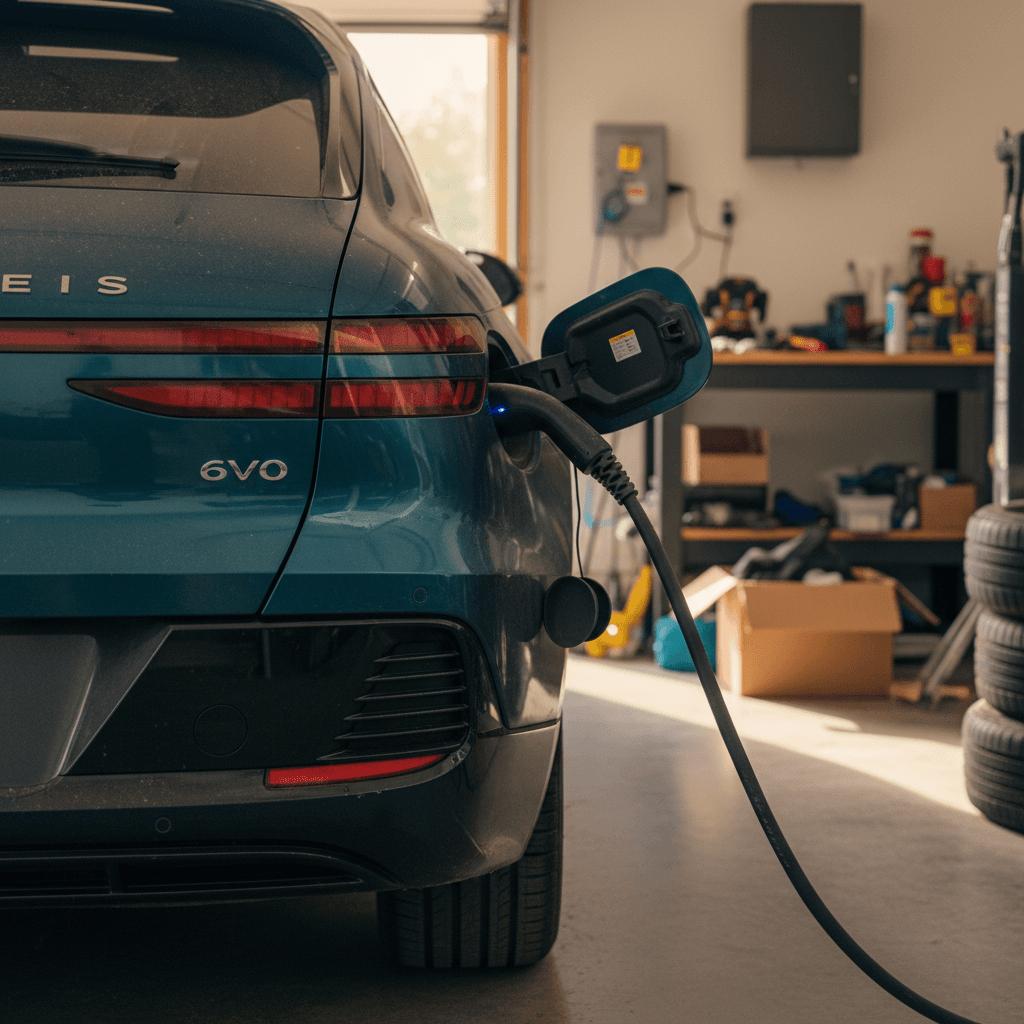
For many used‑EV shoppers, the biggest unknown is the pack: How healthy is the battery, and how long is it protected? The GV60’s long high‑voltage battery warranty is a selling asset, but only if you time your sale while there’s still a meaningful chunk left.
- Genesis backs EV batteries for up to roughly 8–10 years and 100,000+ miles in many markets (exact terms vary by region and model year; always verify your specific coverage).
- Early U.S. GV60 buyers often still have most of that battery warranty in front of them in 2026–2028, which is a major comfort factor for second owners.
- Even beyond the paper warranty, measured battery health (how much capacity remains versus new) is becoming a central part of used EV pricing.
Warranty as a timing anchor
This is where Recharged’s Recharged Score battery health diagnostics shift the equation. Instead of telling a buyer to “trust the warranty,” you can point to an independent report that shows how your GV60’s pack is actually performing. That combination, remaining warranty + verified health, is exactly what the most cautious buyers will pay extra for.
Seasonality, incentives and broader EV market swings
Unlike pickup trucks or convertibles, EVs don’t have extreme seasonal swings, but there are still better and worse months to list a Genesis GV60 in the U.S. On top of that, federal and state incentives, interest‑rate moves and new‑car discounting can all nudge used prices up or down.
How calendar timing influences your GV60 sale
These patterns aren’t absolute, but they’re worth keeping in mind.
Early spring (Feb–Apr)
Tax‑refund season plus longer days usually lift car shopping overall.
- More buyers in the market for **road‑trip‑ready EVs**.
- Good time to list if you’re targeting a quick sale.
Late summer (Aug–Sep)
New‑model‑year launches and dealer clear‑outs on new EVs can pressure used prices.
- List **before** big advertised discounts hit if you can.
- Otherwise, lean on **better equipment and battery reports** to justify price.
Late fall & holidays
Enthusiast and value buyers are still looking, but foot traffic drops.
- You may need to be **more flexible on price**.
- Useful if you’re not in a rush and can wait for the right buyer.
Incentives and interest rates matter
Leasing vs. owning: how it changes the “best time to sell”
Your exit options look very different if your GV60 is leased versus financed or owned outright. The “best time to sell” might simply be “when you can actually capture the equity.”
If you’re leasing a GV60
- Watch your **buyout price** versus current retail values. In some cases, early EV leases have turned into unexpected equity; in others, market softness means there’s no spread.
- If market prices for used GV60s are **well above** your residual, you may be able to buy out the lease and resell the vehicle for a profit or roll that equity into your next EV.
- If used prices are at or below residual, your optimal move is usually just to **turn it in at lease end** and walk away.
If you own or are financing
- You control the timing. The sweet spot is usually **after the steep first‑year depreciation** but **before big mileage and warranty cliffs**.
- Aim to sell when your **loan balance is below realistic private‑party value**, so you’re not writing a big check at payoff.
- If interest rates fall and demand for used EVs ticks up, that’s a window to capture a better price.
How Recharged can help on leases
Pricing strategy when you list your Genesis GV60
Once you’re in that 3–6‑year, sub‑60,000‑mile sweet spot with good warranty coverage, timing becomes less about the exact month and more about how you position and price the car. The GV60 is still a niche, design‑forward luxury EV; buyers need to understand why yours is worth your asking price compared with more common options like a Model Y.
Smart pricing checklist for your GV60
1. Start with real‑world transaction data
Look up recent GV60 sales, ideally same trim, similar mileage and options. Use that as a foundation, not just optimistic list prices on classifieds.
2. Adjust for trim and options
Performance trims, dual‑motor AWD, larger wheel packages and advanced driver‑assist bundles can justify more than a generic “GV60” price, especially if they’re rare in your area.
3. Price into the search filters
Many shoppers filter by round numbers (e.g., $35,000, $40,000). Pricing just under a key cutoff often yields more visibility without much sacrifice.
4. Make battery health and warranty part of the value story
If you have a recent battery‑health report or Recharged Score, mention it up front. Buyers will assign more value to a GV60 that comes with transparent data.
5. Decide your minimum acceptable number
Before listing, be honest about the lowest figure that makes sense for you after payoff or taxes. It’s easier to negotiate confidently when you’ve done that math up front.
Anchor your price, but leave room
Where to sell: trade‑in, private party or EV specialist
Timing isn’t just about the calendar; it’s also about the channel you choose to sell through. Each path values a Genesis GV60 a bit differently, and your ideal timing may shift depending on whether you prioritize speed, simplicity or top‑of‑market pricing.
Comparing your options for selling a Genesis GV60
The same GV60 can have different values depending on how, and where, you sell it.
Traditional dealer trade‑in
- Fast and convenient, especially when buying something else.
- Most dealers still price EV risk conservatively, especially on **niche luxury EVs**.
- Best if timing and convenience matter more than absolute top dollar.
Private‑party sale
- Potentially the **highest price**, particularly for well‑optioned, low‑mileage GV60s.
- Requires handling ads, test drives, financing and paperwork yourself.
- Market timing matters more; you’re exposed to swings in buyer demand.
EV specialist or marketplace (like Recharged)
- More EV‑savvy pricing that accounts for battery health and remaining warranty.
- Tools like the Recharged Score make your GV60’s condition legible to buyers.
- Often a good balance of fair market value, expert support and nationwide demand.
How Recharged evaluates and sells Genesis GV60s
Genesis built the GV60 to feel like a technology flagship, and that shows up in the details buyers care about: fast charging, over‑the‑air updates, and an upscale interior. Recharged is set up to surface those details so serious EV shoppers actually see the value you’ve been enjoying.
- Every vehicle on Recharged comes with a Recharged Score Report that includes verified battery health, pricing vs. the current market, and a transparent condition summary.
- Our EV‑specialist team can help you decide whether to take an instant offer, consign your GV60, or use it as a trade‑in toward another used EV.
- Because Recharged sells nationwide with digital retailing and delivery, your buyer pool isn’t limited to your zip code, helpful for a distinctive model like the GV60.
Using Recharged to time your exit
FAQ: Best time to sell a Genesis GV60
Frequently asked questions about selling a Genesis GV60
Bottom line: the best time to sell a Genesis GV60
There’s no single magic month to sell a Genesis GV60, but there is a clear pattern. The best time is after the initial new‑car hit has passed, yet before high mileage, feature creep and expiring battery coverage turn it into “old news.” For most owners, that means selling in years 3–6, below about 60,000 miles, with a healthy slice of battery warranty and a clean battery‑health report.
If you’re somewhere near that window now, consider getting a data‑backed valuation and battery diagnostic instead of guessing. Recharged can help you understand exactly how your GV60 stacks up against the used‑EV market, and whether it makes more sense to cash out today, consign for maximum exposure, or trade into another EV that better fits your current life.