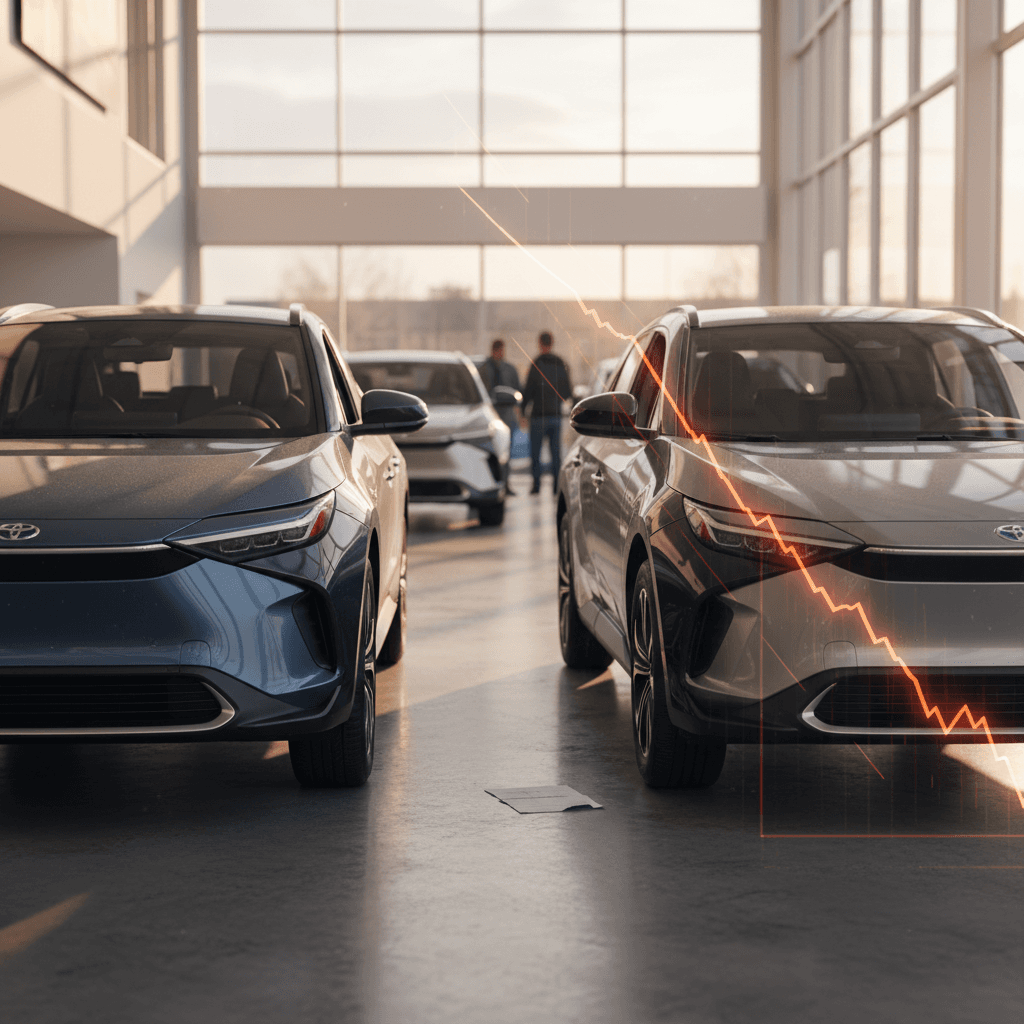
If you’re looking up the Toyota bZ4X depreciation rate in 2026, you’ve probably noticed something surprising: this is one of the rare Toyotas that doesn’t hold its value like a rock. The good news is that once you understand how and why it’s depreciating, you can decide whether 2026 is the right moment to buy a used bZ4X at a discount, or cut your losses and sell while demand is still solid.
Key context
Toyota bZ4X depreciation in 2026: quick overview
Toyota bZ4X depreciation snapshot for 2026
In plain English, the bZ4X is losing value faster than a RAV4 Hybrid, but not falling off a cliff the way some early EVs did. If you bought new in 2023–2024, you’ve likely absorbed the steepest part of the curve already. If you’re shopping used in 2026, that same curve is working in your favor.
How fast is the Toyota bZ4X losing value?
Different valuation tools use different assumptions, but they’re all telling a similar story: the bZ4X sheds a lot of value in its first few years and then levels off.
- Consumer‑facing guides show some 3‑year‑old bZ4X examples trading at around half of their original MSRP, depending on miles and equipment.
- Depreciation tools put the bZ4X near the bottom of the pack for value retention among compact SUVs, electric or otherwise.
- Auction and listing data for recent model years cluster many average‑mileage bZ4X examples in the low‑ to mid‑$20,000s by year three.
For context, Toyota’s own lineup usually depreciates more gently, think mid‑30% loss after five years for a strong seller like a RAV4 Hybrid. The bZ4X behaves more like a typical first‑wave EV: big hit early, then a slower slide.
Don’t fixate on one number
3–5 year Toyota bZ4X depreciation forecast
Because the first U.S. bZ4X models arrived for 2023, 2026 is the first year we’re seeing true 3‑year results. Looking forward from here, most data points suggest the following pattern for a typical, well‑kept bZ4X used as a daily driver (about 12,000–15,000 miles per year):
Typical bZ4X depreciation curve (bought new, average use)
Actual numbers vary, but the curve looks similar for most owners.
Year 1–2: steep drop
Incentives, price cuts, and rapid EV tech changes combine to hit early owners the hardest.
- Expect roughly 25–35% loss from MSRP in the first 24 months.
- Lease deals and tax credits can mask this on paper but the market still bakes it in.
Year 3–4: leveling out
By around the 3‑year mark, where early bZ4X models sit in 2026, values often hover at ~45–55% below original MSRP.
From here, the annual dollar loss usually shrinks as pricing finds a steady used‑market range.
Year 5: battery warranty still active
By year five, we expect total loss around the mid‑40% range for many bZ4X examples.
Critically, the battery is still under long factory coverage, which supports used‑buyer confidence.
Battery health matters more than ever
Toyota bZ4X vs other electric SUVs on depreciation
The best way to understand the bZ4X’s 2026 depreciation rate is to compare it with other mainstream electric SUVs that shoppers cross‑shop: Tesla Model Y, Hyundai Ioniq 5 and Kia EV6, for example.
How the bZ4X stacks up on depreciation
Approximate 5‑year depreciation expectations in 2026 for popular electric SUVs, assuming similar mileage and condition.
| Model | Segment | Estimated 5‑year depreciation | Value‑retention story |
|---|---|---|---|
| Toyota bZ4X | Compact electric SUV | ~45–50% loss | Faster drop than typical Toyotas, but in line with many first‑gen EVs. |
| Tesla Model Y | Compact electric SUV | ~40–45% loss | Still one of the stronger EVs for resale, though price cuts have hurt older examples. |
| Hyundai Ioniq 5 | Compact electric SUV | ~38–45% loss | Modern platform, strong demand and fast charging support relatively solid values. |
| Kia EV6 | Compact electric SUV | ~40–48% loss | Similar story to Ioniq 5; incentive‑heavy regions may see deeper early‑year drops. |
| Chevrolet Bolt EUV (discontinued) | Subcompact electric SUV | ~55–65% loss | Older tech and end of production push prices down despite solid real‑world performance. |
These are directional comparisons, not official guarantees. Regional markets and incentives can shift the real numbers.
The big takeaway: the bZ4X is not the worst EV on the market for depreciation, but it’s also not in the top tier. Tesla and the newer Korean EVs tend to keep their value a bit better, while some discontinued or niche models lose more.
Why the bZ4X depreciates faster than most Toyotas
If you know Toyota only from Camrys and 4Runners that run forever, the bZ4X’s resale curve can feel shocking. Several forces are working together here:
- First‑generation product: Shoppers often wait for the second or third generation before they fully trust a new EV platform, keeping used‑market demand in check.
- Rapid EV tech improvements: Range, charging speed and driver‑assist features are improving so quickly that a 3‑year‑old EV can feel older than a 3‑year‑old gas SUV.
- Price cuts and incentives: Generous lease cash, tax credits, and later MSRP cuts on new bZ4X models lowered the ceiling for used prices.
- Brand EV reputation still forming: Toyota’s bulletproof reputation in hybrids hasn’t fully transferred to its EVs yet, so used buyers negotiate harder.
- Plenty of alternatives: Shoppers considering a used bZ4X can also pick from Model Y, Ioniq 5, EV6, Mustang Mach‑E and more, all competing on price.
Early owner pain, later owner opportunity
What this depreciation means if you own a bZ4X
For current owners, the real question isn’t, “Has my bZ4X lost value?”, it’s “What should I do about it in 2026?” Your answer depends on how long you plan to keep the vehicle and how you bought it.
If you financed or paid cash
- Already past the worst drop: If you bought in 2023 or 2024, odds are you’ve taken most of the steep early‑year hit already.
- Consider keeping 5–7+ years: Spreading purchase cost over more years is usually smarter than selling into a soft market.
- Watch your equity: If your loan balance is close to or above market value, selling may lock in a loss you don’t need to take yet.
If you leased
- Residual is the key: Compare your lease buyout price with real‑world retail listings for similar bZ4X models in your area.
- Below‑market buyout can be a win: If the buyout is thousands under current market value, buying and later reselling can put money back in your pocket.
- Over‑market residual? Hand back the keys and walk away; the bank eats the depreciation, not you.
Use real offers, not just book values
Is 2026 a good time to buy a used Toyota bZ4X?
For many shoppers, yes, 2026 is an excellent time to buy a used bZ4X, especially if you’re value‑focused and comfortable with the range and charging performance it offers.
Pros and cons of buying a used bZ4X in 2026
Depreciation cuts both ways. Here’s how it looks from the buyer’s side.
Why it’s a smart buy
- Heavy early‑year depreciation is already priced in, so you’re not the one absorbing that big initial drop.
- Battery and powertrain coverage from Toyota is still in force on 2023–2025 models, reducing long‑term risk.
- Toyota build quality and familiarity make it easy to live with, especially if you’re coming from another Toyota.
- Competitive used pricing versus similar‑age Model Y, Ioniq 5 or EV6 examples.
What to watch for
- Range and charging performance aren’t class‑leading, so road‑trippers may prefer newer rivals.
- Market may stay soft, so don’t expect the bZ4X to suddenly turn into a resale superstar.
- Spec and tax‑credit history matter: two “similar” bZ4Xs can be priced very differently depending on equipment and how much incentive money is baked into the original deal.
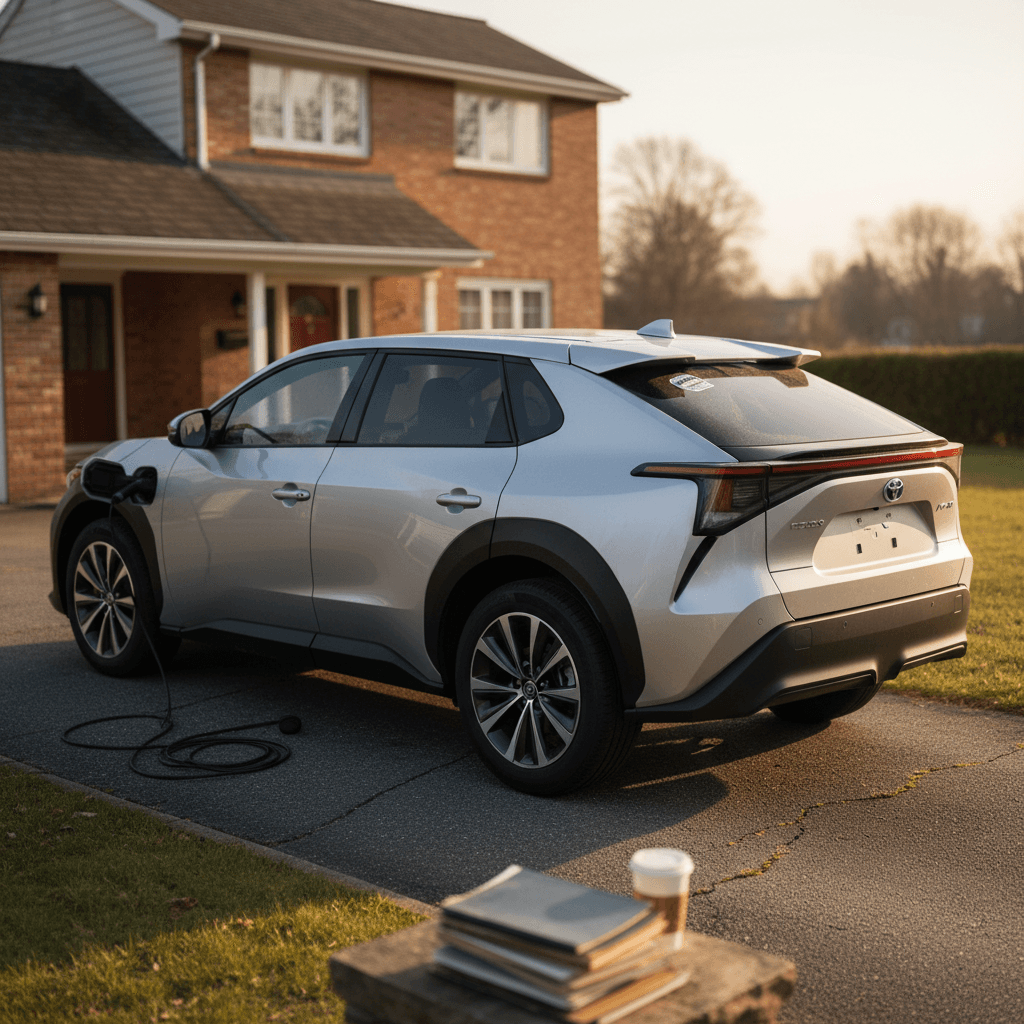
Depreciation tips: boosting (or protecting) your bZ4X’s value
You can’t change how the entire market feels about the bZ4X, but you can absolutely influence where your particular vehicle lands within that market. Whether you plan to sell in 2026 or keep it to year eight or nine, these moves help:
Practical ways to protect your bZ4X’s value
1. Keep mileage in check
Resale models are built around average driving. If you can keep annual miles closer to 10,000–12,000 instead of 18,000–20,000, your bZ4X will sit at the top of the pricing range when you sell.
2. Document all maintenance
Keep digital and paper records of every service visit. EVs don’t need oil changes, but tire rotations, cabin filters and brake service still matter to buyers, and to lenders who are setting values on used EVs.
3. Protect the battery
Follow Toyota’s charging guidance, avoid constant DC fast‑charging when you don’t need it, and store the car in moderate temperatures when possible. Healthy real‑world range is one of the first things serious buyers notice on a test drive.
4. Fix cosmetic issues early
Door dings, curb‑rashed wheels and cracked glass are value killers. Taking care of them before sale is usually cheaper than the discount buyers will demand if they have to fix them.
5. Time your sale or purchase
Watch how much new‑car inventory is on the ground. When dealers are stacked deep with new EVs and running aggressive incentives, used values soften. When inventory tightens, clean used examples gain leverage.
6. Get an independent battery health report
If you’re selling or buying through a platform like <strong>Recharged</strong>, a battery‑health diagnostic and transparent <strong>Recharged Score</strong> can justify a stronger asking price, or help you negotiate a better deal as a buyer.
How Recharged can help
Sample Toyota bZ4X depreciation table for 2026 shoppers
To make the 2026 bZ4X depreciation rate more concrete, here’s a simplified example using round numbers. This is not a quote; it’s a way to visualize roughly where values often fall for average‑mileage, clean‑title vehicles.
Illustrative Toyota bZ4X depreciation in 2026 (U.S.)
Assumes a $44,000 original MSRP on an XLE‑type trim with typical options and roughly 12,000–15,000 miles per year.
| Model year in 2026 | Vehicle age | Original MSRP (example) | Illustrative private‑party value range | Approx. depreciation from MSRP |
|---|---|---|---|---|
| 2023 bZ4X | ~3 years | $44,000 | $20,000–$24,000 | ~45–55% loss |
| 2024 bZ4X | ~2 years | $44,000 | $22,000–$26,000 | ~40–50% loss |
| 2025 bZ4X | ~1 year | $42,000 (after price cuts) | $28,000–$34,000 | ~20–35% loss |
| 2026 bZ4X | Current model | $42,000 (estimate) | Too early to tell | N/A |
Use this as a directional guide only. Real‑world prices will vary by trim, miles, incentives and region.
Why your numbers may differ
How Recharged helps you price and shop a used bZ4X
Because the Toyota bZ4X’s depreciation curve is steeper and more volatile than a typical Toyota SUV, smart shoppers lean on good data instead of gut feel. That’s exactly what Recharged was built for.
Why use Recharged for a used Toyota bZ4X?
We combine real‑time pricing, battery diagnostics and EV‑specialist guidance.
Fair‑market pricing insight
We analyze real used‑market transactions so our pricing reflects what bZ4X models are actually selling for, not just what a guide book says they’re worth.
Recharged Score battery report
Every EV on our platform gets a Recharged Score with verified battery health, so you can compare two similar‑year bZ4Xs and see which one really offers the stronger long‑term value.
Nationwide convenience
Shop and complete your purchase fully online, use trade‑in or consignment options if you’re selling, and get nationwide delivery or visit our Experience Center in Richmond, VA for in‑person help.
Ready to find your next EV?
Browse VehiclesToyota bZ4X depreciation FAQ (2026)
Frequently asked questions about Toyota bZ4X depreciation in 2026
Bottom line on Toyota bZ4X depreciation in 2026
The Toyota bZ4X depreciation rate in 2026 is undeniably steeper than long‑time Toyota owners are used to, but that doesn’t automatically make it a bad vehicle or a bad decision. For first owners who paid close to sticker, the heavy early‑year drop stings. For second or third owners, that same curve opens the door to well‑equipped, warrantied electric SUVs at prices that would have been unthinkable a few years ago.
If you already own a bZ4X, focus on the long game: keep miles reasonable, maintain it well, and consider holding at least five to seven years unless your situation changes. If you’re shopping in 2026, use the market’s over‑reaction to your advantage by targeting low‑mileage, well‑documented examples and insisting on clear battery‑health information. And if you’d rather not puzzle through all of that on your own, Recharged can walk you through the numbers, provide a Recharged Score battery report, and help you buy or sell a bZ4X with confidence instead of guesswork.