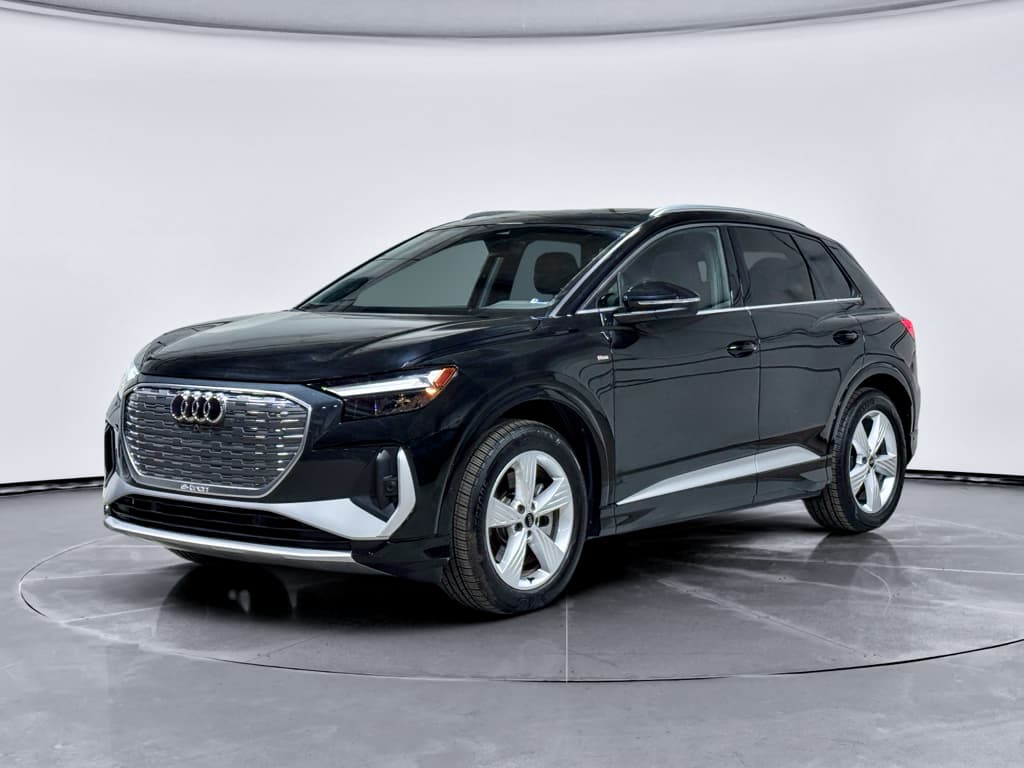
If you’re looking for tips for selling an Audi Q4 e-tron, you’re already ahead of most sellers. The Q4 is a modern, software‑defined EV riding on the VW Group’s MEB platform, and that means buyers will judge it less like a used Audi Q5 and more like a piece of tech. The way you price it, prove its battery health, and tell its story will have a bigger impact on resale than whether it has a fresh wax.
Quick snapshot
Why selling an Audi Q4 e-tron is different from a gas SUV
What traditional shoppers worry about
- Oil changes and timing belts
- Transmission and engine issues
- Fuel economy numbers on the window sticker
- Carfax accidents and number of owners
What Q4 e-tron shoppers worry about
- Battery health and remaining warranty
- Real‑world range in their climate and driving pattern
- Charging options near home and work
- Software updates, recalls, and connectivity features
You can’t change the Q4 e-tron’s basic depreciation curve, but you can change how confident a buyer feels. Your goal is to move your car from “generic used luxury EV with question marks” to “known quantity with documented battery health, clear history, and honest pricing.” The rest of this guide walks through exactly how to do that.
Audi Q4 e-tron resale at a glance
Tip 1: Understand what your Audi Q4 e-tron is worth today
Before polishing a single trim piece, you need a realistic range for what your Q4 e-tron can sell for. EV pricing moves faster than traditional used‑car books, and the Q4 is still a relatively young model, so yesterday’s values can be stale.
- Look up trade‑in, private‑party, and retail values for your exact year, trim, mileage, and ZIP code on a couple of major valuation sites.
- Search listings for similar Q4 e-tron models on used‑car marketplaces to see actual asking prices. Pay attention to battery‑health mentions and options like S line, Sportback, or dual‑motor Quattro.
- Check whether your configuration was eligible for federal or state EV incentives when new; earlier purchase incentives often translate into softer used prices because first owners started with effective discounts.
Leverage EV‑specific tools
Tip 2: Time the market for your Q4 e-tron sale
You can’t perfectly time the market, but a bit of strategy helps. EV values are sensitive to new‑car incentives, interest rates, and model‑year updates. The Q4 e-tron has already seen efficiency and range improvements over the earliest builds, and newer model years may qualify for different lease or purchase programs, which ripple into used pricing.
Smart timing moves
Watch new‑car incentives
Aggressive lease or purchase incentives on **new Q4 e-tron or sibling VW ID.4 models** tend to drag down used prices. If your local Audi dealer is advertising big discounts, be ready to price more competitively.
Avoid overlapping with tax‑credit waves
When big federal or state EV incentives reset in January or mid‑year, demand for used EVs usually softens as buyers chase new‑car credits. If you can, <strong>list a few weeks before</strong> those changes hit.
Sell before warranty cliffs
Audi’s battery warranty is typically 8 years/100,000 miles. You’ll get stronger offers when the car still has <strong>at least 2–3 years or 30,000–40,000 miles</strong> of battery coverage left.
Consider seasonality
In colder regions, range anxiety is worse in winter. Listing in spring or early summer can make test drives feel more impressive and soften concerns about efficiency.
Don’t wait just to “ride it out”
Tip 3: Gather proof of battery health and warranty coverage
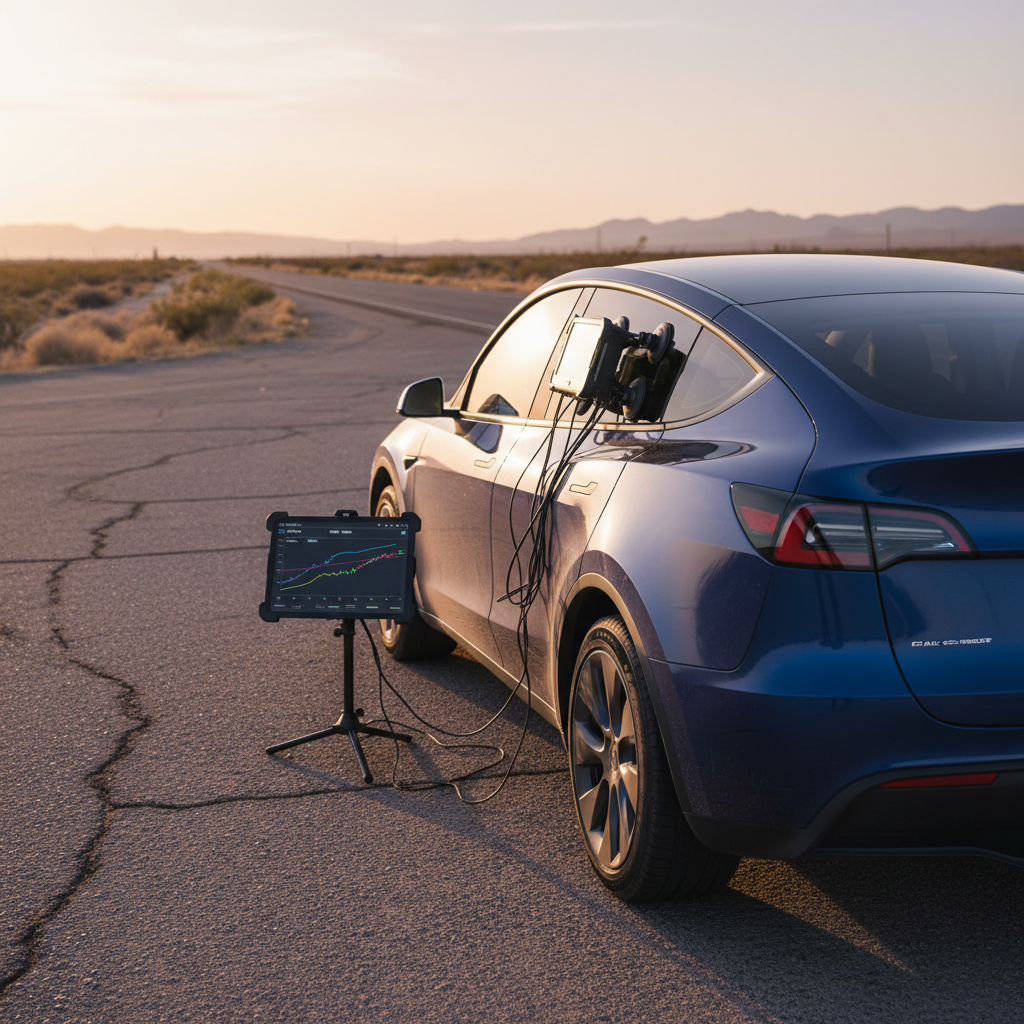
For an EV buyer, battery health is the new mileage. Two Q4 e-trons with the same odometer reading can be worth very different amounts if one shows strong range and the other looks tired.
What buyers want to see about your battery
Make it easy for them to say “yes”
Documented range
Show recent photos of your fully charged range estimate in the Virtual Cockpit and MMI screen. Note temperature and driving profile so buyers can put the number in context.
Warranty confirmation
Print or save a PDF of the warranty booklet or Audi’s online FAQ showing the 8‑year/100,000‑mile high‑voltage battery coverage and that it’s transferable.
Independent battery report
Consider a third‑party battery health test or selling via Recharged, where every Audi Q4 e-tron comes with a Recharged Score Report that quantifies pack health for buyers.
Turn the warranty into a selling point
Tip 4: Organize service history, software updates, and recalls
Traditional buyers want to see oil‑change stamps. EV shoppers want to see that you stayed on top of software, minor maintenance, and any relevant recall campaigns, especially on a platform that shares hardware with the VW ID.4.
- Log in to your myAudi account or ask your Audi dealer for a service history printout. Highlight high‑voltage or charging‑system work, even if it was just a software update.
- Check for open recalls or campaigns and get them handled before you list the car. That way you’re selling a clean slate instead of a to‑do list.
- Gather invoices for tires, brake fluid service, cabin filters, and alignment. EVs can be heavy; showing you maintained tires and suspension reassures buyers who have read too many forum horror stories.
- If you’ve installed software updates over‑the‑air, mention that the car is up‑to‑date on Audi’s latest Q4 e-tron software release for smoother charging curves and better efficiency (where applicable).
Frame it like a CPO alternative
Tip 5: Fix the cheap stuff, disclose the expensive stuff
You’ll never get every dollar back from perfectionism, especially on a fast‑depreciating luxury EV. But there are a few categories where small investments reliably pay off, and others where it’s smarter to be transparent and price accordingly.
What to fix vs. what to disclose
Spend where buyers are hypersensitive
Usually worth fixing
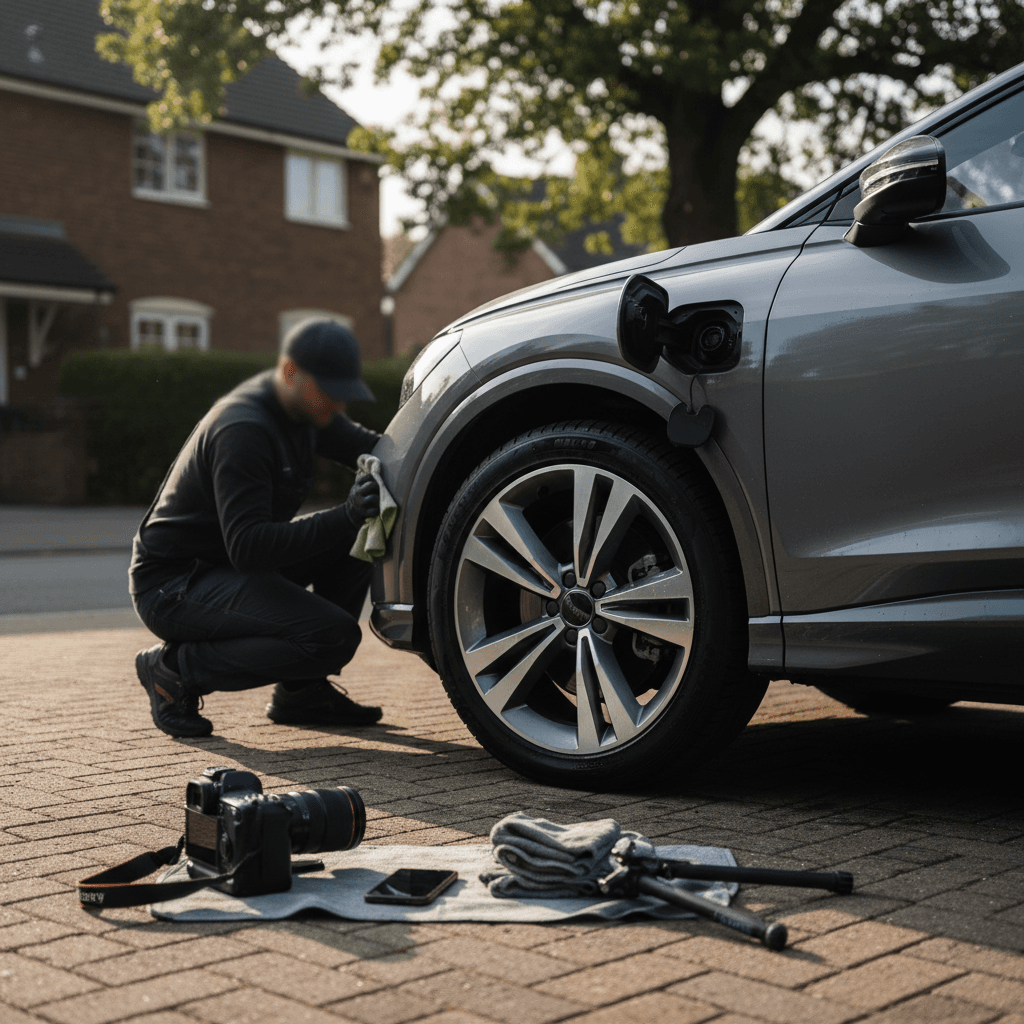
- Professional detailing of the interior and exterior
- Worn wiper blades or cheap, easy bulbs
- Minor curb rash on wheels visible in photos
- Cheap trim pieces or missing charge‑port caps
These are low‑cost items that photograph badly. Fixing them makes your Q4 feel like a premium product again.
Usually better to disclose
- Out‑of‑warranty repairs or high‑voltage component concerns
- Cosmetic bodywork that would cost thousands to make perfect
- Range issues that might point to battery degradation
Be honest, price the car to reflect the work, and let the buyer decide. Hiding serious issues just drags out the sale and invites chargebacks or legal headaches.
Tip 6: Charge and present the car the way EV buyers expect
How you physically present an EV sends strong signals about how you treated it. A Q4 e-tron sitting at 8% state of charge on arrival doesn’t inspire confidence; one thoughtfully staged tells buyers you understood how to live with an EV.
Q4 e-tron presentation checklist
Arrive with 70–90% state of charge
That level shows a healthy range estimate without topping the pack to 100% for long periods, which savvy buyers know isn’t ideal for everyday use.
Highlight both charging cables and accessories
Include photos of the <strong>portable charging cable, any Level 2 wall‑box documentation, and adapters</strong>. If something is missing, say so upfront.
Show the charging screen
Buyers love screenshots or photos of a recent DC fast‑charge session: kW rate, time to full, and station used. It shows the car charges properly at speed.
Stage like a premium Audi
Clean Virtual Cockpit, polished touchscreens, no clutter, Audi Drive Select in a sensible mode. You’re selling an Audi and an EV, not just an appliance.
Tip 7: Write a listing that actually sells the EV story
Most used‑car listings read like parts diagrams. With an EV, buyers also want a sense of how this car fits their life and how it compares to their mental benchmark, often a Tesla Model Y or Hyundai Ioniq 5.
Key details to include
- Exact trim, drive configuration, and battery (e.g., "2023 Audi Q4 50 e-tron Quattro, ~77 kWh battery")
- Remaining battery and bumper‑to‑bumper warranty with clear dates and miles
- Home charging situation (included Level 2 charger, professionally installed circuit, etc.)
- Typical range you’ve seen on your commute in summer and winter
EV‑specific phrases that convert
- "Battery health independently assessed" or "Includes Recharged Score battery report"
- "DC fast‑charged primarily on road trips; daily use on Level 2 home charging"
- "Latest Audi software update installed for improved charging curve and driver‑assist features"
Use comparison anchors
Tip 8: Choose the right place to sell your Audi Q4 e-tron
Where you sell determines how much hassle you trade for money. With an Audi Q4 e-tron, the choice is less about “online vs. offline” and more about whether the buyer or platform actually understands EVs.
Options for selling an Audi Q4 e-tron
Compare the main paths most Q4 e-tron sellers consider.
| Option | Pros | Cons | Best for |
|---|---|---|---|
| Traditional dealer trade‑in | Fast, simple payoff; no strangers; can stack with new‑car incentives | Often weak on EV valuation; little credit for battery health or charging accessories | Owners prioritizing convenience or already buying another Audi |
| Private‑party sale | Highest potential price; you control the story and screening | Time‑consuming; you become the EV educator; handling test drives and payment risk | Experienced sellers and EV‑savvy markets with high demand |
| Generic online car‑buying sites | Easy instant offers; pick‑up at your door | Algorithms may treat Q4 like a gas SUV; little room to showcase battery health | Sellers who want quick liquidity and are OK with mid‑pack pricing |
| EV‑focused marketplace (like Recharged) | Battery health is measured and surfaced; pricing tuned to EV market; expert‑guided sale, trade‑in, or consignment; nationwide EV‑interested audience | Requires a bit more setup than a simple trade‑in | Sellers who want strong value without managing a full private sale |
You’re balancing speed, price, and how much EV expertise lives on the other side of the transaction.
How Recharged fits in
Tip 9: Set your price and negotiation strategy
Once you know the market range and selling channel, you need a pricing plan that leaves room to move without scaring away smart shoppers who can see dozens of Q4 listings with a tap.
Pricing playbook for your Q4 e-tron
Anchor to condition and battery documentation
If you’ve invested in a <strong>battery health report, fresh tires, and complete records</strong>, price in the top third of the market range for similar cars. If you’re light on documentation, expect to live near the middle or lower end.
Use odd pricing bands
Instead of listing at a round $40,000, consider $39,4xx or $38,9xx to show you’ve thought about the market. For higher‑mileage or earlier‑build Q4s, small psychological differences matter.
Decide your walk‑away points
Before you list, write down: your dream price, your realistic target, and your absolute floor after time on the market. Stick to those numbers so you’re not negotiating against yourself in the moment.
Respond with data, not defensiveness
When buyers push on price, point to battery health documentation, warranty remaining, recent maintenance, and comparable listings, instead of just saying “that’s what it’s worth.”
Tip 10: Run safe, effective test drives for an EV
Test drives for an EV are part sales pitch, part tutorial. Many shoppers coming from gas cars are nervous about one‑pedal driving, regen, and public charging. Your job is to make the Q4 feel intuitive, not alien.
Before the drive
- Verify the buyer’s driver’s license and insurance and meet in a public, well‑lit place.
- Have the car at 60–80% charge so they see a healthy range number on the dash.
- Quickly walk through the basic controls: shifter, regen settings, Drive Select, and the main infotainment screens.
During the drive
- Start in a quiet neighborhood so they can feel instant torque and smoothness without stress.
- Show how regen works and how the car coasts vs. slows when they lift off the pedal.
- If practical, stop by a nearby DC fast charger to demonstrate plug‑in, session start, and charge‑rate behavior.
Protect yourself
Tip 11: Get your paperwork and payoff details right
The paperwork for an Audi Q4 e-tron isn’t fundamentally different from a gas car, but EV‑specific incentives and tax credits can create confusion. Buyers sometimes assume they can retroactively claim credits on a used car; you’ll want to be clear on what is and isn’t available.
- If you have a loan, request a recent 10‑day payoff from your lender so you know exactly what must be cleared for the title to release.
- Gather your original purchase or lease paperwork so you can accurately answer questions about prior incentives, options packages, and warranty start dates.
- Clarify in your listing that federal clean‑vehicle tax credits generally apply to new EVs only, though some states and utilities offer used‑EV rebates the buyer may pursue on their own.
- Prepare a simple bill of sale that spells out included charging equipment, extra wheels/tires, and any transferable service contracts or Audi Care packages.
Tip 12: Decide between trade-in, private sale, and Recharged
Not every seller wants to become a part‑time used‑car dealer. The right path depends on your risk tolerance, time, and how much of the pricing upside you want to capture from your Q4 e-tron’s EV‑specific strengths.
Which path fits your situation?
Match your priorities to the right selling channel
You value time most
If you want the fastest, lowest‑friction path, a trade‑in at an Audi dealer or an instant‑offer service is hard to beat. You’ll probably leave money on the table but gain speed.
You’ll trade effort for money
Listing privately and handling test drives can unlock the highest price, especially if you have pristine records and battery documentation. Just budget time for screening and paperwork.
You want EV‑savvy buyers
Using an EV‑focused platform like Recharged gives you nationwide reach, expert help, and buyers who already understand things like battery health and charging curves, without you doing all the heavy lifting.
FAQ: Selling an Audi Q4 e-tron
Bottom line: Treat battery health like other sellers treat mileage
Selling an Audi Q4 e-tron isn’t about polishing chrome and quoting highway mpg. It’s about proving that the car’s battery, software, and charging behavior are healthy and predictable, then pricing it realistically in a fast‑moving EV market. If you document range, surface the remaining warranty, fix the cheap stuff, and choose a selling channel that understands EVs, you’ll stand out from the sea of generic listings.
Whether you trade in to keep things simple, list privately for maximum upside, or let Recharged handle the heavy lifting with a Recharged Score and EV‑specialist support, the same principles apply. Treat your Q4 e-tron like the piece of high‑value technology it is, not just another used SUV, and you’ll give buyers the confidence they need to pay you what it’s actually worth.