Thinking about switching from a gas car to an electric car is exciting, but it also raises a lot of questions. Before you take the plunge, there are a few crucial things to know before switching to an electric car, from how you’ll charge to how far you can really go in winter, what maintenance looks like, and whether a new or used EV fits your budget best.
Who this guide is for
Before you switch to an electric car
At a high level, owning an EV is simpler than owning a gas car: fewer moving parts, no oil changes, and most of your "refueling" happens while you sleep. The trade‑offs are different, not necessarily worse. To decide if an EV fits your life, you need to understand charging, range, total cost of ownership, and battery health, and how each of those looks for your specific driving patterns and home setup.
EV life at a glance (typical U.S. owner, 2025–2026)
1. How EV charging actually works
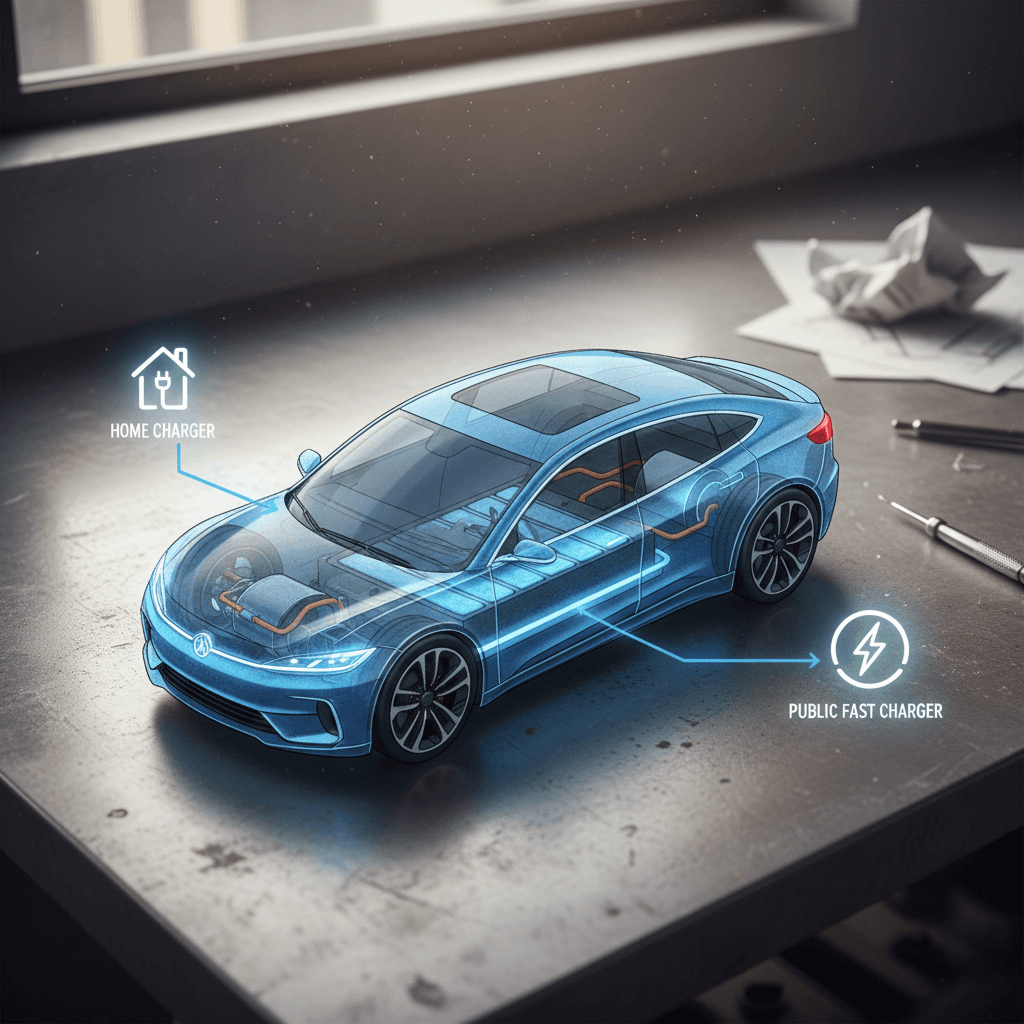
EV charging sounds more complicated than it is. In practice, you plug in, set a charge limit, and walk away. The main thing to learn is that there are different charging levels with very different speeds, and they’re used for different jobs, daily charging versus road trips.
Charging levels explained: Level 1, Level 2, DC fast
Charging levels at a glance
Approximate charging speeds for a typical modern EV with a 60–80 kWh battery.
| Charging type | Typical power | Common location | Approx. miles of range per hour* | Best use |
|---|---|---|---|---|
| Level 1 (120V) | 1–2 kW | Standard wall outlet at home | 3–5 mi/hr | Light daily driving, backup option |
| Level 2 (240V) | 7–11 kW (up to ~19 kW) | Home wallbox, workplace, public "Level 2" stations | 15–40 mi/hr | Primary daily charging |
| DC fast charging | 50–350 kW | Highway corridors, select urban sites | 150–1,000+ mi/hr (when battery is low) | Road trips, occasional fast top‑ups |
Actual speeds depend on your car’s onboard charger, battery size, and temperature, but this table shows realistic ballpark numbers.
Think of it like your phone
You don’t need to memorize kW numbers, but you do need to match your daily miles and living situation to the charging you can realistically access. That’s the first big question to answer before you switch.
2. Can you realistically charge at home?
Home charging is the single biggest quality‑of‑life upgrade when you move to an EV. If you can park off‑street and plug in at home, you’ll rarely think about charging. If you can’t, your EV will still work, but you’ll plan around public or workplace chargers much more actively.
Detached home / dedicated parking
- Best case: You can add a 240V circuit and a Level 2 wallbox in a garage or driveway.
- Backup: If your daily driving is light (under ~30 miles), a regular 120V outlet may be enough.
- Upfront cost: Budget for the charger plus electrician work; many utilities offer rebates.
Apartment, condo, or street parking
- Ask first: See if your building already has shared Level 2 chargers or plans to add them.
- Alternatives: Rely on workplace charging, nearby public Level 2, or fast chargers.
- Reality check: If you can’t plug in where you sleep or work, expect more time and planning around charging stops.
Don’t assume you can add a 240V outlet easily
If you’re not sure whether home charging is feasible, use your utility’s online tools and talk to your landlord or HOA. In some cases, it might be smarter to wait, or to prioritize a building with EV charging, before you fully switch to electric.
3. What range you really need (and how weather changes it)
Range anxiety is real, until you live with an EV that fits your driving. Most U.S. drivers travel under 40 miles per day, yet many fixate on 300‑mile range. The more useful question is: How many miles do you actually drive on your busiest regular days?
Range realities by use case
Match your driving pattern to the kind of EV range that makes sense.
Short urban commute
Profile: 20–40 miles/day, lots of city driving.
A 200–220 mile EV is often plenty, especially with home or workplace charging.
Suburban family life
Profile: 30–70 miles/day, errands, kids’ activities.
Target 230–280 miles EPA range for flexibility, especially in bad weather.
Frequent highway trips
Profile: Weekly 150–250 mile trips.
Look for 270+ miles of range and strong DC fast‑charging speeds, or plan for more frequent charging stops.
Weather and range
Before you buy, map a few typical and worst‑case days in Google Maps, everything from your commute to kids’ practices to weekend trips. Then compare those mileage totals to the realistic winter range of EVs you’re considering, not just the EPA number on the window sticker.
4. The true cost of owning an EV vs a gas car
Sticker price is only part of the story. Many shoppers discover that while a comparable EV might cost more up front than a gas car, total cost of ownership over several years can be lower when you factor in fuel, maintenance, and incentives, especially if you buy used.
Where EVs save you money
- Energy cost per mile: Home charging is usually much cheaper than gas on a per‑mile basis, especially if your utility offers off‑peak rates.
- Maintenance: No oil changes, spark plugs, timing belts, or exhaust systems. Brake wear is often lower thanks to regenerative braking.
- Incentives: Federal, state, utility, and local incentives can significantly reduce the net price of new and used EVs in the near term.
Where EVs can cost more
- Insurance: Premiums can be higher for some models because of repair costs and parts availability.
- Public fast charging: DC fast charging can cost as much or more than gas per mile, depending on the network and region.
- Home setup: Installing a Level 2 charger and any panel work is an upfront expense, even if it pays back over time.
Run your own numbers
If you’re open to a used EV, the economics can be even more attractive. Many lightly used electric cars have dropped sharply in price compared with new, which is a big reason Recharged focuses on making used EV ownership transparent and predictable.
5. Battery life, degradation, and why battery health matters
The high‑voltage battery is the EV’s single most expensive component. Naturally, new buyers, and especially used‑EV shoppers, worry about battery life. The encouraging news: real‑world data shows that most EV batteries lose capacity slowly when they’re well designed and properly managed. The less‑good news: it can be hard for a shopper to verify how healthy a specific car’s battery really is.
- Most modern EVs are designed to keep at least ~70% of original capacity for many years of typical use.
- Degradation is usually slow and gradual, not a sudden cliff, unless there’s a defect.
- Heat, repeated 100% charges, and frequent DC fast charging at high states of charge can accelerate wear.
- Not all manufacturer "state of health" readouts are equally transparent or consistent across brands.
Why battery health is critical when buying used
If you’re considering a used EV elsewhere, ask explicitly: How was the battery tested, and can I see a report? If the seller can’t answer plainly, build that uncertainty into the price you’re willing to pay, or walk away.
6. Public charging networks, speed, and etiquette
Even if 90% of your charging happens at home, your experience with public charging will shape how confident you feel taking longer trips. Before you switch, open PlugShare, Chargeway, or your favorite charging‑map app and drop pins on the places you actually go: work, relatives, kids’ tournaments, your favorite weekend trails.
Public charging: what to know before you rely on it
Coverage
Look for clusters of Level 2 and DC fast chargers along your regular routes, not just one lonely station in a wide area.
Speed
Check both the station’s max kW and your car’s max DC fast‑charge rate. The slower of the two will set your real charging speed.
Reliability & wait times
Read recent user check‑ins and photos. A station that’s often down, or always full, can turn a simple trip into a headache.
Basic fast‑charging etiquette
Before you buy, try running a weekend errand loop or short road trip using public chargers only (rent an EV if you don’t own one yet). That real‑world stress test will quickly tell you whether the current network in your area is something you’re comfortable relying on.
7. How driving and maintenance will feel different
EVs don’t just refuel differently, they drive differently. Many gas‑to‑EV switchers notice the instant torque first: smooth, quick acceleration with no shifting. But there are other day‑to‑day differences you’ll want to understand before you switch.
- Regenerative braking: Lifting off the accelerator slows the car and recaptures energy. One‑pedal driving can feel odd at first but quickly becomes second nature.
- Quieter cabin: Less engine noise means more wind and road noise; tire choice matters more than you might think.
- Preconditioning: You can often heat or cool the car while plugged in so you start with a comfortable cabin and a warm (or cool) battery.
- Maintenance: You’ll still need tires, brake fluid, cabin filters, and wiper blades, but no oil changes, emissions checks, or timing belts.
Good news for your local shop
If you’re test‑driving an EV, make sure to play with regenerative‑braking settings, driver‑assist systems, and one‑pedal driving modes. The right setup can transform how relaxed your commute feels.
8. Incentives, taxes, and policy timing
The policy landscape around EVs keeps evolving. Federal and state incentives can meaningfully change your timing and which models make sense, but many of these programs have income caps, price caps, or sunset dates. In other words, the rules for buying an electric car in 2026 may not look like the rules in 2028.
Key incentive questions to answer
Because incentives can change year by year, build a little urgency into your research. If you’re on the fence and a major credit is scheduled to shrink next year, that might tilt the math toward buying sooner, or toward a good used EV that’s already taken the depreciation hit.
9. New vs used EVs – and how to buy smart
The used EV market has matured quickly. In many segments, you can find low‑mileage electric cars at substantial discounts to new, which is especially appealing if you’re unsure whether EV life is right for you long term.
New vs used EVs: which fits you?
When a new EV makes sense
- You want the latest tech and longest range available.
- You qualify for strong new‑EV incentives that close the price gap.
- You plan to keep the car long enough to spread out depreciation.
When a used EV makes sense
- You want lower monthly payments and are flexible on options.
- Your driving fits the range of slightly older models.
- You can verify battery health with a trusted report, like the Recharged Score.
Used EV essentials to verify
Confirm remaining warranty coverage
Ask about both the basic warranty and the separate battery/drive unit warranty. Some brands offer 8 years or more of coverage on the high‑voltage battery, often with mileage caps.
Review a real battery‑health report
Don’t settle for a dashboard guess. Look for a third‑party or platform‑backed diagnostic that shows estimated remaining capacity and any fault codes. Every vehicle sold through Recharged includes a <strong>Recharged Score Report</strong> for this reason.
Check charging history and habits
Frequent DC fast‑charging to 100% or long stretches sitting at full charge in hot climates can accelerate battery wear. Ask how the prior owner typically charged the car.
Inspect tires and brakes
EVs are heavier and can wear tires faster, especially on performance models. Look for even tread wear and ask about previous rotations and alignments.
10. What to test on your extended EV test drive
A five‑minute spin around the block won’t tell you much about EV life. Before you switch, try to live with an electric car for at least 24–48 hours, through your real commute, parking spots, errands, and evening routine.
Extended EV test‑drive checklist
Test your real commute and parking
Drive your full commute, including any highway segments, and practice parking where you normally park at home and work. Make sure charging cables reach comfortably.
Charge from a low state of charge
Arrive home with under 30% battery, plug in, and see how much range you gain overnight on the charging you have access to (Level 1 vs Level 2).
Try public charging at least once
Use a Level 2 or DC fast charger near your normal routes. Practice starting a session with the app or card you’re likely to use long‑term.
Experiment with regen and drive modes
Toggle between drive modes and regenerative‑braking levels to find a setting that feels natural. Notice how it changes the car’s character and efficiency.
Simulate your worst day, not your best
11. Common new EV-owner mistakes to avoid
- Waiting until you’re almost empty to charge: Unlike gas cars, it’s fine, and easier, to "top off" frequently. Don’t make every charge a 0–100% sprint.
- Ignoring home‑electric upgrades: Running a long extension cord from a random outlet isn’t a long‑term plan. Get a proper circuit and outlet installed for safety.
- Relying entirely on a single DC fast‑charging network: Apps, stations, and networks can misbehave. Have at least one backup network or location along your route.
- Underestimating winter impacts: The first cold snap can be a shock. Precondition your car, keep some buffer in your battery, and assume slower DC fast‑charging in deep cold.
- Not learning the apps: Most charging networks and some automakers rely heavily on apps for starting sessions, payment, and route planning. Set these up before a big trip.
Don’t skip the learning curve
12. How Recharged can make your switch easier
If you like the idea of an EV but feel overwhelmed by the details, you don’t have to go it alone. Recharged is built specifically to make used EV ownership simple and transparent, from the first search to the day the car shows up in your driveway.
What Recharged does differently for EV shoppers
Verified battery health
Every vehicle includes a Recharged Score Report with independent battery‑health diagnostics, charging performance, and key vehicle data, so you’re not guessing about the most important component.
Expert EV guidance
Recharged’s EV specialists help you decide whether an EV fits your driving, talk through charging at your home, and compare models, not just push you to the most expensive option.
Flexible buying & selling
Digital shopping with financing, trade‑ins, instant offers or consignment, plus nationwide delivery and an in‑person Experience Center in Richmond, VA if you’d rather see cars up close.
Ready to find your next EV?
Browse VehiclesWhether you already know the exact EV you want or you’re still trying to understand how charging would work in your life, using a platform that’s built around electric vehicles, and not just adapting old gas‑car playbooks, can save you time, money, and stress.
Switching to an electric car: FAQ
Frequently asked questions about switching to an EV
Bottom line: Is switching to an EV right for you?
Switching to an electric car can make your daily driving quieter, cheaper, and more convenient, especially if you can charge at home and your regular routes are well covered by public chargers. The key things to know before switching to an electric car fall into four buckets: where and how you’ll charge, how much range you truly need (in all seasons), what your real total cost of ownership looks like, and how to verify battery health if you’re buying used.
If those pieces line up, an EV is more than just a technology upgrade, it’s a different, often better, way to own a car. When you’re ready to explore specific vehicles, platforms like Recharged can help you compare used EVs, understand each car’s battery health through the Recharged Score Report, line up financing or a trade‑in, and even deliver the car to your driveway so you can start your electric ownership story with confidence.