If you’re looking at a Tesla, or already own one, you’ve probably heard two competing stories about Tesla repair costs. On one hand, maintenance is cheap because there’s no engine or oil changes. On the other, headlines about expensive collision repairs and battery replacements make EV ownership sound terrifying. The reality in 2025 sits somewhere in the middle, and understanding that gap is the key to making a smart decision, especially if you’re shopping used.
Big picture
Why Tesla repair costs feel confusing
Part of the confusion comes from mixing up maintenance (tires, filters, wipers) with repairs (fixing something that broke or was damaged). Tesla is near the top of the industry for low long‑term maintenance and repair costs: one recent analysis of 10‑year costs found Tesla at roughly $4,000 over 10 years, versus $5,000–$9,000 for most legacy brands. But that broad average hides some very spiky individual bills, especially for collision work and out‑of‑warranty components.
What actually drives Tesla repair costs
Fewer moving parts, but more expensive parts and labor
High‑voltage components
Battery packs, inverters and drive units are engineered to last and covered by long warranties, but when they fail out of warranty they’re some of the most expensive parts on the car.
Proprietary structure & tech
Teslas use large castings and integrated electronics. This streamlines manufacturing but can increase repair complexity and the number of parts that must be replaced after a crash.
Limited repair ecosystem
Certified body shops, Tesla‑only parts and software‑locked components mean fewer options and less price competition than for mainstream gas vehicles, for now.
Tesla maintenance vs repair: what owners actually spend
Typical Tesla ownership costs (maintenance + repairs)
Look at a 2024–2025 Model 3 and you’ll see how this plays out. Third‑party ownership cost models and OEM data suggest annual routine maintenance in the $250–$500 range for the first decade. Independent cost‑to‑own calculators put 5‑year maintenance and repair totals in the low thousands of dollars, which is well below what you’d typically spend on a similarly quick BMW 3‑series or Audi A4 once you factor in oil changes, transmission service and more complex mechanicals.
Maintenance vs repair, look at both
Common Tesla repairs and typical price ranges
Most Tesla owners will never see a battery invoice, but almost everyone deals with tires and the occasional piece of glass or trim. Below is a high‑level look at common repair categories and what U.S. owners typically see in 2025 at out‑of‑warranty or insurance rates. Actual numbers vary by state, labor rate and model, but this gives you ballparks to plan around.
Typical Tesla repair cost ranges in 2025
Approximate customer‑pay figures in U.S. dollars for popular Tesla models (Model 3/Model Y). Collision and structural work skew higher on Model S/X.
| Repair type | Example job | Typical cost range | Notes |
|---|---|---|---|
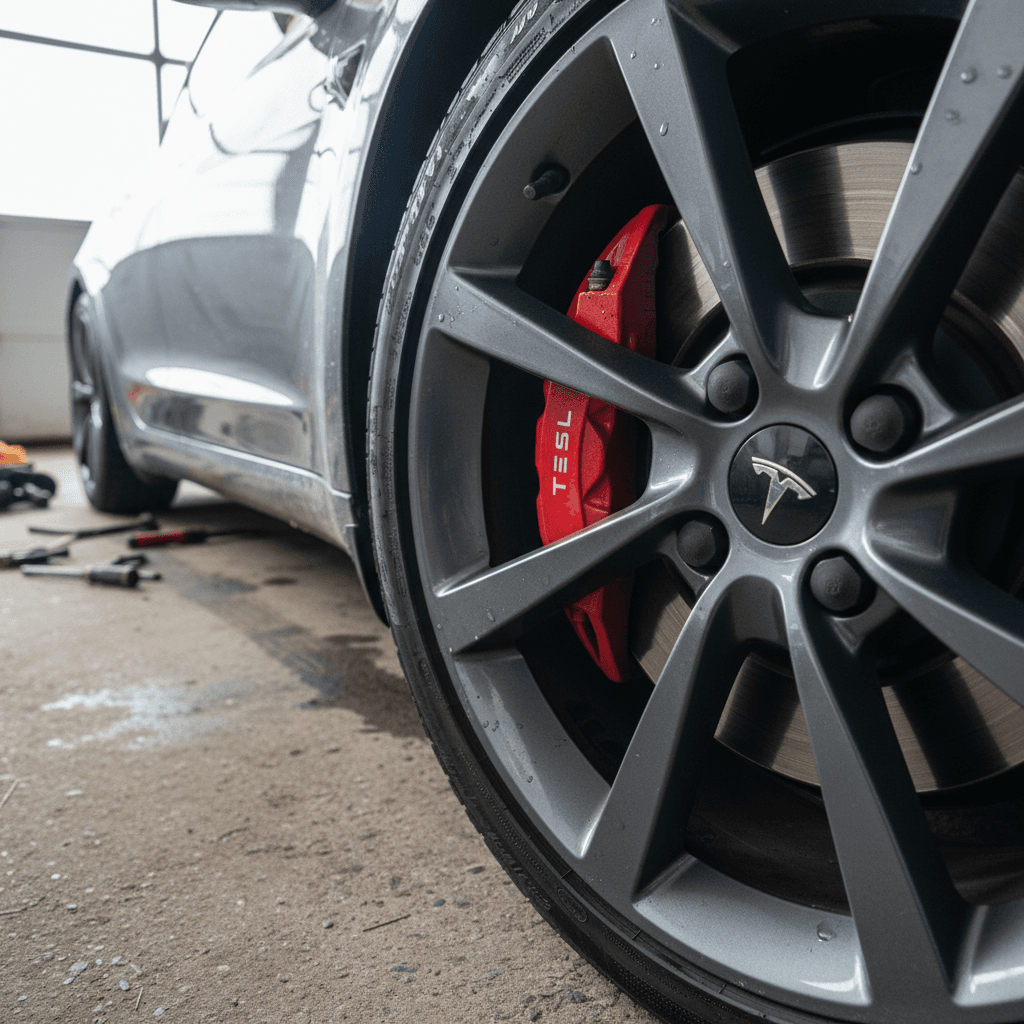
| Tires & alignment | Replace 4 tires on Model 3 with alignment | $1,000–$1,500 | High torque and weight wear tires faster than many gas sedans; plan on ~25–40k miles per set. |
| Wheel repair | Refinish or replace one 18–20" wheel | $150–$800 | Simple curb rash repair at the low end, full wheel replacement at the high end. |
| 12V/low‑voltage battery | Replace low‑voltage battery | $250–$450 | Eventually needed on most Teslas; much cheaper than the main drive battery. |
| Door handle, window, mirror | Replace mirror or window regulator | $300–$900 | Electrically‑actuated components can be pricier than on economy cars. |
| Touchscreen / MCU | Replace center display unit | $1,200–$2,500 | Costs depend on generation and whether Tesla offers a remanufactured unit. |
| Suspension components | Control arm or bushing replacement | $500–$1,500 | Pot holes, curb impacts and heavy wheels can accelerate wear. |
| Minor paint/body repair | Fix small dent and repaint one panel | $800–$2,000 | Costs depend heavily on whether a Tesla‑certified shop is required. |
| Windshield replacement | Model 3/Y front glass | $900–$1,700 | Large glass area and ADAS camera calibration drive cost. |
| Panoramic glass roof | Replace rear roof glass | $1,500–$3,000+ | Large, model‑specific glass panels are expensive to ship and install. |
Use these as planning ranges, not quotes, always get a VIN‑specific estimate.
Why ranges are so wide
Battery and drive unit: when repairs get expensive
High‑voltage components are the elephant in the room whenever people talk about Tesla repair costs. They’re also the area most covered by warranties, and the least likely to fail in the first 8–10 years if the car has been treated reasonably well.
Main battery pack
Tesla’s battery and drive unit warranties typically cover 8 years and 100,000–150,000 miles depending on model and trim. Most owners will move on from the car before facing an out‑of‑warranty pack failure. When they do happen, costs vary widely:
- Module‑level repairs: For localized defects, some shops can replace individual modules or address corrosion, often in the low thousands of dollars.
- Pack replacement: A full pack replacement on a Model 3 or Model Y through Tesla can easily run into the five‑figure range before any goodwill or warranty assistance.
Drive units and power electronics
Electric drive units have fewer moving parts than an engine + transmission, which is a big reason EVs need less mechanical work. When they do fail outside warranty, the parts themselves are costly, but failures are statistically rare compared with items like tires or even infotainment.
For a used buyer, the key is understanding how the car was driven and what shape the battery is in. That’s why Recharged includes a Recharged Score battery health report with every car, so you’re not guessing about the pack’s state when you sign.
High‑voltage safety
Bodywork, glass and collision repairs
This is the part of Tesla ownership that generates the scary anecdotes, and where the design choices that make a Tesla efficient to build can make it more expensive to fix. Large front and rear castings, extensive use of aluminum and big glass areas mean collision work often involves more parts and more calibration than on a simple steel sedan.
Key factors that drive Tesla collision repair costs
Extent and location of damage
Damage that reaches structural castings, pillars or the battery enclosure will be much more expensive than cosmetic bumper and fender work.
Certified vs non‑certified shop
Insurance companies often push you toward the cheapest option, but Tesla may require certified shops for certain repairs, especially where structural integrity or Autopilot hardware is involved.
ADAS and camera calibration
Any work that touches cameras, radar (on older cars) or alignment angles can require specialized calibration, adding several hundred dollars to the bill.
Parts availability and logistics
Shipping large body parts or glass panels and waiting for back‑ordered components can add storage fees and rental car days on top of the physical repair cost.
Hidden cost: diminished value
Why Tesla insurance is high, and how repairs play into it
Another way you "pay" for Tesla repair costs is through insurance premiums. Multiple 2024–2025 analyses show annual insurance for Model 3 and Model Y in the low‑to‑mid $3,000s for typical U.S. drivers, with wide swings based on state and driving record. Insurers price coverage based on what they expect to pay in repairs, and Teslas check a few boxes that push that number up: higher MSRPs, complex electronics, expensive glass and aluminum, and a repair ecosystem that’s still maturing.
Why premiums are higher
- Repair severity: When accidents do happen, average claim size tends to be higher than on simpler gas cars.
- Parts and labor rates: Tesla‑specific parts and calibration procedures mean fewer cheap shortcuts.
- Theft and total‑loss decisions: In some markets, borderline cases get totaled rather than repaired because of parts and labor costs.
How you can push costs down
- Compare Tesla Insurance (where available) against multiple traditional carriers using a VIN‑specific quote.
- Consider slightly older, used Teslas, purchase price is a big driver of comprehensive/collision premiums.
- Opt for higher deductibles if you have the savings buffer, and invest in good parking habits to avoid low‑speed scrapes.
Tesla repair costs vs gas cars
Zoom out from individual horror stories and the comparison looks more straightforward: Teslas, and EVs in general, tend to cost less to keep running than comparable gas cars over a long horizon, even though individual repairs can be more painful when they happen.
Where Teslas save you money, and where they don’t
Think in total cost of ownership, not just individual bills
No engine & oil system
No oil changes, timing belts, spark plugs, emissions equipment or multi‑speed transmissions. That wipes out dozens of traditional service items over 10 years.
Less brake wear
Regenerative braking means pads and rotors last much longer on Teslas than on comparable gas cars, especially if most of your driving is city traffic.
But higher‑severity repairs
When a modern EV needs collision or high‑voltage work, the individual repair can cost more and take longer than for a simple, body‑on‑frame or steel‑unibody gas vehicle.
Typical 10‑year maintenance+repair costs by brand
High‑level brand comparisons based on recent Consumer Reports and other long‑term cost studies.
| Brand type | 10‑year maintenance+repair | Notes |
|---|---|---|
| Tesla (EV) | ~$4,000 | Among the lowest of any major brand over 10 years. |
| Mainstream non‑luxury (Toyota, Honda, etc.) | $4,900–$5,800 | Hybrids tend to sit near the low end, performance models near the high end. |
| Premium German brands (BMW, Mercedes, Audi) | $9,000+ | Engine and transmission complexity plus higher parts prices drive the difference. |
| Heavy SUV/truck (gas) | $7,000+ | More mass, more complex drivetrains and 4WD systems increase wear and repair exposure. |
Comparisons are averages, individual models and driving patterns can differ substantially.
Fuel and depreciation matter too
How to reduce your Tesla repair costs
Practical ways to keep Tesla repair bills in check
1. Prioritize tires and alignment
Rotate tires every ~6,000 miles and check alignment annually or after hard impacts. This alone can save you thousands over 5–7 years in premature tire wear.
2. Protect glass and paint early
Use quality floor mats and, where it makes sense, partial paint‑protection film (PPF) on high‑chip areas. Avoid tailgating on gravel or freshly chipped roads to reduce glass damage.
3. Use the app and remote diagnostics
Many minor issues can be diagnosed, and sometimes fixed, over the air or via mobile service, saving you a trip and letting you address small problems before they snowball.
4. Shop labor, not just parts
For out‑of‑warranty and non‑structural jobs, compare estimates from Tesla Service Centers and independent EV‑specialist shops. Labor rate gaps of $30–$60/hour add up fast.
5. Choose insurance deliberately
Instead of letting a dealer or app auto‑assign insurance, get multiple quotes with the exact VIN, coverage limits and deductibles you actually need.
6. Consider extended coverage strategically
Tesla’s Extended Service Agreement or third‑party EV warranties can make sense if you expect high annual mileage and plan to keep the car beyond the factory coverage period.
Where buying used helps
Buying a used Tesla: managing repair risk
Used Teslas have become one of the most interesting corners of the EV market. Prices fell sharply in 2024 and stabilized through 2025, which means you can buy a car with modern range and features for significantly less than new. The flip side is that you’re inheriting someone else’s usage history, and with it, some uncertainty about future repair costs.
Key risks with used Teslas
- Unknown battery health: A car that’s been fast‑charged heavily or stored at 100% charge in hot climates may age faster than one that’s been treated gently.
- Past collision damage: Not all bodywork shows up cleanly on history reports, and a major structural repair can affect long‑term durability and resale value.
- Out‑of‑warranty components: As cars age out of their 4‑year basic warranty and approach the 8‑year battery/drive‑unit limit, your exposure to bigger bills rises.
How Recharged helps manage those risks
- Every car on Recharged includes a Recharged Score battery health report, based on diagnostics rather than guesses from the dash.
- We benchmark pricing against fair‑market data, so you can see how depreciation and potential repair exposure are baked into the number.
- EV‑specialist advisors can talk you through what to expect in repair costs for your specific model, mileage and use case, before you buy.
If you’re comparing a used Tesla to a new gas car, it’s worth doing a simple spreadsheet: line up purchase price, likely financing, realistic insurance quotes, electricity vs fuel, and a conservative repair budget. For many drivers, especially those who can charge at home, a well‑chosen used Tesla still comes out ahead over 5–10 years, even with today’s higher‑than‑average EV repair costs.
FAQ: Tesla repair and maintenance costs
Frequently asked questions about Tesla repair costs
Tesla repair costs in 2025 are a tale of two curves: low day‑to‑day maintenance, but the potential for pricey, specialized repairs when things go wrong. If you treat the car well, choose your insurance intentionally and, when buying used, insist on real battery and condition data, you can capture most of the upside of EV ownership without being blindsided by the downside. That’s the mindset we build Recharged around: give you the information and support you need to make a clear‑eyed decision, and back it with diagnostics, fair pricing and EV‑savvy guidance from first click to final delivery.