Search for “Tesla Model Y coolant flush cost” and you’ll see everything from $150 DIY estimates to $1,000+ dealer quotes. That’s confusing enough on a gas car; on an EV where the coolant touches your battery and high‑voltage hardware, it can be downright intimidating. Let’s cut through the noise and look at what Model Y coolant service really costs, when it’s actually needed, and how it fits into your long‑term ownership budget.
Quick takeaway
Do Tesla Model Y owners really need a coolant flush?
Start with what Tesla itself says. In the current Model Y owner’s manual and maintenance guidance, you won’t find a simple “flush coolant every 5 years” line the way you would on many gas cars. Instead, Tesla describes the battery coolant system as a factory‑filled, sealed loop and notes that coolant levels should only be checked and serviced by Tesla or a qualified shop. Routine maintenance items focus on tires, cabin filters, brake fluid checks, wipers, etc., not scheduled coolant changes.
Independent Tesla specialists increasingly recommend treating coolant as a long‑interval item on Model Y, something you might address around the 8–10 year mark or when high mileage, repairs, or diagnostics justify opening the system, rather than a fixed every‑X‑years flush. That’s very different from some legacy EVs that have explicit 5‑year coolant intervals.
Don’t top off or flush coolant yourself
How the Model Y coolant system works
More than just engine coolant
In a Tesla Model Y there’s no engine, but you still have a complex liquid cooling system. Coolant circulates through multiple loops to:
- Keep the high‑voltage battery in its optimal temperature range
- Cool inverters, motors, and on‑board chargers
- Support the heat pump / HVAC system for cabin heating and cooling
Why that matters for service
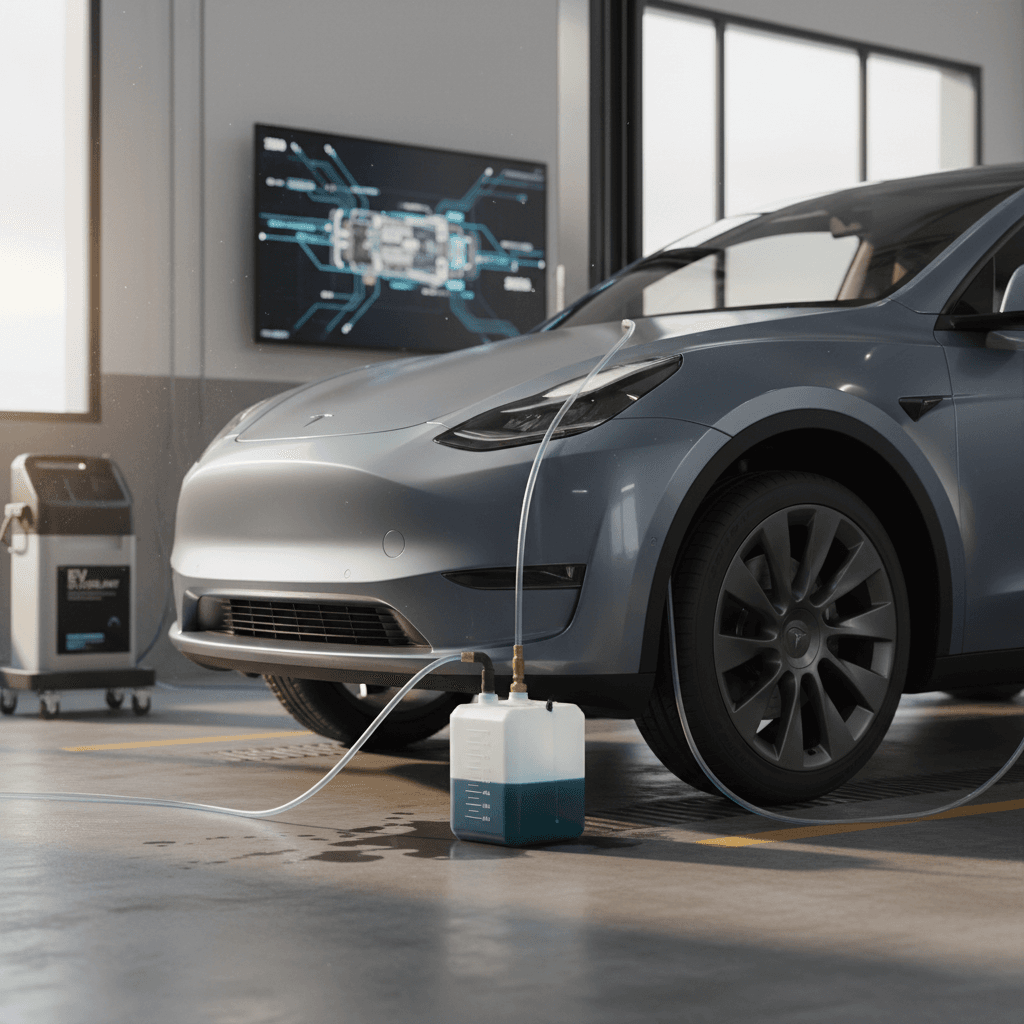
Because coolant touches so many critical systems, Tesla designed the loops to be sealed and low‑maintenance. Service procedures use scan tools and dedicated coolant carts to vacuum‑fill and bleed the system. That’s why a proper flush is labor‑intensive and more expensive than an old‑school drain‑and‑fill on a gas car.
What fluid does Tesla use?
Tesla Model Y coolant flush cost in 2026
Typical 2026 coolant service pricing for Model Y
Those ranges reflect real‑world quotes from independent Tesla specialists and EV repair shops in the U.S. as of early 2026, as well as comparisons to dealer‑level pricing on similar EV coolant jobs. A basic drain and refill of one loop on a Model 3/Y is commonly quoted in the mid‑$300s at independents and higher at Tesla, while multi‑loop flushes associated with bigger repairs can climb toward four figures.
Model Y coolant service cost breakdown
How different coolant services on a Tesla Model Y typically price out in 2026.
| Service type | Where done | Typical price range (USD) | What’s included |
|---|---|---|---|
| Coolant level check & top‑off | Tesla or mobile service | Often included / $0–$150 | Diagnostic check, leak inspection, topping off with correct coolant if needed. |
| Single‑loop drain & refill (battery/drive‑unit loop) | Independent EV shop | $250–$450 | Drain, vacuum refill, bleed procedure, basic health check. |
| Single‑loop drain & refill (battery/drive‑unit loop) | Tesla Service Center | $350–$600 | Same as above with Tesla labor rates and OEM tools. |
| Multi‑loop flush (battery + power electronics + HVAC case) | Independent EV shop | $500–$700 | Multiple loops flushed, more coolant, more labor, deeper diagnostics. |
| Multi‑loop flush tied to component replacement | Tesla Service Center | $700–$1,200+ | Coolant plus replacement of a chiller, valve block, or heat pump component; pricing dominated by hardware. |
Actual pricing will vary by region, labor rate, and whether additional diagnostics or hardware are involved.
Watch the wording on estimates
Tesla Service Center vs independent EV shop pricing
Choosing where to get Model Y coolant work done
Most owners have two realistic options when coolant service is needed.
Tesla Service Center
- Pros: Full factory procedures and software, access to service bulletins and campaigns, easy scheduling through the Tesla app.
- Cons: Higher labor rates, less flexibility on partial repairs, service language can be opaque for first‑time EV owners.
- Best for: Warranty work, open service bulletins, complex battery or high‑voltage issues.
Independent EV Specialist
- Pros: Often lower hourly rates, more willingness to repair vs replace, you can speak directly with the tech doing the job.
- Cons: Quality varies; make sure they’re truly Tesla‑trained and using OEM‑spec coolant and procedures.
- Best for: Out‑of‑warranty cars, price‑sensitive repairs, and long‑term ownership beyond 8–10 years.
How Recharged approaches coolant risk
Ready to find your next EV?
Browse VehiclesWhen (if ever) should a Model Y coolant flush be done?
Because Tesla doesn’t publish a simple mileage or time interval, think of coolant service on a Model Y as **condition‑based**, not calendar‑based. Here are the most common scenarios where a flush or drain/refill is justified:
- A repair that requires opening the cooling system (e.g., replacing a chiller, valve block, or heat pump component).
- Evidence of coolant contamination, debris, oil, or discoloration seen during diagnostics.
- Documented coolant leak that can’t be fixed with a simple fitting or O‑ring replacement.
- High‑mileage, out‑of‑warranty vehicles (8–10+ years old) where an EV‑savvy shop recommends testing coolant conductivity and changing it as preventive maintenance.
- Regional or fleet use in extreme conditions where the vehicle sees heavy DC fast charging or sustained thermal stress.
What about 5‑year recommendations you see online?
Warning signs your Model Y has a coolant problem
Pay attention to these coolant‑related red flags
1. Coolant low / OK to drive message
A common message in the Tesla app or on the screen. It usually means the system has detected a loss of coolant or a sensor reading out of range. You should schedule service promptly even if the car says it’s safe to drive short distances.
2. Repeated HVAC or climate system errors
Messages like “Cabin climate control requires service” can sometimes trace back to low or improperly filled coolant in the heat pump/HVAC loop, especially on early Model Y builds.
3. Visible puddles or stains under the car
Pinkish or greenish fluid on the ground where you park is a red flag. A quick shop visit can distinguish harmless A/C condensation from an actual coolant leak.
4. Unusual pump or fan noises
New whining or buzzing noises when charging, pre‑conditioning, or driving could point to a coolant pump or valve struggling, sometimes due to air or restriction in the system.
5. Reduced fast‑charging performance in moderate weather
If Supercharging suddenly slows in mild temperatures without a clear reason, it may be a battery‑thermal issue. Coolant problems are one of several possible causes worth checking.
6. Prior repair history involving the cooling system
If a previous owner had major HVAC, battery, or drive‑unit work and paperwork is murky, it’s worth having a specialist verify that the coolant system was refilled and bled correctly.
When to stop driving immediately
What actually happens during a Tesla coolant flush
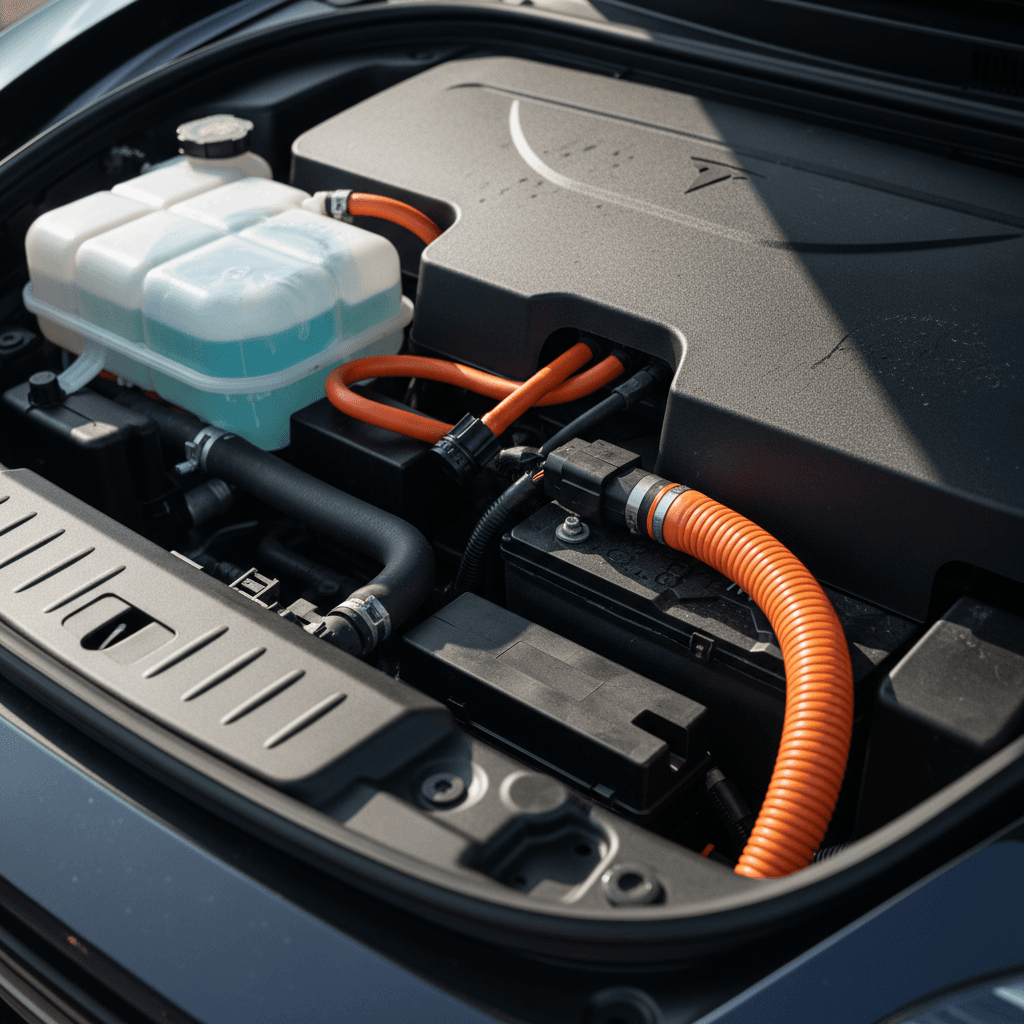
“Flush” can mean very different things depending on who’s doing the work. On a Model Y, a properly executed coolant service is closer to a surgical procedure than a quick‑lube upsell. Here’s what a professional shop typically does:
- Connect diagnostic tools and put the car into a dedicated service mode for the thermal system.
- Safely depressurize and open the targeted coolant loop, capturing old fluid for proper disposal.
- Use a vacuum‑fill machine and Tesla‑specific adapters to remove air, refill the system with fresh low‑conductivity coolant, and bleed it thoroughly.
- Run service routines to drive pumps and valves through their ranges and verify there are no trapped air pockets.
- Pressure‑test and inspect for leaks, then clear any fault codes and confirm normal operation with a short road test or charge session.
Ask exactly what’s being flushed
Where coolant service fits in your total ownership costs
It’s easy to fixate on a single line item like a potential $500 coolant job, but the right comparison is against the overall cost of owning a Model Y. Tesla itself pegs estimated annual maintenance costs for the Model Y in the mid‑hundreds of dollars, largely tires and wear items, rather than the $1,000+ many luxury gas SUVs rack up every year in oil services, belts, and cooling system work.
Over 8 years of ownership
- No engine oil changes at all.
- Likely no scheduled coolant flush, only if issues arise.
- Big‑ticket maintenance is mostly tires, occasional brake service, and suspension as miles add up.
How a flush fits in
Even if you do eventually pay $400–$700 for a coolant service at year 8–10, that’s a one‑time expense, not a recurring line. Spread over a decade, it barely moves the needle on cents‑per‑mile ownership cost compared with fuel and routine maintenance savings.
Thinking about long‑term ownership?
Coolant service considerations when buying a used Model Y
For used‑car shoppers, coolant isn’t as visible as curb rash or a cracked windshield, but it’s part of the hidden story about how a Model Y was used and cared for. A car that’s done a high volume of DC fast charging in extreme climates, or one that’s already had major HVAC or battery‑adjacent repairs, deserves closer scrutiny.
How to factor coolant into a used Model Y purchase
You won’t usually get a line item for coolant in a Carfax report, but you can still get answers.
1. Ask for thermal‑system history
2. Look for repeated climate or temp warnings
3. Get an expert pre‑purchase inspection
4. Price in potential future service
5. Compare total cost, not single bills
6. Use data, not vibes
FAQ: Tesla Model Y coolant flush cost & service
Frequently asked questions
For most Tesla Model Y owners, a full coolant flush is a rare, condition‑based event, not a recurring bill you’ll see every few years. When it does appear, it’s more complex and expensive than an old‑school radiator service, but also far less frequent. The bigger picture is that EVs like the Model Y shift costs away from constant fluids and wear items toward a handful of sophisticated systems that occasionally need expert attention. If you understand where coolant fits into that equation, and if you lean on data‑driven tools like the Recharged Score when shopping used, you can budget confidently and enjoy the benefits of electric ownership without coolant anxiety.