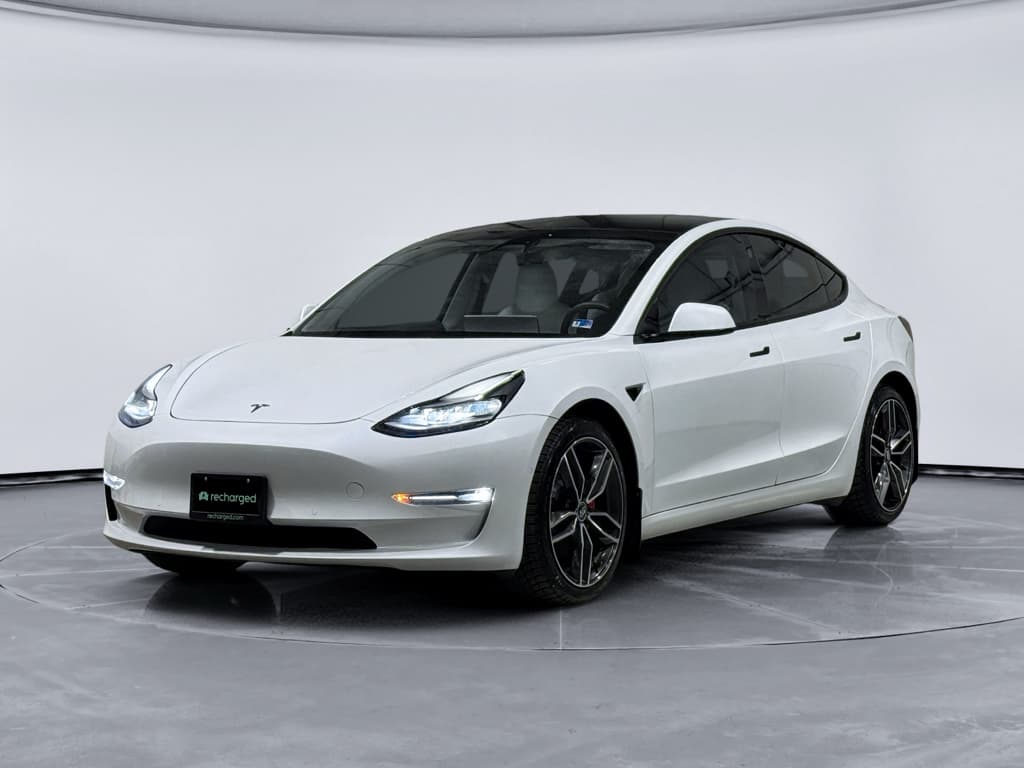
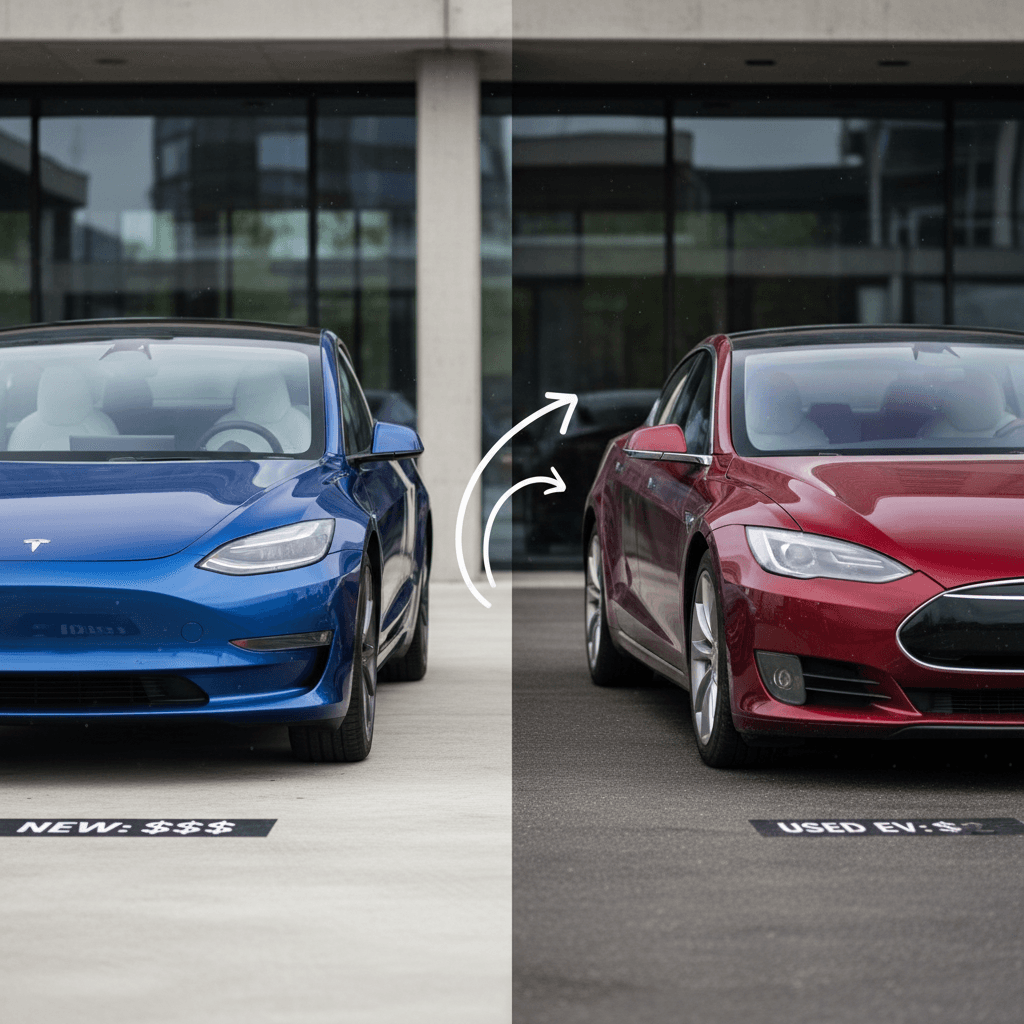
For the last few years, every time Tesla slashed prices on new cars, the used market flinched. Owners watched values drop overnight; shoppers suddenly found Model 3s and Model Ys for thousands less than they were just months before. If you’ve wondered what the *Tesla price cuts effect on the used market* really is in 2026, and whether it’s finally safe to buy a used EV, this guide is for you.
A market that moved in fast‑forward
Why Tesla price cuts matter for used EV buyers
When an automaker drops new‑car prices, used values almost always follow. With Tesla, the effect has been amplified because it dominates EV sales and adjusts prices like you and I tweak an online shopping cart. That means every Tesla price change ripples through auctions, dealer lots, and private‑party listings, and it doesn’t just affect Tesla. Competing used EVs have had to chase Tesla down the price ladder, and now, as used Tesla prices firm up again, they’re being left behind.
- Tesla sets expectations: A cheaper new Model 3 or Model Y resets what buyers think a used one is worth.
- Price cuts compress the ladder: When new prices fall, 1–3‑year‑old used Teslas take the biggest immediate hit.
- Competitors are forced to react: Used Hyundai, Kia, Ford, and VW EVs have had to discount heavily to stay interesting next to cheaper Teslas.
- Financing and incentives magnify moves: Changes to federal tax credits, and when they end, swing demand between new and used EVs.
If you bought at the peak…
How Tesla price cuts worked, and why they hammered used values
Most brands move prices once or twice a year. Tesla moved them like a tech company runs A/B tests: big cuts, quick reactions, and little warning. Starting in 2023, Tesla chopped thousands of dollars off new Model 3 and Model Y stickers, sometimes more than once in a quarter. That instantly made nearly‑new used cars look overpriced.
How hard the early price cuts hit used EVs
Layer on top of that a flood of ex‑rental Teslas from fleets like Hertz and a growing wave of off‑lease EVs, and you had the perfect conditions for a price reset. In plain English: the used EV market got ahead of itself, and Tesla’s cuts forced it back to earth fast.
Why this was good news for patient buyers
From crash to rebound: used Tesla prices 2023–2026
The story didn’t end with that big drop. By late 2025 and early 2026, the used EV landscape shifted again. The federal tax credit for used EVs expired on September 30, 2025, and demand pivoted. Instead of discount‑hungry shoppers chasing whatever EV fit under the incentive cap, buyers started hunting for the safest‑feeling bet, often, that still meant Tesla.
Used Tesla price direction after tax credits ended
How average used Tesla prices moved from September 2025 to January 2026 compared with other EVs.
| Model or Group | Avg. Price Sept 2025 | Avg. Price Jan 2026 | Change |
|---|---|---|---|
| Used Teslas overall | $30,040 | $31,329 | +4.3% |
| Tesla Model 3 | $25,061 | $25,701 | +2.6% |
| Tesla Model Y | $29,603 | $29,989 | +1.3% |
| Tesla Model S | $47,226 | $51,249 | +8.5% |
| Tesla Model X | $51,973 | $57,306 | +10.3% |
| All other used EVs (avg.) | $24,629 | $23,738 | -3.6% |
Used Tesla prices have recently firmed up while many rival EVs kept slipping.
After two years of leading prices downward, used Teslas suddenly became the stabilizing force. In the months after the credit disappeared, average used Tesla prices climbed a few percentage points while most other used EVs slipped again. The gap between Tesla and non‑Tesla used EVs, in price trajectory, is now nearly eight percentage points.
Tesla vs. other EVs: who got hit hardest?
In the first phase of this story, roughly 2023 into early 2024, Tesla was the poster child for falling used EV values. Three of its four models were among the top 10 vehicles with the biggest year‑over‑year price drops. But they weren’t alone. Early‑generation EVs with shorter range and older tech, like the Chevrolet Bolt EV and Nissan Leaf, also sank like stones.
How Tesla’s swings changed the pecking order
Different EVs felt Tesla’s price cuts in very different ways.
Models hit hardest long‑term
- Older, short‑range EVs (Leaf, first‑gen Bolt) lost the most in percentage terms. When new‑car EV prices fell, nobody wanted yesterday’s tech.
- Premium Teslas (Model S, Model X) saw five‑figure price drops from 2022 peaks but have recently bounced as new production slowed and Tesla signaled a shift away from these lines.
Models that now look like bargains
- 3‑year‑old Model 3 and Model Y often sit in a sweet spot: modern hardware, lots of inventory, and pricing similar to compact and midsize gas crossovers.
- Non‑Tesla EVs like Hyundai Kona Electric, Kia Niro EV, and VW ID.4 have kept sliding as used Teslas firmed up, widening the value gap.
Don’t assume all EVs behave like Teslas
What Tesla’s pricing strategy means if you own a Tesla
If you already own a Tesla, you’ve felt this more directly than any analyst chart can show. The rapid price cuts hurt resale in the short term, and the shift away from flagship models like the Model S and Model X has created a roller coaster for those cars in particular.
Short‑term pain
- Big paper losses if you bought new in 2021–2023 at peak prices.
- Trade‑in offers likely felt brutal in 2023–2024 as dealers protected themselves from further drops.
- Insurance companies quietly adjusted residual assumptions for Teslas, which can influence lease and payoff values.
Emerging silver linings
- Stabilizing used prices in late 2025–2026 mean the worst of the free‑fall appears behind us.
- Brand strength and charging access still make Teslas the default used EV choice for many buyers.
- If you’re trading into another EV, lower used prices across the board reduce the “payment shock” when you switch.
Where Recharged fits in if you’re selling
Ready to find your next EV?
Browse VehiclesHow to use Tesla price swings to your advantage as a buyer
As a shopper, Tesla’s past price chaos is now an opportunity. The market has largely repriced used Teslas and other EVs for the post‑incentive world, and you can step in after the dust has settled. The key is to buy the *right* used EV at the *right* point in its depreciation curve.
Three strategies savvy used‑EV shoppers are using
All built on lessons from Tesla’s price cuts.
1. Target the 3‑year “sweet spot”
2. Cross‑shop Tesla and non‑Tesla
3. Focus on out‑the‑door cost
Let the data do the hard work
Pricing scenarios: real‑world used Tesla examples
Let’s translate all this into the kinds of choices you might face scrolling listings today. Exact numbers will vary by mileage and condition, but these scenarios mirror what many buyers are seeing in early 2026.
Sample used‑market match‑ups
Illustrative comparisons of common used‑EV choices in early 2026.
| Scenario | Option A | Approx. Price | Option B | Approx. Price | What to Think About |
|---|---|---|---|---|---|
| Daily‑driver compact EV | 2023 Tesla Model 3 RWD, 35k miles | Mid‑$20,000s | 2023 Chevy Bolt EUV, 25k miles | Low‑$20,000s | Bolt may be cheaper, but the Model 3 offers stronger DC‑fast charging and brand pull. |
| Small family crossover | 2022 Tesla Model Y Long Range, 40k miles | High‑$20,000s to low‑$30,000s | 2022 VW ID.4 Pro, 30k miles | Low‑ to mid‑$20,000s | ID.4 prices have slid more, but many shoppers still gravitate to the Y’s range and network. |
| Luxury highway car | 2021 Tesla Model S Long Range, 50k miles | Low‑$50,000s | 2021 Mercedes EQE, 40k miles | High‑$40,000s | Model S values rebounded as new S production waned; EQE may look like the value play. |
These ballpark scenarios show how Tesla’s price recovery compares with continued softness in other EVs.
Remember: these are patterns, not promises
Why battery health now matters more than the last price cut
Price charts tell only half the story. Two 3‑year‑old Model Ys can sit side by side at the same asking price, but if one spent its life fast‑charging at 100% every night and the other lived on a Level 2 home charger, their real‑world range and long‑term value will be very different.
A cheap EV with a tired battery isn’t a bargain
That’s why independent battery diagnostics are becoming the new Carfax for EVs. At Recharged, every car, Tesla or otherwise, gets a Recharged Score report that measures real‑world battery health and projected range so you aren’t just buying a price point; you’re buying the confidence that the pack behind it can keep up.
Checklist: buying a used Tesla in the aftermath of price cuts
Smart steps before you sign on a used Tesla
1. Look at the model‑year story, not just the odometer
Figure out when that model took its biggest new‑car price cuts. If you’re shopping a 2022 Model 3, a lot of the pain is already in the rear‑view mirror; a very late‑2024 build may still be repricing.
2. Compare against today’s new‑car programs
Check current new‑Tesla pricing, finance rates, and any incentives. If a new Model 3 payment is close to a used one, it’s worth penciling out both.
3. Get battery health verified
Ask for a recent battery‑health report or shop where one is included, like the Recharged Score. Real‑world range matters far more than an original EPA number.
4. Study charging and software history
How often was the car DC‑fast charged? Does it have recent software updates? A car that sat with outdated software can be a red flag for neglect.
5. Check for accident and repair history
Just like any used car, structural repairs, airbag deployment, or poor‑quality bodywork can hurt both safety and future resale value.
6. Plan your exit before you buy
Think about how long you’ll keep the car and what the market might look like then. With Tesla, shorter 3–5‑year horizons tend to manage pricing volatility better than “drive it forever” plans.
FAQ: Tesla price cuts and the used market
Frequently asked questions about Tesla price cuts and used EVs
The bottom line for used EV shoppers
Tesla’s price cuts rewrote the rulebook for EV depreciation. First they pulled used values, Tesla and non‑Tesla, off their pandemic highs in a hurry. Now, with incentives shifting and supply normalizing, used Teslas are behaving more like the anchor of the market than its weak link. For you as a shopper, that means the panic phase is over and the opportunity phase is here: you can buy into EV tech at prices that finally make sense.
Your best move is to treat price as one input, not the whole story. Focus on battery health, charging fit for your life, and a realistic ownership horizon. And if you’d like someone to run the numbers with you, Recharged can help you compare options, line up EV‑friendly financing, and deliver a used Tesla, or any EV, with verified battery health right to your driveway.