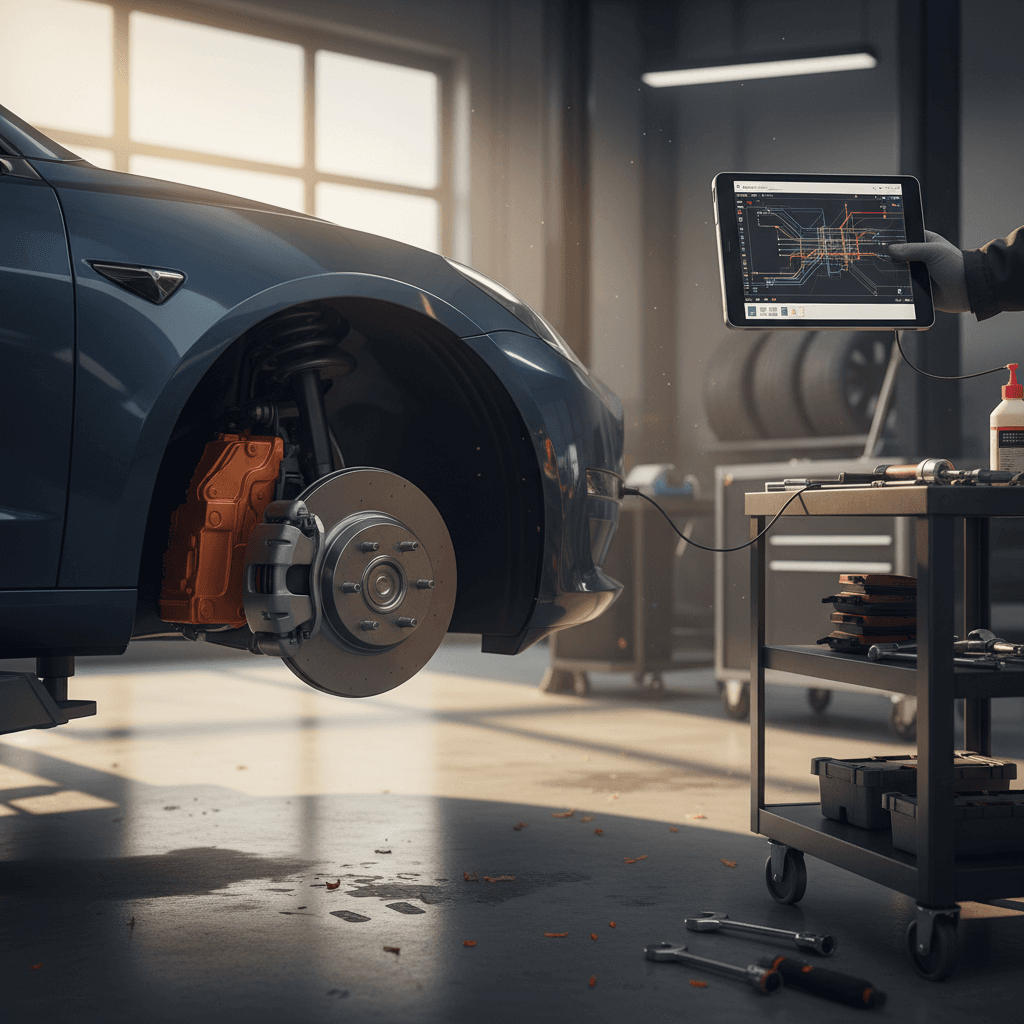
When you’re staring at a 7‑year‑old Model 3 or a high‑mileage Model S, one question quickly jumps to the top of the list: what are Tesla out-of-warranty repair costs actually like? Are we talking a few hundred a year, or the horror stories of $10,000 invoices and five‑figure battery jobs?
Short answer
Why Tesla out-of-warranty costs matter
Because Teslas are electric, you don’t have oil changes, timing belts, spark plugs, or exhaust systems to worry about. That’s a big part of why Consumer Reports calculated 10‑year maintenance and repair costs around $4,035 for Tesla, the lowest of any brand they tested. But that average includes the warranty years; once the odometer rolls past 50,000 miles and the basic coverage ends, any uncovered failure is your problem, not Tesla’s.
Tesla maintenance and repair picture at a glance
So the key question isn’t just “are Teslas cheap to maintain?” It’s how bad can the big repairs get once protection runs out, and how do you position yourself, especially if you’re buying a used Tesla, to avoid getting caught by surprise.
Tesla warranty basics, and when you’re on your own
To understand out-of-warranty risk, you first need a clear picture of what Tesla covers, and for how long. There are two major buckets: the basic (often called “bumper‑to‑bumper”) warranty and the battery/drive‑unit warranty.
Current Tesla factory warranty coverage (US, 2025 models)
This is approximate and can vary slightly by model and year, always verify against the specific vehicle’s documentation.
| Component | Typical coverage | Models |
|---|---|---|
| Basic vehicle warranty | 4 years / 50,000 miles | All current Tesla models |
| Battery & drive unit – Model 3 RWD / Y RWD | 8 years / 100,000 miles (70% capacity retention) | Model 3, Model Y |
| Battery & drive unit – Long Range / Performance | 8 years / 120,000–150,000 miles (70% capacity retention) | Model 3, Model Y, Model S, Model X |
| Rust/perforation | 12 years / unlimited miles (no paint coverage) | Most models |
Once the coverage below expires, you’re generally paying full retail for repairs unless you have third‑party protection.
Important nuance
Tesla previously sold extended service agreements on certain older models, but newer vehicles no longer have a factory extended warranty option. Instead, owners past the basic term either self‑insure, budgeting for possible repairs, or shop third‑party coverage plans.
Common Tesla out-of-warranty repairs and typical costs
Exact numbers vary by region and model, but owner invoices and independent repair data give us reasonable ballparks. Think of the figures below as typical Tesla service-center pricing in the US, not the absolute minimum you might find at a specialist shop.
Typical Tesla out-of-warranty repair costs (parts + labor)
Approximate US pricing as of late 2024–2025. Actual costs vary by model, market, and damage severity.
| Repair type | Typical cost range | Notes |
|---|---|---|
| Touchscreen / MCU replacement | $1,500 – $2,000 | Central screen failure, delamination, or unresponsive unit. |
| High‑voltage battery replacement | $10,000 – $15,000+ | Full pack; partial module repairs or refurbished packs can cost less. |
| Drive unit replacement | $5,000 – $7,000 | Covers the main motor/inverter assembly on one axle. |
| Suspension repairs | $1,000 – $2,500 | Control arms, links, and alignment, common on heavier S/X and rough roads. |
| A/C compressor or major HVAC | $900 – $1,500 | Loss of cooling, noisy compressor, or failed components. |
| Infotainment/connected electronics | $400 – $900 | Minor module replacements, antennas, or connectivity hardware. |
| Wheel alignment & minor suspension | $150 – $400 | Alignment plus small suspension or steering components. |
| Tire replacement (per tire) | $200 – $400 | EV‑rated tires, often staggered sizes on performance trims. |
Use these ranges for budgeting and comparing against extended warranty quotes or a used-car discount.
Reality check on batteries
How costs change over 10 years of Tesla ownership
If you zoom out and look at a full decade, Tesla ownership costs tend to follow a pattern: very low early on, then gradually rising as miles and age accumulate. Consumer Reports data suggests Teslas average about $580 in maintenance and repairs over the first five years and around $3,455 over years six through ten, still the lowest among all brands they studied.
Years 1–4: Under full basic warranty
- Most failures are covered, your out-of-pocket is mainly tires, cabin filters, and wiper blades.
- Software updates fix many annoyances without a shop visit.
- Collision damage is handled by your insurance, though Teslas can be pricey to fix.
Years 5–10: Where risk increases
- Basic warranty has expired; only battery/drive unit coverage remains.
- Suspension wear, A/C issues, or electronic glitches become more common.
- One or two $1,000–$3,000 repairs in this period is realistic, especially on higher-mileage cars.
Teslas vs. gas cars
Collision vs. mechanical repairs: two very different bills
When people talk about brutal Tesla repair bills, they’re often mixing two very different categories: collision damage and mechanical or electronic failures. For out-of-warranty planning, you should treat them separately.
Two buckets of Tesla repair costs
Your warranty mainly helps with mechanical/electronic failures, not accident damage.
Collision repairs
- Body and structural repairs after crashes.
- Often more expensive than comparable gas cars because of aluminum, sensors, and calibration.
- Usually handled by collision insurance (minus your deductible).
- High severity accidents may total the car outright.
Mechanical & electronic repairs
- HVAC, suspension, drive units, chargers, electronics.
- These are the costs that hit hardest once the basic warranty ends.
- Generally not covered by insurance unless caused by a covered event.
- Can often be performed by specialized independent EV shops for less than Tesla retail pricing.
Don’t rely on insurance for wear and tear
5 ways to reduce your Tesla out-of-warranty risk
You can’t eliminate repair risk, but you can dramatically tilt the odds in your favor, especially if you’re shopping for a used Tesla or your factory coverage is about to expire.
Smart moves before and after your warranty ends
1. Get a true picture of battery health
Battery replacement is the scariest line item, even if it’s unlikely. Before buying a used Tesla, or as you approach year 8, get an independent battery health report. <strong>Recharged’s Battery Health Diagnostics and Recharged Score</strong> quantify pack condition and degradation so you don’t have to guess.
2. Budget a yearly “repair fund”
Instead of fearing one big bill, plan for it. Many owners set aside $500–$800 per year once their basic warranty ends. If you don’t need it, great, but when a $1,800 suspension repair pops up, it won’t wreck your finances.
3. Use specialists, not just the Tesla Service app
Tesla’s own service centers are convenient but not always the cheapest. In many metro areas, independent EV shops can perform suspension, HVAC, and some high‑voltage work at lower labor rates and with more flexibility on parts pricing.
4. Time repairs before warranty expiration
If you’re approaching 50,000 miles or the four‑year mark, schedule a thorough inspection. Any rattles, clunks, intermittent faults, or screen issues should be documented and addressed while you’re still under coverage.
5. Consider third‑party protection strategically
Reputable third‑party extended service contracts can make sense on older, higher‑mileage Teslas, especially Model S/X with air suspension and complex electronics. Compare the total cost of the contract against realistic repair scenarios, not just worst‑case battery failures.
Buying a used Tesla? Here’s how to bake repair costs into the deal
Used Teslas can be outstanding values, but only if you treat potential out-of-warranty costs as part of the price, not as an unpleasant surprise later. That’s where a structured evaluation and transparent data beat guesswork.
1. Start with the big three risks
- Battery health: Look for state-of-charge vs. range behavior, rapid drops, or huge variation between charge sessions.
- Drive unit noise or vibration: Whines or clunks under steady acceleration can signal expensive future work.
- Suspension and steering: On a test drive, listen for clunks over bumps and feel for wandery steering or uneven tire wear.
2. Translate risk into dollars
- Use the typical cost ranges in this guide as your reference sheet.
- If a car needs $2,000 of work soon, that should be reflected in the price, just like with a gas vehicle.
- Factor in tires and any cosmetic issues that might impact resale.
How Recharged helps
Ready to find your next EV?
Browse VehiclesIf you’re trading out of an older Tesla with looming repair needs, Recharged can also provide an instant offer or consignment option, plus financing on your next EV and nationwide delivery, so you can step into a newer, lower‑risk vehicle without juggling multiple dealers.
FAQ: Tesla out-of-warranty repair costs
Frequently asked questions
Bottom line: Are Tesla out-of-warranty costs a dealbreaker?
For most drivers, Tesla out-of-warranty repair costs are manageable, not catastrophic. Over a decade, the average Tesla still costs less to maintain and repair than comparable gas cars. The catch is that the risk isn’t smooth, you’re trading small, predictable maintenance items for the possibility of a handful of larger, less predictable repairs.
If you go in with eyes open, use objective tools to assess battery health and upcoming repairs, and budget realistically, a Tesla, new or used, can still be one of the smartest long‑term ownership bets on the market. And if you’d rather not go it alone, browsing used EVs with a Recharged Score Report, financing options, and trade‑in support built in is one of the easiest ways to keep the numbers on your side.