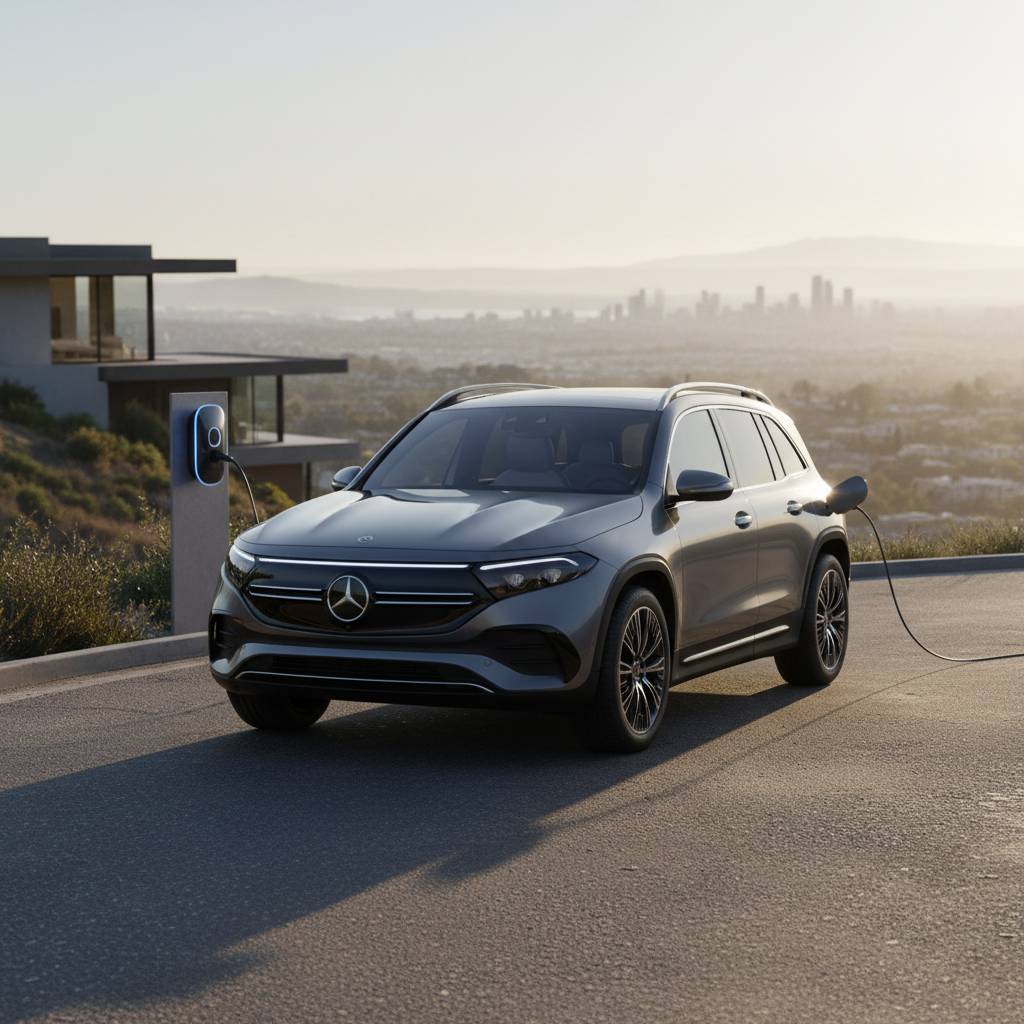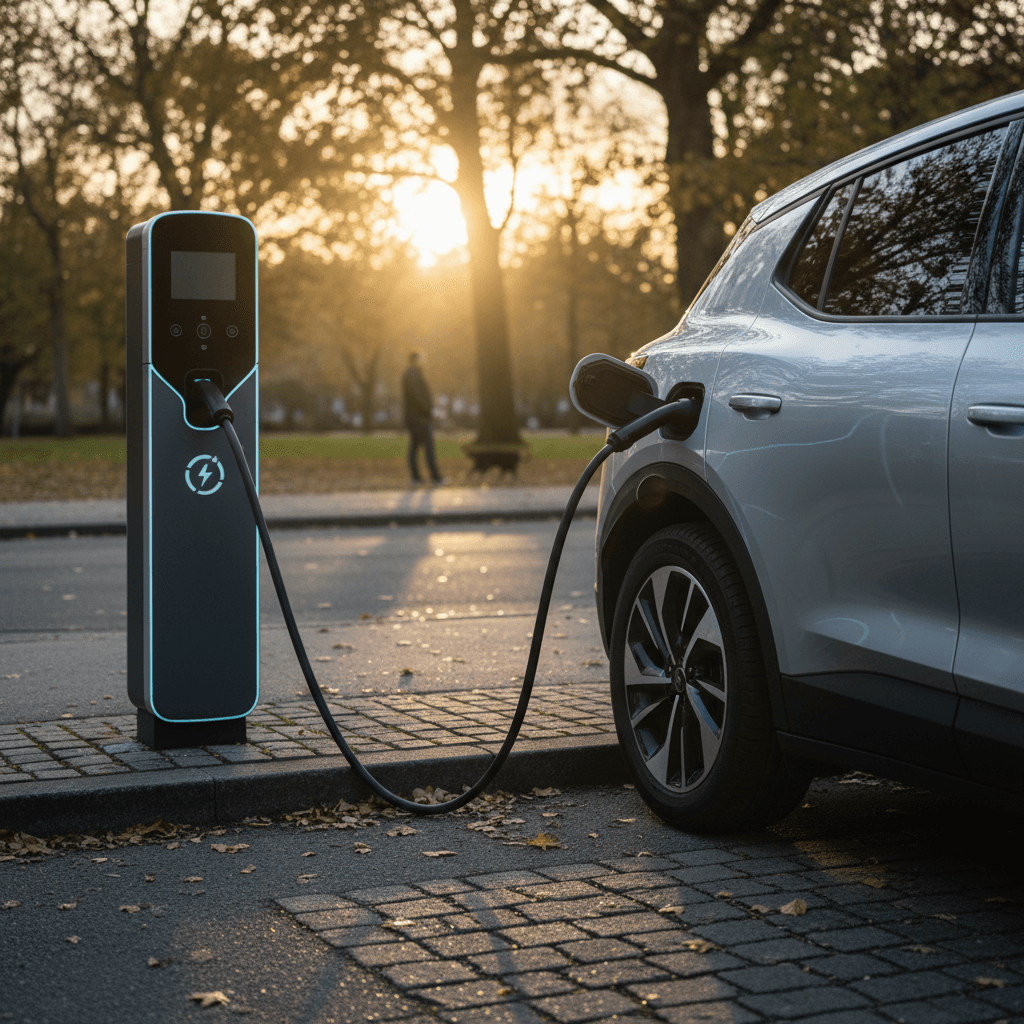
You bought an EV to skip the gas station, not to swap gas bills for charging bills. The good news: if you know where to look, you can find free EV charging often enough to make a real dent in your running costs. The bad news: free plugs can be crowded, confusing, or not quite as free as the sign suggests. This guide walks you through exactly how to find free EV charging near you, and when it’s smarter to swipe your card and move on.
Big picture
Why free EV charging matters (and its limits)
Electricity is cheaper than gasoline almost everywhere in the U.S., but the spread is getting wider depending on where and how you charge. At home on a typical residential rate, adding 100 miles might cost you just a few dollars. At a busy DC fast charger along the interstate, the same energy could be closer to what you used to spend on gasoline. Free EV charging narrows that gap even further, especially if you regularly park somewhere that offers $0 sessions.
The catch is convenience. Free chargers are usually Level 2, often capped at a few hours, and they live in places where someone wants you to linger, stores, offices, hotels, city centers. On road trips, free charging can feel like finding a twenty-dollar bill on the sidewalk, but relying on it as your only plan is how you end up spending a Saturday afternoon babysitting a charger behind a strip mall.
Free isn’t always free
Best apps to find free EV charging
If you’re wondering how to find free EV charging in practice, your phone is the answer. The trick isn’t just having an app; it’s using the right filters so you only see chargers that work for your car and your budget.
Core apps for finding free EV chargers
Use at least two, coverage and data quality vary by region
PlugShare
PlugShare is the EV driver’s Swiss Army knife. It has the largest community map of stations and excellent filters for price, connector type and power level.
- Filter explicitly for free stations
- See driver reviews and photos to verify it’s really free
- Includes some shared home chargers and private stations
ChargeHub & ChargePoint
ChargeHub and ChargePoint both let you filter by price, connector and speed, and they cover most major U.S. networks.
- Tap price filters to show $0 or low-cost options
- Route planners for long trips
- Some chargers can be started and paid right in the app
Network & retailer apps
Electrify America, EVgo, FLO, Volta-style networks and even retailers like some grocery chains have apps that call out promotions.
- Watch for $0 session or “validated” charging
- Some loyalty tiers unlock free hours
- Enable notifications for rotating promos
Use CarPlay or Android Auto
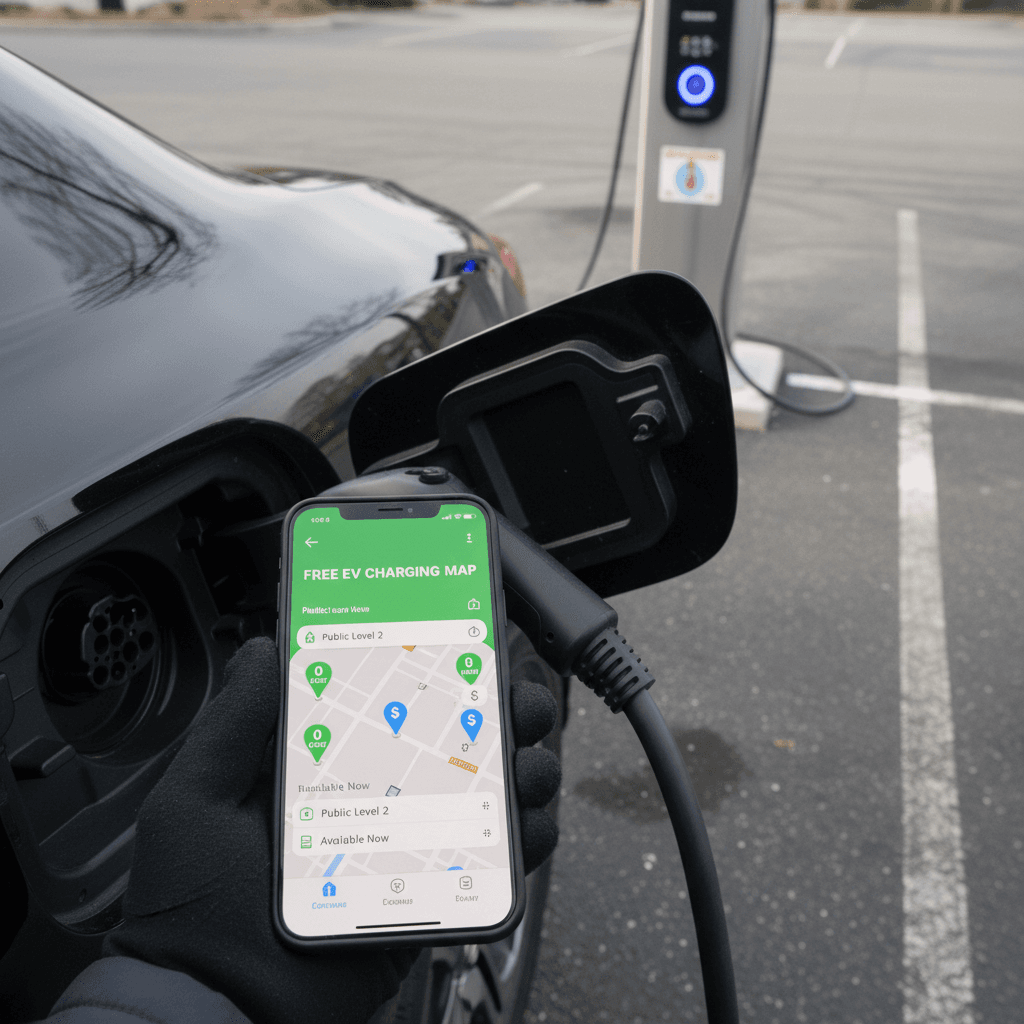
Common places to find free EV chargers
Once you’ve got the right apps installed, the map starts to look less like static and more like a pattern. Free EV charging clusters around a few familiar types of locations.
Where free EV charging usually hides
Start with these locations in your favorite charging app
Retail & grocery parking lots
Big-box retailers, outlet malls and some grocery chains treat free Level 2 charging as a customer magnet.
- Commonly 2–4 hour limits, ideal while you shop
- Often located near main entrances
- Some stations switch to paid after the first hours
Workplace charging
Employers increasingly offer chargers as a benefit, sometimes free, sometimes at a heavily discounted rate.
- Great fit if your car sits 6–8 hours a day
- Access is usually badge-gated to employees
- Ask HR or facilities about waitlists and etiquette
Hotels & resorts
Mid-range and upscale hotels love advertising free EV charging, especially along highway corridors.
- Typically Level 2, perfect for overnight charging
- Sometimes for guests only, call ahead
- Check if there’s a resort or parking fee
Municipal lots, libraries & campuses
Cities, counties and universities still use free chargers to promote clean transportation or downtown visits.
- Often in city garages, park-and-ride lots or libraries
- Time-limited to avoid squatting
- Rules can change, verify in your app first
Stack the odds in your favor
How to use app filters like a pro
Knowing that free chargers exist is one thing. Finding the ones that actually work for your connector, your schedule and your patience level is another. This is where filters in PlugShare, ChargeHub and other apps do the heavy lifting.
Dial in your filters for free charging
1. Start with your connector and network
Filter for your connector (CCS, NACS, J1772) and preferred networks first. There’s no point seeing a free CHAdeMO plug if your car can’t use it.
2. Set price to “free” or $0
Most apps let you include pricing in the filter. Toggle off paid and membership-only options so you’re looking at genuinely free or $0 stations.
3. Choose the right power level
If you’re at work all day, Level 2 is fine. If you’re squeezing in a charge on a road trip, you may prefer a discounted DC fast charger over a distant free Level 2.
4. Read the most recent reviews
Scroll the last few check-ins to see if other drivers confirm that it’s still free, functional and not ICEd or blocked.
5. Watch time limits and parking rules
Your app or the photos will usually show 2-hour limits, overnight bans or permit requirements. A $50 parking ticket ruins any savings from free electrons.
Refresh before you drive
Workplace and apartment charging: the quiet MVPs
If you can land free or cheap charging where your car sleeps or spends all day, you’ve essentially hacked EV ownership. For many drivers, workplace or apartment charging is more valuable than every retail freebie in town combined.
Workplace charging
Companies like to talk about sustainability, and installing a few Level 2 chargers in the employee lot is a visible, relatively low-cost way to do it.
- Often free or a token fee per session
- Badge access prevents public congestion
- Charging etiquette matters, move when you’re done
If your employer doesn’t offer it yet, ask HR whether EV charging is on their roadmap. Sometimes a handful of employees voicing interest is enough to move it up the list.
Apartments & condos
Multi-family housing is finally catching up. Newer buildings increasingly advertise EV-ready parking, and some include charging in the rent to stand out in listings.
- Ask whether charging is included or metered
- Look for dedicated EV spots, not just one shared plug
- Clarify guest policies if friends or family drive EVs
If your current building is a dead zone, it’s worth factoring EV charging into your next lease decision. Saving $40–$80 a month in charging can offset a slightly higher rent.
Don’t hog the free spot
Hotels, road trips, and overnight free charging
On a road trip, free EV charging turns into a kind of game. A lot of mid-scale and upscale hotels quietly include Level 2 charging as an amenity, especially in EV-heavy corridors. If you plan it right, you can roll in nearly empty, plug in overnight and leave in the morning with a full battery and a $0 charging bill.
Comparing hotel charging setups
What you’re likely to see when you search for “EV charging” in hotel listings
| Hotel type | How common is charging? | Typical cost | What to double-check |
|---|---|---|---|
| Budget / roadside | Occasional Level 2, sometimes just an outlet | Often free or small fee | Is it a real EVSE or just an outdoor plug? |
| Mid-range chain | Level 2 increasingly common at newer properties | Frequently free for guests | Number of plugs vs. rooms; first-come or reservable? |
| Upscale / resort | Multiple Level 2, sometimes valet-only | Usually bundled into high parking fees | Overnight parking cost, valet tips, guest-only rules |
Call the front desk before you book, "EV charging available" can mean anything from a proper Level 2 unit to a lone 120V outlet by the dumpster.
Route-plan around overnight charging
Utility programs, promos, and memberships
Utilities and charging networks are constantly experimenting with incentives, some offer off-peak discounts, others hand out limited-time free charging credits to get you into their ecosystem. It’s not as simple as “free forever,” but it’s real money back in your pocket.
- Utility EV programs: Many power companies offer special EV rates, off-peak discounts or rebate programs for home or public charging. Some bundle a set number of free public kWh while they pilot new infrastructure.
- Network loyalty tiers: Signing up for Electrify America, EVgo, FLO or similar networks sometimes unlocks free charging promos or birthday credits.
- Retail memberships: Warehouse clubs, grocery chains and malls occasionally include free or validated charging for premium cardholders or paid membership tiers.
- Automaker perks: New EVs sometimes come with a starter pack of free DC fast-charging sessions. Even if you bought your EV used, it’s worth checking whether any transferrable benefits remain on the car.
Watch the clock on “unlimited” promos
When paying for charging actually saves you money
There’s a certain thrill to watching the price readout stay stubbornly at $0. But driving 25 minutes out of your way, waiting in line and nursing a slow, overcrowded free charger can cost more, in time, in stress, even in extra energy usage, than just paying for a quick, well-placed fast charge.
Choose free when…
- You’re already going to be parked there (work, grocery, gym, hotel).
- The charger is reasonably reliable based on recent reviews.
- You don’t need a full charge, just topping up the daily commute.
- It doesn’t add meaningful time or distance to your trip.
Choose paid when…
- You’re on a tight schedule or a long road trip.
- The nearest free option is slow, out of the way or usually full.
- You’re trying to get from 10% to 80% quickly on DC fast.
- You’d rather spend 25 minutes at a reliable station than 2 hours in a random parking lot.
Beware of “free, but slow” on road trips
How Recharged helps you plan charging costs
Finding free EV charging is easier when you start with the right car and a realistic picture of your charging habits. That’s where Recharged comes in. Every used EV on our marketplace comes with a Recharged Score Report that includes verified battery health and fair market pricing, so you’re not guessing about range or long-term efficiency.
If you’re shopping a used EV through Recharged, our EV specialists can help you map out a day-to-day charging plan, home, work, public, and free options, based on your actual commute and local infrastructure. We’ll talk through whether you can mostly live on workplace charging, whether that “free” apartment plug is really a good deal, and how often you’ll realistically hit paid fast chargers on road trips.
From browsing to plugged in
FAQ: Free EV charging
Frequently asked questions about finding free EV charging
Free EV charging won’t erase your entire energy bill, but used strategically, at work, at your favorite grocery store, at that hotel halfway down the interstate, it can make owning an electric car feel almost unfairly cheap. Start with the right apps, learn a small handful of reliable locations, and treat those free plugs with care. The result is a charging routine that’s calm, predictable and, more often than not, pleasantly close to $0.