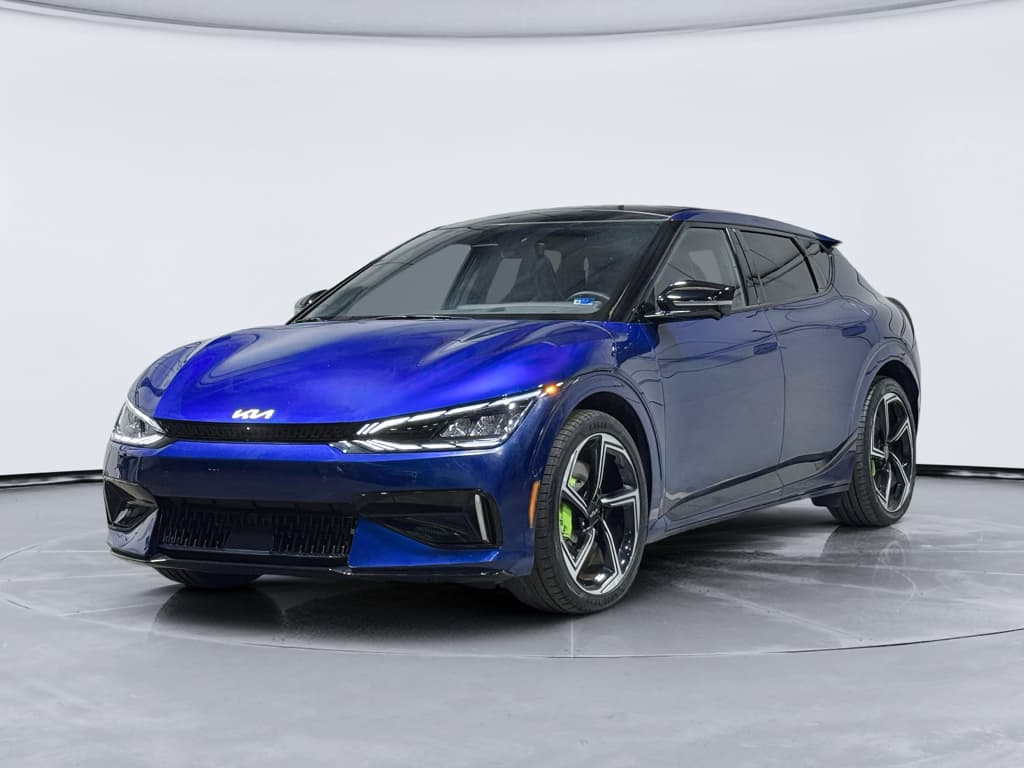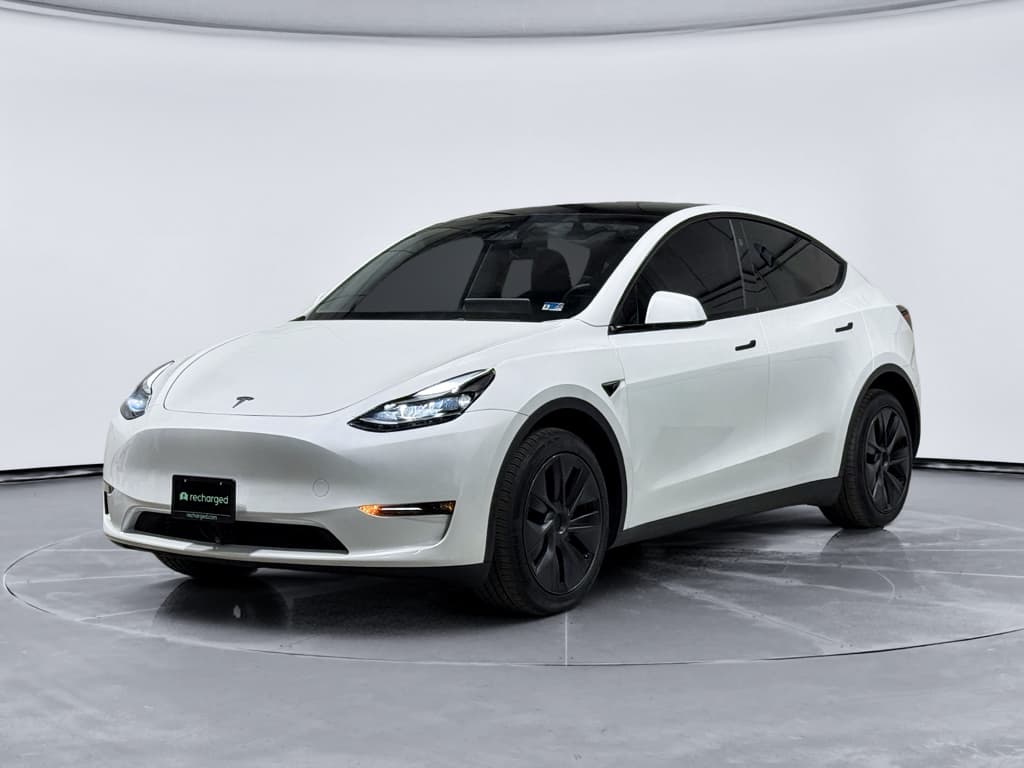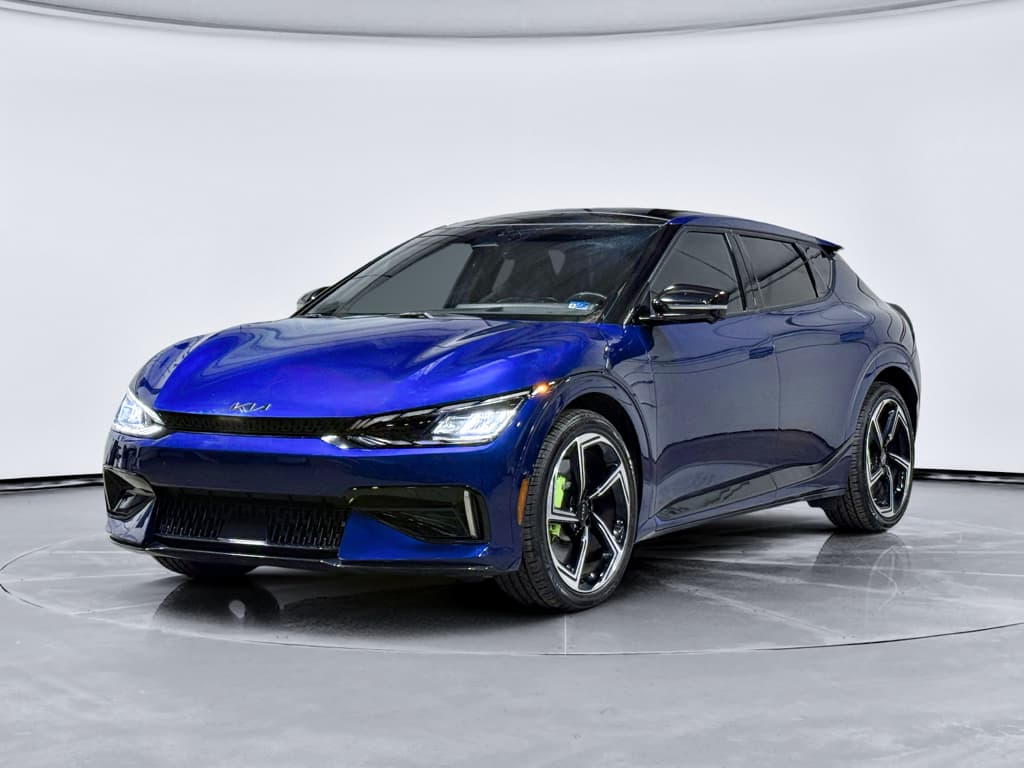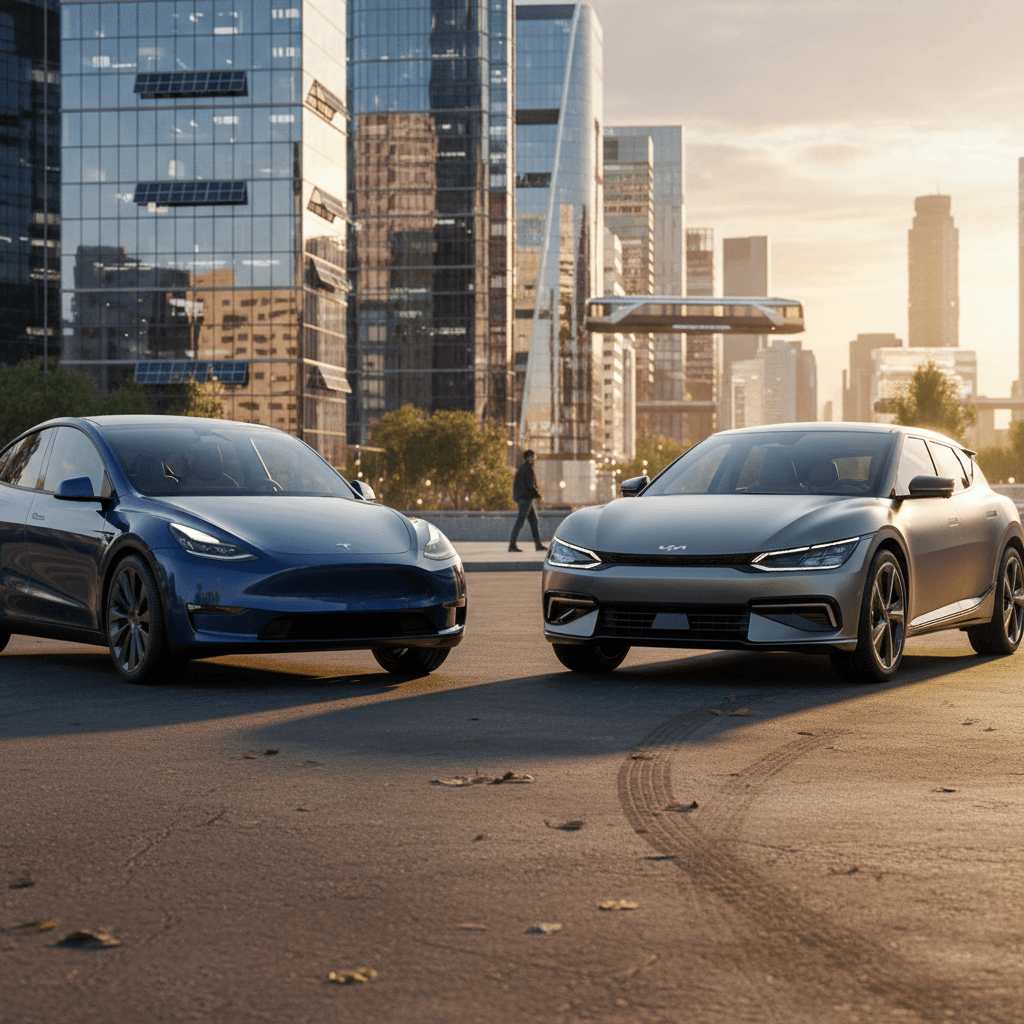
If you’re cross-shopping the Tesla Model Y vs Kia EV6 and wondering which is better, you’re not alone. These two compact electric SUVs dominate a lot of EV shortlists in the U.S., whether you’re buying new or looking at the fast-growing used EV market. They’re roughly the same size, promise 250–310 miles of range in most trims, and are priced within striking distance of each other, but they drive, charge, and age very differently.
Bottom line up front
Tesla Model Y vs Kia EV6: Quick Overview
How the Model Y and EV6 differ at a glance
Two compact electric SUVs with very different personalities
Tesla Model Y
- Body style: Tall, upright crossover; optional 3rd row
- Range: Up to ~310 miles EPA depending on year/trim
- Charging: Direct access to Tesla Supercharger network
- Strengths: Efficiency, charging network, over-the-air software, resale
- Weaknesses: Minimalist interior not for everyone; ride can feel firm; mixed build quality reports
Kia EV6
- Body style: Lower, sportier "EV wagon" stance
- Range: Typically 250–310 miles EPA, depending on battery/motor
- Charging: 800V architecture; DC fast charging can hit ~18–20 minutes 10–80% in ideal conditions
- Strengths: Very quick DC charging, engaging drive, physical buttons, CarPlay/Android Auto, warranty
- Weaknesses: Smaller cargo area, fewer service points, public charging experience depends heavily on network quality
Market context: How popular are they?
Key Specs: Range, Charging, and Performance
Range and charging speed are where many shoppers decide the Tesla Model Y vs Kia EV6 question. On paper, the Kia’s 800V charging system looks like the clear winner, while the Model Y still tends to edge ahead on efficiency and real-world range per kWh. Here’s how the numbers usually stack up for 2023–2025 U.S.-market models (exact figures vary by year and trim, so always verify the specific VIN you’re looking at).
Core specs: Typical U.S. trims (recent model years)
Approximate specs for common trims seen in the new and used market. Always check the specific car’s window sticker or Recharged Score Report for exact figures.
| Model / Trim | Battery (usable kWh, approx.) | EPA Range (mi) | 0–60 mph (sec) | Max DC Fast Charge | Onboard AC Charger |
|---|---|---|---|---|---|
| Tesla Model Y RWD | ~60–62 | 260–280 | ~6.0 | ~170 kW+ | 7.7 kW |
| Tesla Model Y Long Range AWD | ~75 | 295–310 | ~4.6–4.8 | ~250 kW peak | 11.5 kW |
| Tesla Model Y Performance | ~75 | 260–280 | ~3.5 | ~250 kW peak | 11.5 kW |
| Kia EV6 RWD (Long Range) | 77.4–84 | 295–310 | ~7.0 | ~240–258 kW | 10.9 kW |
| Kia EV6 AWD (Wind/GT-Line) | 77.4–84 | 255–282 | ~5.1–5.2 | ~240–258 kW | 10.9 kW |
| Kia EV6 GT | 77.4–84 | ~235–255 | ~3.4–3.5 | ~240–258 kW | 10.9 kW |
Specs will vary slightly by model year, wheel size, and software updates.
Real-world range vs. EPA
Range: Slight edge to Tesla
- Model Y Long Range is one of the most efficient EV SUVs on the market, and its ~295–310-mile EPA range in many trims gives you a comfortable buffer for long trips.
- EV6 RWD Long Range can match that 300-mile headline number, but dual-motor AWD trims are a bit less efficient than the equivalent Model Y.
- If you road trip often in the western U.S. where distances between chargers can be large, the Tesla’s efficiency plus Supercharger coverage is a meaningful advantage.
Charging: Edge to Kia on pure speed
- The Kia EV6’s 800V architecture lets it hold very high charging power: in ideal conditions, 10–80% can be done in roughly 18–20 minutes on a 240+ kW DC fast charger.
- The Model Y peaks around the mid-200-kW range, but its curve often tapers more quickly. Many owners see 10–80% in the 25–30 minute window.
- On paper, the EV6 is the faster charger; in practice, network reliability and charger availability often matter more than peak kW numbers.
Spec sheet trap
Pricing, Incentives, and Used Market Value
New EV pricing shifts quickly with incentives and discounts, but on average, a similarly equipped Tesla Model Y and Kia EV6 often land within a few thousand dollars of each other once you factor in dealer discounts on Kia and Tesla’s direct-price changes. Where they differ sharply is how those prices behave over time, and that’s where used shoppers, and platforms like Recharged, come in.
How pricing typically compares
New vs used market realities in 2026
New pricing (typical)
- Model Y: Tesla’s frequent price changes and temporary incentives mean real transaction prices can swing by thousands in a month. Historically, it’s started a bit higher than comparable EV6 trims, but aggressive discounts in 2024–2025 narrowed that gap.
- EV6: Kia dealers often layer factory incentives with dealer discounts. It’s common to see effective prices several thousand below MSRP, especially on remaining prior-model-year inventory.
Used pricing
- Model Y: Huge sales volumes mean lots of supply, but strong brand recognition and Supercharger access prop up resale. It still commands a premium over most non-Tesla EVs of similar age and mileage.
- EV6: Lower sales and heavier initial discounts mean steeper early depreciation. For used buyers, that can be a sweet spot: a well-equipped EV6 can cost noticeably less than a comparable Model Y on the secondary market.
Value equation
- If you’re buying new and can stack Kia dealer discounts, the EV6 can be the better value.
- If you’re buying used and care about resale 5–7 years out, the Model Y’s brand strength and charging advantage typically make it the safer value play.
Where Recharged fits in
Ready to find your next EV?
Browse VehiclesCharging: Superchargers vs Public Networks
Charging access is often the deciding factor in the Tesla Model Y vs Kia EV6 debate, especially if you road trip or rely on public fast charging. The technical specs don’t tell the full story; network coverage, uptime, and ease of use often matter more than peak kilowatts.
Tesla Model Y: Supercharger native
- Every Model Y has native access to the Tesla Supercharger network, historically the most reliable and widely distributed fast-charging network in the U.S.
- Many newer and updated Superchargers now support non-Tesla EVs via NACS, but Tesla owners still enjoy the most seamless plug-and-charge experience.
- The Tesla app and in-car navigation tightly integrate route planning, charger availability, and real-time stall status, which takes much of the guesswork out of road trips.
Kia EV6: Fast hardware, improving access
- The EV6 was designed around multi-network fast charging. It works on major DC fast networks (Electrify America, EVgo, etc.) using CCS, and newer U.S. models are adopting the NACS port for broader Supercharger access.
- With its 800V system and 240–258 kW DC capability, the EV6 takes full advantage of high-power public chargers when you find a healthy, well-maintained station.
- The trade-off: public CCS fast-charging networks can be hit-or-miss in reliability, and app juggling (network apps, credit cards, RFID cards) is part of the experience unless you primarily rely on home charging.
If you don’t have home charging
Space, Comfort, and Practicality
On the outside, the Tesla Model Y and Kia EV6 are similar in footprint. Inside, they feel very different. The Model Y emphasizes airy space and maximum cargo volume; the EV6 leans into a sportier, more cocooned driving position and a sleeker roofline that trades some practicality for style.
Interior space and seating
- Model Y: Feels tall and open, with large windows and a big glass roof. Shared with the Model 3 platform but with more headroom and legroom. Some versions offer a third-row jump seat, but it’s tight, best for kids or occasional use.
- EV6: Lower seating position and more cockpit-like feel. Rear legroom is generous for adults, but the sloping roof can pinch headroom for taller passengers. No third-row option.
For families who regularly carry five and a lot of gear, the Model Y’s extra vertical space and optional third row are meaningful advantages.
Cargo volume and usability
- Model Y: One of the largest cargo areas in the class. The deep rear well and front trunk (frunk) add useful extra space for charging cables or groceries.
- EV6: Cargo space is good but not class-leading. The sleeker tailgate intrudes on tall items, and the frunk is much smaller in U.S. models.
If you’re hauling strollers, sports gear, or home-improvement runs every weekend, the Tesla’s packaging usually makes life easier.
Car seats and kid duty
Tech, Safety, and Driving Experience
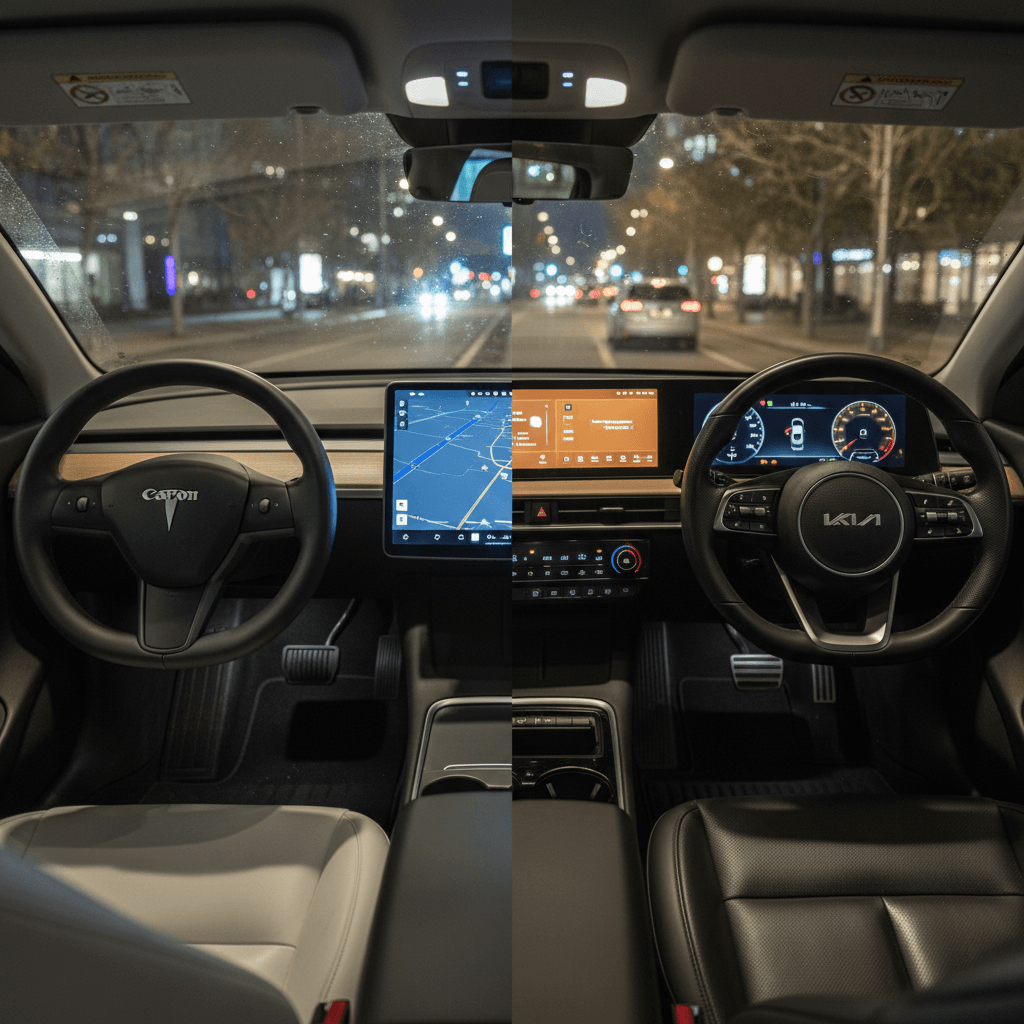
This is where personalities really diverge. The Tesla Model Y doubles down on software, over-the-air features, and a minimalist interface. The Kia EV6 takes a more traditional approach with separate gauge and infotainment screens, physical buttons for climate, and smartphone integration that feels familiar to most drivers.
User interface and in-car tech
- Model Y: A single 15-inch center touchscreen runs virtually everything, speedometer, navigation, climate, wipers, and more. There’s no Apple CarPlay or Android Auto; you live in Tesla’s ecosystem. In return, you get rich features such as native streaming apps, built-in dashcam/Sentry Mode, and frequent OTA software updates.
- EV6: Dual 12.3-inch screens (gauge + touchscreen) plus physical climate controls and shortcut buttons. Crucially, it offers wired or wireless Apple CarPlay and Android Auto in many trims, which many shoppers see as non-negotiable.
Driving dynamics and comfort
- Model Y: Quick in almost any configuration, with instant torque and strong passing power, especially in Long Range and Performance trims. The ride can feel firm or busy on rough pavement, especially with larger wheels.
- EV6: Generally more composed and refined over bumps, with steering and chassis tuning that reviewers often describe as "sporty but comfortable." The EV6 GT is genuinely rapid, with 0–60 mph times in the mid-3-second range.
- If you enjoy backroad driving or simply want a more conventional feel from behind the wheel, the EV6 often wins on driver engagement.
Safety and driver assistance
Ownership Costs, Reliability, and Depreciation
EV shoppers don’t just care about the test drive, they care about what happens in years four, seven, and ten. The Tesla Model Y and Kia EV6 both benefit from fewer moving parts than comparable gas SUVs, but their long-term stories differ in a few important ways.
Long-term ownership snapshot
Maintenance and repairs
- Model Y: Simple maintenance schedule, tire rotations, brake fluid checks, occasional cabin filters. Independent EV shops and mobile Tesla service expand options, but collision repair costs can be high.
- EV6: Kia’s nationwide dealer network is a plus, but not all dealers are equally experienced with high-voltage EV work yet. Routine maintenance is still lighter than a gas car.
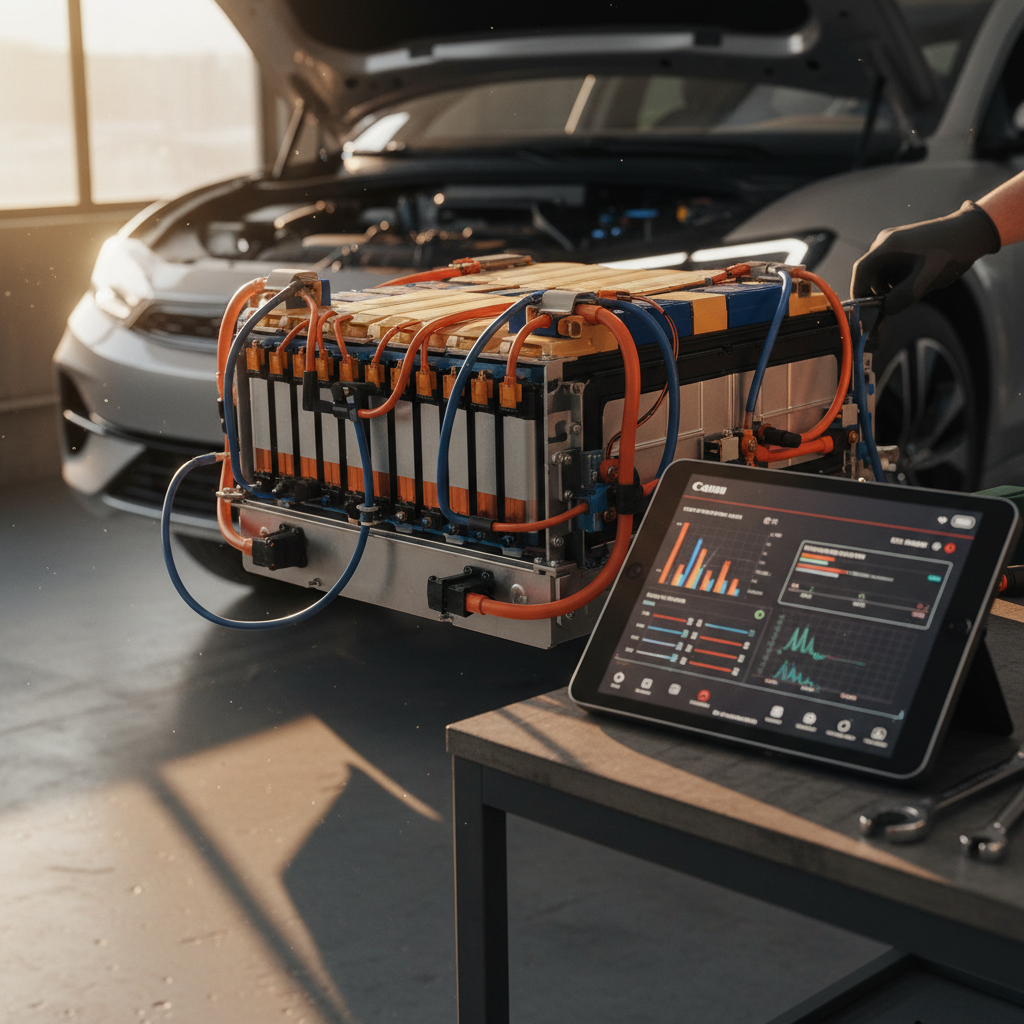
Battery health
- Both vehicles carry long battery and electric-drive warranties, often 8 years / 100,000 miles or more on key components.
- In early used data, Model Y and EV6 packs have shown modest degradation when properly managed, typically a few percent after the first couple of years, then a slower taper.
On Recharged, our Recharged Score quantifies this with a battery health percentage and projected usable range at delivery.
Depreciation profile
- Model Y: Depreciates, but from a higher starting point and with strong used demand. Historically outperforms many non-Tesla EVs on residual value.
- EV6: Experiences steeper initial depreciation, in part due to incentives and lower brand recognition in EV space. That’s bad news for first owners but often great news for used buyers.
Watch software and feature changes
Which Is Better for You? Use-Case Scenarios
There’s no universal winner in the Tesla Model Y vs Kia EV6 debate. The right choice depends heavily on how you drive, where you charge, and what you value most, tech, comfort, or long-term dollars and cents. Use the profiles below to see which SUV aligns more closely with your reality.
Match the EV to your use case
1. Long-distance highway traveler
If you frequently drive cross-country or do multi-state work trips, the <strong>Model Y</strong> usually wins. Its combination of strong range, built-in trip planning, and seamless Supercharger access lowers your risk of charging headaches. The EV6 can absolutely road trip, but you’ll depend more on third-party fast-charging networks and apps.
2. Suburban commuter with home charging
If you mostly commute 20–60 miles a day and can install a Level 2 charger at home, both vehicles shine. In this scenario, the <strong>EV6 can become the value play</strong>, especially used, because its fast DC capability matters less when you charge overnight and its slightly steeper depreciation makes prices attractive.
3. Tech-focused early adopter
If you love software updates, in-car entertainment, and the feel of a rolling gadget, the <strong>Model Y</strong> feels more like a smartphone on wheels. You’ll give up CarPlay/Android Auto but gain Tesla’s tightly integrated ecosystem, frequent OTA upgrades, and unique extras like in-car gaming and built-in dashcam/Sentry features.
4. Driver who hates touch-only controls
If you prefer tactile knobs and buttons for climate and quick functions, you’ll likely be happier in the <strong>Kia EV6</strong>. It offers a more conventional cockpit layout, still modern but less dependent on digging through touchscreen menus for basic tasks.
5. Family hauler with kids and gear
For two kids, strollers, and the usual suburban cargo, the <strong>Model Y</strong> generally wins with its extra cargo volume and optional third row. The EV6 works fine for most families of four, but if you’re hauling bulky gear every weekend, you’ll notice the Tesla’s packaging advantage.
6. Budget-conscious used buyer
If you’re shopping used with a firm budget ceiling, you may find <strong>more EV6 for your dollar</strong>. Because it depreciates faster from MSRP, well-equipped two- or three-year-old EV6s often carry lower asking prices than similar-age Model Ys. A Recharged Score Report can help you see exactly how much battery and value you’re getting for your money in each case.
Quick verdict by priority
Buying a Used Model Y or EV6 with Recharged
Whether you lean Tesla or Kia, the used market is where many of the best values now live. Inventory of off-lease Model Ys has grown rapidly, and the first wave of EV6 leases is hitting the secondary market as well. That’s a lot of choice, but also a lot of variance in battery care, fast-charging habits, and pricing.
Why battery health matters more than trim
Two otherwise identical EVs can behave very differently if one spent its life fast-charging to 100% and the other mostly trickle-charged at home. That’s why Recharged built the Recharged Score, a standardized report for every vehicle we sell, including used Tesla Model Ys and Kia EV6s.
- Verified battery health and estimated usable range at delivery, not just whatever the dashboard happens to show that day.
- Charging history insights where available, to flag unusually heavy DC fast-charging use.
- Fair market pricing based on real transaction data across similar EVs, so you know if a particular Model Y or EV6 is priced in line with the market.
End-to-end EV specialist support
Recharged is built specifically around used EV ownership, not just generic used cars:
- EV-specialist advisors who can walk you through Model Y vs EV6 differences for your specific commute, climate, and budget.
- Financing options tailored to used EVs, plus trade-in and consignment if you’re coming out of a gas vehicle or a different EV.
- Nationwide delivery and, if you’re near Richmond, VA, an Experience Center where you can get hands-on with EVs before you buy.
That matters when you’re deciding between two capable but very different electric SUVs.
FAQ: Tesla Model Y vs Kia EV6
Common questions about Model Y vs EV6
If you’re choosing between the Tesla Model Y and Kia EV6, you’re looking at two of the most compelling electric SUVs on sale today. The Model Y leans into efficiency, charging convenience, and a software-first experience that still sets the pace for much of the industry. The EV6 counters with fast DC charging, a more traditional cockpit, and often stronger value on the used market. The right answer depends less on the logo on the hood and more on the life you’ll ask the car to live. If you want help matching those needs to real cars, down to verified battery health and fair pricing, Recharged is built to make that decision clearer.