If you’re thinking about bikes, skis, a cargo box, or even a rooftop tent for your Tesla Model Y, the first number you need to understand is the roof rack weight limit. Tesla gives the factory Model Y roof rack a specific load rating, and going beyond it can hurt handling, range, and even your warranty. This guide breaks down the official limits, how much you can really carry, and what’s realistic for everyday gear and camping setups.
Quick answer
Overview: Model Y roof rack weight limit in plain English
Tesla sells an official Model Y Roof Rack with aluminum crossbars and integrated locks. In Tesla’s online shop, the product is listed with a load rating of 165 lbs (75 kg), and it’s compatible with all Model Y variants. That number is the headline limit most owners should treat as their working cap for anything carried on the roof while driving.
Tesla Model Y roof rack: headline numbers
One critical nuance
Tesla’s official Model Y roof rack rating (dynamic load)
Tesla doesn’t scatter roof load numbers all over its website. For the Model Y, the clearest public spec most owners will see is on the Model Y Roof Rack product page, which lists a load rating of 165 lbs. That’s understood in the industry as a dynamic load rating, the maximum the rack and roof should carry while the vehicle is moving.
- The 165 lb rating assumes you’re using Tesla’s own Model Y crossbars and proper mounting points.
- It’s a roof system limit, not a “how much stuff can my Y hold” limit. You still have to stay within the vehicle’s overall GVWR and axle ratings.
- The rating is for distributed load across both crossbars, not 165 lbs on a single clamp or one tiny contact point.
- Tesla’s owner’s manual also warns that only Tesla‑approved rack systems should be used to avoid damage.
In practice, that means if your crossbars weigh ~15–20 lbs and your accessory (bike tray, ski rack, cargo box) weighs another 20–50 lbs, you’ll often have 80–120 lbs of “real” payload left before you hit Tesla’s limit.
Pro tip for quick math
Dynamic vs static roof rack weight: why it matters
Most of the confusion around the Tesla Model Y roof rack weight limit comes from mixing up dynamic and static load ratings. They’re related but not interchangeable.
Dynamic vs static load on a Model Y roof rack
Two different ratings for two very different scenarios
Dynamic load (while driving)
- The weight your roof rack system can handle as the car moves.
- Includes forces from wind, bumps, cornering, and emergency maneuvers.
- For the Model Y OEM rack, this is about 165 lbs total, rack + gear.
- Exceeding it can affect handling, braking distance, and structural safety.
Static load (parked / camping)
- The weight the rack and roof can hold when the vehicle is not moving.
- Typically much higher than dynamic load, often 2–3x in the broader rack industry.
- Rooftop tent makers rely on this higher static capacity, plus support from the ladder.
- Tesla does not publish an official static number for the Model Y roof.
How rooftop tent brands think about it
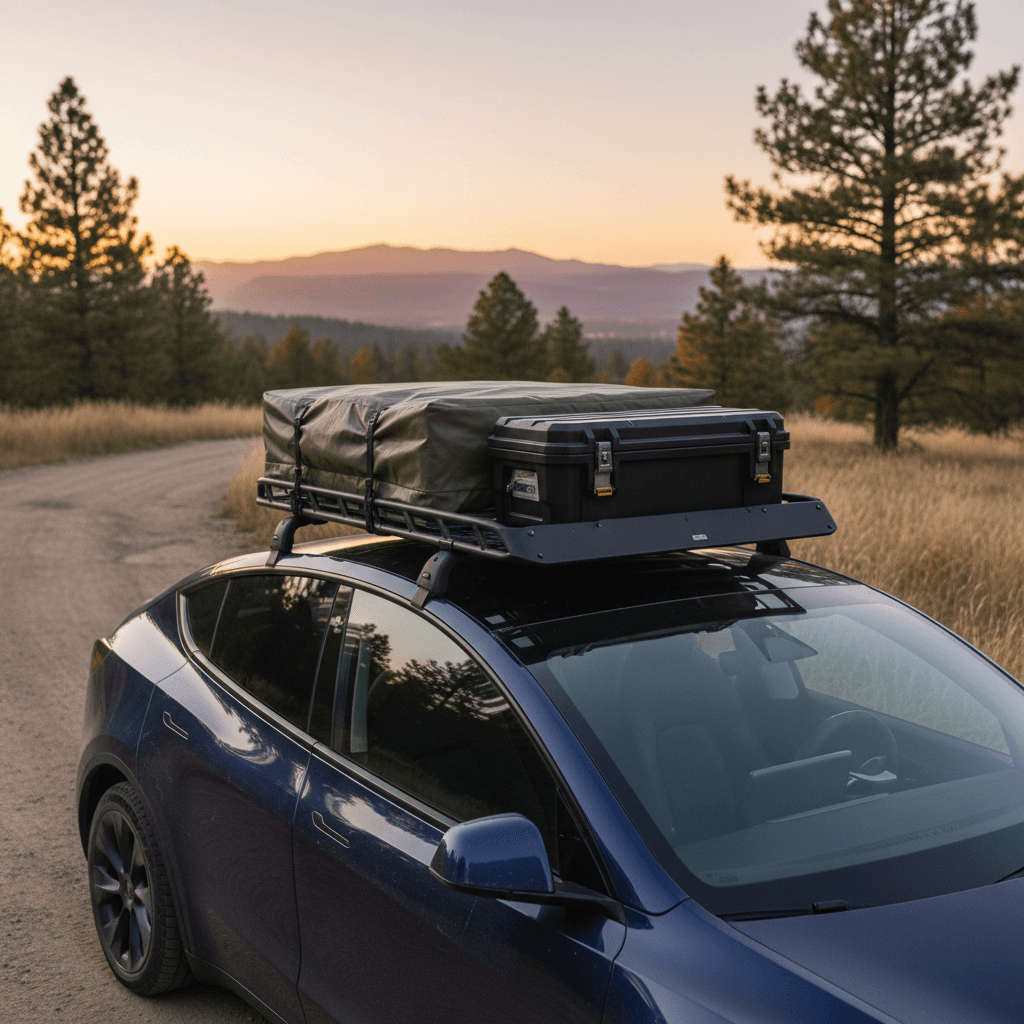
Can a Tesla Model Y safely carry a rooftop tent?
Short answer: yes, a light rooftop tent on a Model Y is possible with the right rack system and careful math, but it’s not the same as bolting a huge overlanding tent to a body‑on‑frame truck. You’re working with a glass‑heavy roof structure, a relatively modest dynamic rating, and an EV whose range is sensitive to drag.
Several tent and rack guides now list the Model Y as compatible for compact rooftop tents, typically assuming Tesla’s ~165 lb dynamic roof load and a much higher static capacity while parked. But there are three guardrails you should respect:
- Respect Tesla’s dynamic limit. Your tent’s empty weight plus crossbars, mounting hardware, and any extra gear must stay at or below ~165 lbs while driving.
- Choose a truly lightweight tent. Many hard‑shell tents weigh 150–180 lbs by themselves, leaving almost no headroom for bars or hardware. Soft‑shell or compact hard‑shell units in the 100–130 lb range are a better match.
- Drive like you’re carrying a fragile load. Extra height and weight increase rollover risk and emergency stopping distance. This is especially true on a taller crossover like the Model Y.
Warranty and liability reality check
How to calculate a safe roof load for your Model Y
Whether you’re loading skis or building a full camping setup, you can sanity‑check your configuration with a simple framework. The goal is to keep your total roof system weight within Tesla’s dynamic rating while also staying under the vehicle’s overall cargo capacity.
5‑step checklist to stay under the Model Y roof rack weight limit
1. Confirm you have a Tesla‑approved rack
Start with Tesla’s factory Model Y crossbars or a system the automaker explicitly approves. The owner’s manual stresses using only Tesla‑approved roof rack systems that mount into the designed hard points, not clamp‑on solutions that grab glass or unsupported sheet metal.
2. Add up the hardware weight
Check the specs for your crossbars, towers, and mounting hardware. Many systems fall in the <strong>15–25 lb</strong> range for the pair. Write that number down, it counts against the 165 lb limit.
3. Add up the carrier and accessory weight
Cargo boxes, bike trays, ski racks, kayak mounts, and rooftop tents all publish their own weights. A mid‑size box might be 40–55 lbs; a compact rooftop tent could be 110–130 lbs. Add this to your hardware number.
4. Add your actual cargo
Now estimate or actually weigh what you plan to carry: bikes, skis, duffel bags, camping gear. Put them on a bathroom scale if needed. Add that to the previous total. If you’re near or above 165 lbs, start subtracting items until you’re clearly under.
5. Cross‑check vehicle cargo ratings
The Model Y’s tire label and owner’s manual list a maximum combined weight for passengers and cargo. If you’ve got five adults plus roof gear plus a full trunk, it’s easy to creep past that number. Don’t treat the roof limit in isolation, make sure the whole vehicle stays within its rated capacity.
A conservative target
Aftermarket racks, warranties, and common mistakes
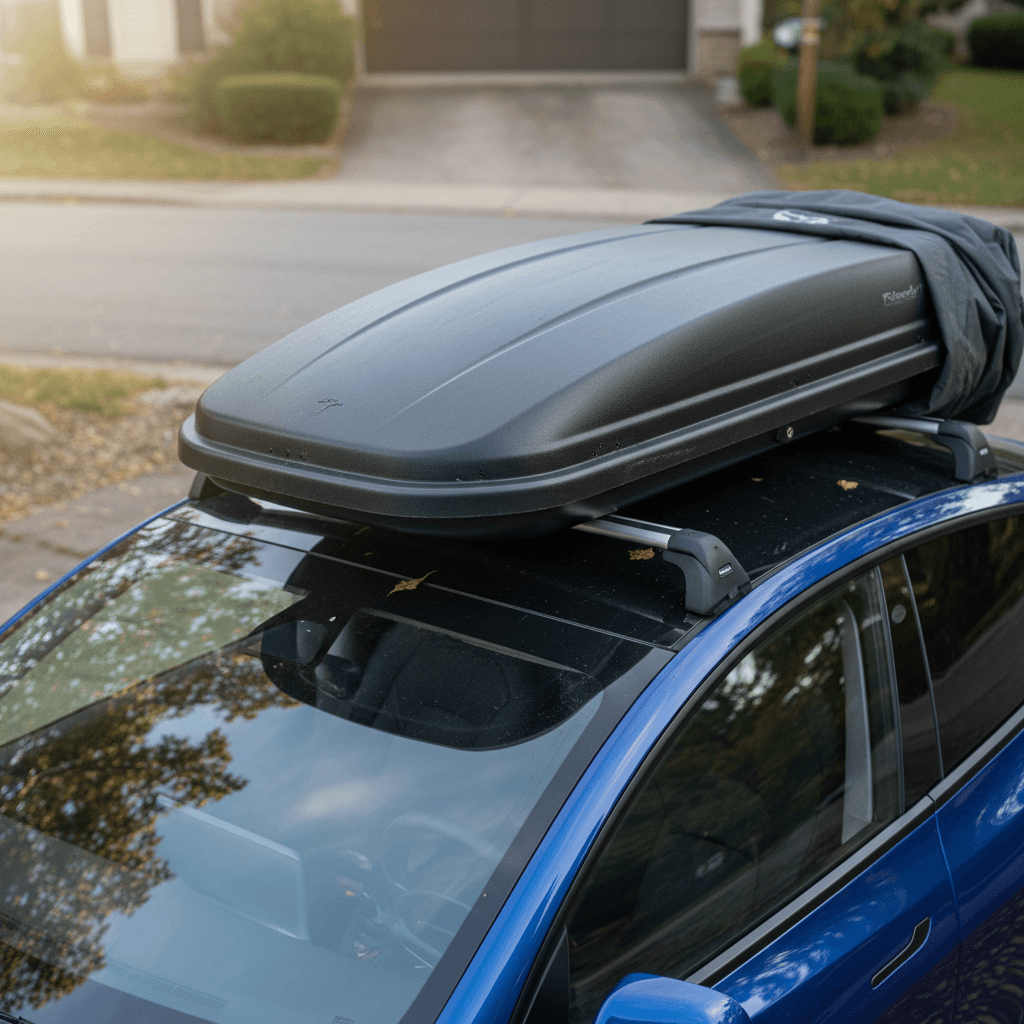
There’s no shortage of third‑party roof racks advertised for the Tesla Model Y. Many list similar or slightly higher weight ratings than Tesla’s own crossbars, and some even promote aggressive static numbers aimed at rooftop tent shoppers. That doesn’t automatically make them a good idea.
What to watch with aftermarket racks
- Mounting method: Legitimate systems use the same mounting points Tesla designed in the roof rails. Avoid anything that clamps to glass or weatherstripping.
- Real vs marketing numbers: A rack might claim a 495 lb static capacity, but that doesn’t change Tesla’s expectations for what the roof itself should see.
- Corrosion and leaks: Poorly machined hardware can deform seals over time, leading to water ingress, an especially bad outcome on an EV packed with electronics.
Five common owner mistakes
- Ignoring rack weight and only counting the bikes or tent.
- Mixing units (kg vs lbs) and accidentally overloading by 20–30%.
- Stacking gear high above the crossbars, which increases leverage and stress on mounts.
- Leaving heavy gear up full‑time, which hammers range and exposes the rack to more fatigue.
- Assuming “if it fits, it sits,” instead of checking Tesla’s dynamic limit and the vehicle’s cargo ratings.
Warranty gray area with non‑Tesla racks
How roof weight and racks affect range and handling
Staying under the Tesla Model Y roof rack weight limit is the first safety box to check. The second is understanding what that weight, and the extra drag of a rack and cargo, does to the way your EV drives and how far it goes on a charge.
What to expect when you add weight and drag up top
It’s not just about the number on the spec sheet
Higher center of gravity
Reduced range
Longer stopping distance
Road‑trip strategy
Buying a used Model Y with a roof rack: what to inspect
If you’re shopping the used market, whether through a private seller, a dealer, or a dedicated EV marketplace like Recharged, a Model Y that’s spent time with a loaded roof rack deserves a closer look. Done right, light roof use is harmless. Done wrong, it can leave subtle damage that’s expensive to fix later.
Inspection checklist for a used Model Y with a roof rack history
1. Look closely at the mounting points
With the crossbars removed, inspect the factory mounting points in the roof rails (or under the covers) for cracks, distortion, chipped paint, or rust. Any deformation suggests the rack has been overloaded or improperly installed.
2. Check for glass stress or cracks
Examine the panoramic glass roof around the rack feet. Hairline cracks, chipped edges, or unusual patterns in the tint or sealant can signal past stress. Even if the crack seems small, glass replacement on a Model Y is not cheap.
3. Ask how the rack was used
There’s a world of difference between carrying two road bikes on weekends and hauling a heavy rooftop tent plus gear across thousands of miles. Ask specifically about tents, kayaks, and long‑distance trips with loaded racks.
4. Scan for leaks and water marks
Check the headliner along the roof edges, A/B/C pillars, and cargo area for water staining or musty smells. A poorly sealed or over‑torqued rack foot can open a path for water into the cabin.
5. Review the vehicle’s weight history
If the previous owner routinely packed five passengers, a full trunk, and a loaded roof box, the Model Y’s suspension and brakes have seen more stress. That’s not a deal‑breaker, but it’s a good reason to drive the car on varied roads and listen for clunks, squeaks, or rubbing.
6. Leverage objective diagnostics
On platforms like <strong>Recharged</strong>, every used EV comes with a <strong>Recharged Score Report</strong> that includes battery health and usage patterns. Pair that with a physical inspection of the roof area and you’ll have a far clearer picture of how the car was actually used.
Why this matters for used EV shoppers
Ready to find your next EV?
Browse VehiclesFrequently asked questions: Model Y roof rack weight limit
Tesla Model Y roof rack weight limit FAQs
Key takeaways for Model Y owners and shoppers
For the Tesla Model Y, the roof rack weight limit centers on a dynamic rating of about 165 lbs when you’re using Tesla’s factory crossbars. That number includes the rack, carriers, and everything you strap on top. In the real world, that makes the roof a smart place for relatively light, bulky items, bikes, skis, a modest cargo box, or a compact rooftop tent, so long as you stay within the limit and drive accordingly.
If you’re loading up your own Y, keep your total roof system weight in the 140–150 lb range, stick with Tesla‑approved hardware, and be honest about how heavy your gear really is. If you’re shopping the used market, a careful inspection of the roof, glass, and mounting points, paired with objective data like the Recharged Score Report, will tell you whether a previous owner treated the car like a commuter crossover or an overloaded expedition rig.
Handled thoughtfully, a roof rack makes the Model Y far more versatile without compromising safety or range. The key is to respect the limits, do the math, and choose the right vehicle for the job, whether that’s the Model Y in your driveway or a carefully vetted used EV you find through Recharged.