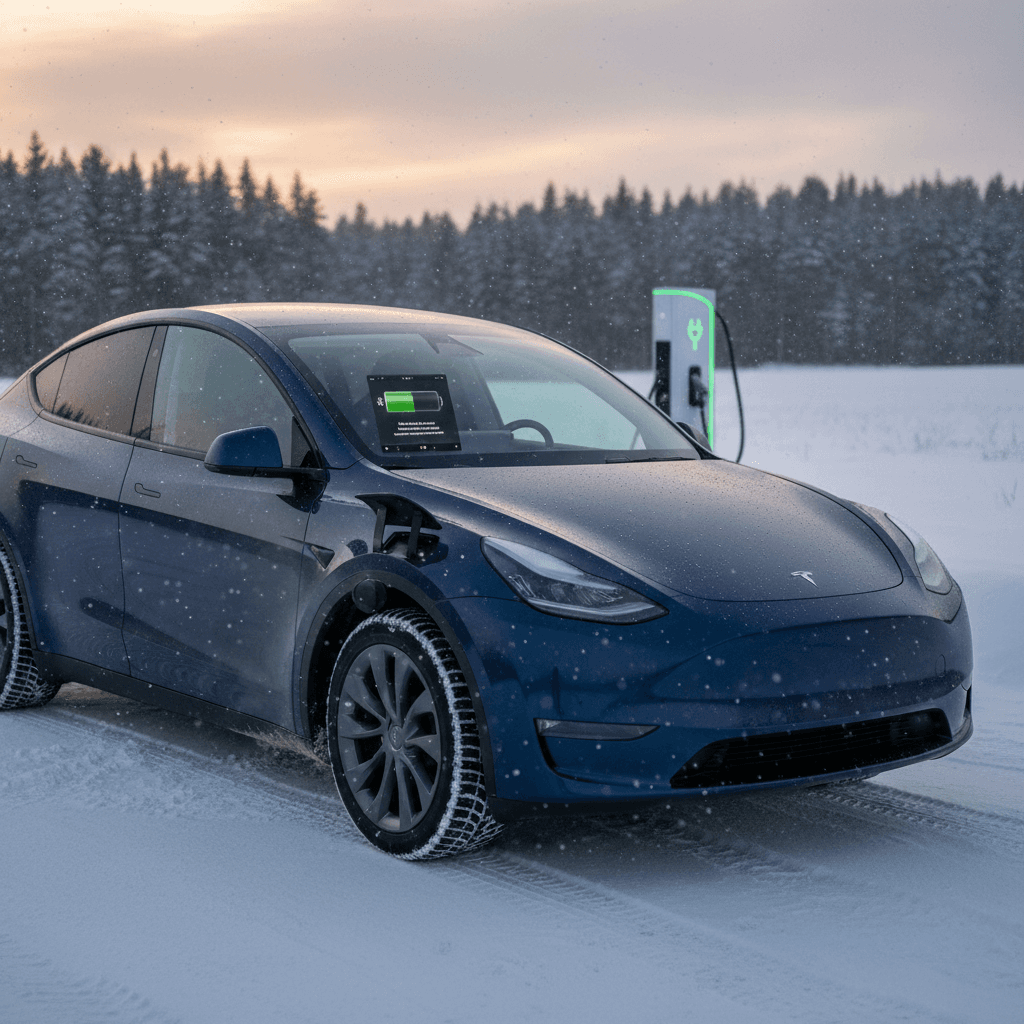
If you live where winters are real, snow on the roads, temps below freezing, you’ve probably heard stories about Tesla Model Y range in cold weather dropping fast. Some are exaggerated, some are painfully accurate. The truth sits in between, and once you understand why cold hurts range and how to work with it, winter driving in a Model Y becomes a lot less stressful.
Key takeaway
Why cold weather hits Tesla Model Y range
Cold weather doesn’t single out Teslas; it affects every EV and every gasoline car. The difference is that you see the impact in a Tesla’s energy graph and remaining range, instead of quietly losing efficiency at the pump. Three main things are stealing your miles when temperatures drop.
- Battery chemistry slows down in the cold. Lithium-ion cells prefer a moderate temperature window. When it’s cold, internal resistance increases, so the pack can’t deliver or accept energy as efficiently. That means more energy wasted as heat and temporarily less usable capacity until the pack warms up.
- Cabin heating uses a lot of energy. In a gas car, cabin heat is basically a byproduct of the engine. In an EV, heat has to come from electricity in the high-voltage battery. The Model Y’s heat pump is efficient, but on a cold start it’s still a big power draw.
- Winter driving conditions add drag. Snow tires, slush, higher rolling resistance on cold pavement, and slower traffic all nudge consumption upward. Even strong winter headwinds can chop noticeable range from a highway trip.
Think in energy, not just miles
How much Tesla Model Y range you lose in cold weather
Let’s talk numbers. No two drivers are the same, but the patterns in owner data and winter test results are remarkably consistent. Here’s a practical way to think about Model Y winter range if you’re in the U.S. or Canada.
Typical Tesla Model Y winter range impact
One important nuance: short, stop-and-go errands in town are the worst-case scenario. The battery and cabin never really get fully warmed up, so you keep paying the energy penalty of heating everything over and over. On a long highway run, your efficiency may actually improve after the first 20–30 minutes as the pack and cabin stabilize.
Don’t panic at the first few miles
Winter range by Tesla Model Y variant
Official EPA ratings assume ideal conditions. They’re a useful baseline, but winter will trim them. Here’s a high-level look at how different Model Y trims behave, and what you might realistically see on colder days once you factor in typical winter losses.
Approximate Tesla Model Y winter range expectations
Rough planning numbers for cold-weather driving, assuming a healthy battery and efficient driving. Real-world results vary with speed, wind, elevation, wheels/tires, and how you use heat.
| Model Y Variant | EPA Rated Range (mi)* | Mild Cold ~15% Loss (mi) | Freezing ~30% Loss (mi) | Deep Cold ~40% Loss (mi) |
|---|---|---|---|---|
| RWD / Standard Range† | 260 | 220 | 180 | 155 |
| Long Range AWD | 310 | 265 | 215 | 185 |
| Performance | 285 | 240 | 200 | 170 |
Use these numbers for conservative trip planning in cold weather, not as exact promises.
*EPA numbers are rounded for simplicity and may vary slightly by model year and wheel choice. †Tesla has sold different Standard Range / RWD configurations over time with slightly different battery sizes. Treat these numbers as ballpark planning tools, not exact figures for every car.
Why Long Range still matters in winter
Real-world winter driving scenarios
Numbers in a chart are helpful, but what you really care about is, “Can I do my life in this car when it’s 20°F and snowing?” Let’s walk through a few real-world scenarios and how Tesla Model Y range in cold weather tends to play out.
How a Model Y behaves in common winter scenarios
Three everyday drives and what to expect from your range meter
Suburban commute (20–30 miles round trip)
If you precondition from shore power and drive gently, this is the sweet spot.
- Expect roughly 15–25% more energy use than summer.
- Most drivers never get below 40–50% charge on a typical workday.
- Short lunch errands between cold soaks will use proportionally more energy.
Weekend highway trip (150–200 miles)
The first 20–30 minutes are your penalty lap; then things stabilize.
- Plan for 25–35% less range at 65–75 mph in freezing temps.
- Let the car navigate you via Supercharger stops, it will warm the battery en route.
- Wind, elevation, and snow-packed roads can add another 5–10% penalty.
Ski trip with gear (full car)
Weight, elevation, and mountain weather amplify every inefficiency.
- On steep climbs in sub‑freezing temps, expect 30–40% higher consumption.
- Plan a stop before you hit the mountains so you arrive with a warm pack.
- Use seat heaters instead of cranking cabin temp; the difference is huge.
Good news for everyday drivers
12 ways to maximize Model Y range in cold weather
You can’t negotiate with physics, but you can absolutely stack the odds in your favor. Here are concrete steps you can take to stretch winter range without turning every drive into a hypermiling contest.
Cold-weather driving checklist for Tesla Model Y owners
1. Precondition while plugged in
Use the Tesla app to warm the cabin and battery before you leave, especially if you’re fast-charging on your route. Drawing heat from the grid instead of the battery preserves range and improves early-trip efficiency.
2. Schedule departure, not just charging
Set a scheduled departure time so the pack and cabin are warm as you unplug. This is more effective than just charging to 100% an hour earlier, especially in overnight cold snaps.
3. Dial back cabin temp, use seat heaters
Dropping the cabin setpoint by just a few degrees and relying on seat and steering wheel heaters can save a surprising amount of energy. You stay comfortable while your battery breathes easier.
4. Choose the right drive mode
Chill mode won’t magically create more range, but smoother acceleration helps. Combined with moderate highway speeds (65 instead of 75), it trims consumption noticeably on long winter legs.
5. Keep tires properly inflated
Cold air drops tire pressure. Low pressure means higher rolling resistance and more energy use. Check your Model Y’s tire pressures when temperatures first fall and adjust to the recommended PSI.
6. Clear snow and ice before driving
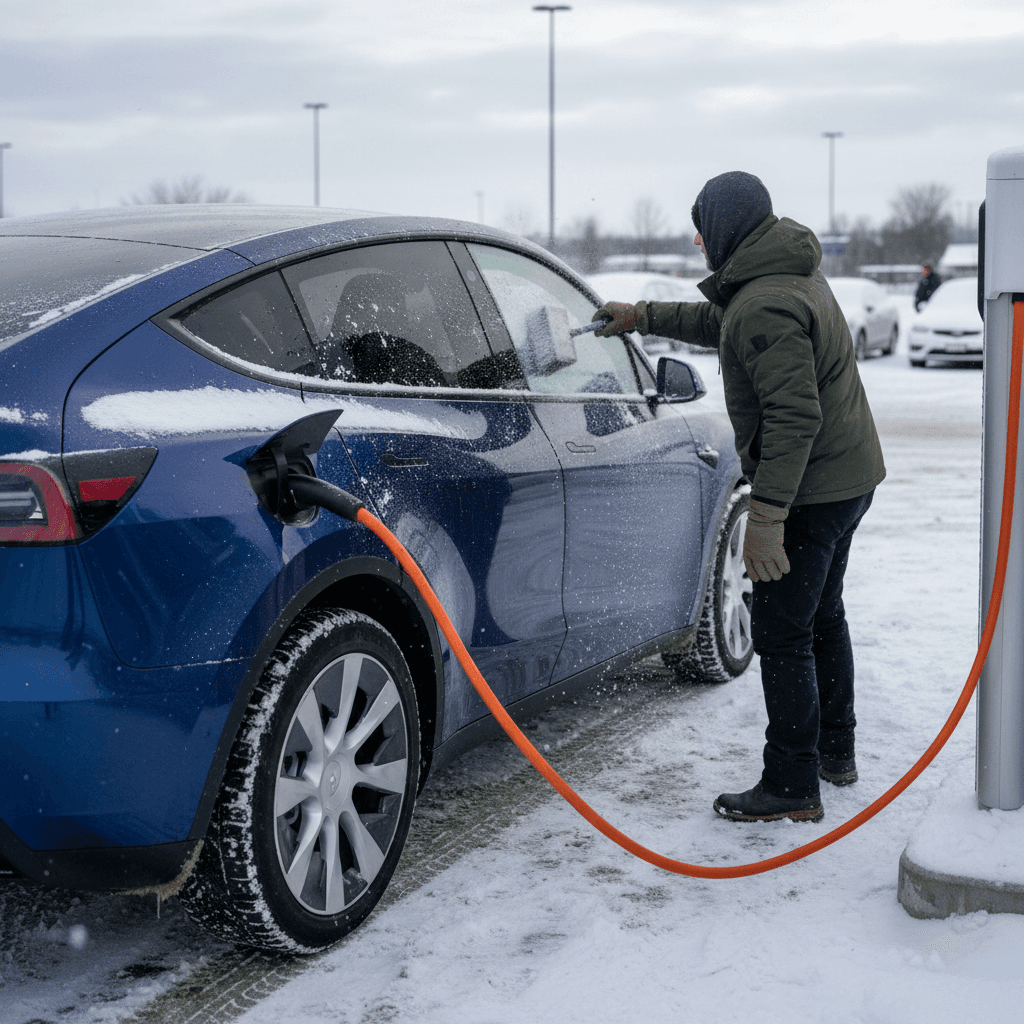
Brushing off snow from the roof, hood, and hatch isn’t just about visibility. Extra weight and wind drag from packed snow quietly eat into your winter range.
7. Use navigation for every DC fast charge
Even if you know the route by heart, set the Supercharger as your destination. The car will automatically preheat the battery so you arrive ready for a faster, more efficient charge.
8. Avoid short, repeated cold starts when possible
If you have several errands, try to batch them so the car stays warm rather than cooling completely between each drive. One 30‑minute trip is easier on your range than three 10‑minute cold starts.
9. Watch the energy graph, not just rated miles
Use the ‘Consumption’ or ‘Trip’ view instead of fixating on the battery icon. You’ll get a better feel for how your current driving and climate settings are affecting projected arrival state of charge.
10. Plan more buffer into trip estimates
In winter, assume that a drive that normally uses 40% of the battery might use 55–60% instead. Leaving that cushion means you’re not white-knuckling it to the next charger if conditions worsen.
11. Use eco-friendly winter tires
If you need snow tires, look for options known for low rolling resistance. Aggressive tread is great for powder days but overkill, and extra drag, for mixed city/highway driving.
12. Keep software up to date
Tesla occasionally refines thermal management, HVAC efficiency, and range prediction through software. Staying current makes sure you’re getting the latest winter behavior improvements for your Model Y.
Let the car be your winter coach
Charging your Model Y in cold weather
Range is only half the winter story. Cold weather also affects how quickly your Model Y can charge, especially at DC fast chargers. Understanding what the car is doing, and giving it a head start, can shave meaningful time off your stops.
Why fast charging slows down in the cold
- Cold cells can’t accept high power safely. The car protects the battery by limiting charging speed until the pack warms up.
- You’ll see the ‘blue snowflake’ icon. That’s the car telling you some energy is temporarily unavailable because it’s too cold.
- Arriving with a warm pack matters more than arriving nearly empty. A warm battery at 25% can charge faster than an ice‑cold battery at 10%.
How to get better winter charging speeds
- Always navigate to the Supercharger or DC fast charger so the car can preheat the pack.
- Try not to let the car sit for hours in sub‑freezing temps before you fast charge.
- If you’re staying overnight at a hotel, plug into any available Level 2. A slow, steady charge keeps the pack happier than starting from a frozen state in the morning.
Plan for longer winter charging stops
Protecting your battery through winter
Cold snaps are more of a short-term comfort and convenience issue than a long-term battery killer. In fact, high heat is generally worse for battery life than cold. Still, there are smart ways to treat your Model Y’s pack kindly when temperatures swing.
- Avoid charging hard on an ice-cold pack. Let the car do its preconditioning before you hit a Supercharger, and don’t panic if the initial charge rate is low, it will ramp up as the pack warms.
- Don’t leave the battery near 0% for long in the cold. If you arrive home nearly empty on a frigid night, plug in so it can gently recover. It’s okay to leave it around 40–60% overnight.
- Use Sentry Mode and cabin overheat protection thoughtfully. These features draw small amounts of energy over time. In deep cold, a car sitting unplugged for multiple days can lose more range than you expect from these background systems and pack heating.
- Don’t worry about occasional 100% charges. For trips, fully charging is fine, even in winter. Just avoid parking at 100% for days on end, set your daily limit lower (often 70–80%) for normal use.
Cold isn’t the villain for battery longevity
Shopping used Model Y? What to ask about winter range
If you’re considering a used Tesla Model Y, especially in a northern climate, winter performance shouldn’t be a guessing game. You want to know not just the odometer reading, but how the battery has aged and how the car behaves when the mercury drops.
Winter questions to ask before you buy a used Model Y
Don’t just test-drive, interview the car’s cold-weather history
1. What’s the real battery health?
Ask for concrete data, not just “it seems fine.” Tools like the Recharged Score battery health report use diagnostics to estimate remaining capacity, so you’re not guessing how much range you’ll have in winter or summer.
2. How does it behave in winter?
If the previous owner drove through winters, ask what percentage drop they saw in normal use, and at what temperatures. Their habits might differ from yours, but patterns (good or bad) are revealing.
3. Which wheels and tires are included?
A Performance Model Y on sticky 21‑inch summer tires is a very different winter animal than the same car on smaller, efficient all‑season or winter tires. Confirm what’s on the car and whether a second winter wheel set comes with it.
4. How was it charged day to day?
Home charging, battery limits, and storage habits all influence long-term health. A car that spent its life bouncing between 5% and 100% every day will age differently than one kept between 20–80% and plugged in overnight.
How Recharged helps de-risk winter range on used EVs
Ready to find your next EV?
Browse VehiclesFAQ: Tesla Model Y range in cold weather
Frequently asked questions about Model Y winter range
Bottom line: Winter range confidence in a Model Y
Winter doesn’t turn the Tesla Model Y into a different car; it just makes its energy use more visible. If you go into the cold season expecting roughly a 20–35% hit to usable range, precondition while plugged in, and give the battery time to warm up before fast charging, the Model Y is a remarkably capable four-season EV. For most owners, the convenience of charging at home and the stability of electric torque in snow outweigh the quirks of a cold lithium-ion pack.
If you’re cross-shopping or looking at a used Model Y, especially in a northern climate, don’t leave winter performance to chance. Look for verified battery health data, ask real questions about cold-weather behavior, and lean on experts who live with these cars year-round. At Recharged, that’s exactly what we do, test batteries, decode range, and match drivers with EVs that fit their everyday lives, in every season.