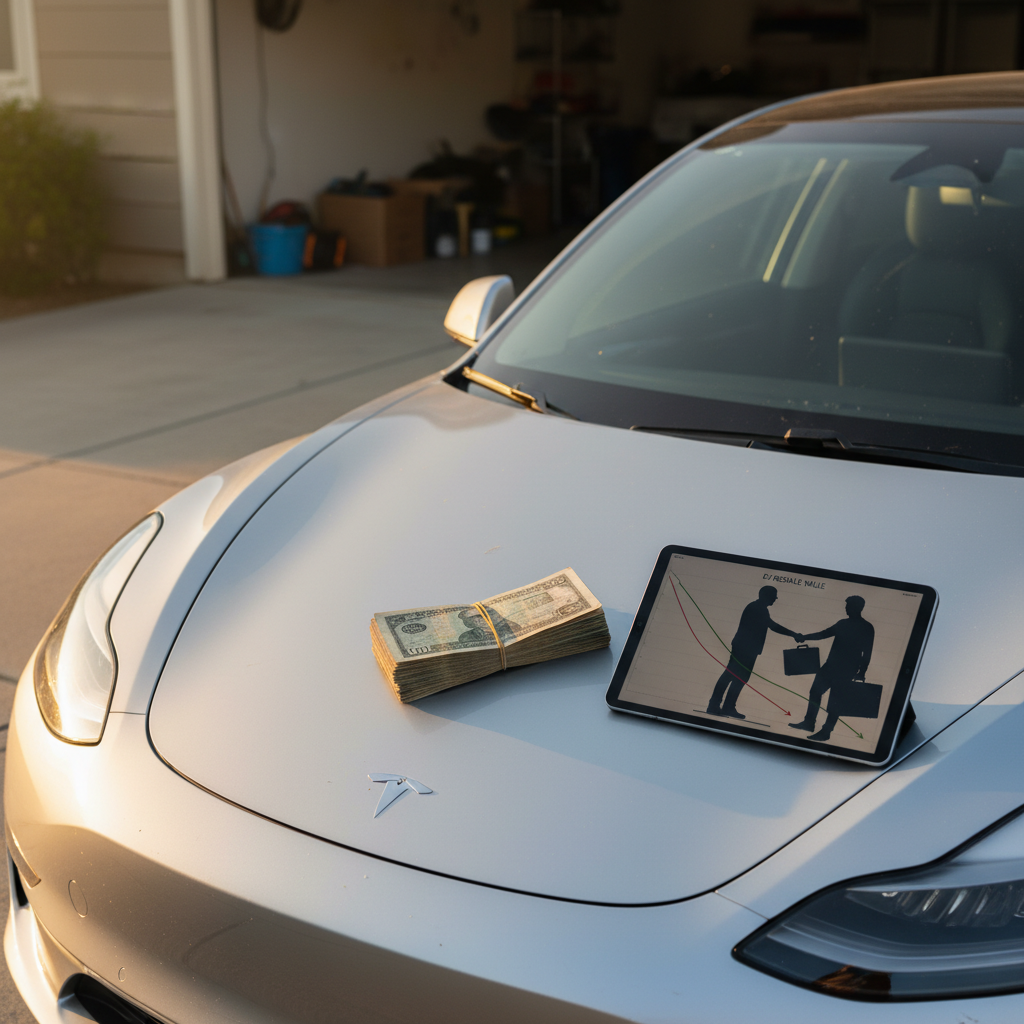
If you own, or want to own, a Tesla Model Y, 2025 has been a rollercoaster. Aggressive Tesla price cuts in recent years, cheaper new trims, and a growing used EV supply have all pushed Tesla Model Y depreciation into the spotlight. The good news: if you understand what’s happening, you can turn a scary headline into an opportunity, especially in the used market.
Key takeaway for 2025
Why Model Y depreciation looks different in 2025
Most new vehicles follow a classic curve: lose around 20–30% of value in the first year, then about 10–15% per year for the next several years. Tesla broke that pattern, twice. Early on, limited supply and strong demand meant some Teslas barely depreciated at all. Then in 2023–2024, steep factory price cuts and incentives hit, and many Model Y owners watched their resale values drop hard and fast.
By early 2025, the average used EV price in the U.S. has drifted down into the high-$20,000s, and used Model Y prices commonly cluster around the low- to mid-$30,000s, depending on year, mileage, and trim. That’s a far cry from the days when lightly used Ys were selling near-new.
Why your friend’s story may not match yours
Tesla Model Y depreciation at a glance (2025 snapshot)
How much does a Tesla Model Y depreciate?
Let’s translate the depreciation story into ballpark numbers you can actually use. We’ll assume a new Model Y transaction price around $45,000–$50,000 after recent cuts and typical incentives. Your exact price may be higher or lower, but the percentages tell the story.
Illustrative Tesla Model Y depreciation curve
Approximate retained value for a new Model Y bought around $48,000 and driven 12,000 miles a year. Real-world numbers will vary by trim, options, and condition.
| Age of vehicle | Estimated value range | Approx. value lost vs. new | What’s happening |
|---|---|---|---|
| 1 year | $34,000–$38,000 | 20–30% | Biggest drop; market adjusts to new-car discounts and incentives. |
| 2 years | $30,000–$34,000 | 30–40% | Depreciation slows but is still noticeable as newer trims arrive. |
| 3 years | $27,000–$31,000 | 35–45% | Used inventory builds; shoppers weigh older Ys vs. refreshed models. |
| 5 years | $22,000–$26,000 | 45–55% | Closer to industry average five‑year loss; battery health now a major factor. |
These are directional estimates, not appraisals. Always check live market data, or a Recharged Score Report, for your specific vehicle.
Why these numbers look wide
What’s driving Model Y depreciation in 2025
Main forces shaping Model Y values
Depreciation is about more than mileage and age.
1. Tesla’s own price cuts
When Tesla slashes new Model Y prices or introduces cheaper trims, used values must follow. A buyer won’t pay nearly‑new money when the factory is advertising aggressive discounts or 0%‑style financing on fresh inventory.
2. Rapid EV tech turnover
Faster charging, better range, new safety features, and refreshed interiors all make older Model Y examples feel dated sooner. That tech pace can steepen depreciation for earlier years even if they still drive well.
3. Growing used EV supply
Early Tesla adopters are now trading up, turning the Model Y into a mainstream used SUV. More supply plus a more cautious EV shopper equals more negotiation leverage and softer prices.
4. Gas prices & incentives
When fuel prices spike or EV incentives are rich, used EV values firm up. When gas is cheaper or incentives shift, some buyers drift back to hybrids or efficient gas models, pressuring used EV prices.
5. Financing costs
Higher interest rates in 2024–2025 have made monthly payments a bigger concern than sticker price. That can push buyers toward lower‑priced used EVs, or keep them out of the market entirely.
6. Reliability perception
Headlines about software bugs, panel gaps, or repairs can scare some shoppers, even if long‑term running costs stay low. Perception alone can nudge resale values up or down.
Watch Tesla’s configurator
Depreciation scenarios for 2020–2024 Model Y buyers
Because the Model Y has lived through wild price swings, the year you bought matters a lot. Here are simplified scenarios that mirror what many owners are seeing as of 2025.
Scenario A: Early adopter (2020–2021)
You paid a premium when supply was tight and demand was red‑hot. Back then, depreciation felt almost nonexistent. Today, your 2020–2021 Model Y might be worth 40–55% of what you paid, depending on mileage and options.
Upside: You’ve enjoyed the car for years. Downside: On paper, the dollar loss can sting compared with today’s deals.
Scenario B: Peak‑price buyer (late 2021–mid 2022)
This is the hardest group hit. Many buyers who paid in the $60Ks for well‑equipped Model Y Performance or Long Range trims have seen values sink into the high‑20s or low‑30s in roughly 3 years.
Some owners in this window effectively lost $25,000–$35,000 in about 30 months when you combine normal depreciation with Tesla’s price cuts.
Scenario C: Discount‑era buyer (late 2023–2024)
You bought after Tesla’s major price cuts and when dealer and lease incentives improved. Your starting price was lower, so your percentage and dollar depreciation both look much more “normal.”
If you paid around $45,000, seeing the car worth mid‑30s after a year feels far more manageable than what peak‑price buyers experienced.
The negative equity trap
Tesla Model Y vs gas SUVs: depreciation comparison
A fair question: has the Model Y been a depreciation disaster compared with a mainstream gas SUV, or is the story more nuanced? In most cases, the Model Y still compares competitively, especially if you bought after Tesla started cutting prices.
Model Y vs comparable gas SUV: 5‑year ownership snapshot
Illustrative comparison assuming similar purchase prices around $48,000 and typical usage. Fuel and maintenance are rough averages; your local conditions will change the math.
| Metric (5 years) | Tesla Model Y | Gas compact/midsize SUV |
|---|---|---|
| Estimated depreciation | $22,000–$27,000 lost | $24,000–$30,000 lost |
| Fuel/energy cost | Lower (electricity) | Higher (gasoline) |
| Maintenance/repairs | Lower (no oil changes, fewer wear parts) | Higher (fluids, more moving parts) |
| Resale demand | Strong but sensitive to Tesla pricing | Broad, more predictable |
| Total cost impact | Depreciation softened by low running costs | Higher fuel and maintenance can outweigh slightly better resale |
Depreciation isn’t the only cost, fuel and maintenance can tilt the equation back toward EVs.
Why Model Y still holds its own

Battery health and depreciation: what really matters
Unlike a gas SUV, a big part of a Model Y’s value comes down to the traction battery. The market has now seen enough high‑mileage Teslas to calm some early fears: many still retain a large share of their original capacity after 5–8 years. But buyers and lenders still price in battery risk, especially on older cars.
- Real‑world data suggests many Teslas lose roughly 5–10% of range in the first few years, then degradation slows.
- Cars with visible battery or charging issues (sudden range drops, DC fast‑charge limits) take a big resale hit.
- Documented battery replacements, especially out of warranty, can either scare buyers off or support value if done by Tesla or a reputable shop.
- Transparent battery health reporting is becoming a major differentiator in the used EV market.
How Recharged helps on battery risk
How to limit your losses as a Model Y owner
You can’t stop depreciation. But you can absolutely influence whether your Model Y sits at the top or bottom of the value range for its year and mileage. Think of yourself as the next buyer’s advocate: make their decision easy, and the market will reward you.
Six ways to protect your Model Y’s value
1. Keep mileage reasonable
Mileage still matters. If you can keep your annual mileage around the 10,000–12,000 mark instead of 18,000–20,000, you’ll preserve thousands in value over a five‑year span.
2. Stay on top of cosmetics
Curb rash, dents, and worn interiors are silent value killers. Fix small items early, keep the interior clean, and consider paint‑protection film or ceramic coating if you plan to keep the car long‑term.
3. Document maintenance and updates
Even with fewer wear items, keep records of tire rotations, brake service, cabin filters, and any software or warranty work. A clean, documented history reassures the next owner, and the lender behind them.
4. Treat the battery kindly
Avoid living at 100% charge, especially in hot climates. For daily use, aim for a more moderate charge limit and minimize repeated back‑to‑back DC fast‑charging when you don’t need it.
5. Time your sale or trade smartly
If possible, avoid selling immediately after Tesla announces major price cuts or a big refresh. Waiting even a few months for the market to digest the news can help stabilize offers.
6. Get multiple valuations
Before you accept the first trade‑in offer, compare instant cash offers, marketplace pricing, and what a consignment service like Recharged could bring you. A small effort can uncover thousands of dollars in difference.
Smart ways to buy a used Model Y in 2025
If you’re shopping for a used Model Y in 2025, you’re in a sweet spot. Early depreciation and Tesla’s pricing reset mean you can often buy a lightly used car at a substantial discount from original MSRP, without giving up modern range and tech.
Used Model Y buying playbook
Focus on value, not just the lowest price.
Target the right model years
2021–2023 Model Y examples often hit a value sweet spot: much cheaper than new, but still with modern range, safety tech, and warranty coverage (depending on in‑service date).
Earlier cars can be bargains, but dig deeper into battery health and history.
Insist on battery and history transparency
Ask for a recent battery health assessment, charge‑rate behavior, and a full vehicle‑history report. That’s automatically baked into every car sold on Recharged through the Recharged Score and our condition reports.
Compare purchase paths
Buying from Tesla directly, from a franchised dealer, or via a specialized used‑EV marketplace like Recharged each has trade‑offs in price, inspection depth, and support. Don’t just chase the lowest sticker, look at warranty, return policies, and EV expertise.
Focus on total cost, not just price
Factor in financing, taxes, insurance, and energy costs. Recharged can help you line up EV‑friendly financing and compare monthly payments so you’re not surprised after you fall in love with a particular Model Y.
How Recharged fits into the picture
When selling or trading in a Model Y makes sense
With depreciation front of mind, you may be wondering whether to keep your Model Y longer or cut your losses now. There’s no one‑size‑fits‑all answer, but there are a few reliable guideposts.
- If you bought at peak prices and don’t need to sell, holding the car longer usually makes sense. You spread that big early loss across more years of use.
- If you’re facing a large repair out of warranty and your loan balance is low, selling can prevent throwing good money after bad, especially if you can move into a newer, more efficient EV.
- If your lifestyle has changed (new baby, longer commute, different climate), a trade into a better‑fitting EV can be smarter than forcing the Model Y to do a job it’s not ideal for.
- If you’re significantly upside‑down on your loan, explore options like making extra principal payments, refinancing, or selling with an instant‑offer service that minimizes negative equity.
Signs you should hold your Model Y
- Loan balance is close to or below current market value.
- Battery health and range still meet your daily needs.
- No major repairs looming, and your warranty coverage is solid.
- You’re satisfied with comfort, tech, and charging access.
Signs you should consider selling
- You bought at peak prices and need to move within 12–18 months anyway.
- Your commute or home‑charging setup changed, making the car less convenient.
- A new EV better fits your needs, and incentives or discounts narrow the price gap.
- You’re comfortable writing a check (or using equity from another vehicle) to clear any negative balance.
Use modern selling options to your advantage
Ready to find your next EV?
Browse VehiclesFAQ: Tesla Model Y depreciation in 2025
Common questions about Tesla Model Y depreciation
Bottom line on Tesla Model Y depreciation
The Tesla Model Y’s depreciation story in 2025 is complicated, but not hopeless. Early buyers who paid peak prices absorbed unusually heavy hits when Tesla reset the market. Later buyers, and especially smart used buyers, are enjoying a far more typical curve, often with lower total ownership costs than comparable gas SUVs.
If you already own a Model Y, your best tools are time, maintenance, and information: keep the car long enough to spread out the early loss, care for the battery and cosmetics, and get honest valuations before you decide to move on. If you’re shopping used, the current moment offers an opportunity to buy a well‑equipped, thoroughly modern EV at a discount to its original price, provided you insist on transparent battery health and fair pricing.
Recharged was built for exactly this environment. With battery‑health diagnostics, Recharged Score reports, expert EV guidance, financing, trade‑in support, and nationwide delivery, we help you navigate Tesla Model Y depreciation instead of being blindsided by it, whether you’re buying your first used EV or figuring out the smartest way to exit the one in your driveway.