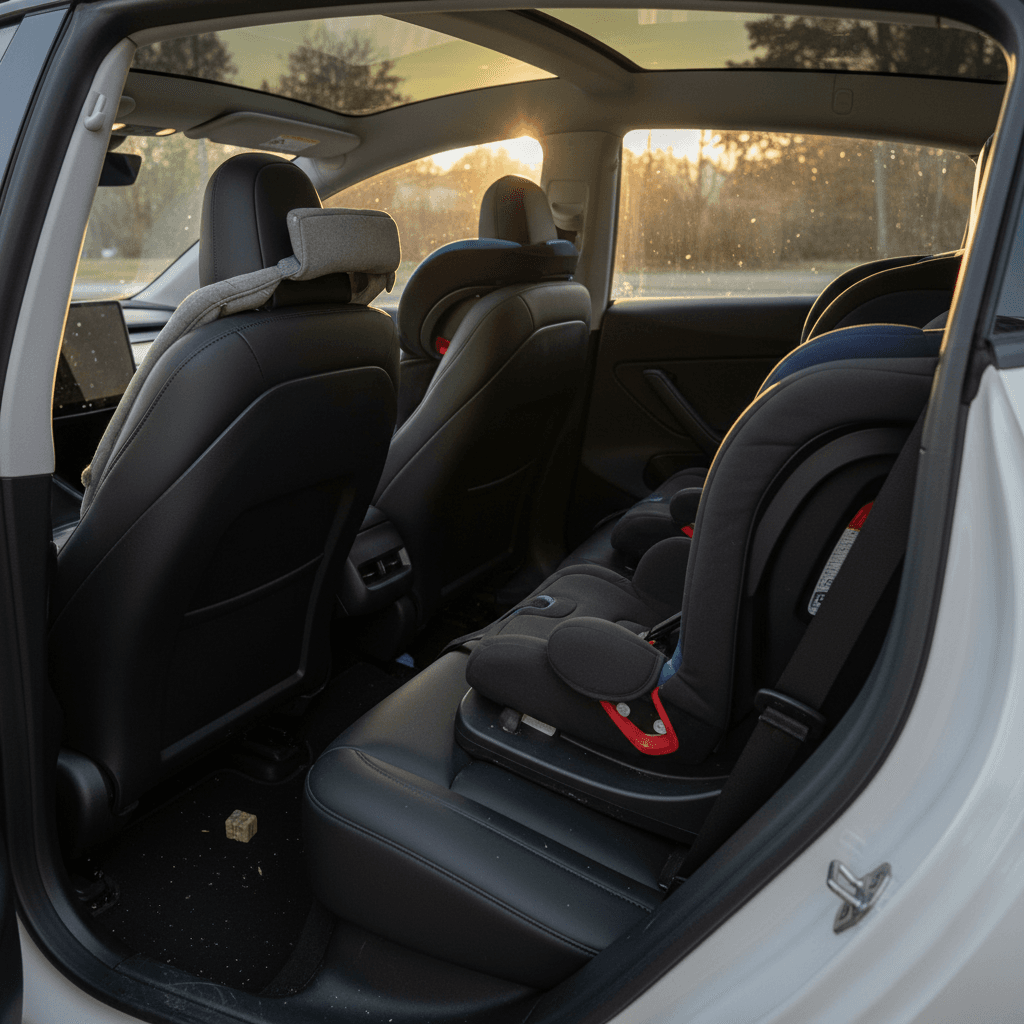
If you’re looking at a Tesla Model Y as the family hauler, the big question is simple: how well do child seats actually fit? This Tesla Model Y child seat fit guide walks through LATCH locations, best seating positions by age, three‑across possibilities, and practical installation tips so you can set your kids up safely from day one.
Scope of this guide
Why the Tesla Model Y works so well for families
Family‑friendly strengths of the Tesla Model Y
On paper, the Model Y is a compact crossover. In practice, the flat floor, wide rear bench, and generous legroom make it feel more like a mid‑size SUV where it counts for families: fitting bulky child seats without crushing front‑row passengers. Add a low, flat loading floor and big hatch opening and you have a layout that’s surprisingly forgiving when you’re wrestling with a rear‑facing convertible.
A quick reassurance
Model Y seating layout and LATCH overview
Before you start choosing positions, it helps to understand exactly where the LATCH (Lower Anchors and Tethers for Children) hardware lives in a Tesla Model Y and how it differs by seat.
Tesla Model Y rear seat and LATCH layout (5‑seat models)
Overview of anchor hardware you can use for different seating positions in the Model Y second row.
| Position | Lower anchors (ISOFIX/LATCH) | Top tether anchor | Typical use |
|---|---|---|---|
| Left outboard (behind driver) | Yes – dedicated pair in seat bight | Yes – on back of seat | Great for rear‑facing or forward‑facing seats. Easy access. |
| Center | No dedicated pair (belt install only) | Yes – on back of center seat | Works well for belted convertibles and boosters once kids are bigger. |
| Right outboard (behind front passenger) | Yes – dedicated pair in seat bight | Yes – on back of seat | Most popular for infant seat bases; easy access from curb side. |
Always confirm details in your specific car’s owner’s manual, especially for 7‑seat configurations.
The IIHS rates the Model Y’s child seat anchors as Acceptable for ease of use, mainly because the lower anchors can sit a little deeper in the seat bight than ideal. In practice, once you know where to reach, attaching LATCH connectors is straightforward, and the exposed tether anchors on the back of each rear seatback are easy to identify and use.
Which child seat types work best in a Model Y?
How common child seat types play with the Model Y
Most mainstream seats fit, but some work better than others.
Infant carriers
Detachable infant carriers with bases generally install cleanly on either rear outboard seat using LATCH or the seatbelt.
Look for bases with a narrow footprint if you’re planning for three‑across or have very tall front passengers.
Convertibles
Rear‑facing convertibles fit well on the outboard seats, even for taller shells.
Using a more upright angle (once your child’s old enough) can preserve passenger legroom.
Boosters
High‑back and backless boosters fit across the bench, but buckle access can get tight if you run three across.
Narrow boosters with open belt paths are your friend here.
Because the Model Y’s rear bench is relatively flat and the door openings are tall, you’re not fighting aggressively bolstered cushions or low roofs the way you might in a sportier SUV. The main constraints are seat width (for three‑across) and anchor accessibility at the lower LATCH points.
Seat width reality check
Best Model Y seating positions by age and stage
The safest place for a child seat is wherever you can get the best installation: tight, correctly reclined, and using either LATCH or the seatbelt exactly as the child seat manual describes. With that in mind, here are Model Y‑specific recommendations by age and stage.
Recommended seating positions in a Model Y
1. Newborn–12 months: infant seat or rear‑facing convertible
Most parents prefer the <strong>right outboard</strong> seat so they can load from the curb and see the baby easily. Use LATCH or the seatbelt (never both). If front‑passenger legroom is tight, move the infant seat behind the driver and slide the seat back to a safe position away from the wheel.
2. Toddlers: extended rear‑facing (up to 3–4 years)
Keep toddlers rear‑facing on one of the <strong>outboard</strong> seats. The Model Y has enough legroom that you can usually keep them rear‑facing to the upper limits of your seat without the front passenger eating the dashboard.
3. Preschoolers: forward‑facing harnessed
Forward‑facing harnessed seats work well in all <strong>three rear positions</strong>. Use LATCH on the outboard seats (within the weight limit) or the seatbelt anywhere, and always connect the top tether to the anchor on the back of the seat.
4. Big kids: high‑back or backless booster
For booster‑age kids, the <strong>center seat</strong> is appealing because it’s furthest from side impact, but its raised cushion and seatbelt geometry can make fit trickier. If the belt doesn’t sit correctly across the shoulder and hips in the center, use an outboard seat instead.
5. Mixed ages: keeping everyone happy
In a two‑kid setup, many families run a rear‑facing seat behind the passenger and a booster or forward‑facing seat behind the driver. That leaves the center seat open for a third passenger or occasional extra child seat when needed.
Forward‑facing? Don’t skip the tether.
Can you fit three child seats across in a Model Y?
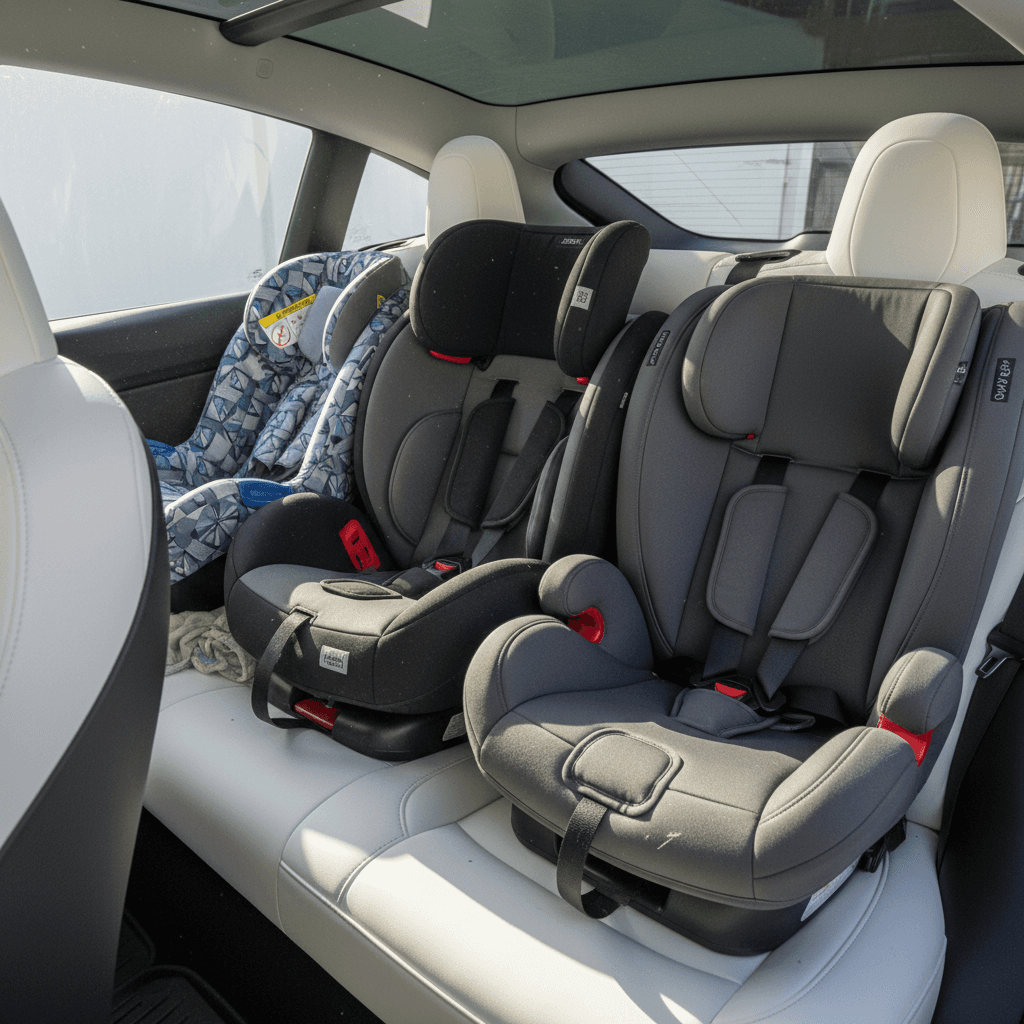
Short answer: yes, three‑across is realistic in a Model Y with the right combination of seats. Family testers, including dedicated child‑seat reviewers, have successfully installed two forward‑facing seats plus one rear‑facing seat across the back row.
Example three‑across layouts that work in a Tesla Model Y
These are sample patterns only – always confirm compatibility for your specific seats and children.
| Left (behind driver) | Center | Right (behind passenger) | Notes |
|---|---|---|---|
| Narrow forward‑facing harnessed | Narrow rear‑facing convertible (seatbelt install) | Narrow forward‑facing harnessed | Common setup for three under five. Belt‑install the center seat to free LATCH points for the outboard seats. |
| High‑back booster | Forward‑facing harnessed (seatbelt + tether) | High‑back booster | Works for older siblings plus a harnessed middle child. Watch buckling access for boosters. |
| Rear‑facing infant base | Narrow booster | Rear‑facing convertible | Better for mixed ages; booster in the center can preserve buckle access on at least one side. |
Using three identical narrow seats is often the easiest path to a successful three‑across.
Three‑across success tips
Remember that only the outboard positions have lower anchors, and LATCH spacing is fixed. In three‑across mode, you’ll often end up installing at least the center seat (and sometimes all three) with the seatbelt instead of LATCH. That’s fine from a safety standpoint as long as the install is tight and the top tether is used where required.
Step‑by‑step installation tips for Model Y parents
Model Y–specific child seat installation checklist
1. Start with the owner’s manual
Open your Model Y manual to the child restraint section and confirm where LATCH is allowed, how much combined child+seat weight can use the lower anchors, and any Tesla‑specific notes about center‑seat installations.
2. Choose LATCH vs. seatbelt wisely
On the outboard seats, either method is acceptable if your child’s weight is within the LATCH limit. In three‑across or with heavier kids, a <strong>seatbelt install</strong> is often the only way to keep everything within weight and spacing limits.
3. Find and clear the anchor points
Run your fingers into the seat bight to locate the lower anchors; they may be a bit recessed. Move seatbelts and buckles out of the way so they don’t get trapped under the child seat base during installation.
4. Get the angle and recline right
Use the Model Y’s rear seatback adjustment to help dial in the correct recline for rear‑facing seats. You can recline the back slightly, install the seat firmly, then gently bring the back more upright to snug things up (if your seat manufacturer allows this trick).
5. Put your weight into it
Whether you’re using LATCH or the belt, press down firmly on the child seat, ideally from inside the shell, while tightening. In the Model Y’s firm rear cushions, this usually results in a very solid, wobble‑free install.
6. Use and check top tethers
Route the tether strap over the seatback to the anchor on the rear of that specific position. Check that the strap isn’t twisted and that it’s snug, but not cranked so hard that it distorts the seat shell.
7. Do the final shake test
At the belt path, give the installed seat a firm shake side‑to‑side and front‑to‑back. If it moves more than about an inch, re‑tighten or reassess your install method.
When to call in a pro
Real‑world usability: space, comfort, and everyday life
Front passenger legroom with rear‑facers
The Model Y’s longer wheelbase and upright seating position mean a rear‑facing seat behind the passenger doesn’t automatically doom the front seat to unusable status. Most average‑height adults can sit comfortably in front of a compact; extended‑rear‑facing convertible, especially once the child is old enough for a more upright angle.
If you have a particularly tall front passenger, consider putting the rear‑facing seat behind the driver and letting them use the passenger seat.
Cargo space and stroller reality
The Model Y’s deep rear cargo well and under‑floor bin swallow full‑size strollers more easily than many compact crossovers. That matters when you’re also packing diaper bags, scooters, and maybe a portable EV charger.
Folding the 60/40 split seatbacks down is simple, but remember to disconnect any top tethers before dropping seats for big Costco runs.
Road‑trip ready
Safety cautions and common mistakes to avoid
- Using LATCH and the seatbelt at the same time for the same seat (most child seat manufacturers explicitly prohibit this).
- Letting the center passenger use lower anchors borrowed from both sides unless your vehicle and seat manuals both say it’s allowed.
- Skipping the top tether on forward‑facing harnessed seats, even for short trips.
- Routing the tether to the wrong anchor; each rear position in the Model Y has its own anchor on the seatback.
- Allowing a booster‑age child to route the shoulder belt behind their back or under their arm for comfort.
- Leaving heavy or hard items unsecured in the cargo area where they can become projectiles in a crash.
Airbag and front‑seat warning
What to check when buying a used Model Y for family duty
If you’re shopping the used market, especially through a marketplace like Recharged, it’s worth taking a child‑seat‑specific look at any Model Y before you commit. Most examples haven’t been abused, but family use does leave clues.
Child‑seat focused checklist for used Model Y buyers
1. Inspect seatbelts and buckles
Check that all rear buckles latch and release smoothly and that none of the belts are frayed, twisted, or slow to retract, signs of past hard use or contamination.
2. Examine LATCH and tether anchors
Look for bent, rusty, or paint‑flaked lower anchors and tether loops. Light cosmetic wear is normal; significant deformation is not.
3. Look for crash or repair history
Ask specifically about any rear‑end collisions and whether seatbelts or airbags were replaced. If the vehicle has been in a significant crash, child‑seat points may need inspection or replacement.
4. Test‑fit your actual seats
If possible, bring at least one of your own child seats to the test drive and do a trial install in your preferred positions. This is the fastest way to confirm fit and buckling access.
5. Review the Recharged Score
On vehicles sold through <strong>Recharged</strong>, the Recharged Score includes a detailed vehicle health check. Pair that with your own seat test‑fit and you’ll have a much clearer view of how the car will work for your family day‑to‑day.
Leasing vs. buying with growing kids
Tesla Model Y child seat fit FAQ
Common Tesla Model Y child seat questions
Bottom line: Is the Tesla Model Y a good family EV?
If you strip away the tech hype and look at it like a safety analyst, the Tesla Model Y stacks up as a very competent family vehicle. It offers two robust LATCH positions, tethers for all three rear seats, plenty of legroom for rear‑facing seats, and enough width to make three‑across a real option rather than a marketing claim.
For parents buying used, pairing this child‑seat fit knowledge with a Recharged listing, complete with a Recharged Score battery‑health report and expert help on financing or trade‑ins, takes a lot of the uncertainty out of switching to an EV. Get the installation right, keep kids in the right seats for their age and size, and a Tesla Model Y can cover school runs, road trips, and everything in between without burning a drop of fuel.