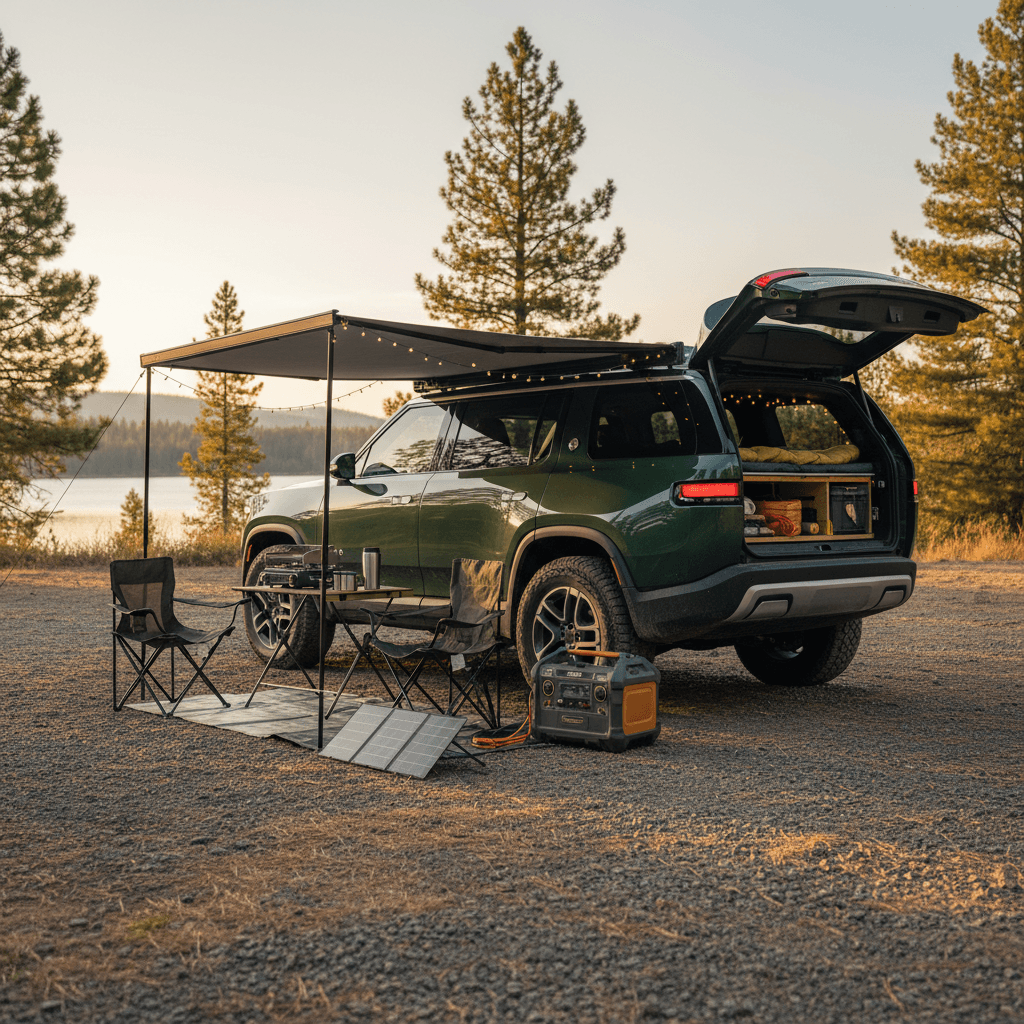
If you bought a Rivian R1S with camping in mind, you’re on the right track. The R1S combines serious off‑road capability, big battery capacity, and clever software like Camp Mode to turn a three‑row SUV into a surprisingly comfortable basecamp. This Rivian R1S camping setup guide walks you through how to sleep in the vehicle, power your gear, manage battery use overnight, and choose accessories like rooftop tents and camp kitchens.
Who this guide is for
Why the Rivian R1S Makes Sense for Camping
Core advantages of the R1S as a camping platform
What it does better than a typical gas SUV
Big battery, quiet nights
The R1S’s large battery pack lets you run climate control, lights, and outlets for hours without idling an engine or dealing with fumes and noise. It’s more like camping with a silent generator built in.
Real off-road capability
With adjustable air suspension, multiple drive modes, and excellent traction, the R1S can comfortably reach trailheads and dispersed sites that would challenge many crossovers.
Flat cargo area
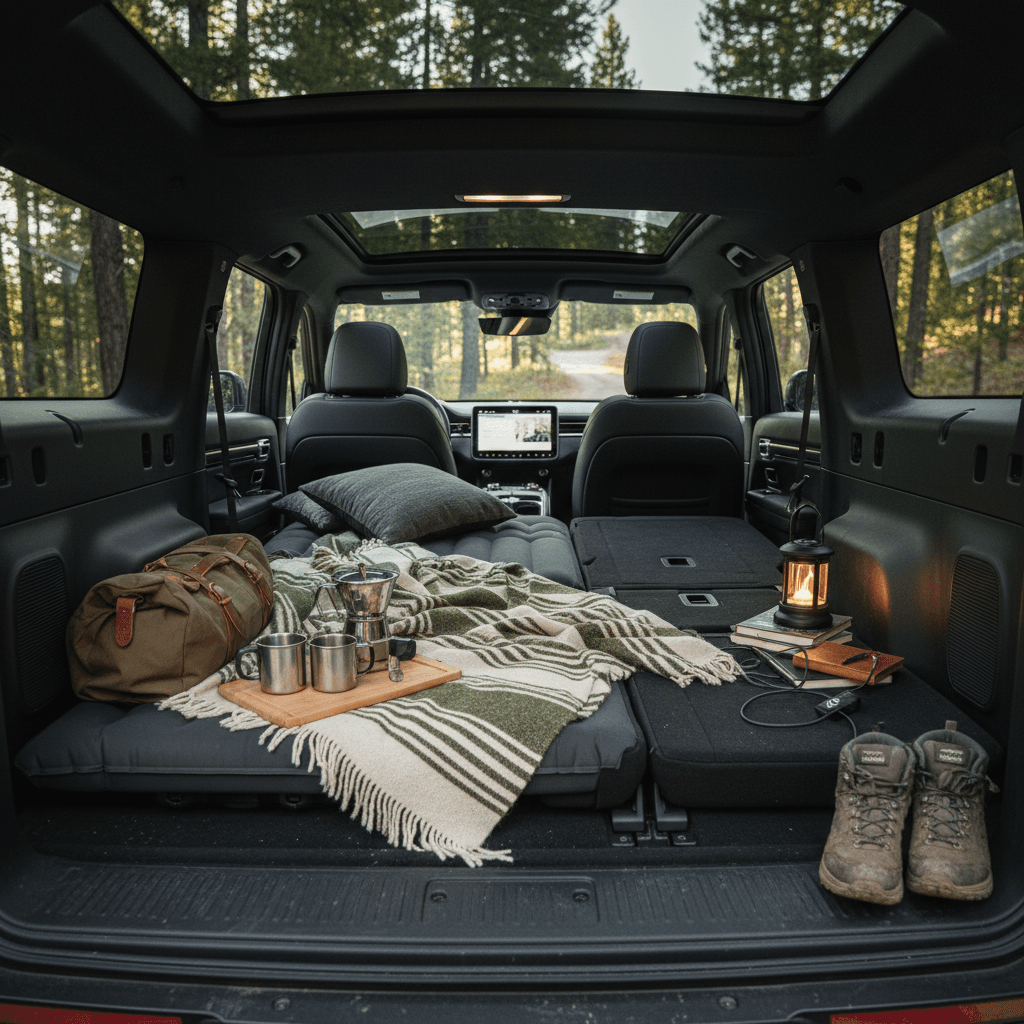
Fold the second and third rows flat and you have a long, wide cargo floor that can be turned into a two‑person sleeping platform with room for gear under and beside you.
Where the R1S differs from the R1T is storage layout. You don’t get a Gear Tunnel, but you do get covered cargo, an under‑floor storage bin, and roof rack options. Done right, it’s a very livable space for weekend camping or multi‑day trips.
Real-world camping behavior in Rivians
A quick note on battery numbers
Key Rivian R1S Features That Matter at Camp
- Camp Mode with self‑leveling suspension, climate control, and “Camp Courtesy” lighting/sound behavior.
- Adjustable air suspension that can raise for clearance on rough approaches or lower for easier rooftop‑tent access.
- Multiple 120‑volt AC outlets (household style) in the second row and cargo area for fridges, induction plates, laptops, and more.
- Numerous USB‑C ports for phones, tablets, and low‑draw electronics.
- Under‑floor storage bin in the cargo area for recovery gear and camp items you don’t need every hour.
- Available crossbars and roof rack mounting points for rooftop tents and cargo boxes.
- Strong tow rating, so you can pull a small trailer or off‑road camper if you outgrow in‑vehicle camping.
Learn your vehicle in daylight first
Step-by-Step Rivian R1S Camping Setup (Base Vehicle)
From highway to campsite: your basic setup sequence
1. Choose your parking spot wisely
Aim for ground that’s as level as possible and avoid deep ruts or sharp rocks. The more level you start, the less the suspension has to work and the better you’ll sleep.
2. Set ride height and engage Park
Switch to a moderate ride height in All‑Purpose or Off‑Road mode as you park. Once you’re where you want to stay, shift to Park and let the vehicle settle before you start Camp Mode.
3. Fold second and third rows
Fold the 60/40 second row and the third row fully flat. Remove any headrests or bulky items that interfere with your mattress lying flat from tailgate to back of front seats.
4. Lay out your sleeping platform
Use a tri‑fold memory‑foam mattress or camping pads sized to the width between the wheel wells. Test fit at home so you know exactly how they lay with the seats folded.
5. Stage your gear zones
Keep heavy items like water jugs and coolers just behind the second row and lighter gear further aft or in the frunk. Decide what must stay inside overnight and what can live in a rooftop box.
6. Activate Camp Mode
Once you’re settled, go into the climate/vehicle menu, choose Camp Mode, set your preferred temperature, decide whether outlets stay powered, and enable Camp Courtesy so you’re not lighting up the campground.
A simple first‑trip strategy
Dialing In Rivian Camp Mode
Rivian’s Camp Mode is one of the R1S’s biggest advantages over a gas SUV. Instead of idling an engine, you ask the battery to run climate, outlets, and select vehicle systems while you sleep. Used thoughtfully, it makes the R1S feel more like a hotel room on wheels than a truck with a sleeping bag.
Core Camp Mode settings
- Temperature: Pick a realistic overnight setting. In mild weather, 68–72°F is usually enough; in colder conditions you may want it warmer, but energy use will rise.
- Fan speed: Use a low or medium fan to stay comfortable without blowing directly on you all night.
- Zones: Remember the R1S lets you control front and rear zones separately. For sleep‑in‑the‑back setups, focus on the rear zone and close unused vents.
- Outlets on/off: Decide if the 120‑volt outlets should remain powered. Leaving them on adds some energy use but is essential if you’re running a fridge or CPAP.
Camp Courtesy & creature comforts
- Camp Courtesy: Enable this so exterior lights, chimes, and proximity locking don’t wake your neighbors at 2 a.m. when you grab something from the car.
- Lighting: Use the interior light dimming controls and consider small battery lanterns for localized light that doesn’t glare.
- Displays: Turn screen brightness way down or off once you’ve set climate. If you may want to adjust settings from the second row, leave the rear screen on a low brightness.
- App control: The Rivian app can adjust some settings, but owners report that for long overnight sessions it’s more reliable to set and forget from the main screen.
Precondition before you park
Power Outlets and Running Gear at Camp
The R1S gives you multiple ways to power your campsite without hauling a separate battery pack. Knowing where the outlets are, and what they can realistically support, keeps you from tripping breakers mid‑omelet.
Common Rivian R1S power options for camping
Approximate locations and best uses. Always confirm exact specs in your owner’s manual for your model year.
| Outlet / Port | Typical Location | Best For | Notes |
|---|---|---|---|
| 120V AC outlet #1 | Back of center console (second row) | Laptops, camera chargers, low‑draw cooking gear | Turn outlets on in the Energy/Camp Mode menu. |
| 120V AC outlet #2 | Cargo area driver‑side wall near tailgate | Portable fridge, induction plate, air pump | Total AC capacity is limited; avoid running multiple high‑wattage devices at once. |
| USB‑C ports (6 total) | Front console, rear headrests, rear of console, cargo area | Phones, tablets, headlamps, small fans | Some ports provide higher wattage than others; test where you plug laptops. |
| 12V outlets | Cabin and cargo area (varies by model year) | Legacy gear, some coolers, small pumps | Check your specific vehicle, some later builds relocated or removed certain 12V sockets. |
Most R1S configurations offer two 120‑volt outlets plus multiple USB‑C ports that can run light appliances, electronics, and a portable fridge.
Respect the inverter limits
Sleeping Setups Inside the R1S
You don’t need a custom drawer system or a rooftop tent to sleep comfortably in an R1S. The flat floor and relatively tall roofline make it easy to build a simple, flexible sleeping setup that still lets you haul people during the week.
Popular R1S interior sleeping layouts
Pick a layout that matches how often you camp and how much you want to modify the vehicle
Full‑width mattress
Best for comfort‑first couples.
Use a full‑ or queen‑width tri‑fold memory‑foam mattress cut down to match the cargo‑area length. Store bedding in a rooftop box or under the mattress during the day.
Platform + storage
Best for gear‑heavy trips.
Build a low platform over stackable bins. You sleep on top while recovery gear, stoves, and dry food live underneath. Keep platform height modest so you can still sit up.
Split sleep + gear
Best for solo travelers.
Sleep diagonally or on one side on a narrow mattress and keep a tall bin or drawer stack on the other for camera gear, clothing, and food.
Measure twice, cut once
Rooftop Tents, Racks, and Exterior Storage
If you camp often, a rooftop tent can turn the R1S into a true two‑bedroom rig, sleeping up top, storage and living space inside. Rivian offers crossbars and has partnered with brands like Yakima and iKamper, and many generic rooftop tents can be adapted so long as you respect the R1S’s dynamic and static roof‑load ratings.
Rooftop tent pros
- Always‑ready bed: Leave bedding in the tent and simply pop it open at camp.
- More interior room: Keeping sleeping in the tent frees the entire cabin for gear, pets, or kids.
- Cleaner interior: Muddy boots and wet gear stay out of your sleeping space.
Look for low‑profile hard‑shell designs or Rivian‑specific solutions that minimize aerodynamic drag and range loss on the highway.
Rooftop tent tradeoffs
- Range impact: Any rooftop tent will reduce highway efficiency, how much depends on shape and weight.
- Height and access: The already‑tall R1S becomes even taller; use the suspension’s lowest setting for easier setup and teardown.
- Cost: Quality tents and crossbars can easily run $2,000–$4,000, often more than a simple interior sleep setup.
If you only camp a few weekends a year, a good interior mattress may be a better return on investment than a rooftop tent.
Mind roof‑rack and tent weights
Cooking, Kitchens, and Food Storage
Unlike the R1T, the R1S doesn’t have a Gear Tunnel for Rivian’s factory Camp Kitchen, but you still have plenty of options for cooking and food storage. Think of the R1S as the power source and weather‑tight pantry that supports a modular camp kitchen you can set up under an awning or at a picnic table.
Three common kitchen approaches for the R1S
Start simple and add complexity only if you need it
Portable stove + bins
Simple & flexible.
Use a compact butane or propane stove plus nesting cookware stored in a plastic bin. Cook on a picnic table or folding camp table, then stash everything in the cargo area.
12V/120V fridge
No‑ice convenience.
A small compressor fridge/freezer powered from the rear 120V outlet keeps food and drinks cold without ice melt. Ideal for longer trips or hot climates.
Aftermarket slide‑out kitchen
Dedicated setup.
Several aftermarket suppliers now build R1S‑specific drawer and kitchen systems that fit the cargo area, offering a slide‑out worktop, stove mount, and storage.
Use the vehicle as your pantry, not your stove
Managing Battery and Range While Camping
The freedom to run climate and power gear all night is a huge perk of EV camping, but it only works if you keep an eye on your state of charge. A bit of planning goes a long way toward avoiding range anxiety when you pack up camp in the morning.
Smart battery habits for R1S camping
Start camp with a healthy buffer
Aim to arrive at camp with at least <strong>40–60% state of charge</strong>, especially if you’ll be far from DC fast charging. That gives you room for overnight use and the next morning’s drive.
Adjust climate expectations
Running the cabin at 68°F on a cool night will use less energy than turning it into a sauna. Use extra blankets or a high‑quality sleeping bag so you can set Camp Mode to a moderate temperature.
Be selective with AC outlets
Running a fridge and charging devices is reasonable; running a big induction cooktop and hair dryer at the same time isn’t. When in doubt, unplug high‑draw devices once you’re done using them.
Use sun and shade to your advantage
In summer, park in the shade to reduce A/C load. In colder weather, a sunny spot can reduce how hard the heater has to work, especially in the evening and morning.
Check projected range before sleeping
Before you turn in, glance at the projected range and state of charge. If numbers look tight, lower your climate set‑point a few degrees and switch non‑essential outlets off.
Top up whenever it’s convenient
On multi‑day trips, use any chance at a Level 2 charger in town or at a campground so you’re not relying solely on fast charging at the end of the weekend.
Plan your charging around your campsite, not the other way around
Packing Checklist for Rivian R1S Camping
Core camping gear that works especially well with an R1S
Sleeping comfort
Tri‑fold foam mattress or quality pads sized to the R1S cargo area, pillows that compress for storage, and either a two‑person sleeping bag or individual bags depending on climate.
Window covers & ventilation
Reflective or insulated window covers for privacy and thermal control, plus a couple of small USB fans to keep air moving without running the main fan on high all night.
12V/120V power strategy
Short, heavy‑duty extension cord, power strip with built‑in surge protection, USB‑C charging cables for every device, and possibly a small standalone battery bank for campsite lights.
Kitchen basics
Compact stove, fuel, nesting cookware, cutting board, sharp knife, collapsible sink or tub, quick‑dry towels, and clearly labeled food bins that stack neatly in the cargo area.
Recovery & safety
Tire repair kit, portable air compressor, traction boards if you’ll be off‑road, first‑aid kit, headlamps, and a paper map in case your phone or infotainment loses signal.
Organization
Stackable storage bins or soft‑sided cubes so each category of gear, sleeping, cooking, clothing, tools, has a dedicated home. This is what turns a packed SUV into a livable space.
Buying a Used Rivian R1S With Camping in Mind
If you’re shopping for a used Rivian R1S specifically as a camping and adventure rig, it pays to look beyond color and wheel design. Focus on battery health, software features, and how the previous owner used the vehicle.
Features and options to prioritize
- Battery pack: Larger packs give you more margin for overnight Camp Mode plus morning driving. That can make a noticeable difference if you frequent remote areas.
- Off‑Road or Adventure packages: These often include skid plates, tow hooks, and other hardware that make rough‑road approaches less stressful.
- Factory crossbars or roof rack: If you’re planning on a rooftop tent or cargo box, having Rivian‑approved hardware already installed is a plus.
Condition and history checks
- Battery and charging history: Ask for documentation on how the vehicle was charged. Frequent DC fast charging isn’t a deal‑breaker, but you want to see that the pack still delivers healthy range.
- Undercarriage and body: Crawl under the vehicle and inspect for off‑road scrapes, bent skid plates, or rust in regions that salt winter roads.
- Interior wear: A camping‑focused R1S may have more scuffs or minor stains. That isn’t a problem if the price reflects it, but you don’t want hidden water damage or wiring mods.
How Recharged can help
Rivian R1S Camping FAQ
Frequently Asked Questions About Camping in a Rivian R1S
Set up thoughtfully, the Rivian R1S is one of the most capable all‑electric camping vehicles on the market, equally at home in a national‑park campground or a quiet forest road. Start with a simple sleep‑inside layout, learn how Camp Mode and the outlets behave in your climate, and then layer in tents, kitchens, and storage systems as your trips get longer. Whether you’re shopping for your first used R1S or dialing in the one in your driveway, approaching your camping setup methodically will pay off every time you shut the doors, dim the screens, and let the battery quietly keep you comfortable through the night.