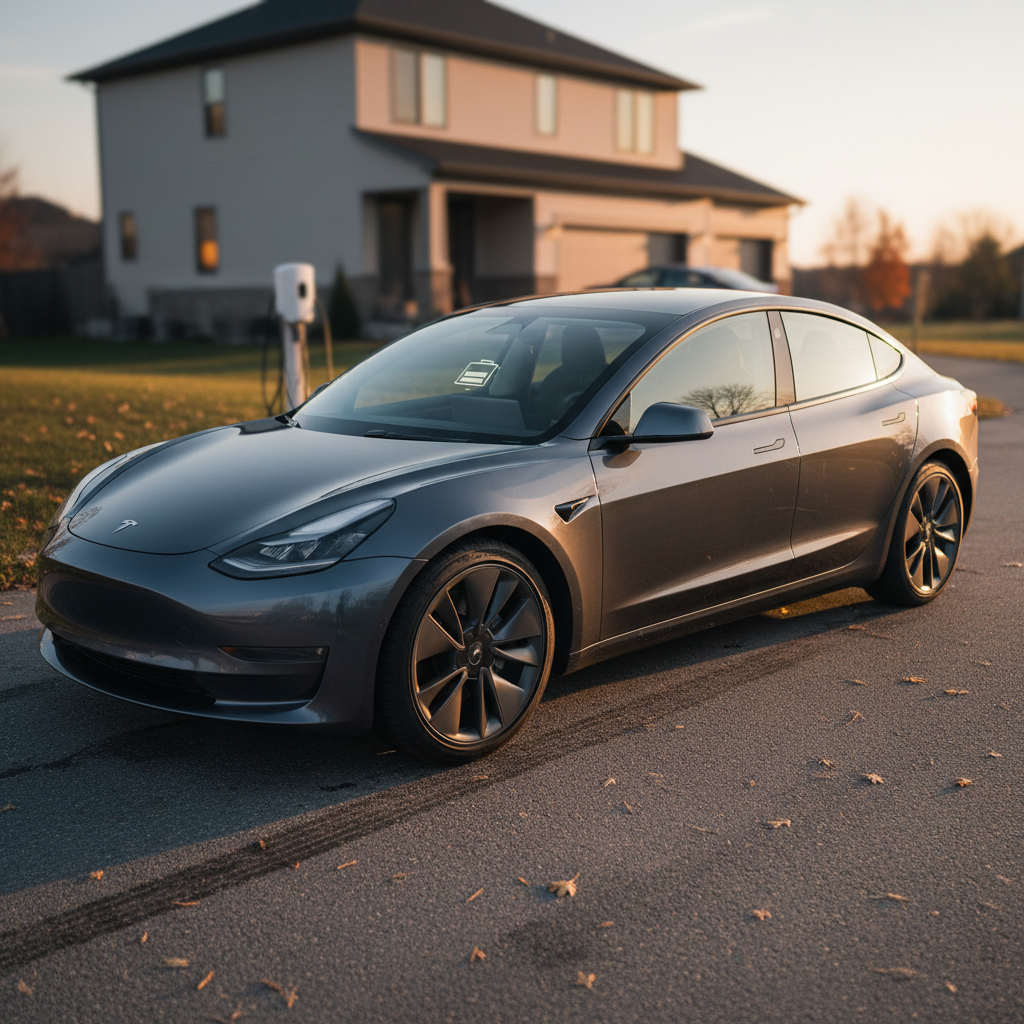
If you’re eyeing a Tesla Model Y, especially a used one, the first big question is almost always the same: how long will the battery last before range really starts to drop? The good news is that Model Y batteries are proving to be long‑lived workhorses, but the details matter: what pack you have, how it’s been charged, climate, and mileage all play a role.
Quick answer
How long does a Tesla Model Y battery really last?
Let’s translate lab talk into driveway reality. When people ask, “Tesla Model Y battery lifespan how long?” they’re usually trying to understand whether they’ll face a massive battery bill at 80,000 miles, or if the pack will outlast their loan.
- Most Model Y owners see roughly 5–10% range loss over the first 100,000 miles under normal use.
- Data from high‑mileage Teslas (Model 3/Y share very similar packs) shows batteries comfortably passing 200,000 miles with usable range still above 80–85% for many drivers.
- Thermal management and conservative software buffers mean the pack isn’t actually using 0–100% of its physical capacity, which helps prolong life.
If you keep a Model Y 8–12 years and stay under about 200,000 miles, odds are high you’ll never need a full battery replacement. Degradation is gradual and, for most owners, more of a slow decrease in road‑trip range than a sudden failure.
Tesla Model Y battery basics: packs, chemistry, and range
Understanding what’s under the floor of a Model Y helps make sense of lifespan. Tesla uses different battery chemistries and pack sizes depending on trim and build location.
Common Tesla Model Y battery configurations
Approximate pack sizes and chemistries by trim. Exact values vary slightly by year and region.
| Trim | Approx. usable capacity (kWh) | Chemistry | Typical EPA range (new, miles) |
|---|---|---|---|
| Model Y RWD (LFP, some markets/years) | ~60 | LFP (lithium iron phosphate) | ~260–280 |
| Model Y Long Range AWD | ~75–78 | NCA/NCM (nickel‑rich) | ~310–330 |
| Model Y Performance | ~75–78 | NCA/NCM (nickel‑rich) | ~285–303 |
Battery size and chemistry influence range and how the pack ages over time.
LFP vs nickel‑based packs
Battery degradation: what to expect over time
EV batteries don’t suddenly “die” like a smartphone after two years. They slowly lose usable capacity, which you feel as reduced range. With the Model Y, degradation usually follows a recognizable pattern.
Typical Model Y degradation curve
How capacity usually changes over mileage under normal use
Early dip (0–20,000 miles)
It’s common to see a small initial drop of 3–5% in the first year or two. Think of it as the pack “settling in.”
Slow phase (20,000–150,000 miles)
After the early dip, degradation usually slows to a crawl, often around 1–2% every additional 50,000 miles when treated well.
High‑mileage behavior
Well‑cared‑for packs often stay above 80% of original capacity even past 200,000 miles. Abuse, heat, or extreme fast charging can push that lower.
Dash range isn’t a lab instrument
Warranty: how long Tesla covers the Model Y battery
A big clue to expected lifespan is how far the manufacturer is willing to put its own money on the line. Tesla’s Model Y battery warranty is straightforward but varies slightly by configuration.
Tesla Model Y battery & drive unit warranty
Coverage at a glance for most North American Model Y vehicles. Always verify details for a specific VIN and region.
| Trim | Time limit | Mileage limit | Minimum guaranteed capacity |
|---|---|---|---|
| Model Y Long Range | 8 years | 120,000 miles | At least 70% battery capacity |
| Model Y Performance | 8 years | 120,000 miles | At least 70% battery capacity |
| Model Y RWD (varies by year/region) | 8 years | 100,000–120,000 miles | At least 70% battery capacity |
Tesla guarantees both time and mileage, plus a minimum capacity retention threshold.
That “70% capacity” clause means Tesla expects most packs to stay above that mark well past the warranty window under normal conditions. Many real‑world cars exceed that by a healthy margin.
Used‑car tip
What actually shortens, or extends, Model Y battery life
Battery chemistry sets the stage, but how the car is used and charged determines whether your Model Y ages gracefully or burns through its good years early. Here are the biggest levers.
Key factors that affect Model Y battery lifespan
1. State of charge habits
Living at 100% all the time is hard on nickel‑based packs. Keeping your daily charge limit around <strong>70–80%</strong> (or even 50–60% if you drive very little) can significantly extend life. LFP packs are more tolerant of 100% charging.
2. DC fast charging frequency
Supercharging is great for road trips but stressful if used all the time. Relying primarily on <strong>Level 2 home charging</strong> and saving fast charging for long drives is easier on the battery.
3. Climate and temperature swings
High heat accelerates chemical aging. Garaging the car, avoiding long periods at 100% in summer, and preconditioning in winter all reduce stress on the pack.
4. Driving style and load
Frequent hard acceleration, towing, or heavy loads make the battery work harder and run warmer. The occasional spirited drive is fine; constant abuse isn’t your battery’s friend.
5. Calendar age vs. mileage
Batteries age with time as well as miles. A low‑mileage car that’s 10 years old and often stored full in a hot climate can be in worse shape than a higher‑mileage car treated gently in mild weather.
Heat is the silent killer
Real-world Tesla Model Y battery lifespan scenarios
Scenario 1: Typical commuter
You drive 12,000–15,000 miles per year, mostly suburban and highway, and charge at home overnight to 70–80% with the occasional Supercharger on road trips.
- 10‑year outlook: Roughly 120,000–150,000 miles, with many owners still seeing 85–90% of original range.
- 15‑year outlook: 180,000–225,000 miles. Range may be down around 75–85%, but the car is still very usable for daily driving.
Scenario 2: Road warrior
You put on 25,000–30,000 miles a year and Supercharge several times a week, often to high states of charge.
- 8‑year outlook: 200,000+ miles is realistic, but capacity might be closer to the 70–80% range by then, especially if climate is hot.
- Takeaway: You’re more likely to hit the mileage limit of the warranty long before the years run out, and degradation will be noticeable on long trips.
In both scenarios, we’re talking about lifespans that are broadly in line with, or better than, many gasoline engines and transmissions, just with a different kind of “wear” that shows up as range loss instead of mechanical breakdowns.
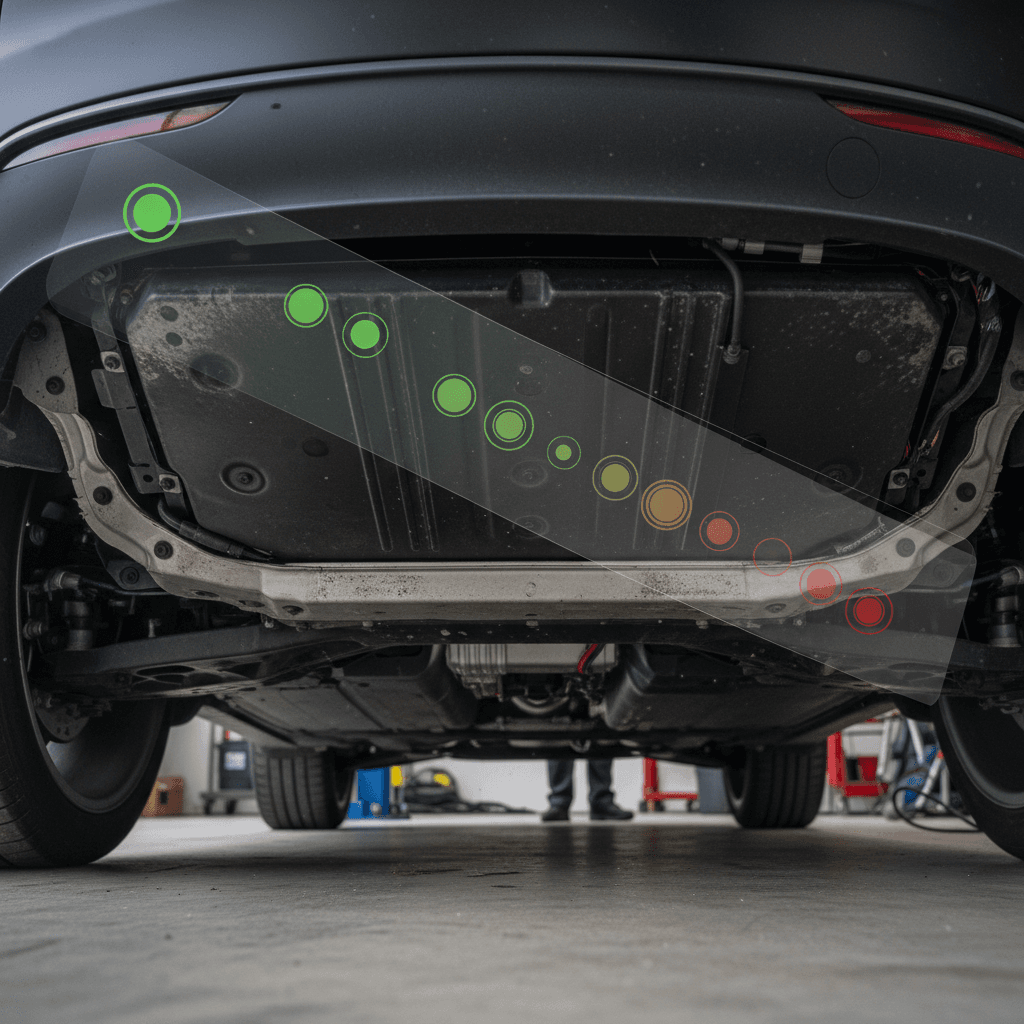
Buying a used Tesla Model Y: how to judge battery health
If you’re shopping for a used Model Y, battery health isn’t a nice‑to‑know, it’s the core of the car’s value. Two Model Ys can have the same mileage but very different battery stories depending on how they were treated.
Used Model Y battery checklist
1. Look at odometer and build date together
A 4‑year‑old Model Y with 60,000 miles that mostly did highway commuting can be a safer bet than a 9‑year‑old car with 40,000 miles that sat outside fully charged in the sun.
2. Ask about charging habits
Did the previous owner mostly charge at home to 70–80%? Or live on Superchargers and 100% charges? Honest answers here tell you a lot about likely degradation.
3. Check remaining battery warranty
Knowing how many years and miles of Tesla battery coverage remain can sway the decision, especially if you’re nervous about long‑term ownership.
4. Review energy and range history
A quick drive and a look at typical consumption (Wh/mi) over recent trips can reveal whether range seems in line with similar cars. Big outliers deserve more investigation.
5. Get a proper battery health report
The most reliable way to avoid guessing is to use <strong>independent diagnostics</strong> that measure actual usable capacity instead of inferring from the dash.
Compare to similar cars, not to the sticker
How Recharged evaluates Tesla Model Y battery health
This is where a marketplace built around EVs, not gas cars, makes a real difference. At Recharged, every Tesla Model Y we list goes through a Recharged Score evaluation that includes battery‑specific testing, because the pack is the heart of the vehicle.
What the Recharged Score tells you about a Model Y battery
Battery transparency you won’t get from a typical used‑car lot
Verified usable capacity
We use professional diagnostics to estimate how much of the battery’s original capacity is still available, not just what the dash says.
Degradation vs. peers
We benchmark each car against similar Model Ys of the same age and mileage, so you can see if it’s better, worse, or right on target.
Fair pricing and guidance
Battery health feeds directly into our fair market pricing and our guidance on whether a particular car is a smart buy for your needs.
Ready to find your next EV?
Browse VehiclesIf you’re planning to keep a Model Y for a long time or you’re nervous about betting big on a used EV, that level of transparency is worth its weight in lithium. You’re not just buying a car, you’re buying a specific battery with a known story.
Make the most of a healthy pack
Practical tips to keep your Model Y battery healthy
Whether you already own a Model Y or you’re planning to buy one, a few simple habits can add years of healthy range to your battery’s life.
- Set your daily charge limit to around 70–80% on nickel‑based packs (Long Range/Performance). Go higher only before trips.
- If you have an LFP‑equipped rear‑wheel‑drive Model Y, it’s fine, and even recommended, to charge to 100% regularly.
- Favor Level 2 home or workplace charging for daily use. Save Supercharging for road trips and true convenience needs.
- Avoid parking for long stretches at 100% in hot weather, especially outdoors. If you must charge to full, time it so you start driving soon after.
- Use the Scheduled Departure or preconditioning features so the pack is at a comfortable temperature when you start driving, especially in winter.
- Keep software up to date; Tesla often refines thermal management, charging curves, and range estimates over the air.
Think in decades, not months
FAQ: Tesla Model Y battery lifespan and degradation
Frequently asked questions about Model Y battery life
Bottom line: Is a Tesla Model Y battery built to last?
When you look past the anxiety and into the data, the Tesla Model Y’s battery story is reassuring. With sane charging habits and halfway decent climate, the pack is likely to outlast the typical ownership cycle, and often the financing term, by a wide margin. You’ll see some range loss over time, but not the catastrophic cliff many people fear.
If you’re considering a used Model Y, the key is to treat battery health like you’d treat an engine inspection on a gas car. Ask about history, understand the warranty, and, whenever possible, lean on proper diagnostics like the Recharged Score rather than guesswork. That’s how you turn a big unknown into a confident, long‑term purchase.
And if you’re just starting your EV search, you can explore a wide range of vetted used Teslas and other EVs on Recharged, with transparent battery health, fair pricing, financing options, and expert support from the moment you start browsing to the day your EV shows up in your driveway.