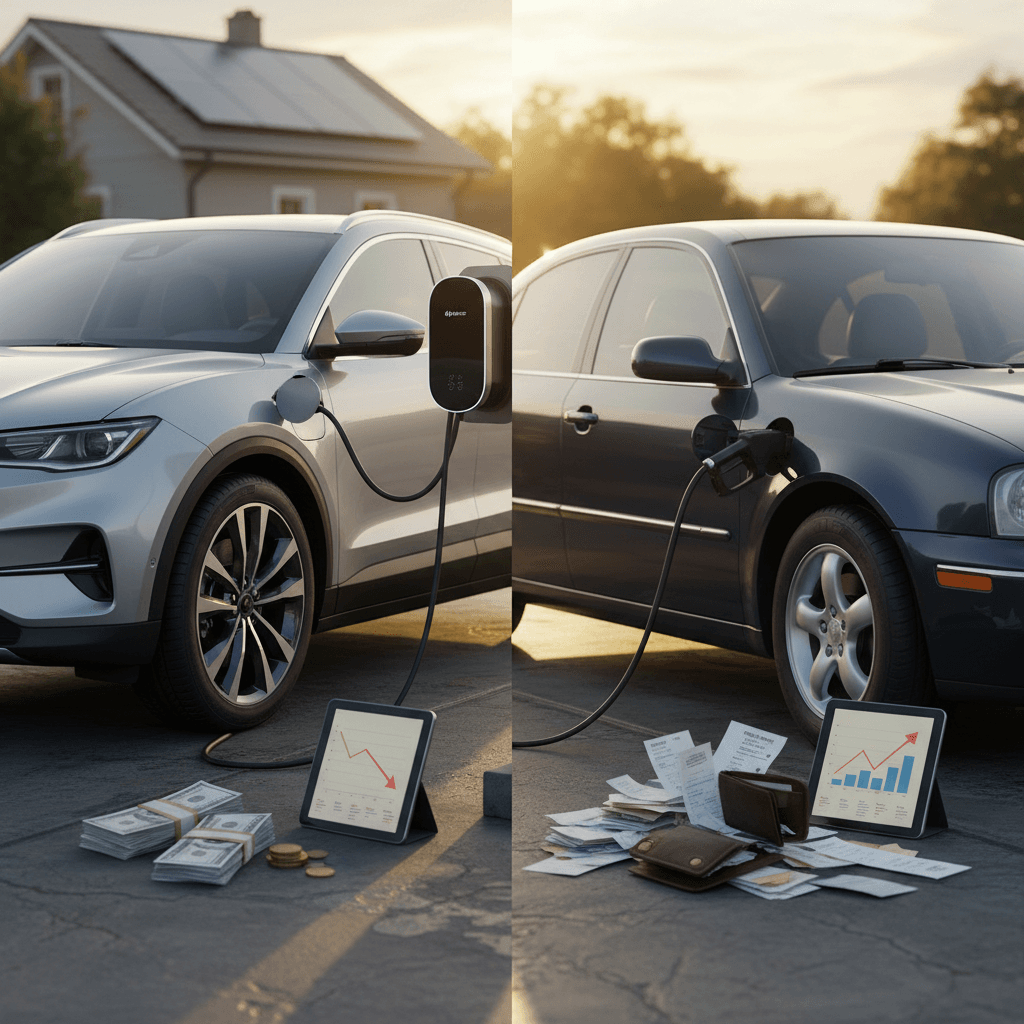
If you’re considering a Tesla Model Y, you’re probably not just asking “What’s the price tag?” You’re asking what really matters: What is the Tesla Model Y annual cost of ownership, and how does it compare with a gas SUV over several years. In this guide, we’ll break that down line by line, charging, insurance, maintenance, depreciation, and how buying used can significantly change the math.
At-a-glance: Typical Model Y annual costs
Why the Tesla Model Y annual cost of ownership matters
Sticker price gets headlines, but total cost of ownership is what affects your budget every month. The Model Y is one of the most popular EVs in the U.S., and it’s often cross-shopped with compact and midsize gas SUVs. When you compare those vehicles fairly, same miles, same driver profile, the Model Y often spends less on energy and maintenance, but more on insurance and upfront purchase price. Understanding those tradeoffs is the key to making a smart decision, especially if you’re considering a used Model Y from a marketplace like Recharged.
Model Y cost of ownership: key 2026 stats
Key assumptions behind our Model Y cost numbers
Before we start throwing numbers around, let’s be clear about the assumptions. Your own costs will vary by state, driving style, and how you buy the car, but you need a baseline to compare against.
- Model: Tesla Model Y Long Range or similar dual-motor trim.
- Miles driven: 12,000 miles per year (close to the U.S. average).
- Electricity price: 17–19¢/kWh national average range in 2025–2026 for residential power.
- Energy efficiency: About 3.2 mi/kWh in mixed driving for a Model Y.
- Charging mix: 80% home charging, 20% DC fast/public charging at a higher price.
- Driver profile: Clean record, mid-30s to 50s, full-coverage insurance with typical limits.
- Ownership period: We’ll focus on cost per year but reference a five-year window for depreciation.
Your numbers will be different
Annual Tesla Model Y charging costs
Energy is where the Model Y can really shine compared with a gas SUV, but the savings depend on how and where you charge. Let’s start with the math and then look at some real-world scenarios.
Estimated annual Model Y charging cost (12,000 miles/year)
Assumes ~3.2 mi/kWh efficiency and a mix of home and fast charging.
| Scenario | Electricity price | Charging mix | kWh per year | Estimated annual cost |
|---|---|---|---|---|
| Home charging – lower cost | $0.15/kWh | 100% home | 3,750 | ≈$560 |
| Typical mix (baseline) | $0.18/kWh home, $0.40/kWh DC fast | 80% home / 20% fast | 3,750 | ≈$750–$800 |
| High-cost electricity region | $0.25/kWh | 100% home | 3,750 | ≈$940 |
| Heavy DC fast charging | $0.20/kWh home, $0.45/kWh DC fast | 50% home / 50% fast | 3,750 | ≈$1,150–$1,250 |
Actual costs depend on your electricity rate, driving style, weather, and how often you use DC fast charging.
Quick rule of thumb

Insurance costs for a Tesla Model Y
If there’s one line item that surprises many first-time EV buyers, it’s insurance. The Model Y is not cheap to repair, and it’s a popular vehicle, which means insurers have plenty of claims data. Recent market analyses put average full-coverage Model Y premiums in the ballpark of $3,200–$3,800 per year for a typical 40‑year‑old driver with a clean record. Younger drivers or those in high-cost states can see much higher figures.
Illustrative annual Model Y insurance ranges
Ballpark ranges assuming full coverage, clean record, and 12,000 miles/year. Your actual quote may fall outside these bands.
| Driver profile | Typical annual premium | Notes |
|---|---|---|
| Experienced driver, low-cost state | $2,200–$2,800 | Favorable ZIP code, good credit, low claims history. |
| Average driver, average-cost state | $3,200–$3,800 | Where many shoppers land in practice. |
| High-cost urban area or higher risk profile | $4,000–$5,500+ | Younger drivers, dense cities, prior claims, or very high coverage limits. |
Use these ranges as a planning tool, then get real quotes based on your exact situation.
What pushes Model Y insurance up?
Maintenance, tires, and repairs
One of the big selling points for any Tesla is reduced routine maintenance. There’s no oil to change, no transmission service, and far fewer moving parts than a gas engine. But that doesn’t mean a Model Y is maintenance‑free.
Where your Model Y maintenance dollars go
Most of your annual spend is tires and basic service, not major repairs.
Tires & rotations
EVs are heavy and powerful, and they like to eat tires.
- Rotate tires about every 6,000–7,500 miles.
- Expect a full replacement roughly every 30,000–40,000 miles, depending on driving.
Budget $300–$400 per year over time.
Cabin filters & fluids
Tesla recommends periodic cabin air filter replacements and brake fluid checks.
- Cabin filters: roughly every 2 years.
- Brake fluid checks: every 2 years, replace as needed.
Plan on $75–$150 per year averaged out.
Repairs & incidentals
Unexpected repairs (door handles, alignment, minor electronics) happen with any modern car.
Over several years, setting aside $100–$200 per year for small issues is prudent.
Put that together and you’re typically looking at $500–$650 per year in maintenance and wear items for a Tesla Model Y over a multi‑year period, often less than a comparable gas SUV once you factor in oil changes, spark plugs, and more complex drivetrain service.
Brake savings add up
Depreciation, taxes, and registration
Depreciation, how much value your Model Y loses each year, is usually the single largest cost of ownership, especially for a new vehicle. EVs in general have seen faster early depreciation than some gas counterparts, though that’s been stabilizing as demand grows and prices normalize.
New Tesla Model Y
- Years 1–3: The steepest drop. It’s not unusual to see $4,000–$6,000 per year in value loss in the early years, depending on incentives and market shifts.
- Years 4–6: Depreciation tends to slow, often closer to $2,500–$3,500 per year.
On average, a five‑year ownership period for a new Model Y can easily see $18,000–$25,000 in depreciation.
Used Tesla Model Y
- Buying a 2–3‑year‑old Model Y means someone else already paid for the steepest drop.
- From there, annual depreciation might look more like $2,000–$3,000, depending on mileage and condition.
This is why shoppers focused on minimizing total cost per year often choose a used Model Y with verified battery health instead of a brand‑new one.
Taxes and registration
Model Y vs gas SUV: annual cost comparison
To understand whether a Tesla Model Y makes financial sense, you have to compare it with a realistic alternative. Let’s pit a Model Y against a well‑equipped gasoline compact/midsize SUV that a typical shopper might cross‑shop.
Illustrative annual ownership costs: Model Y vs gas SUV (12,000 miles/year)
These are ballpark figures for a new vehicle in each category, purchased at similar price points and driven by a similar owner profile.
| Cost category | Tesla Model Y (new) | Comparable gas SUV (new) |
|---|---|---|
| Energy (fuel/electricity) | ≈$750–$900 | ≈$1,600–$2,000 (25 mpg, $3.50–$4.00/gal) |
| Insurance | ≈$3,200–$3,800 | ≈$1,800–$2,400 |
| Maintenance & tires | ≈$500–$650 | ≈$800–$1,100 |
| Depreciation | ≈$4,000–$6,000 | ≈$3,000–$5,000 |
| Taxes & registration | ≈$400–$1,000 | ≈$400–$900 |
| Estimated total per year | ≈$8,800–$12,300 | ≈$7,600–$11,400 |
Energy and maintenance favor the Model Y; depreciation and insurance can tilt toward the gas SUV depending on deals and incentives.
On a purely dollar basis with new vehicles, the Model Y’s energy and maintenance savings can be partially or fully offset by higher insurance and potentially higher early‑year depreciation. Where the Model Y starts to look very compelling is when you buy used or drive a lot of miles each year.
Who “wins,” EV or gas?
How buying a used Model Y changes your costs
Buying used doesn’t change what you pay for electricity or tires, but it can dramatically reduce your two biggest line items: depreciation and insurance. That’s where platforms like Recharged come into play.
Used Model Y: impact on annual costs
Why a 2–4‑year‑old Model Y often offers the best value.
Lower annual depreciation
When you buy a Model Y that’s already absorbed the steepest early‑year drop, your depreciation over the next 3–5 years often drops to ≈$2,000–$3,000 per year instead of $4,000–$6,000.
That single change can shave $150–$250 per month off your true ownership cost versus buying new.
Battery health transparency
The big question with any used EV is battery life. At Recharged, every vehicle comes with a Recharged Score Report that includes verified battery health diagnostics, so you aren’t guessing about range or longevity.
Knowing the pack is healthy lets you confidently spread your purchase over more years and miles, lowering cost per mile.
Insurance can also moderate once a car is a few years old and its replacement value drops, especially if you carry a higher deductible or tweak coverage on an older vehicle. Combined with gentler depreciation, that’s why many shoppers see a used Model Y as the “sweet spot” for total cost per year.
Where Recharged fits in
Ready to find your next EV?
Browse VehiclesPractical ways to lower your Model Y annual costs
Seven levers you can pull to cut Model Y costs
1. Optimize when and where you charge
Use scheduled charging to take advantage of off‑peak electricity rates if your utility offers them, and rely on home Level 2 charging rather than DC fast charging for day‑to‑day use. This alone can save hundreds of dollars per year in energy.
2. Choose the right wheel and tire setup
Big wheels and performance tires look great but can wear faster and reduce efficiency. If you’re cost‑conscious, a smaller wheel with an efficiency‑oriented tire can improve range, extend tire life, and lower annual tire spend.
3. Shop insurance aggressively
Rates vary wildly from one insurer to another for Teslas. Get quotes from at least three carriers, adjust deductibles thoughtfully, and ask about telematics or EV‑owner discounts. Don’t “set and forget” your policy.
4. Keep your driving record clean
Speeding tickets and at‑fault accidents can send Tesla premiums soaring. Defensive driving courses, careful driving, and avoiding small claims where feasible can help keep your record and rates in good shape.
5. Use software and app tools
The Tesla app and in‑car trip planner can help you avoid unnecessary fast‑charging sessions, plan efficient routes, and monitor energy usage. Treat it like a fuel‑savings coach, because that’s essentially what it is.
6. Consider buying used with verified battery health
A well‑chosen used Model Y can slash depreciation by thousands per year. Look for vehicles with documented battery diagnostics, like the <strong>Recharged Score</strong>, so you know you’re not trading lower cost for a compromised pack.
7. Right‑size your financing
Long loans lower the monthly payment but can increase interest costs and keep you upside‑down longer. Use Recharged’s <strong>pre‑qualification</strong> tools to compare terms and pick a payment plan that balances cash flow with total interest paid.
Don’t ignore resale value
Tesla Model Y annual cost of ownership FAQ
Frequently asked questions about Model Y ownership costs
Bottom line: Is a Tesla Model Y worth it?
When you look past the sticker and examine the Tesla Model Y annual cost of ownership, a clear pattern emerges. Energy and maintenance costs are impressively low, while insurance and early‑year depreciation can be noticeably higher than a mainstream gas SUV. For many shoppers, the sweet spot is a well‑vetted used Model Y that has already absorbed the steepest depreciation but still offers strong range, modern tech, and access to Tesla’s charging ecosystem.
If you drive an average or above‑average number of miles each year, keep your insurance in check, and buy smart, a Model Y can deliver very competitive, sometimes lower, total cost per year than a comparable gas SUV, while giving you the refinement and driving experience that made it a best‑seller in the first place. And if you’re ready to explore used options, Recharged’s combination of battery‑health transparency, fair pricing, financing, and EV‑specialist support can help you find the Model Y that fits both your lifestyle and your long‑term budget.