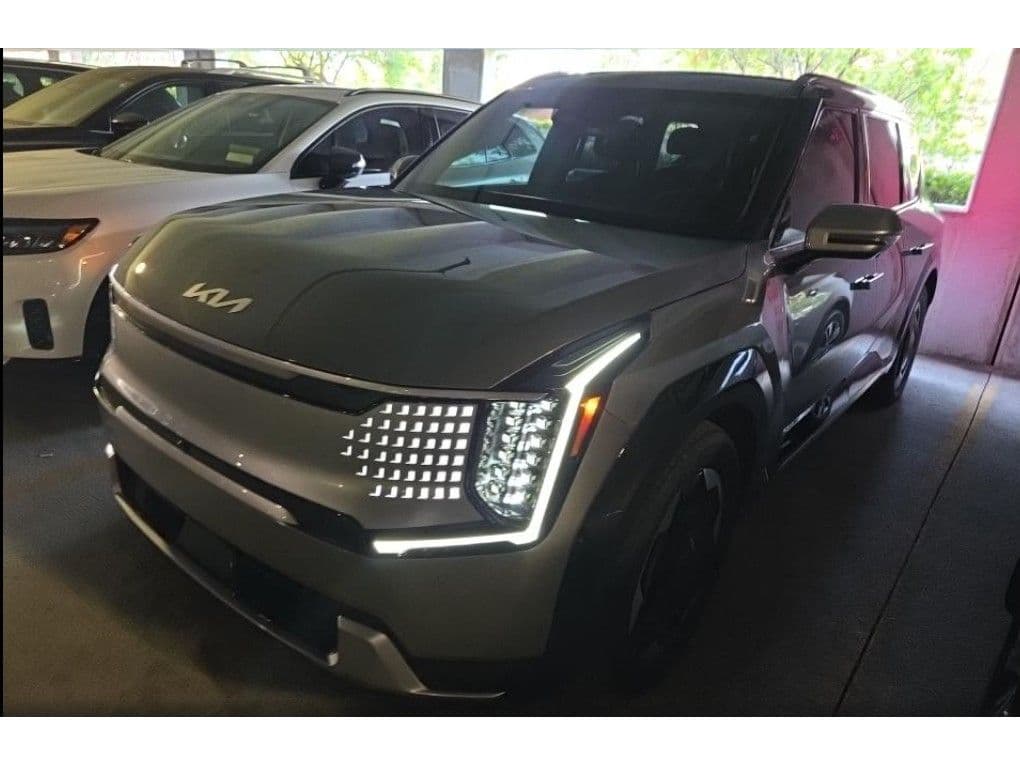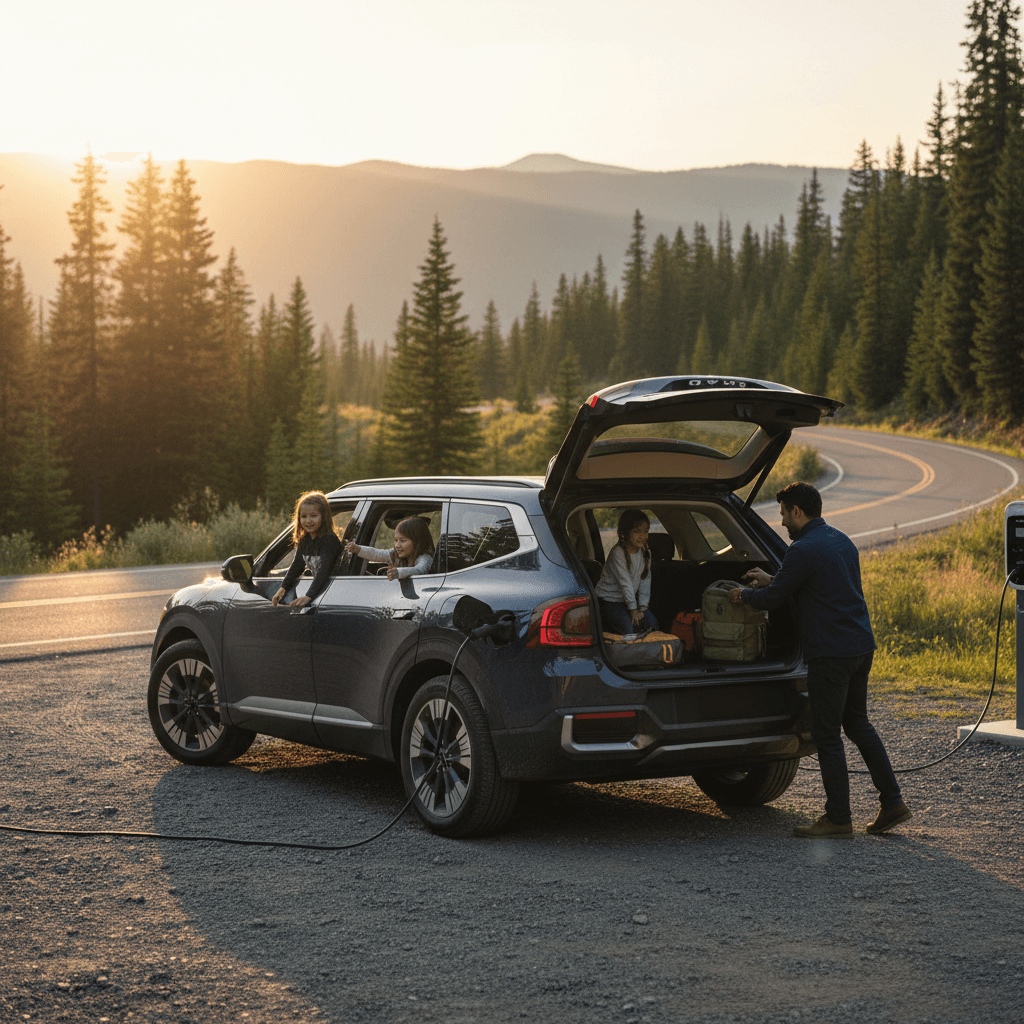
If you’re looking at a three‑row electric SUV in 2026, the Kia EV9 is probably at the top of your list. But glossy launch reviews don’t tell you what this big box of electrons is like after months of school runs, road trips, winter mornings and fast‑charge marathons. This Kia EV9 long term review for 2026 pulls together real‑world data, owner reports, and our own testing to help you decide if it’s the right EV to live with, or to buy used.
The EV9 is no longer a science experiment
Kia EV9 at a glance: specs that shape long-term life
Kia EV9 key numbers (U.S. models)
On paper, the EV9 is a rare thing: a genuinely roomy three‑row EV with real‑world 250‑plus‑mile range in most trims, an 800‑V charging system, and pricing that undercuts luxury rivals. All of those specs matter once you start stacking years and miles on the odometer, because they shape how often you need to charge, how much fast‑charging abuse the battery sees, and how useful the vehicle is as your only family car.
Real-world range and efficiency
The headline number everyone asks about in a Kia EV9 long term review is range. EPA estimates span roughly 230 miles to 304 miles depending on trim and wheels. In real life, owners who’ve lived with the EV9 for a year or more typically report 10–20% less than the EPA number on the highway, especially at 70–80 mph and in cold weather. Around town at lower speeds, many see the opposite, range estimates that quietly creep upward as the car learns their driving.
- Light (76.1 kWh, RWD): realistic 190–210 miles at 70 mph, more in mixed city driving
- Light Long Range (99.8 kWh, RWD): 240–270 miles at 70 mph, 280–300 miles in mild‑weather mixed driving
- AWD models (Wind/Land/GT-Line): often land in the 210–250‑mile band on road trips, depending on wheel size and driving style
Plan by energy, not just miles
Over the long term, those numbers hold up well. There isn’t widespread evidence of dramatic early battery degradation; most owner reports from 12–24 months in show minor changes that are hard to separate from software updates and seasonal swings. What does change is your confidence. Once you understand that a loaded EV9 on 21‑inch wheels, at 75 mph into a headwind, is a 200‑ish‑mile SUV, it becomes easy to plan realistic legs and charging stops.
Charging experience: home, public and NACS
Living with a Kia EV9 in 2026 is as much about how you charge as how you drive. Every EV9 sold in the U.S. so far uses the CCS fast‑charging port and a 10.9 kW onboard AC charger. That means you’ll want a 40‑ or 48‑amp Level 2 setup at home to take full advantage, something you can arrange through a local electrician or by working with an EV‑focused retailer like Recharged when you’re planning a home‑charging upgrade alongside your purchase.
What charging looks like in daily life
Three common patterns we see from long‑term EV9 owners
Overnight at home
Level 2, 40–48A
- Light Long Range: 10–80% in roughly 6–7 hours.
- Most drivers plug in every night or every other night.
- Feels like waking up to a full tank without detours.
Highway fast charging
DC fast, up to ~230 kW
- 10–80% in ~25–30 minutes when the pack is warm.
- Realistically 180–200 kW peaks, then a taper.
- Two 20–30 minute stops turn a 500‑mile day into easy mode.
Using Tesla Superchargers
NACS access via adapter
- By 2026 many EV9s have or qualify for a NACS‑to‑CCS adapter.
- Opens up thousands of Tesla stalls for road trips.
- Still use the Kia or charging‑network app to plan stops.
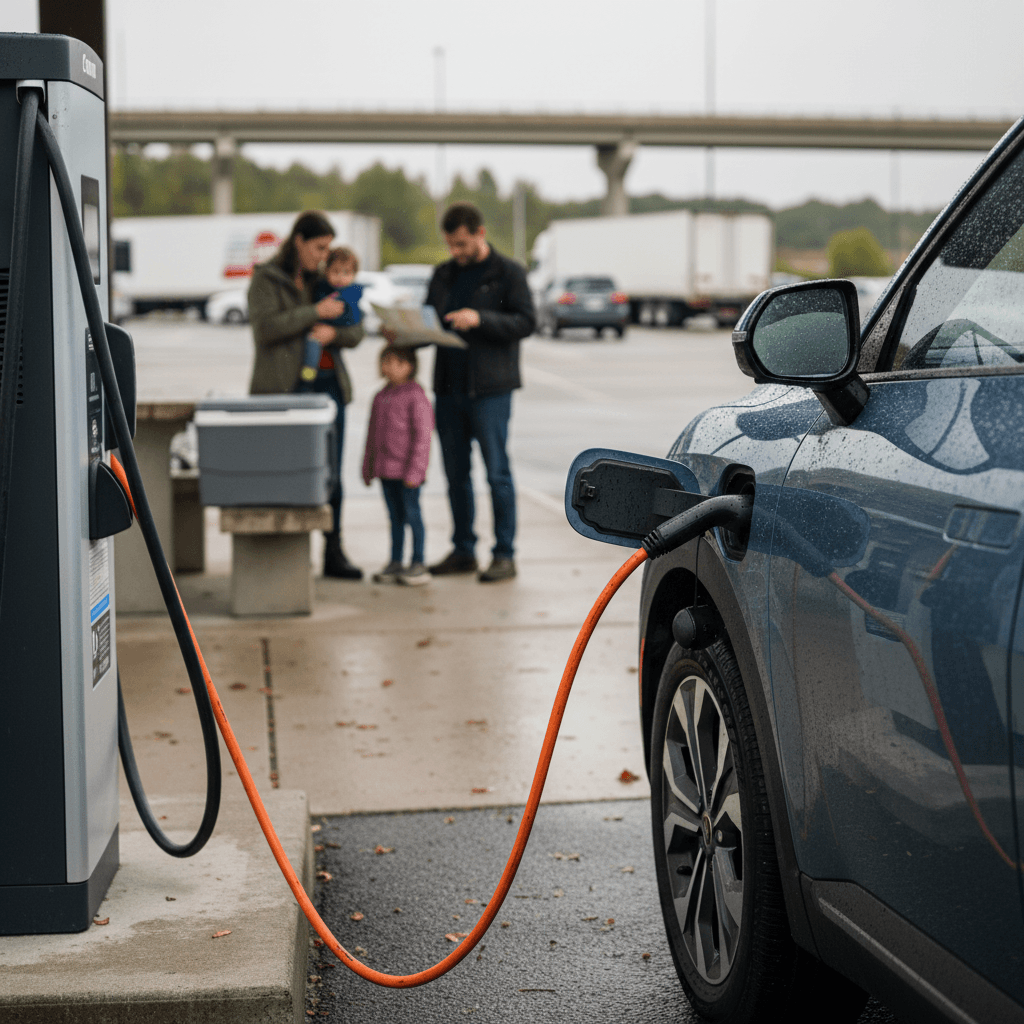
Fast charging is fast, until it isn’t
If you’re stepping into a used Kia EV9, ask the seller how often they fast‑charge versus plugging in at home or work. A road‑trip‑heavy life isn’t a deal‑breaker, modern battery management is excellent, but a car that lived exclusively on DC fast charging will be worth a closer look from a battery‑health standpoint. That’s exactly what services like the Recharged Score are built for: we pull real diagnostic data so you aren’t gambling on guess‑o‑meter numbers during a quick test drive.
Comfort, practicality, and family duty
The whole point of a three‑row electric SUV is to move people and stuff without drama. Here, the EV9 largely delivers. Front and second‑row seats are genuinely comfortable for adults, and in six‑seat configurations the captain’s chairs and open center aisle make it easy to shepherd kids in and out. The third row is adult‑usable for shorter trips, something you can’t say about many “three‑row” crossovers.
- Flat floor makes the second row feel wide and airy.
- USB‑C ports and cupholders are everywhere, critical on kid duty.
- Ambient lighting and big windows keep the cabin from feeling cave‑like.
- With all three rows up, cargo space is tight; fold the third row and it opens up nicely.
A genuinely family‑first EV
Over time, little details matter. The EV9’s wide doors and relatively low step‑in height make it easier for grandparents and toddlers alike. The heat pump and heated seats take the sting out of winter range loss, and the quiet cabin makes long drives less tiring than in a humming, shifting gas SUV. If you’re cross‑shopping used, this is one of the few EVs that genuinely replaces a minivan or body‑on‑frame SUV for most families.
Driving experience over time
The EV9 isn’t a sports car and doesn’t pretend to be one, but that’s not a knock. In day‑to‑day driving, the instant torque and single‑speed smoothness still feel special even after the new‑car smell fades. Rear‑drive versions feel lighter on their feet and deliver the best efficiency; AWD trims add security in bad weather and far quicker launches, especially in the punchy GT‑Line.
What feels good month after month
- Quiet confidence: Wind and road noise are well suppressed for this class.
- Predictable brakes: Blended regen and friction braking become second nature.
- High‑speed stability: Long wheelbase gives the EV9 a relaxed highway stride.
Where time exposes flaws
- Weight: Nearly three tons means you feel it on tight back roads.
- Big wheels, big bumps: 21‑inch wheels look great but can thump over sharp potholes.
- Driver‑assist nags: Lane‑keeping and steering assist can feel overly insistent until you learn how to tailor the settings.
Choose wheels for roads, not Instagram
Reliability, recalls, and ownership quirks
No honest Kia EV9 long term review in 2026 can skip over reliability. As an all‑new model, the EV9 had its share of early teething issues. Certain 2024–2025 builds were recalled for things like potential loss of drive power on some dual‑motor AWD models and software glitches that required dealer visits. There has also been scrutiny of intermittent battery‑related problems in a small number of vehicles, usually addressed via updated components and firmware.
Common early EV9 issues (and how to think about them)
These are patterns seen across early owners and recall campaigns, not guarantees you’ll experience them.
| Issue | How it shows up | Typical fix | What to check on a used EV9 |
|---|---|---|---|
| Loss of power on some AWD models | Warning lights, reduced power, driveline noise | Hardware inspection and replacement under recall | Ask for recall history and service invoices; confirm no open campaigns. |
| Software/infotainment glitches | Frozen screens, random reboots, camera hiccups | Over‑the‑air updates or dealer reflash | Confirm software is current; test cameras and basic functions on a long test drive. |
| Isolated battery or range anomalies | Sudden drop in estimated range, odd charging curves | Dealer diagnostics, potential cell/module repair, software updates | Request battery diagnostic printout; compare range and efficiency to similar EV9s. |
| Windshield wiper concerns on some builds | Inoperative or intermittent wipers in heavy rain | Service bulletin / recall repairs | Cycle all wiper speeds in a test drive, especially in wet conditions if possible. |
When shopping used, documentation matters more than perfection. A car that has had recall work done promptly is often a safer bet than one that hasn’t.
Don’t ignore the recall history
The bigger picture in 2026: Kia’s electric platforms, including the EV6 and Hyundai Ioniq 5 cousins, have matured quickly. The EV9 lands in the middle of the reliability pack for new EVs, better than some luxury rivals, not as bulletproof as the simplest long‑running models. For many families, the trade‑off is worth it given the space, speed and features you get for the money.
Battery health and long‑term value
Kia backs the EV9’s high‑voltage battery with a lengthy warranty window, which is reassuring as we look toward 2028 and beyond. Still, if you’re buying used in 2026, you want more than a promise, you want data. After a few years of real‑world use, we’re not seeing systemic early‑life degradation, but there are enough edge‑case stories to justify a thorough check.
How to sanity‑check EV9 battery health
1. Compare indicated range at high state‑of‑charge
Charge the EV9 to 90–100% and note the projected range in the default drive mode. Compare it to the original EPA figure for that trim, then adjust expectations for weather and wheel size.
2. Look at long‑term efficiency
Pull up the lifetime or multi‑month mi/kWh reading. An EV9 that lived at 3.0+ mi/kWh on mixed driving is likely in better shape than one that averaged 2.1 mi/kWh on big wheels and constant high speeds.
3. Watch a full fast‑charge session
On a test drive or inspection, observe a DC fast‑charge from ~10% to 60–70%. You’re not auditing every kilowatt, just making sure the curve ramps up smoothly and doesn’t stall at very low power.
4. Ask for a battery report
Dealers and specialist retailers can pull more detailed diagnostic reports. At Recharged, we include this in the <strong>Recharged Score</strong> so you see a transparent view of pack health before you sign anything.
5. Don’t obsess over a few miles
A 5–10% difference from label range is normal and often comes down to driving style and climate. Focus on big, unexplained gaps and weird charging behavior, those are worth deeper investigation.
How the Kia EV9 compares to rivals in 2026
By 2026, the three‑row electric SUV field finally has real competition. You’ll find the EV9 cross‑shopped with the Tesla Model X, Rivian R1S, Mercedes‑Benz EQS SUV, and newer entrants like Hyundai’s Ioniq 9 and various Chinese‑built imports in some markets. The EV9 doesn’t always win on any single spec sheet line, but it lands in a very sweet spot when you zoom out.
EV9’s long‑term strengths vs rival three‑row EVs
Why many families still end up in the Kia by year three of ownership
Value and equipment
The EV9 undercuts many luxury‑branded rivals while including the tech and comfort features most families actually use. On the used market, that value gap only widens.
Usable three‑row space
Some rivals squeeze in a third row that’s best for kids only. The EV9’s boxy roofline and packaging make the third row work for adults in a pinch.
Charging & efficiency balance
Rivian and others may be quicker, and Tesla’s network is still stellar, but the EV9’s 800‑V system and growing NACS access give it a compelling long‑term charging story.
Where the EV9 doesn’t shine as brightly is outright performance and brand prestige. A Model X Plaid or high‑end R1S will run circles around it in a drag race, and German badges still carry weight in some driveways. But if you’re coming out of a Telluride, Highlander, or Explorer, the EV9 feels like a huge step forward in refinement without the sticker shock that often comes with a luxury EV badge.
Should you buy a used Kia EV9 in 2026?
That’s the real question behind any Kia EV9 long term review in 2026. The short answer: yes, with due diligence. Early depreciation on large EVs means you can often find a lightly used EV9 for a meaningful discount over new, especially on higher trims. That can make the math work beautifully if you’re willing to do a bit of homework.
Smart ways to shop for a used EV9
Great fit if…
- You need real three‑row space but don’t want a minivan or full‑size truck‑based SUV.
- You have or can add Level 2 charging at home.
- You value comfort and quiet over maximum performance.
- You’re planning to keep the vehicle for 5–8 years.
Maybe look elsewhere if…
- You regularly tow at or near the 5,000‑lb limit over long distances.
- Your daily parking or charging situation is tight for a vehicle this big.
- You demand top‑tier brand prestige and badge cachet.
- You live in a region with sparse fast‑charging and no home‑charging option.
Kia EV9 long term review 2026: FAQ
Frequently asked questions about long‑term Kia EV9 ownership
Final thoughts: Is the EV9 a keeper?
Stepping back from the spreadsheets, the most telling sign of a successful long‑term EV is simple: do owners still like driving it every day once the novelty wears off? With the Kia EV9, the answer from most long‑term drivers in 2026 is yes. They gripe about occasional software quirks and recall visits, but they rave about quiet highway trips, kid‑friendly space, and the feeling of never having to stop for gas on a chaotic Tuesday school run.
If you’re shopping new, the EV9 is one of the most well‑rounded three‑row electric SUVs you can buy. If you’re considering a used Kia EV9 in 2026, a little homework goes a long way: verify recall work, scrutinize charging and range behavior, and insist on a clear view of battery health. That’s exactly where a partner like Recharged shines, pairing vehicles with verified diagnostics, transparent pricing, and EV‑savvy guidance so your first (or next) electric family hauler feels like a keeper for years to come.