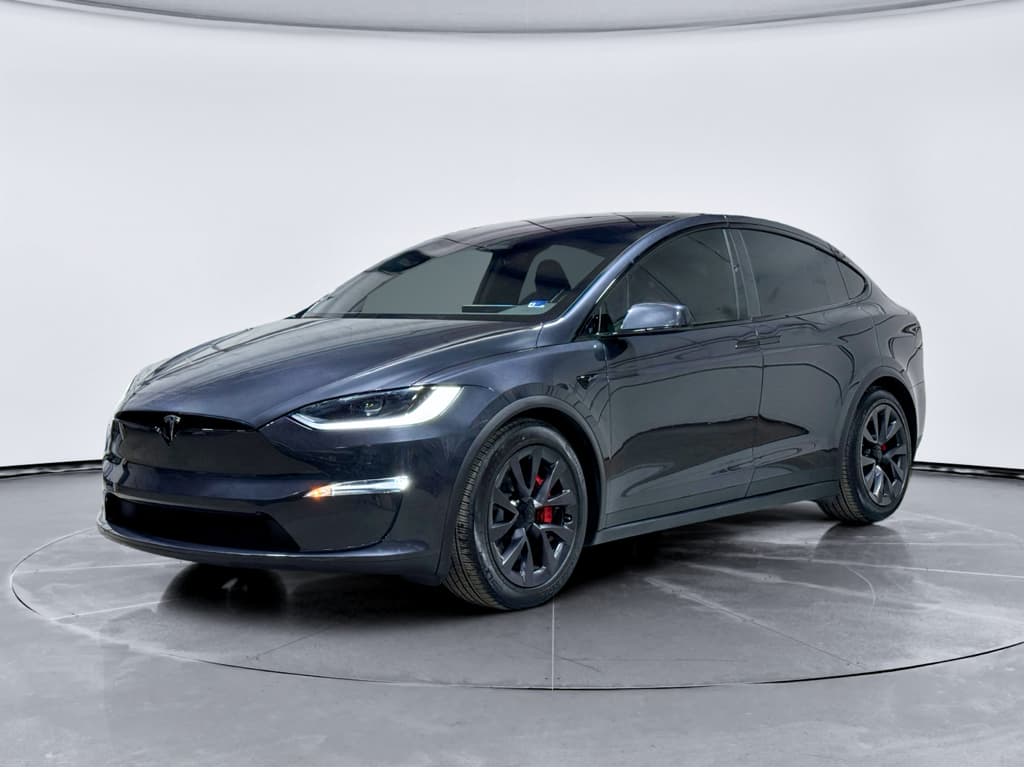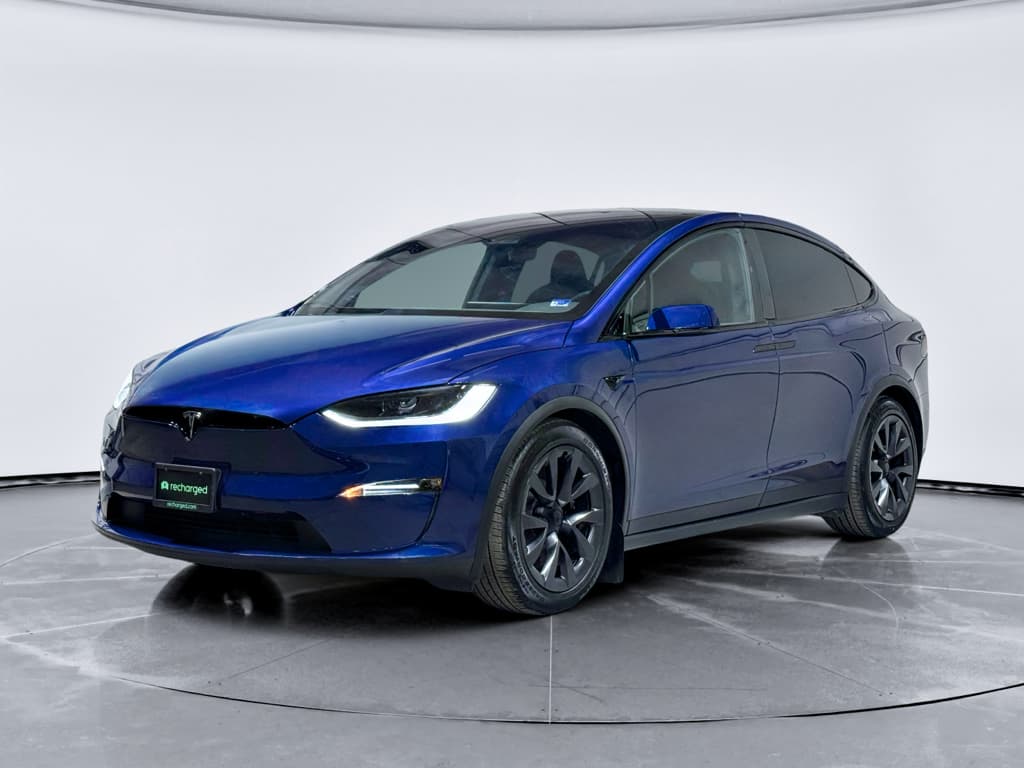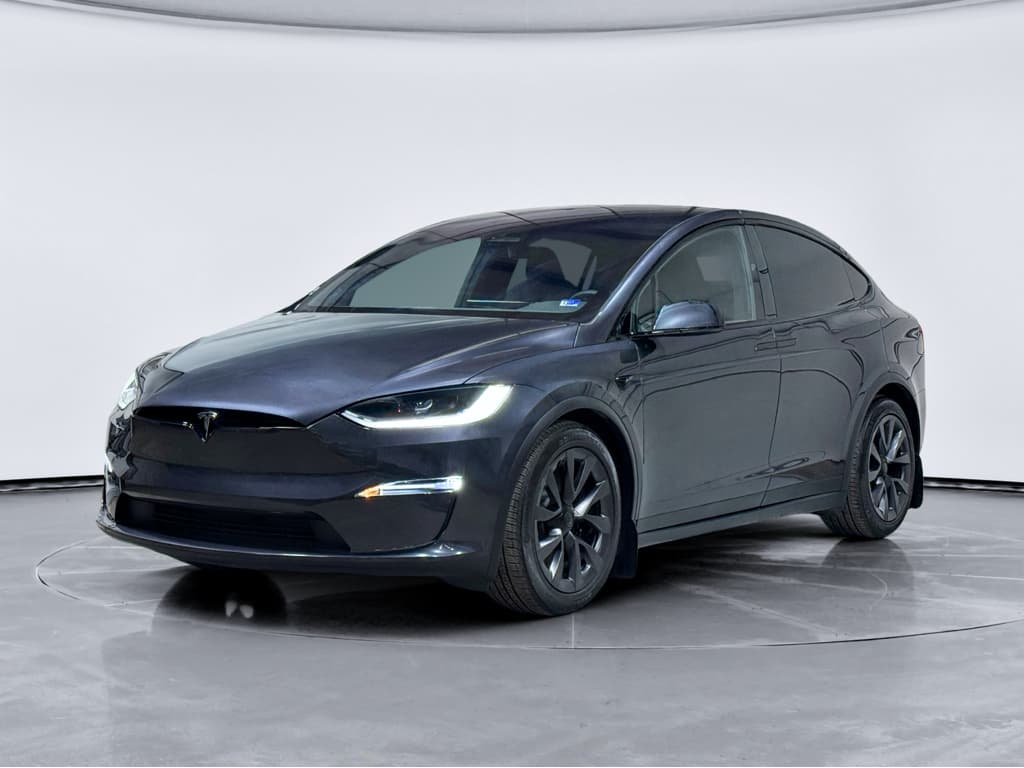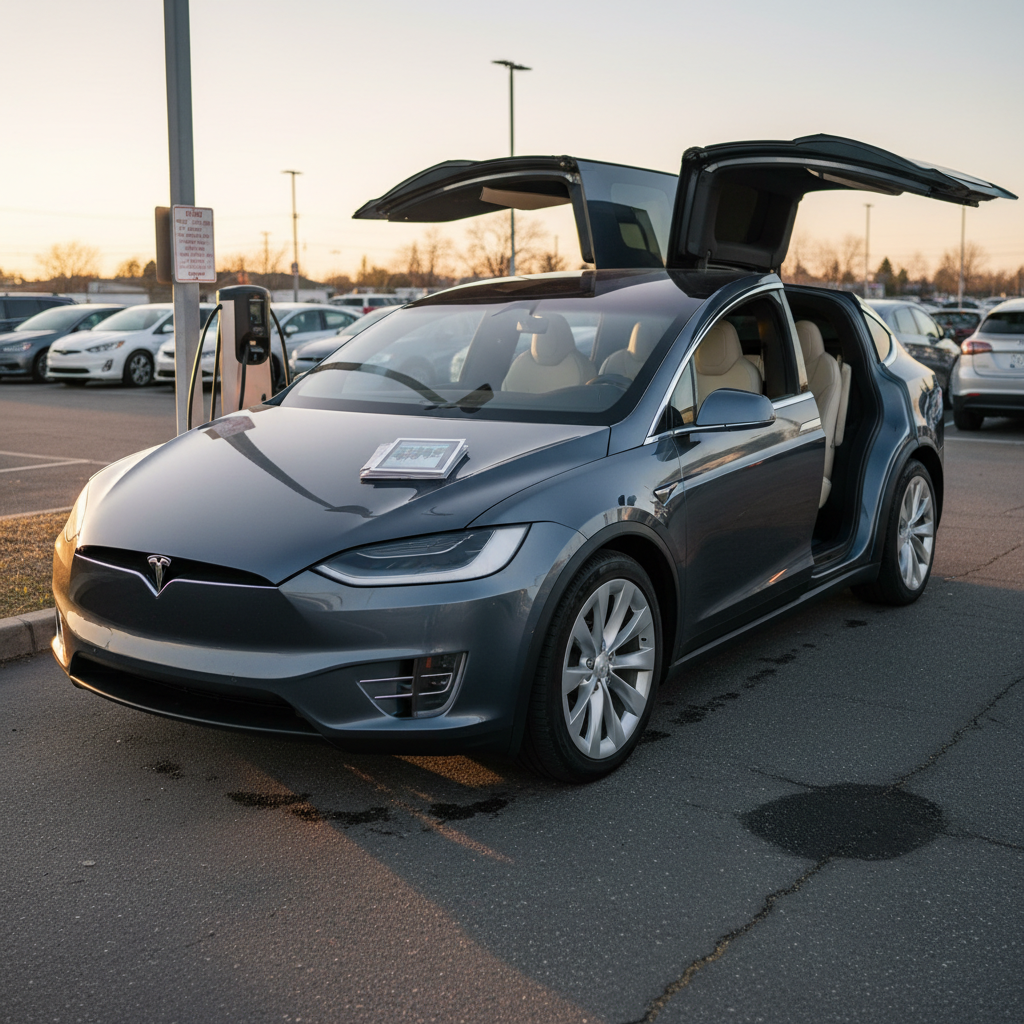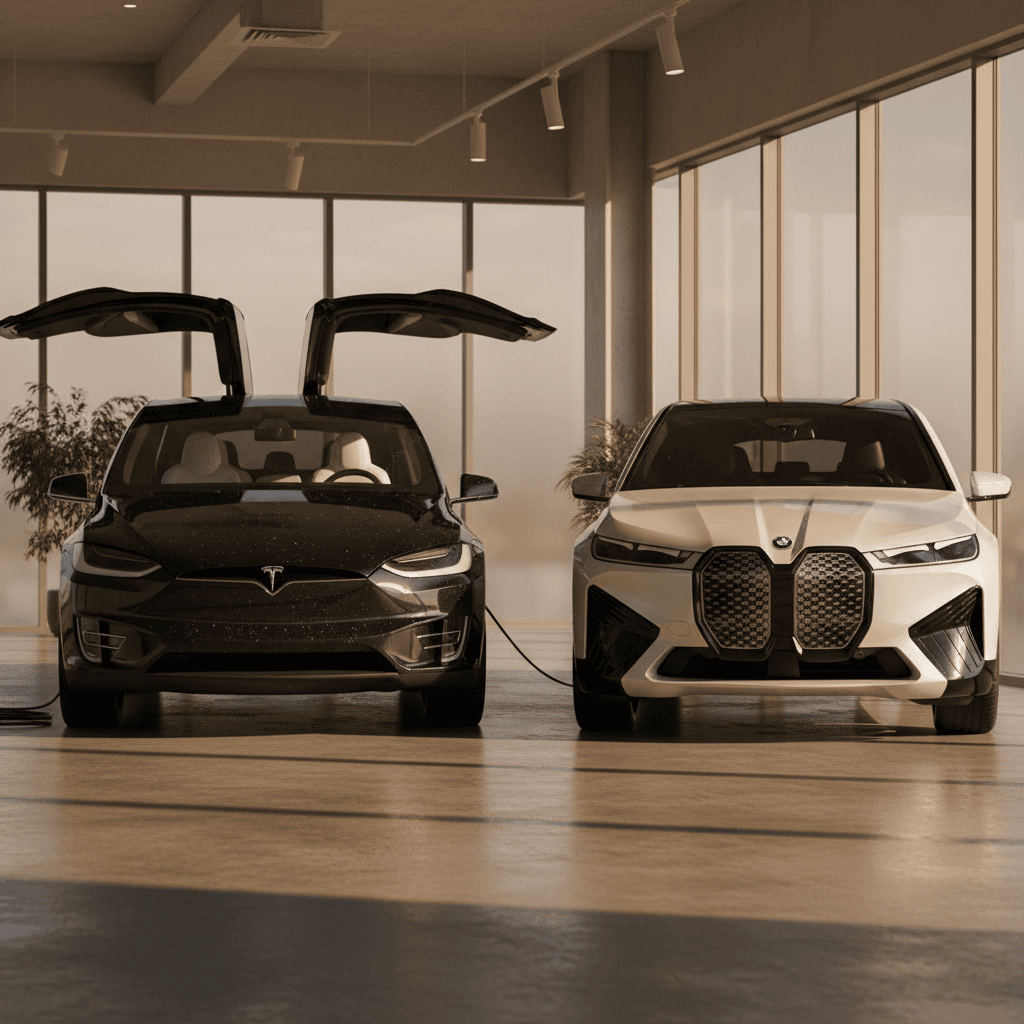
If you’re cross‑shopping the Tesla Model X vs Mercedes EQS SUV, you’re not just buying an electric family hauler, you’re choosing between two very different visions of luxury. One leans into Silicon Valley minimalism and software; the other feels like a classic Mercedes flagship that happens to be electric. This guide breaks down the real‑world differences so you can pick the SUV that actually fits your life, especially if you’re considering a used example.
Two flagship EV SUVs, two very different personalities
Tesla Model X vs Mercedes EQS SUV: who each SUV is for
Tesla Model X: best for tech‑heavy, road‑trip families
- You prioritize range and charging speed over cabin opulence.
- You want access to the Supercharger network today, with native NACS ports on newer non‑Tesla EVs and adapters on older ones.
- You value software, OTA updates, and a minimalist interface more than wood, leather and buttons.
- You need maximum cargo space and the option for seating up to 7.
- You care about performance and don’t mind a firmer, more EV‑like ride.
Mercedes EQS SUV: best for comfort‑first luxury buyers
- You want a quiet, cosseting ride that feels like an S‑Class on stilts.
- You care more about interior materials and craftsmanship than 0–60 bragging rights.
- You prefer a dealer‑centric ownership experience with concierge service and loaners.
- You rarely tow and don’t need max cargo; 5–7 seats are nice but not mission‑critical.
- You’re okay with slightly less range in exchange for comfort and cabin tech like the Hyperscreen.
Quick specs: range, power, space and towing
Tesla Model X vs Mercedes EQS SUV: headline numbers
Key specs for current U.S. models as of early 2026. Exact figures vary by trim and wheel choice, but this gives you a realistic apples‑to‑apples snapshot.
| Spec | Tesla Model X (Dual Motor) | Tesla Model X Plaid | Mercedes EQS SUV 450/400 | Mercedes EQS SUV 580/550 |
|---|---|---|---|---|
| EPA range (mi) | ~335 mi | ~314 mi | ~312–317 mi (est. by trim) | ~312–317 mi |
| Battery capacity | ~100 kWh | ~100 kWh | 118 kWh | 118 kWh |
| Horsepower | 670 hp | 1,020 hp | ~355 hp | 536 hp |
| 0–60 mph | 3.8 s | 2.5 s | ~5.2 s | ~4.0 s |
| Seats | Up to 7 | Up to 6 | 5–7 (trim‑dependent) | 5–7 (trim‑dependent) |
| Max towing | 5,000 lbs | 5,000 lbs | 3,500 lbs | 3,500 lbs |
| DC fast‑charge peak | 250 kW (Supercharger) | 250 kW (Supercharger) | Up to 200 kW | Up to 200 kW |
| Cargo (max) | 94.5 cu ft | 94.5 cu ft | Up to ~74 cu ft | Up to ~74 cu ft |
Always confirm exact specs for the specific model year and trim you’re shopping, especially on the used market.
How to read these specs if you’re buying used
Driving experience and performance
On paper, the Tesla Model X absolutely outguns the Mercedes EQS SUV for performance. Even the “base” dual‑motor Model X is legitimately quick, with Tesla quoting around 3.8 seconds 0–60 mph. The Model X Plaid, with its tri‑motor setup and roughly 1,020 horsepower, is supercar‑fast at about 2.5 seconds to 60, overkill for a family hauler, but undeniably entertaining.
The Mercedes EQS SUV takes a different tack. In its higher‑power 580/550 guise, you’re still looking at a very strong ~536 hp and roughly 4.0‑second 0–60 mph capability. The lower‑output 450/400 variants are closer to 5 seconds. In real‑world use, all trims feel effortless and quietly quick, but they never try to shock you the way a Plaid launch does.
Ride and handling: firm and techy vs soft and serene
Both are comfortable, but they speak different dialects of luxury.
Tesla Model X ride & handling
- Adaptive air suspension delivers a controlled, slightly firmer ride.
- Low center of gravity and quick steering make it feel more agile than its size suggests.
- Road and wind noise are well managed but cabin isolation is more "techy premium" than old‑school plush.
- Performance focus is obvious, especially in Plaid, fun, but range can drop quickly if you drive it hard.
Mercedes EQS SUV ride & handling
- Standard air suspension and rear‑axle steering prioritize comfort and maneuverability.
- Steering is light, body motions are well controlled, and the emphasis is on quiet, unhurried progress.
- Noise isolation and ride comfort are closer to an S‑Class than a conventional SUV.
- Even the more powerful trims feel tuned for smooth torque delivery, not drama.
Performance verdict
Range, battery and charging experience
Range and charging are where EVs stop being spec sheets and start dictating how you actually live with them. Both of these SUVs operate in the 300‑mile ballpark, but they approach charging very differently, especially once you factor in network access and connectors.
Range and charging comparison
Big‑picture look at how Model X and EQS SUV stack up for long‑distance use.
| Category | Tesla Model X | Mercedes EQS SUV |
|---|---|---|
| EPA range window | Approx. 314–335 mi depending on trim/wheels | Around 312–317 mi depending on trim |
| Battery size | ~100 kWh usable | 118 kWh gross |
| Fast‑charge peak | Up to 250 kW on Tesla Superchargers | Up to ~200 kW on DC fast chargers |
| Network access | Native access to Supercharger + compatible CCS/NACS networks depending on adapters and region | Primarily CCS public networks; increasingly gaining NACS access/adapter support |
| Towing impact | Range drops more, but 5,000‑lb rating makes it a better tow vehicle | Less range loss simply because you’ll likely tow less, 3,500‑lb max rating |
| Home charging | 11.5 kW onboard AC charger; works great with a 48‑amp Level 2 | Comparable onboard AC charging; any 40–48‑amp Level 2 setup is plenty |
Real‑world range will depend heavily on speed, temperature, wheel size, and how much weight you’re hauling.
Don’t underestimate the charging network
If you do a lot of interstate travel, the Model X’s combination of efficiency, strong range, and Supercharger access still makes it one of the easiest long‑distance EVs to live with. The EQS SUV is absolutely road‑trip capable, its ~118 kWh pack and ~200 kW DC charging are solid, but you’ll want to plan stops a bit more carefully and pay attention to which networks are reliable in your area.
Interior comfort, seating and in-car tech
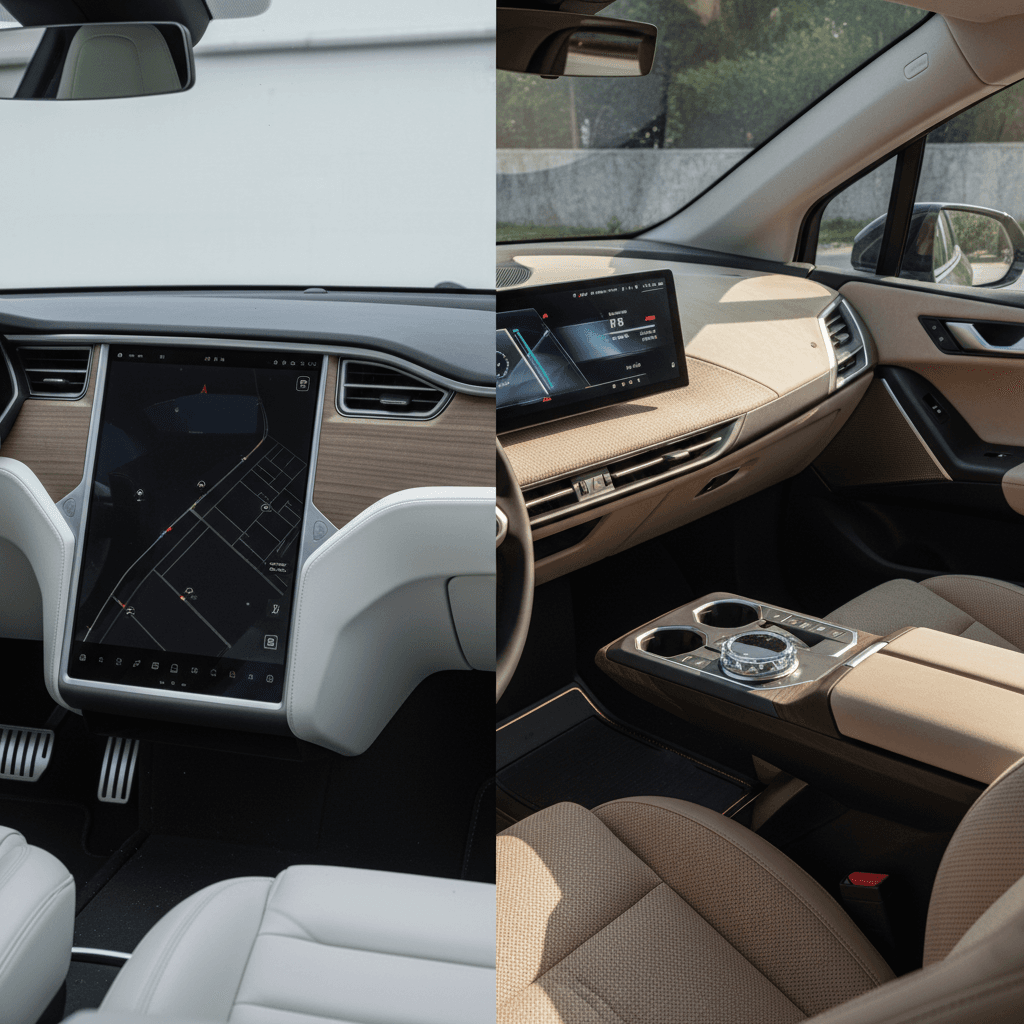
Cabin philosophy: California startup vs German luxury flagship
Both are high‑end; they just define “luxury” differently.
Tesla Model X interior & tech
- Clean, minimalist cabin anchored by a large central touchscreen and yoke or conventional steering wheel (varies by year).
- UI feels like a smartphone on wheels, fast, app‑like, and heavily software‑defined.
- Materials and build quality have improved over time but still feel more "premium tech" than old‑world luxury.
- Falcon Wing rear doors add drama and access, but introduce extra complexity and height constraints in some garages.
- Strong native navigation and route planning tightly integrated with battery and Supercharger data.
Mercedes EQS SUV interior & tech
- Traditional Mercedes luxury vibe with rich materials, ambient lighting, and pillow‑like headrests.
- Available Hyperscreen stretches across the dash with individual displays for driver, center, and passenger.
- More physical controls and haptic buttons than Tesla, but still heavily screen‑driven.
- Cabin is exceptionally quiet; seats are softer, with massage and advanced adjustability on many trims.
- MBUX interface has a learning curve but offers deep customization and strong voice control when set up well.
Watch out for tech aging on used examples
Practicality, cargo and family duty
Both the Model X and EQS SUV are big, three‑row‑capable luxury EVs, but they prioritize space differently. The Model X is the more overtly practical of the two, especially if you routinely haul people and gear at the same time.
Space and utility snapshot
- The Model X’s third row is usable for kids and shorter adults on shorter trips, but it’s not full‑size‑SUV roomy.
- The EQS SUV’s optional third row is similar, fine for occasional use, but realistically a 4–5 passenger vehicle when comfort matters.
- Access to the third row is easier in the Model X thanks to the Falcon Wing doors, though they can be awkward in low garages.
- If you frequently carry five people and a lot of luggage, the Model X’s extra cargo volume becomes a real advantage.
Family‑use reality check
Safety, driver assistance and “self‑driving”
Both SUVs offer modern crash protection and a full suite of driver‑assistance features like adaptive cruise control, lane centering and automatic emergency braking. Ratings evolve by model year, so you’ll want to check the exact NHTSA and IIHS data for the car you’re considering, but structurally these are well‑engineered, heavy EVs with serious crash energy management.
Autopilot vs Mercedes driver assistance
Different branding, similar underlying goal: reduce fatigue and help avoid crashes.
Tesla Autopilot / FSD
- Standard Autopilot includes lane‑keeping and adaptive cruise; optional Enhanced Autopilot and Full Self‑Driving (FSD) add automated lane changes and navigation assistance.
- System behavior and capabilities change over time via over‑the‑air updates, for better and for worse.
- Branding can overpromise, these are still Level 2 driver‑assist systems. You must remain fully attentive and responsible.
- Regulatory scrutiny is higher on Tesla’s systems, which can impact software behavior between updates.
Mercedes Driver Assistance
- Advanced Driving Assistance Package bundles lane‑centering, active steering assist, adaptive cruise, and more.
- Generally more conservative and less hands‑off in feel than Tesla’s, but also less likely to surprise you.
- UI tends to be clearer about system limits and when you need to take over.
- Some markets get limited Level 3 capability, but in the U.S. you should still treat it as Level 2 driver assist.
Reality check on "self‑driving"
Ownership costs and used-market considerations
Upfront pricing shifts year to year, but in broad strokes the EQS SUV usually starts higher than a comparable Model X when new, reflecting its positioning as a rival to the GLS and traditional S‑Class buyers. On the used market, though, things get more interesting: luxury EVs can depreciate quickly, and the way each brand handles software and warranty coverage really matters.
Key cost and used‑market factors to compare
Battery warranty and health
Tesla typically covers the Model X battery and drive unit for 8 years / 150,000 miles (with minimum capacity retention), while Mercedes offers similar long‑term coverage on the EQS SUV’s traction battery. When buying used, always ask for <strong>battery health data</strong> or a recent diagnostic report rather than guessing from the odometer alone.
Depreciation and resale value
High‑end EVs tend to depreciate faster than mainstream models. Historically, well‑specced Teslas have held value relatively well, but aggressive new‑car price cuts can drag down used prices. Mercedes EVs are newer to the market, so used‑value patterns are still forming, but traditional luxury brands often see <strong>steeper early depreciation</strong>, which can be a win for second owners.
Service ecosystem
Tesla relies on a mix of company‑owned service centers and mobile techs, with centralized parts control. Mercedes uses its <strong>dealer network</strong>, with more traditional service experiences, loaners and maintenance packages. Decide whether you prefer app‑first, direct service or the predictability of a dealer.
Software and feature entitlement
On a used Model X, verify which software features (Premium Connectivity, Enhanced Autopilot, FSD) are actually tied to the car today, they don’t always transfer as you’d expect. On an EQS SUV, confirm that <strong>connected services and navigation subscriptions</strong> are active and what they’ll cost after any trial period.
Charging costs and incentives
Both SUVs will slash your fuel bill versus a gas GLS or X7, but pricing varies widely by region. Factor in home electricity rates, off‑peak discounts, and DC fast‑charging costs. Some states still offer <strong>EV incentives or utility rebates</strong> that can meaningfully lower total cost of ownership.
Where Recharged fits in
Ready to find your next EV?
Browse VehiclesWhich should you buy: Tesla Model X or Mercedes EQS SUV?
Choose the Tesla Model X if…
- You road‑trip frequently and want the least friction possible for long‑distance charging.
- You value software, range and performance more than traditional materials and cabin feel.
- You need real towing capability (up to 5,000 lbs) and maximum cargo space.
- You’re comfortable with a more experimental vibe: Falcon Wing doors, evolving software, occasional quirks.
- You plan to keep the vehicle long enough that continued OTA improvements matter.
Choose the Mercedes EQS SUV if…
- Your priority is a calm, quiet, luxurious ride above all else.
- You prefer the familiarity of a Mercedes dealer and traditional service experience.
- You want one of the quietest, most comfortable EV cabins on the market today.
- You rarely tow and don’t need the Model X’s cargo advantage.
- You’re okay trading a bit of efficiency and simplicity for materials, seats and ambiance.
The short version
Checklist: how to choose between Model X and EQS SUV
Work through these questions before you sign
1. How often do you actually road‑trip?
If you’re doing multiple long trips a year, the <strong>Model X’s combination of range and Supercharger access</strong> is a serious advantage. If most of your driving is local, either SUV will work, focus more on comfort and interior feel.
2. Do you tow or haul bulky gear?
If you own a small camper, boat or utility trailer, or you regularly haul big loads, the Model X’s <strong>5,000‑lb tow rating and larger cargo area</strong> make your life easier. If towing is a rare edge case, the EQS SUV’s 3,500‑lb rating may be enough.
3. Which interior actually feels better to you?
Sit in both. The Model X’s minimalist cabin and giant central screen can feel freeing, or sparse. The EQS SUV’s Hyperscreen, lighting and materials can feel sumptuous, or visually overwhelming. This is subjective; your gut reaction matters.
4. What kind of ownership experience do you want?
Tesla’s app‑driven, direct service model works great for some people and frustrates others. Mercedes dealers offer <strong>traditional service bays, advisors and loaners</strong>. Think about which fits your personality and schedule better.
5. Are you buying new or used?
On the used market, don’t chase the cheapest ad. Look for <strong>verified battery health, clear feature entitlements</strong> (Autopilot/FSD or assistance packages), and a solid service history. Buying a used EV through a marketplace like Recharged can de‑risk this, especially with a detailed battery health report.
6. How sensitive are you to software changes?
Tesla’s frequent updates can improve features, but also change behaviors you’ve gotten used to, especially around Autopilot. Mercedes updates more conservatively. If you hate surprises, the EQS SUV’s slower‑moving software might be easier to live with.
FAQ: Tesla Model X vs Mercedes EQS SUV
Frequently asked questions
Both the Tesla Model X and Mercedes EQS SUV are compelling answers to the same question: what should a flagship electric family SUV look like? One looks ahead, software‑defined, range‑efficient, network‑native. The other modernizes a century of luxury‑car know‑how with an electric drivetrain. If you match the SUV to your real usage, how you drive, who you carry, where you charge, you’ll end up with a vehicle that feels like it was built for your life, not just your Instagram. And if you’re stepping into the used market, partnering with a specialist like Recharged for battery health verification and pricing transparency can make that decision far less of a leap of faith.