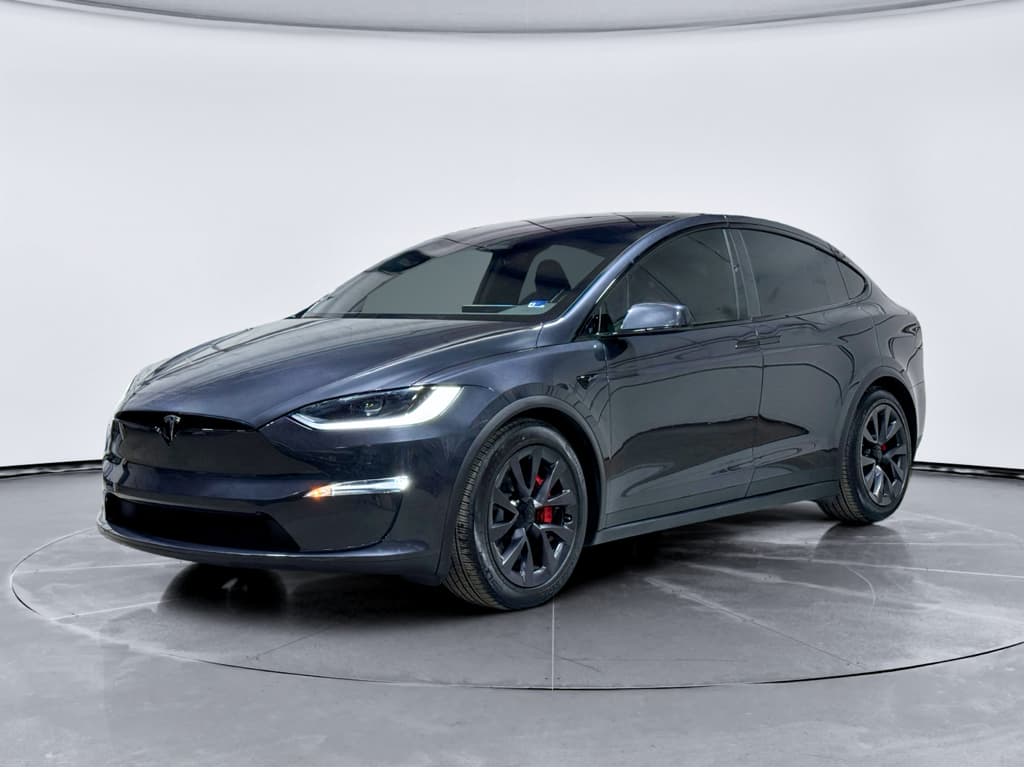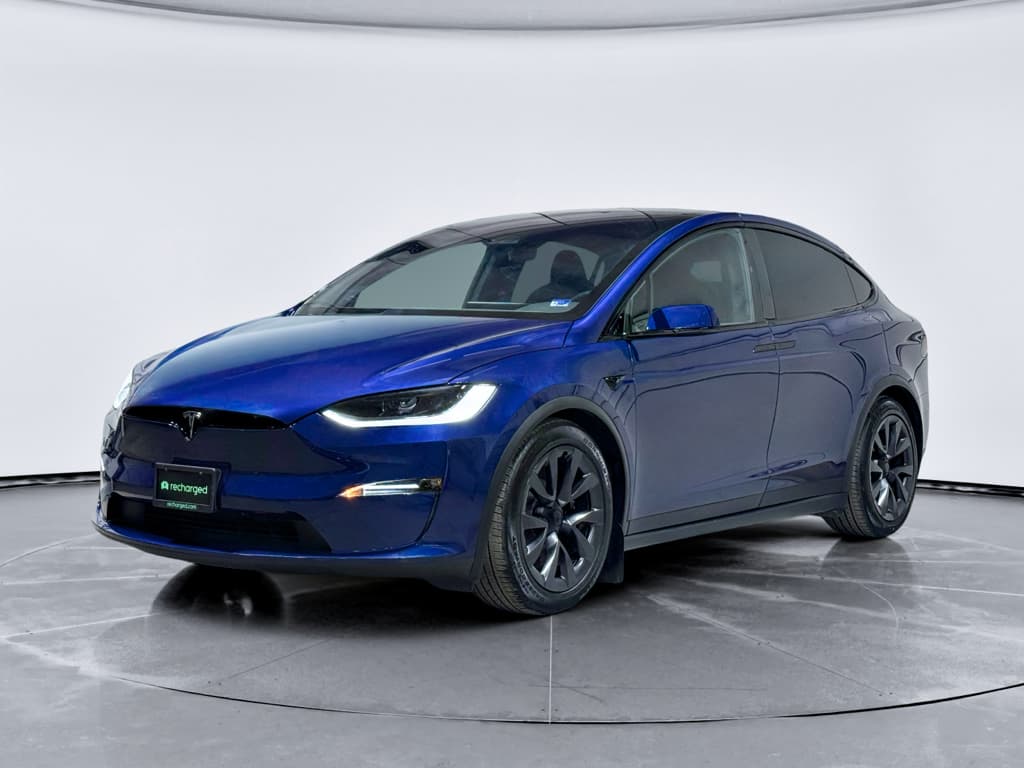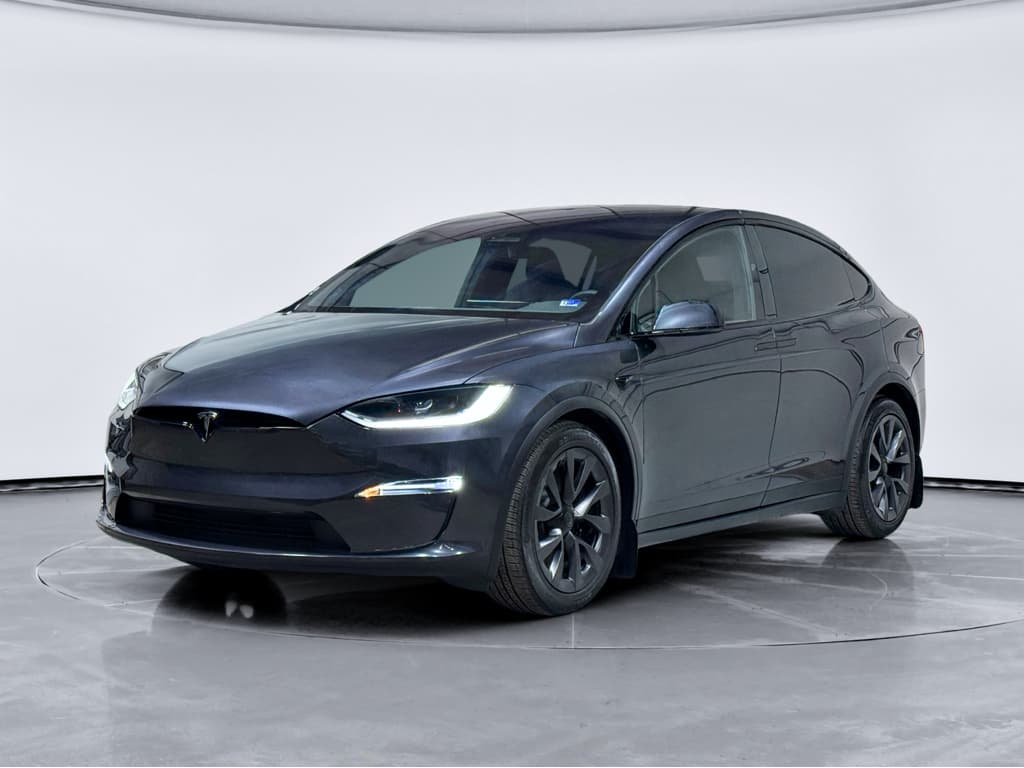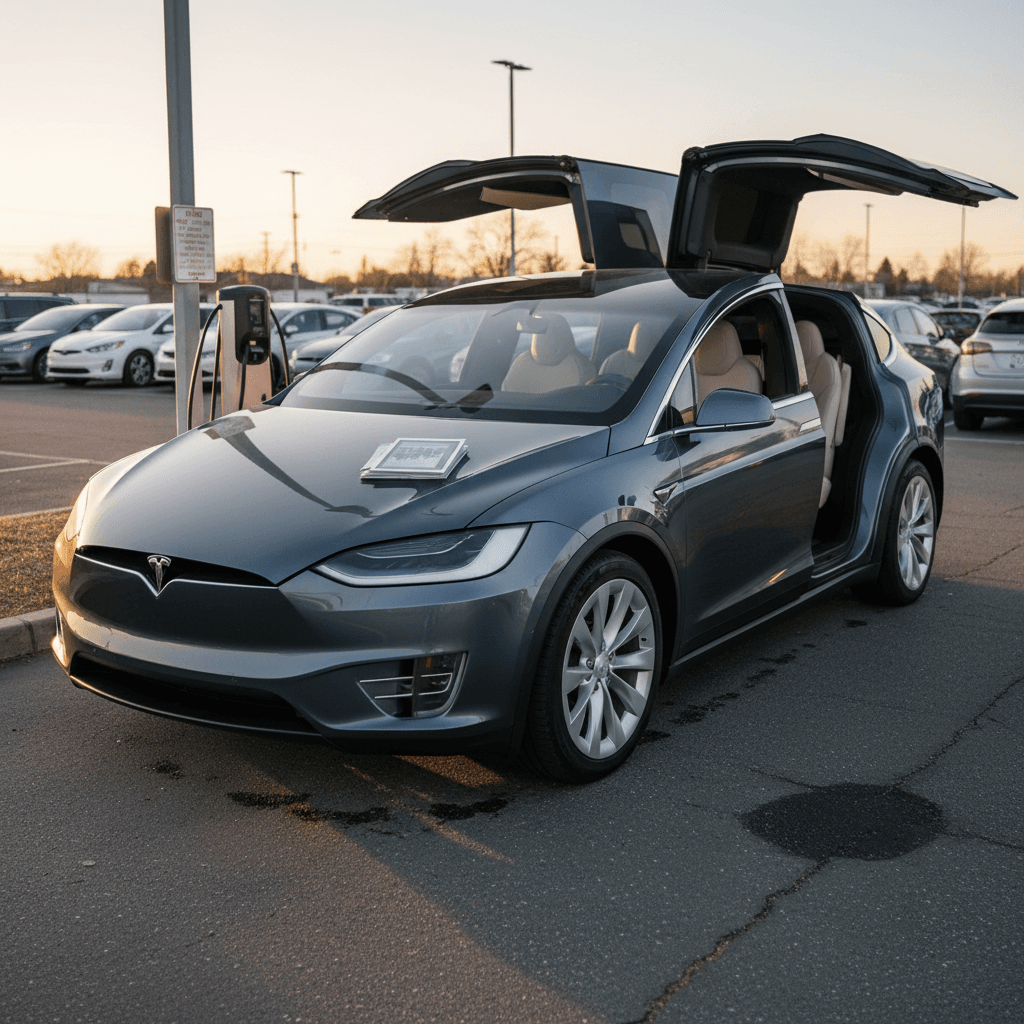
If you’re shopping the used EV market for a roomy, tech‑forward family hauler, the **2016 Tesla Model X** is probably on your radar. It was Tesla’s first SUV and one of the earliest three‑row electric vehicles on U.S. roads. A decade later, it offers big range, big performance, and big questions: how reliable is it, what’s the real‑world range now, and what should you look for before you buy?
Who this review is for
2016 Tesla Model X overview
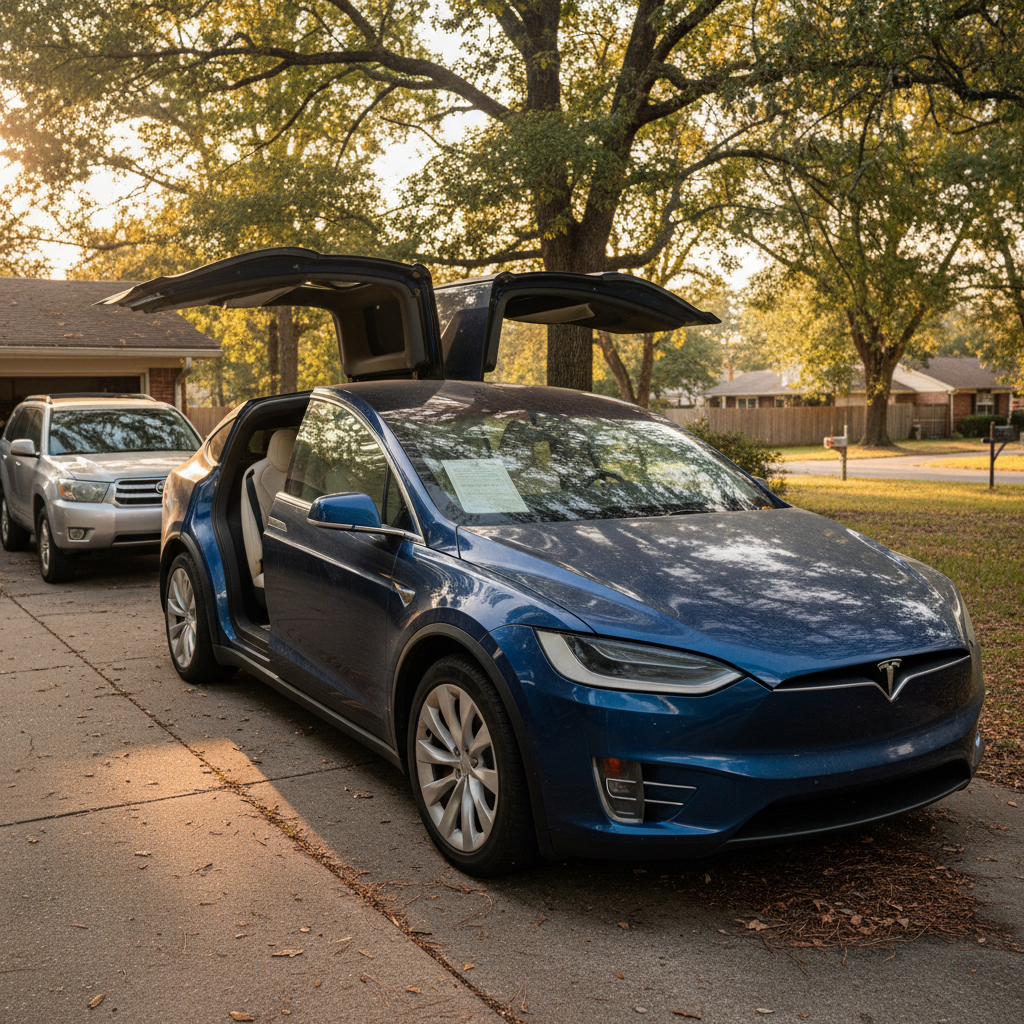
The 2016 Model X launched as a **mid‑size luxury electric SUV** with optional three‑row seating, dramatic Falcon Wing rear doors, and access to Tesla’s growing Supercharger network. Underneath, it shares much of its hardware with the Model S of the same era, including battery packs in the 75–90 kWh range and dual‑motor all‑wheel drive on most trims.
At a glance: pros and cons of a 2016 Model X
What shoppers tend to love, and what they often tolerate
What owners love
- Strong performance: even non‑performance trims feel quick.
- Spacious interior with available 6‑ or 7‑seat layouts.
- Access to Superchargers, especially valuable for road trips.
- Unique Falcon Wing doors and huge panoramic windshield.
- Low running costs vs. comparable gasoline luxury SUVs.
What to watch out for
- Early‑build Falcon Wing door glitches and alignment issues.
- Front half‑shaft/CV vibration under hard acceleration.
- First‑generation MCU (infotainment) failures in high‑mileage cars.
- Out‑of‑warranty repairs can be expensive at Tesla Service.
- Older Autopilot hardware: less capability than newer Teslas.
Quick stats for the 2016 Tesla Model X
Key specs, trims, range and charging
In 2016, Tesla sold several **Model X trims** in the U.S., mainly differentiated by battery size and performance tuning. Exact configurations can be confusing, because Tesla updated packs and names mid‑year, so always verify the specific car you’re looking at. Here’s a simplified view of the core versions you’ll most likely see on the used market.
2016 Model X trims and headline specs
Approximate original specs. Expect some range loss on 10‑year‑old batteries.
| Trim | Battery | Original EPA range (mi) | 0–60 mph (sec) | Drivetrain |
|---|---|---|---|---|
| 60D* | 60 kWh (software‑limited) | ~200–210 | ~6.0 | Dual‑motor AWD |
| 75D | 75 kWh | ~237–239 | ~6.0 | Dual‑motor AWD |
| 90D | 90 kWh | ~257 | ~4.8 | Dual‑motor AWD |
| P90D | 90 kWh performance | ~250 | ~3.8 (Ludicrous lower) | Dual‑motor AWD |
Always check the actual VIN‑specific build sheet or window sticker for exact equipment.
About the 60D
- All 2016 Model X variants are **all‑wheel drive** with dual motors.
- Most came with **air suspension**, allowing automatic ride‑height changes.
- A factory‑equipped **towing package** is rated up to 5,000 pounds.
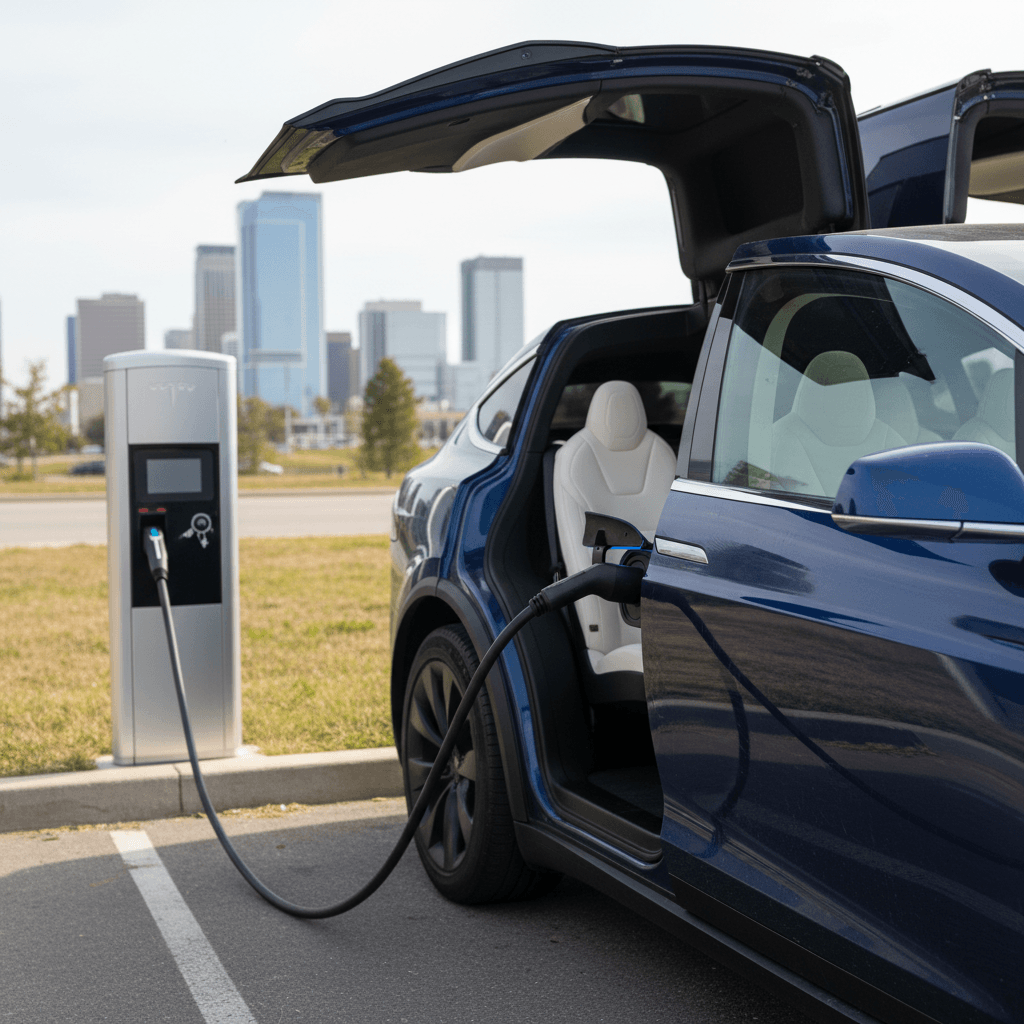
- DC fast charging via Tesla’s Supercharger network is standard, with rates typically in the 120–150 kW peak range for the larger packs in ideal conditions.
Charging experience in 2026
On a healthy battery and a good Supercharger, you can usually expect a 10–80% charge in around **35–45 minutes**, depending on pack size, temperature, and station speed. At home on a 240‑volt Level 2 charger (48 amps), a 2016 Model X will typically add **25–30 miles of range per hour**, meaning a full overnight charge is easy if you plug in every evening.
Charging tip for used buyers
Driving experience: performance, comfort, and practicality
On the road, the **2016 Model X feels more like a tall performance wagon than a lumbering SUV**. Even the 75D pulls hard from a stop thanks to instant torque, and the 90D and P90D cross into true sports‑car territory, especially in Ludicrous‑equipped cars. Steering is light, visibility forward is excellent thanks to the massive windshield, and body motions are well controlled for a vehicle this heavy.
How the 2016 Model X drives
Strengths and compromises from behind the wheel
Acceleration
Comfort
Family practicality
Ride and noise expectations
Reliability, recalls, and common issues
Reliability is where any **2016 Tesla Model X review** has to slow down and get specific. Early Model X builds were effectively first‑generation, high‑complexity vehicles, and it shows in the repair histories. You’ll find plenty of satisfied owners, but also a pattern of repeat fixes in a few key areas.
Common 2016 Model X issues to know about
Not every vehicle will have these problems, but they’re recurring themes in owner reports and service histories.
| Issue | Symptoms | What to look for |
|---|---|---|
| Falcon Wing door glitches | Doors stopping mid‑open/close, false obstacle detections, alignment problems | Test all doors multiple times in a tight parking spot and a garage. Listen for binding or loud creaks and watch for trim rubbing. |
| Front half‑shaft/CV vibration | Shudder or vibration under strong acceleration, especially in "Ludicrous" or at highway speeds | Accelerate briskly from 30–50 mph. Feel for vibration through the floor or steering wheel. |
| MCU (infotainment) failures | Slow boot‑up, frequent reboots, unresponsive center screen, loss of backup camera | Ask if the car has had the MCU upgraded. If screens lag or crash, budget for an MCU2 retrofit. |
| Door and hatch alignment | Wind noise, uneven gaps, rear hatch sitting high on one side | Inspect panel gaps, especially around the Falcon Wing doors and rear hatch. Look for uneven wear on seals. |
| Suspension components | Clunks, squeaks, or wandering steering | Listen over speed bumps and rough roads; check service history for control arm or ball‑joint replacements. |
Use this as a checklist when reviewing service records or ordering a pre‑purchase inspection.
Why MCU failures matter
"Early Model X buyers essentially became beta testers for a very complex vehicle. By 2016–2017, Tesla had improved build quality, but Falcon Wing doors and front half‑shafts still generated more service visits than most luxury SUVs."
Battery health and real‑world range loss
Tesla packs from this era are generally robust, and many **2016 Model X** vehicles still report usable ranges that are solid for daily use and road trips. That said, you’re looking at a 10‑year‑old, high‑mileage‑prone luxury EV. Some degradation is normal, and fast‑charged highway commuters will typically see more loss than low‑mileage suburban cars.
What degradation looks like
- Healthy 75D packs often show ~200–215 miles at 100% today, versus roughly 237–239 miles new.
- Healthy 90D packs often show ~220–235 miles, down from ~257 miles new.
- Real‑world highway range at 70–75 mph is typically 20–25% lower than the dash estimate, especially in cold weather or with a full load.
How to check a specific car
- Ask the seller for a photo of the dash at 100% charge showing rated miles.
- Review the car’s **charging history** in the Tesla app if available: heavy Supercharger use plus high mileage usually means more degradation.
- Use a third‑party tool or a professional evaluation like the Recharged Score to get a data‑driven battery‑health assessment, not just a guess.
How Recharged helps on battery health
Ownership costs, depreciation, and value
When new, a 2016 Model X could easily crest six figures in well‑optioned P90D form. Today, it’s a very different story. Used pricing has fallen sharply, and in 2026 you’ll often see **high‑mileage 60D/75D examples in the low‑$20,000s**, with cleaner, lower‑mile 90D and P90D trims stretching into the high‑$20,000s or more. Exact numbers vary by mileage, options, condition, and whether major items like the MCU and suspension have already been addressed.
Cost snapshot for a 2016 Model X
Routine maintenance (tires, cabin filters, brake fluid) is modest, and there’s no engine oil or transmission fluid to worry about. The bigger financial wildcard is **unexpected repairs** once you’re out of Tesla’s original 8‑year battery and drive unit warranty window, or on higher‑mileage examples that have already aged out of bumper‑to‑bumper coverage.
Warranty timelines matter
What to check before you buy a 2016 Model X
With any 10‑year‑old luxury EV, condition and history matter more than trim badges. Here’s a focused checklist to use whether you’re buying from Tesla, a dealership, or a private party.
Pre‑purchase checklist for a 2016 Tesla Model X
1. Pull complete service and recall history
Request Tesla service records if possible and confirm that any open recalls or service bulletins have been addressed. Pay particular attention to Falcon Wing door work, half‑shaft replacements, and any MCU or control‑arm repairs.
2. Evaluate battery health and range
Inspect the car’s rated range at 100%, ask about typical charging habits, and look for documentation from an independent battery test or a marketplace such as Recharged that provides a formal battery‑health report.
3. Test all doors and seats repeatedly
Cycle both Falcon Wing doors, the front doors, and rear hatch multiple times in different positions. Test second‑ and third‑row seat movement, especially the powered tilt/slide. Watch for errors on the touchscreen or odd noises.
4. Drive it like you own it
On the test drive, include rough pavement and highway speeds. Accelerate hard from 30–50 mph to check for vibration, listen for rattles or clunks over bumps, and pay attention to wind noise around the doors and windshield.
5. Inspect tires, brakes, and suspension
The Model X is heavy and can be hard on tires and suspension. Uneven tire wear, cupping, or edge feathering can hint at alignment or suspension issues that may require costly repairs.
6. Check Autopilot hardware and software
Confirm which Autopilot hardware version the car has and which driver‑assist features are enabled (Autopilot, Enhanced Autopilot, Full Self‑Driving). Don’t assume FSD is included just because a badge appears in the listing, verify in the software menu.
Buying via Recharged
Ready to find your next EV?
Browse VehiclesHow the 2016 Model X compares to other used EV SUVs
If you’re cross‑shopping, the 2016 Model X competes less with brand‑new EVs and more with **slightly newer used electric SUVs and crossovers**. Think 2019–2021 Jaguar I‑Pace, Audi e‑tron, or later‑model Tesla Model Y for shoppers willing to sacrifice third‑row space. Each has its own trade‑offs in range, reliability, and interior space.
Tesla Model X (2016)
- Real three‑row capability and strong towing.
- Excellent fast‑charging access via Superchargers.
- Most complex body hardware (Falcon Wing doors) and higher repair risk.
Newer Tesla Model Y
- More modern tech, newer Autopilot hardware.
- Optional small third row, but tighter than Model X.
- Generally better reliability record and lower operating costs.
Legacy‑brand EV SUVs
- More traditional interiors and dealer networks.
- Range and fast‑charging performance often trail Tesla.
- Some models have better warranty coverage but smaller cargo space.
Think in terms of use case
Frequently asked questions about the 2016 Tesla Model X
2016 Tesla Model X FAQ
Is the 2016 Tesla Model X right for you?
Viewed through a 2026 lens, the **2016 Tesla Model X** is a used‑EV wildcard: it can be an outstanding long‑range family SUV and tow vehicle, or an expensive science project if you pick the wrong example. Its strengths are clear, space, performance, charging access, and still‑competitive real‑world range. Its weaknesses are just as real: complex doors, early‑generation infotainment hardware, and sometimes‑pricey out‑of‑warranty repairs.
If you value **three‑row practicality, road‑trip capability, and EV performance** above all else, and you’re willing to vet the car carefully or work with an EV‑focused retailer that does that work for you, the right 2016 Model X can still be a smart buy. If you’re risk‑averse or just need a simple commuter, a newer, less complex EV or a later‑model X or Y may serve you better. Either way, let the data drive your decision: insist on battery‑health info, a documented service history, and a thorough inspection before you sign anything.