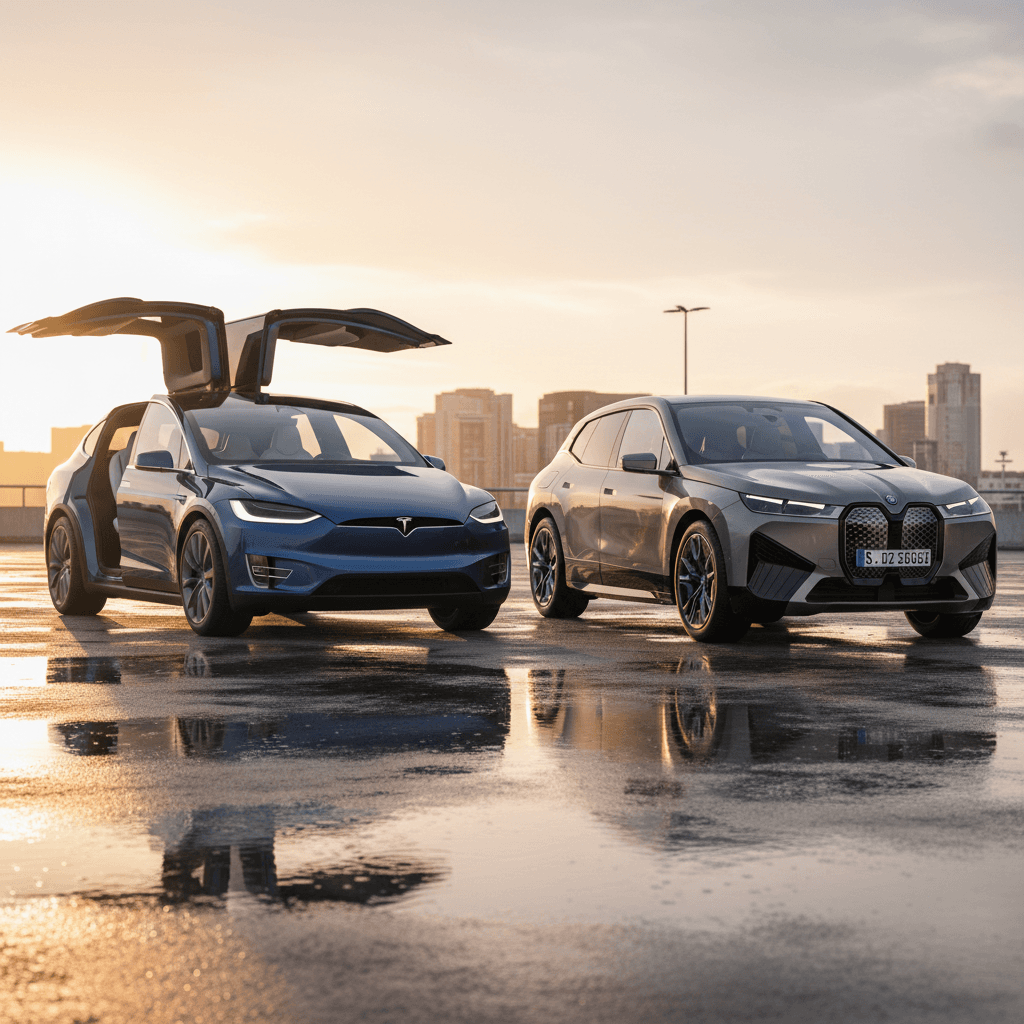
You’re cross‑shopping a Tesla Model X vs BMW iX and want a straight answer: which electric SUV is actually better, especially if you’re looking at the growing used‑EV market? Both are big, luxurious, and seriously quick, but they deliver very different ownership experiences. This guide breaks down the realities of range, charging, space, tech, reliability, and long‑term costs so you can pick the SUV that fits your life, not just the spec sheet.
Context: New vs. used in 2026
Tesla Model X vs BMW iX: Quick Overview
How the Model X and iX differ at a glance
Both are luxury EV SUVs, but they solve different problems.
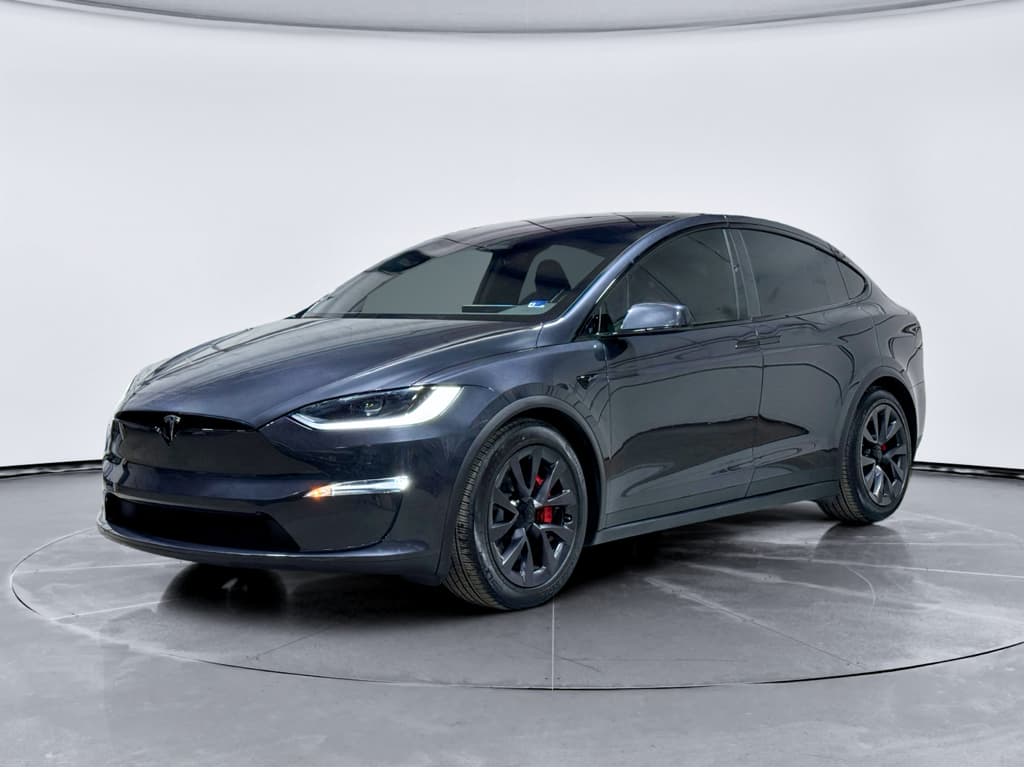
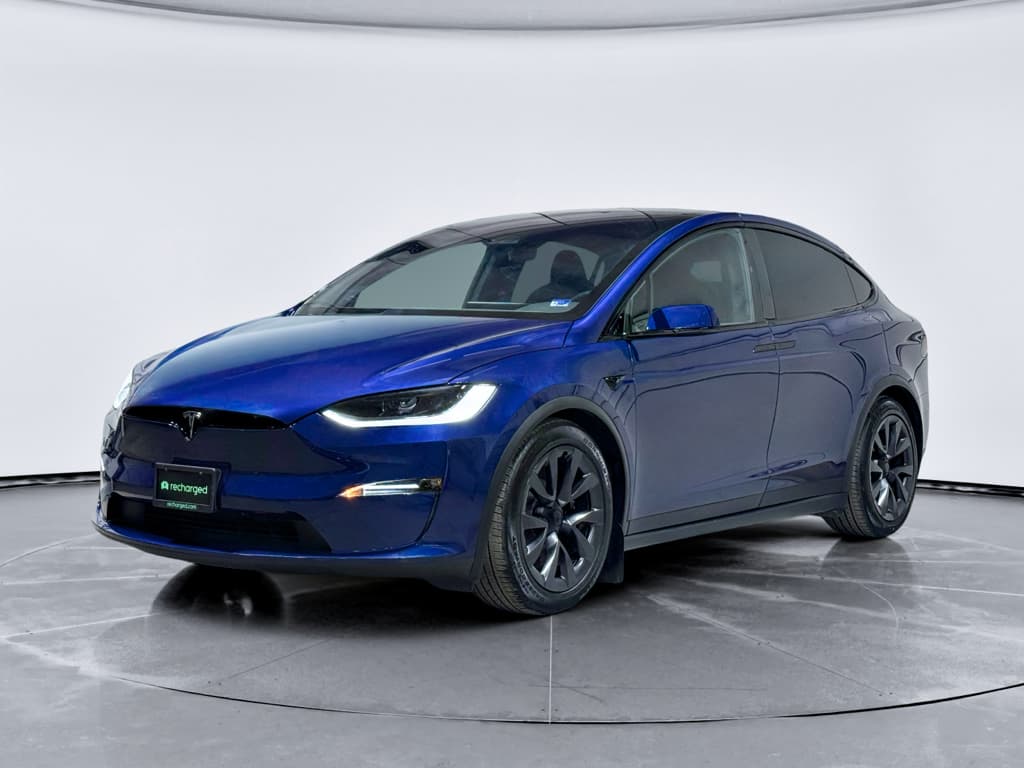
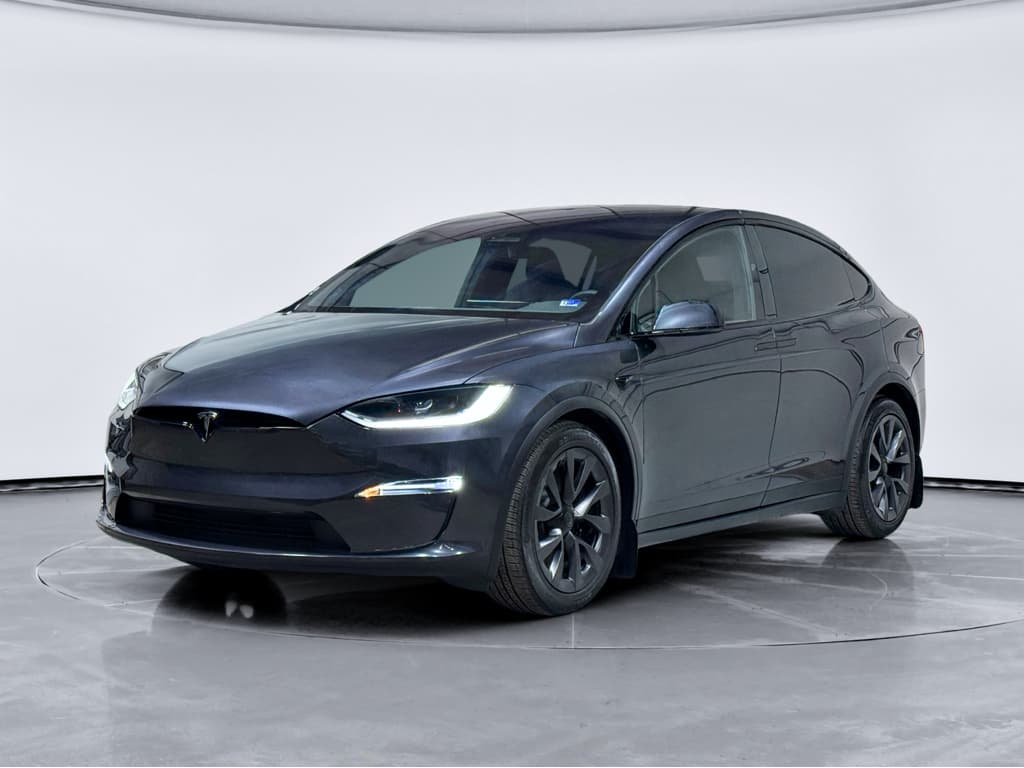
Tesla Model X: Tech‑forward three‑row EV
Strengths:
- Optional 3‑row seating and huge cargo space
- Excellent Supercharger access and road‑trip charging
- Blistering acceleration in Plaid trims
- Clean minimalist interior and giant center screen
Trade‑offs: Firmer ride, more road noise, build‑quality inconsistency on some years, service experience can vary by region.
BMW iX: Ultra‑quiet luxury cocoon
Strengths:
- Exceptionally quiet, refined, and comfortable cabin
- High real‑world efficiency and competitive range
- Top‑tier seats and materials, strong driver‑assist tech
- Traditional dealer network and warranty experience
Trade‑offs: Only two rows, smaller cargo area, no access to Tesla Superchargers without adapters or future updates in some regions.
Quick verdict for most shoppers
Key Specs: Tesla Model X vs BMW iX
Core specs comparison (recent U.S. models)
Approximate numbers for popular trims sold in the U.S. in 2023–2025. Exact figures vary by year and wheel/tire choice.
| Spec | Tesla Model X Long Range | Tesla Model X Plaid | BMW iX xDrive50 | BMW iX M60 |
|---|---|---|---|---|
| Drivetrain | Dual‑motor AWD | Tri‑motor AWD | Dual‑motor AWD | Dual‑motor AWD |
| EPA range (mi) | ~330–335 | ~300 | ~305–315 (wheel‑dependent) | ~280–295 |
| Battery (usable kWh)* | ~95–100 | ~95–100 | ~100+ | ~100+ |
| 0–60 mph | ≈3.8 sec | ≈2.5 sec | ≈4.4 sec | ≈3.6 sec |
| Seats | 5, 6, or 7 | 6 or 7 | 5 | 5 |
| Max DC fast charge | Up to 250 kW (Supercharger) | Up to 250 kW (Supercharger) | Up to ~195 kW | Up to ~195 kW |
| Towing (lbs) | Up to 5,000 | Up to 5,000 | No U.S. tow rating | No U.S. tow rating |
Use this as a directional guide; always verify exact specs for the VIN you’re considering.
About specs and years
Range and Charging: Model X vs iX
When shoppers ask whether the Tesla Model X or BMW iX is better, they usually start with range and charging. On paper, the Model X Long Range slightly edges out most iX trims. In practice, both deliver enough real‑world distance for typical commuting and road trips, but Tesla’s charging ecosystem is still a decisive factor for many U.S. drivers.
Range in the real world
- Model X Long Range: Commonly rated around 330+ miles EPA on recent models. In mixed driving, many owners report high‑200s to low‑300s, depending on speed, temperature, and wheels.
- Model X Plaid: Slightly less range because of performance focus and big wheels; still solid for long trips.
- BMW iX xDrive50: EPA ratings around 305–315 miles with smaller wheels, with owners often seeing similar or slightly better than sticker at moderate highway speeds.
- BMW iX M60: More power, a bit less range, but still competitive with performance‑oriented EV SUVs.
In owner forums and independent testing, the iX often performs very close to its rating at steady highway speeds, while the Model X can be more sensitive to speed and weather. That said, both have more than enough range for 95% of daily driving.
Charging experience
- Tesla Model X: Native access to the Supercharger network is still a major advantage in the U.S. Stations are plentiful along interstates, largely reliable, and easy to use, plug in, walk away, and payment is automatic.
- BMW iX: Uses CCS (or NACS with newer charging agreements and adapters) and taps into networks like Electrify America, EVgo, and others. Coverage has improved, but reliability and station layout can vary by region.
If you road‑trip often, especially through rural areas, Supercharger access makes living with a Model X simpler. If your driving is mostly local and you have home Level 2 charging, the iX’s setup is more than adequate.
Home charging levels the playing field
Performance and Driving Feel
On acceleration alone, the Model X, especially the Plaid, plays in its own league. But when you factor in ride comfort, steering, and cabin isolation, the BMW iX counters with a calmer, more traditional luxury‑SUV character. Which is “better” comes down to whether you value drama or composure.
Performance highlights at a glance
How each SUV feels on the road
- Tesla Model X: Instant torque, strong regen braking, and a firmer suspension tuning make it feel more like a techy performance car than a traditional SUV. The steering is light and direct, and Plaid models can genuinely shock passengers with their acceleration.
- BMW iX: The emphasis is on smoothness. Air suspension (where equipped), careful sound insulation, and a more relaxed steering feel make the iX excel on broken pavement and long highway slogs. Many owners coming from German luxury brands say it feels more like an electric 7‑Series than a crossover.
Noise, vibration, and harshness (NVH)
This is where the iX usually wins. Reviews and owners frequently highlight its near‑silent cabin, minimal wind noise, and excellent suppression of impacts. The Model X is quieter than most gas SUVs, but tire roar and wind noise, especially around the large mirrors and windshield, are more noticeable.
If your daily life includes lots of rough highway miles or you’re sensitive to noise, the BMW iX likely feels more premium from behind the wheel. If you care more about raw speed and one‑pedal driving, the Model X remains addictive.
Interior Space, Comfort, and Practicality
Space and seats are a major dividing line between these SUVs. The Model X is the only one with an available third row, and it can be configured for five, six, or seven passengers. The BMW iX is strictly two‑row, five‑seat only, but those five seats are among the most comfortable in the segment.
Space and practicality comparison
Approximate packaging and use‑case differences that matter day to day.
| Feature | Tesla Model X | BMW iX |
|---|---|---|
| Seating configurations | 5 / 6 / 7 seats | 5 seats only |
| Third row usability | Good for kids, tight for adults | Not available |
| Cargo with all rows up | Modest but usable | Very generous (no 3rd row) |
| Max cargo (rear seats folded) | Very large, van‑like | Large but not class‑leading |
| Rear headroom | Good, but tapering roof | Very good, more upright roof |
| Ride comfort | Varies by wheels; can be firm | Soft, cushioned, highly praised |
| Seat comfort | Good, firmer Tesla style | Excellent, especially up front |
Payload and cargo ratings vary by model year and wheel choice; always verify exact specs for your vehicle.
Family‑first pick
Tech, Infotainment, and Driver Assistance
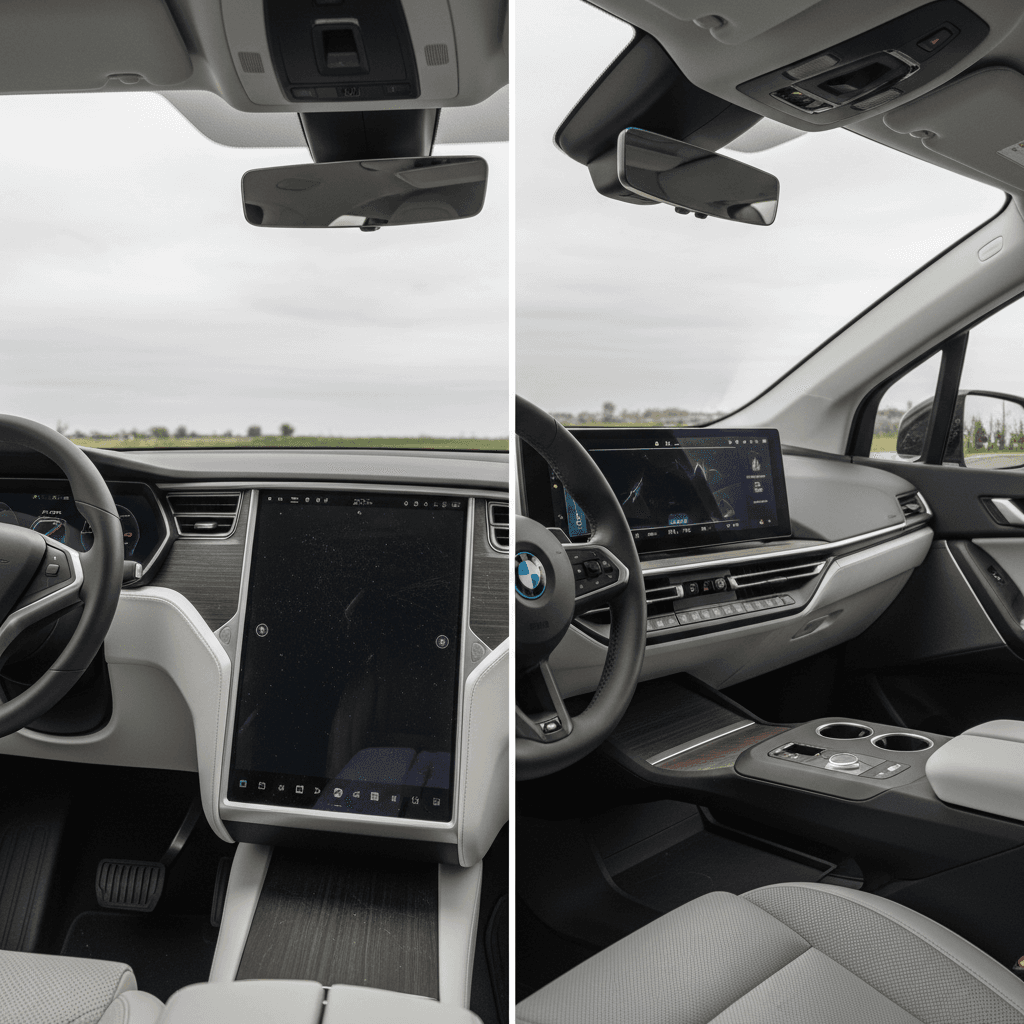
Both SUVs are tech‑heavy, but their philosophies are very different. Tesla leans into a software‑first, phone‑like experience. BMW layers its tech on top of a more traditional luxury‑car interface with physical controls and support for Apple CarPlay and Android Auto.
Infotainment and UX
- Tesla Model X: Dominated by a massive central touchscreen and minimal physical buttons. Maps, streaming, games, and vehicle settings live in software. There’s no native CarPlay or Android Auto; you live in Tesla’s ecosystem.
- BMW iX: Uses a curved dual‑screen setup with BMW’s iDrive 8/8.5. You get Apple CarPlay and Android Auto, plus physical shortcuts and a rotary controller that some drivers find easier on the move.
Owners who value deep integration with their phones often prefer the iX. Drivers who like Tesla’s clean UI and frequent OTA updates tend to be very happy in the Model X ecosystem.
Driver assistance and autonomy features
- Model X: Offers Autopilot and, on many used examples, Enhanced Autopilot or Full Self‑Driving Capability (FSD) as a paid option. Highway assist is strong, but capabilities and behavior vary by software version and whether the vehicle has legacy radar or the newer camera‑only setup.
- BMW iX: Provides robust Level 2 driver assistance (adaptive cruise, lane‑keeping, traffic‑jam assist) through BMW’s Driving Assistance Professional Package. It feels more traditional, less “self‑driving” marketing, but very competent in daily use.
If you’re interested in experimenting with semi‑autonomous features and frequent software updates, the Model X has more upside. If you just want rock‑solid, predictable driver aids, the iX may be less polarizing.
Watch for hardware changes on used Teslas
Ownership Costs, Reliability, and Depreciation
New luxury EVs drop in value quickly, and both the Model X and BMW iX are no exception. That’s bad news for first owners, but a huge opportunity if you’re shopping used. In 2025 and early 2026, we’ve seen transaction prices for nearly new examples significantly under original MSRP, often with warranty coverage remaining.
- Energy costs: Both vehicles are far cheaper to “fuel” than comparable gas SUVs. The iX is often a bit more efficient per mile, but Tesla’s low off‑peak Supercharger rates and time‑of‑use home charging can keep Model X costs competitive.
- Maintenance and repairs: Neither has engine oil or exhaust systems to worry about, but tires, brakes, suspension, and electronics still wear. BMW’s dealer network is dense and familiar to luxury shoppers; Tesla’s direct‑service model can be convenient in some markets and frustrating in others, depending on appointment availability.
- Reliability patterns: Early Model X builds were known for falcon‑door issues and trim misalignments. Later years improved, but you still want a careful inspection. The iX is newer, with fewer long‑term data points, but early signals suggest solid mechanical reliability with some software gremlins, typical of modern luxury brands.
- Depreciation: Large luxury EVs depreciate faster than smaller, higher‑volume models. That means you can often find a lightly used Model X or iX for tens of thousands less than new pricing, especially if you’re open to higher‑mileage examples with strong battery health.
How Recharged helps you avoid surprises
Buying Used: Which Holds Up Better Over Time?
By 2026, most shoppers comparing a Tesla Model X vs BMW iX are looking at 2–5‑year‑old vehicles. At that age, battery health, software support, and warranty coverage matter more than who had the higher MSRP sticker back when the vehicles were new.
Key things to check on a used Model X or iX
1. Battery health and fast‑charging history
Ask for a battery‑health report or use a platform like Recharged that runs high‑voltage diagnostics. Heavy DC fast‑charging use can accelerate wear on any EV, especially large‑battery SUVs.
2. Warranty coverage remaining
BMW iX models typically carry 4‑year/50,000‑mile basic coverage and longer EV‑component warranties. Tesla’s battery and drive unit warranty usually extends 8 years from in‑service date, with a mileage cap. The more coverage left, the less risk you carry.
3. Known trouble spots by year
For Model X, focus on build‑quality updates, door hardware, suspension, and screen/yellowing issues on earlier cars. For iX, look for software‑update history, minor trim fixes, and any campaign work done by BMW dealers.
4. Charging hardware and adapters
Verify which onboard charger, ports, and included adapters come with the vehicle. A used iX, for example, may or may not include home‑charging hardware; a used Model X might lack a mobile connector depending on when it was sold.
5. Tires, brakes, and suspension wear
Both SUVs are heavy and powerful. They can go through tires and suspension components faster than smaller EVs. Examine tread depth, tire brand, and any clunks or vibrations on a test drive.
Skip any EV without clear battery info
Which Is Better for You? Real‑World Scenarios
The Tesla Model X and BMW iX are both excellent, but for different buyers. Instead of chasing a single "winner," match each SUV’s strengths to how you actually drive and live.
Model X vs iX: Best fit by use case
Pick the scenario that looks most like your life.
Large family, road‑trip heavy
Better choice: Tesla Model X
- Three rows and up to seven seats
- Massive cargo room with seats folded
- Best‑in‑class access to Tesla Superchargers for cross‑country travel
- Entertainment features keep kids busy during charging stops
Comfort‑focused commuter or empty‑nester
Better choice: BMW iX
- Whisper‑quiet cabin and soft ride
- Top‑tier front seats with excellent support
- Two‑row interior is ideal for couples or small families
- CarPlay/Android Auto and rich audio options
Performance enthusiast
Better choice: Model X Plaid
- Supercar straight‑line performance
- Signature "wow" factor for passengers
- Still a practical SUV when driven sanely
Value‑driven used‑EV buyer
It depends, shop the metal, not the badge
- Compare actual asking price, warranty left, and battery health
- A gently used iX with strong warranty may beat a higher‑mileage Model X, and vice versa
- Use tools like a Recharged Score to compare real condition and fair‑market pricing
For most shoppers, the right answer isn’t “Tesla or BMW?” It’s “Which specific vehicle has the best combination of battery health, price, and features for how I’ll use it?”
Frequently Asked Questions
Tesla Model X vs BMW iX: Common Questions
Bottom Line: Tesla Model X vs BMW iX
So, is the Tesla Model X or BMW iX better? If you need three rows, tow capability, and plug‑and‑go Supercharger access across the U.S., the Model X is still the more versatile choice. If you care more about a whisper‑quiet cabin, next‑level seat comfort, and a traditional luxury experience with CarPlay and a dealer network, the BMW iX is hard to beat.
On the used market, the real winner is the specific vehicle with the best combination of battery health, price, options, and remaining warranty. That’s where Recharged comes in: by combining verified battery diagnostics, transparent pricing analysis, and EV‑specialist support, we help you decide whether your money goes further in a Model X or an iX, without guessing what’s happening under the floor.
If you’re ready to take the next step, browse used Tesla and BMW listings, get a Recharged Score Report, and compare vehicles side by side. The right answer to “Tesla Model X vs BMW iX: which is better?” isn’t theoretical, it’s the SUV in your budget that fits your life today and still makes sense five years from now.