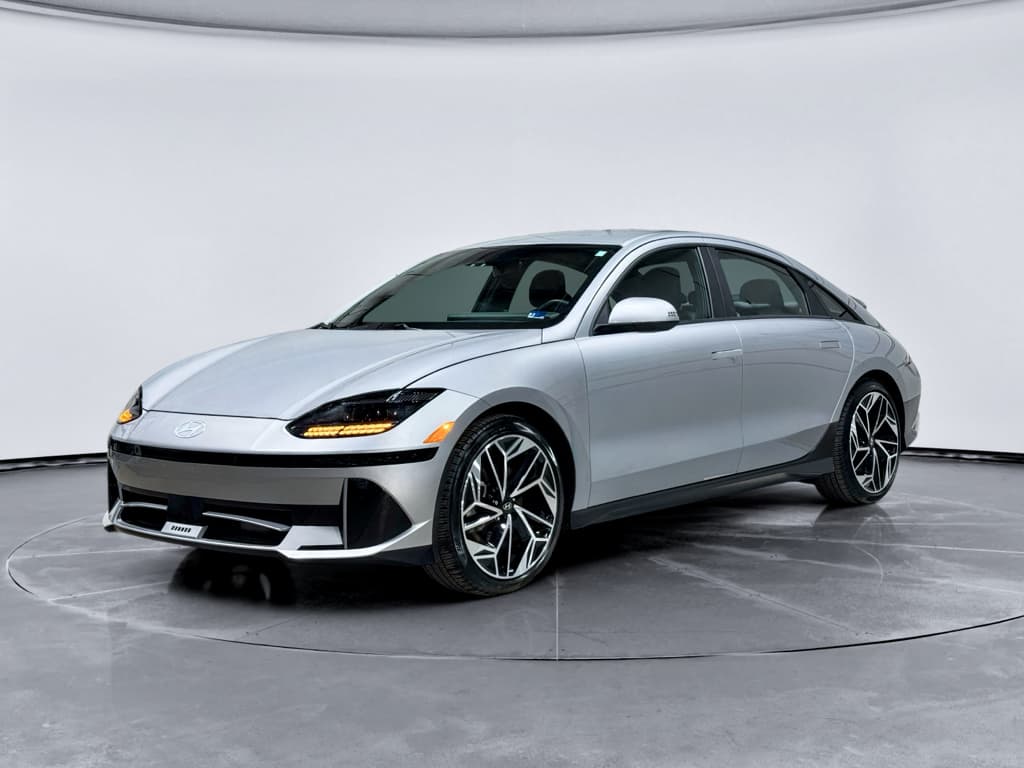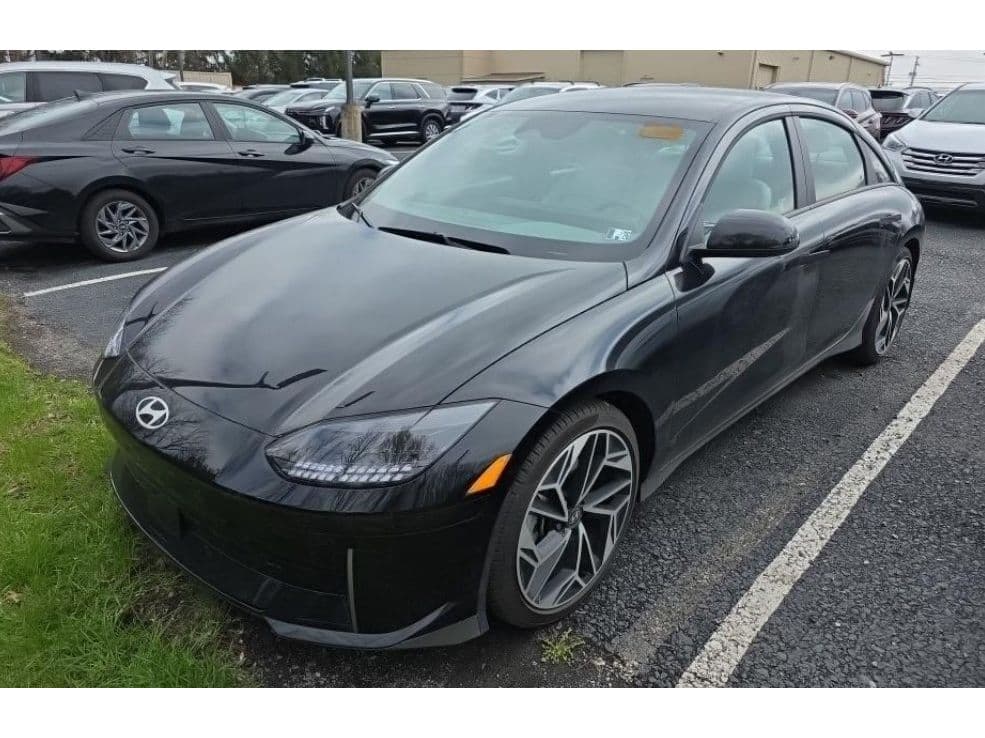
If you’re cross‑shopping a Hyundai Ioniq 6 against a Honda Accord in 2026, you’re really asking one thing: will going electric actually save you money? This guide walks through a realistic Hyundai Ioniq 6 vs Honda Accord cost comparison using current fuel and electricity prices, maintenance patterns, and what’s happening in the used market, so you can decide which sedan makes more sense for your budget.
Scope of this comparison
Why compare the Hyundai Ioniq 6 and Honda Accord in 2026?
On paper, the Hyundai Ioniq 6 and Honda Accord don’t look like obvious rivals: one is a dedicated electric sedan built on Hyundai’s E‑GMP EV platform, the other a long‑running gas (and hybrid) midsize benchmark. But if you’re a sedan buyer looking for something efficient, comfortable, and not an SUV, these are two of the most compelling options on the market.
- Both are midsize four‑door sedans with spacious cabins and grown‑up ride quality.
- The Ioniq 6 targets efficiency and aero in the EV world; the Accord has long been the efficiency benchmark for gas sedans.
- Transaction prices can overlap once you factor in EV incentives and dealer discounts.
- Each has strong reliability track records in its own category (ICE/hybrid vs modern EV).
Where they differ is in how and where you pay: with the Honda Accord, most of your spend shows up monthly at the pump and the shop; with the Ioniq 6, more is baked into the purchase price, but ongoing fuel and maintenance can be dramatically lower, especially if you buy used with verified battery health.
Key takeaways: Ioniq 6 vs Accord costs
Hyundai Ioniq 6 vs Honda Accord: quick 2026 cost snapshot
Key caveats before you run the math
Purchase price, incentives, and used-market reality
You can’t talk total cost of ownership without anchoring on what you actually pay to get into the car. For this comparison we’ll look at realistic 2026 transaction prices, not just window stickers.
Typical 2026 transaction prices: Ioniq 6 vs Accord (U.S.)
Approximate real‑world prices for well‑equipped trims, excluding taxes and fees. Actual numbers vary by market, dealer, and incentives.
| Model & trim (2024–2025) | New MSRP ballpark | Realistic new transaction* | 2‑3 year‑old used range |
|---|---|---|---|
| Hyundai Ioniq 6 SE Long Range RWD | $43,000–$45,000 | $38,000–$42,000 after typical discounts | $30,000–$35,000 |
| Hyundai Ioniq 6 SEL/Limited AWD | $47,000–$52,000 | $42,000–$47,000 after discounts | $33,000–$38,000 |
| Honda Accord 1.5T EX (gas) | $31,000–$33,000 | $30,000–$32,000 | $24,000–$28,000 |
| Honda Accord Hybrid Sport/EX‑L | $33,000–$37,000 | $32,000–$35,000 | $26,000–$30,000 |
New vs used pricing for mainstream trims shoppers actually buy.
What about tax credits?
By early 2026, the Ioniq 6 has seen meaningful price cuts from its launch MSRP as Hyundai chases volume. Combined with incentives, the gap to an Accord Hybrid is often smaller than you’d expect, especially if you’re willing to buy used.
Energy costs: EV electricity vs gasoline
This is where the Hyundai Ioniq 6 usually pulls away from the Honda Accord. To keep the math grounded in 2026 reality, we’ll use conservative national averages:
- Average U.S. residential electricity price (late‑2024 into 2025 data, continued into 2026): about $0.16–$0.18 per kWh for households.
- Average U.S. gas price in early 2026 after the latest oil shock: hovering around $4.00 per gallon nationally.
- Typical Ioniq 6 energy use in mixed driving: roughly 27–30 kWh per 100 miles (including charging losses), depending on trim and climate.
- Accord Hybrid real‑world fuel economy: about 44–48 mpg combined for mainstream trims; non‑hybrid Accords typically land in the mid‑30s.
Ioniq 6 electricity cost per 100 miles
Assume 28 kWh/100 miles and $0.17/kWh home electricity:
- Energy used: 28 kWh
- Cost: 28 × $0.17 ≈ $4.75 per 100 miles
- Cost per mile: about $0.048/mi
Public DC fast charging can easily double this cost, so home charging access is a big swing factor.
Accord gasoline cost per 100 miles
Assume 45 mpg (hybrid) and $4.00/gal gas:
- Fuel used: 100 ÷ 45 ≈ 2.22 gallons
- Cost: 2.22 × $4.00 ≈ $8.90 per 100 miles
- Cost per mile: about $0.089/mi
A non‑hybrid Accord at ~34 mpg pushes this closer to $0.12/mi at the same gas price.
Rule of thumb on fuel savings
If you live somewhere with high electricity prices and relatively cheap gas, that gap can shrink or even close. Conversely, in states with cheap renewable power and high fuel taxes, electricity’s advantage can grow significantly.
Maintenance and repairs over 5–10 years
The second big lever in total cost of ownership is keeping the car running. Here, EVs like the Hyundai Ioniq 6 benefit from mechanical simplicity: there’s no engine oil, spark plugs, timing belt, exhaust system, or multi‑gear automatic transmission to maintain.
Typical maintenance profiles: Ioniq 6 vs Accord
What you’ll actually visit the shop for over a decade
Hyundai Ioniq 6
- No oil or transmission fluid changes
- Brake wear is light thanks to strong regeneration
- Coolant service for battery/drive unit on long intervals
- Tires often wear faster due to weight and torque
- HVAC and cabin air filter service similar to ICE cars
Most owners mainly pay for tires, cabin filters, and the occasional brake fluid service for many years.
Honda Accord / Accord Hybrid
- Regular oil and filter changes
- Transmission or CVT service on schedule
- Engine air filter, spark plugs, belts, coolant, etc.
- Brake jobs more frequently than a regen‑heavy EV
- More moving parts overall = more potential wear items
Hybrids add an electric drive system but retain much of the ICE maintenance stack.
Budgeting maintenance realistically
Unscheduled repairs are harder to model, but both vehicles come from brands with solid reliability records in their respective categories. The big question with EVs is always the battery pack, which is why independent health data, like the Recharged Score, matters so much if you’re buying used.
Insurance, taxes, and fees
Insurance can swing either way. EVs often cost a bit more to insure because of higher repair costs and pricey electronics, but the Ioniq 6 isn’t a six‑figure luxury car, and many insurers rate it similarly to other midsize sedans once they have enough claims data.
- If the Ioniq 6’s sticker price is higher for an equivalent trim, expect insurance quotes to run slightly higher than an Accord in the same garage.
- Some states now impose modest annual EV registration surcharges to make up for lost gas‑tax revenue; others still favor EVs with lower fees.
- Accords don’t face EV fees, but you do pay fuel taxes every time you fill up, which are baked into the pump price.
Check your state’s EV fees
Depreciation and resale value
Depreciation is where the Accord traditionally shines and where EVs like the Ioniq 6 have, historically, taken some heavier early‑year hits. But 2026 looks different from the first generation of compliance EVs.
Honda Accord depreciation pattern
- Accords are resale darlings; 3‑year‑old cars often retain 60–65%+ of MSRP in normal markets.
- Hybrids tend to hold value especially well because they’re efficient and well‑understood.
- Used‑car shoppers trust Accord longevity; that props up prices.
Hyundai Ioniq 6 depreciation pattern
- Hyundai’s aggressive new‑car discounting and EV price cuts tend to push steeper first‑owner depreciation.
- That same dynamic makes 2‑3‑year‑old Ioniq 6s compelling bargains for second owners.
- Battery health uncertainty can weigh on resale unless you can document pack condition.
Why this matters for you
5‑year cost scenarios: commuter vs road-tripper
Let’s put the pieces together with two simplified scenarios. These aren’t precise forecasts, but they give you a feel for where each car shines.
Shared assumptions for both scenarios
1. Mileage and ownership period
You drive 12,000 miles per year and own the car for 5 years (60,000 miles total).
2. Energy prices
Average residential electricity of $0.17/kWh, gas at $4.00/gal over the period. Your reality may be higher or lower.
3. Vehicles compared
Hyundai Ioniq 6 Long Range (home‑charged ~90% of the time) vs Honda Accord Hybrid Sport/EX‑L.
4. Maintenance approach
You follow the factory schedule but avoid unnecessary dealer add‑ons for both cars.
Illustrative 5‑year cost comparison (12,000 miles/year)
All numbers are directional and rounded to the nearest hundred dollars. Purchase price assumes broadly comparable new trims; used purchases tilt even more toward the Ioniq 6.
| Category (5 years) | Hyundai Ioniq 6 (home charging) | Honda Accord Hybrid |
|---|---|---|
| Fuel / energy | ≈$2,850 (avg ~$570/yr) | ≈$4,450 (avg ~$890/yr) |
| Scheduled maintenance | ≈$1,000–$1,400 | ≈$2,000–$2,500 |
| Insurance, taxes & EV fees | Slightly higher insurance + possible EV fee | Slightly lower insurance, no EV fee |
| Depreciation from new | Steeper early drop; stronger value as used buy | Historically strong; retains a higher share of MSRP |
| Estimated 5‑yr operating savings vs Accord | Baseline | Ioniq 6 saves roughly $2,500–$4,000 on fuel + maintenance |
Hyundai Ioniq 6 usually wins on running costs; Accord often wins on resale when bought new.
When EV math can backfire
Should you go used? Ioniq 6 vs Accord
By 2026, there’s finally meaningful used inventory for both of these models. The used market is where the economics of an Ioniq 6 can become especially compelling.

Used Ioniq 6 vs used Accord: what changes in the math?
Depreciation has already done some of the work for you
Buying a used Ioniq 6
- First‑owner depreciation + EV price cuts mean you can often find low‑mileage Ioniq 6s in the low‑to‑mid $30Ks.
- Running costs stay low as long as the battery is healthy and you can charge at home.
- Battery condition becomes the single biggest variable, it’s why tools like the Recharged Score exist.
Buying a used Accord / Accord Hybrid
- Prices stay firm thanks to strong demand and reputation; there are fewer “fire sale” bargains.
- Fuel and maintenance costs remain similar to buying new, just without the latest tech.
- You’re betting on conventional, well‑understood hardware rather than battery health.
How to shop used Ioniq 6 smartly
How Recharged tilts the math for Ioniq 6 shoppers
The Hyundai Ioniq 6 is one of those EVs that makes the most financial sense when you buy it used, after the steepest depreciation is behind you, but only if you know you’re getting a healthy battery and fair price. That’s exactly the gap Recharged is built to close.
- Every Ioniq 6 we list includes a Recharged Score Report with verified battery health, charging history insights, and pricing benchmarks.
- You can trade in a current gas or hybrid vehicle (including an Accord) or get an instant offer, then roll that value into your Ioniq 6 purchase.
- Financing is built for EVs, and you can pre‑qualify online with no impact to your credit, so you can compare payments for an Ioniq 6 vs a future Accord side by side.
- Nationwide delivery and our Richmond, VA Experience Center mean you can keep the transaction fully digital or come see and drive the car in person.
Turning Accord fuel spend into an Ioniq 6 payment
Ready to find your next EV?
Browse VehiclesFAQ: Hyundai Ioniq 6 vs Honda Accord costs
Frequently asked questions about Ioniq 6 vs Accord costs
Bottom line: Which really costs less in 2026?
If you strip away the hype and look at the numbers, a Hyundai Ioniq 6 charged mostly at home is very often cheaper to run than a Honda Accord, especially a non‑hybrid one. Even against an Accord Hybrid, the Ioniq 6’s lower fuel and maintenance costs usually add up over a 5‑ to 10‑year window, though the Accord tends to repay you with stronger resale if you buy new and sell quickly.
Your decision ultimately comes down to where you live, how you drive, and how comfortable you are with EVs. If you have reliable home charging, drive a decent number of miles per year, and are willing to buy used with clear battery‑health transparency, the Ioniq 6 can deliver a quieter, cleaner drive and a lower total cost of ownership than the Accord. If you’re locked out of home charging or live in a region where electricity is unusually expensive, the Accord Hybrid remains one of the most rational choices in the market.
Either way, running the math with your actual commute, local electricity and gas prices, and realistic purchase prices will tell you more than any slogan. And if you’re leaning Ioniq 6, starting with a Recharged‑inspected used car and a Recharged Score Report can turn those projected savings into something you can trust, not just hope for.