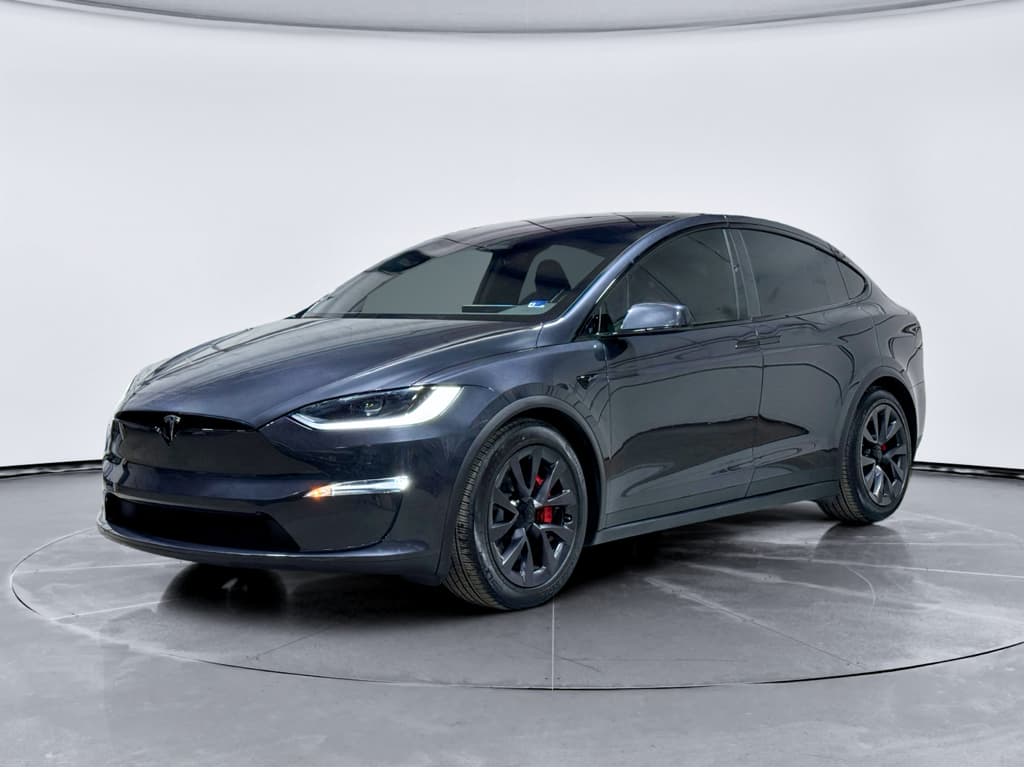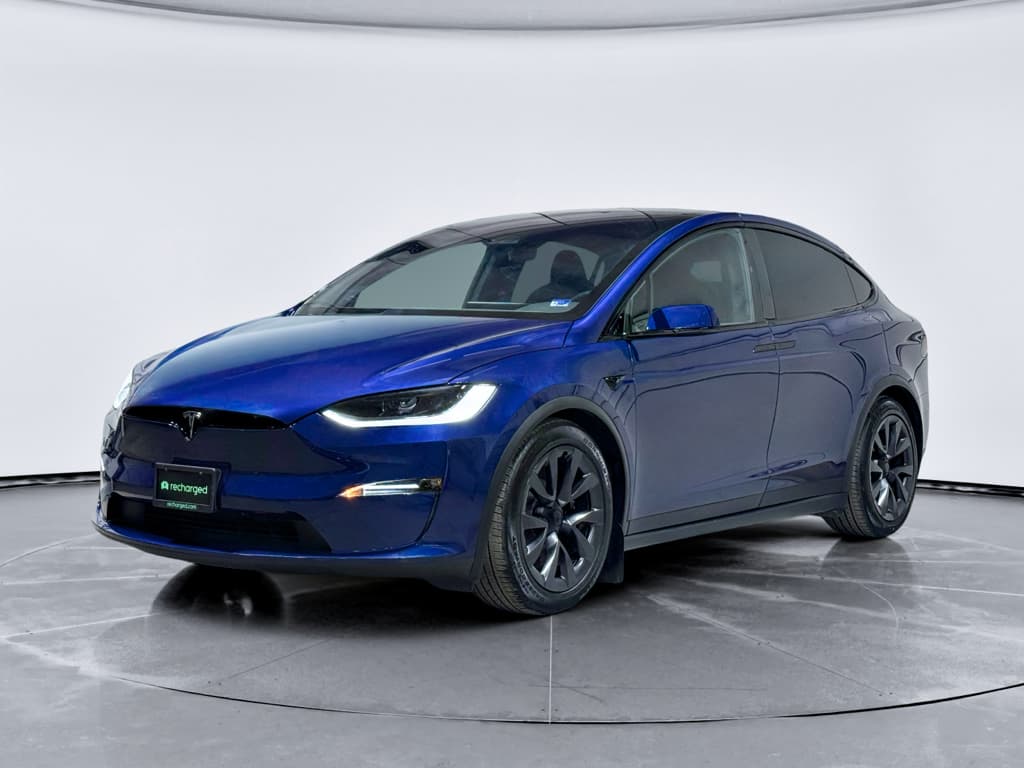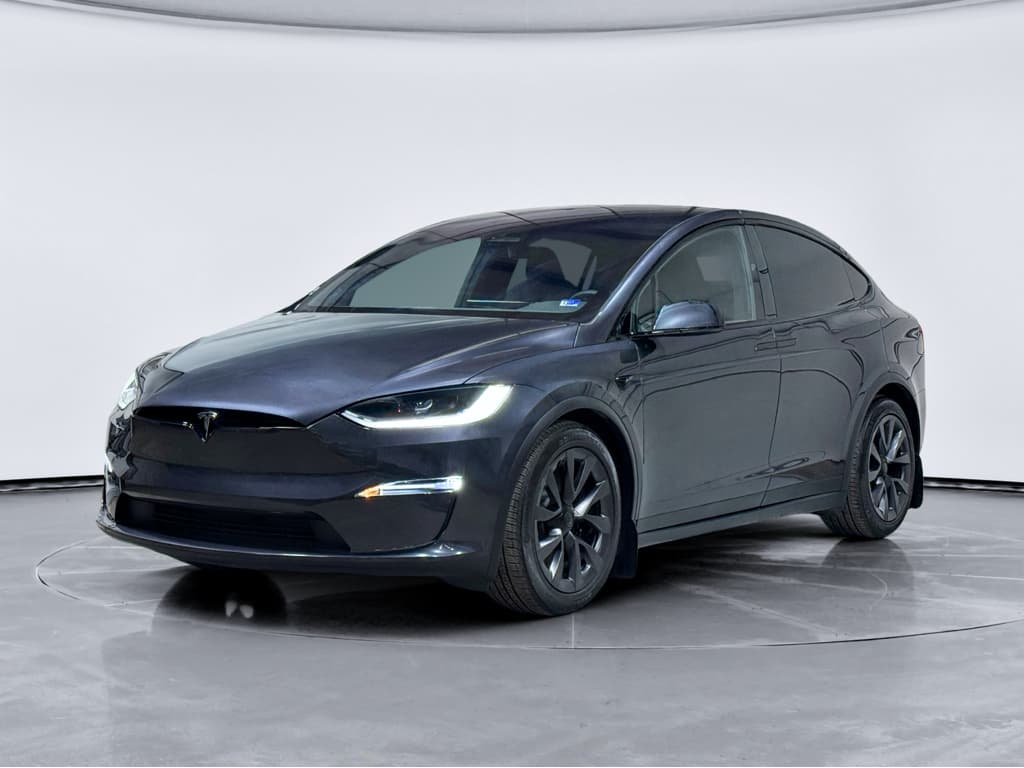
If you’re looking at a Tesla Model X in 2026, you’ve probably noticed one thing: the **EPA range number and the real-world range** rarely match. On paper, a modern Model X is a 330–350‑mile SUV. In day-to-day driving, especially at U.S. highway speeds, you’ll usually see less. This guide breaks down what you can *actually* expect from Tesla Model X real-world range in 2026, and how to shop smart if you’re considering a used one.
Quick takeaway
Why real-world range matters more than the EPA number
The EPA rating is useful for comparing vehicles, but it’s not a promise of what you’ll see commuting, running errands, or cruising at 75 mph. The test cycles are gentler than real life, with slower average speeds and no brutal headwinds, steep grades, cargo boxes, or ski trips in 10°F weather. Tesla’s adjustments to EPA numbers in 2024 also brought advertised range closer to what independent tests had already been seeing, but **real-world range is still typically lower than the sticker**.
- EPA tests assume mild weather and moderate speeds, while real owners often drive faster and in more extreme temperatures.
- Tesla’s older ratings were widely viewed as optimistic; newer figures from 2024 onward are closer to what owners see, but still not perfect.
- Range depends heavily on **wheel size, speed, temperature, elevation, and how full you keep the battery**.
- If you’re buying used, the *original* EPA rating doesn’t tell you anything about **current battery health**.
Don’t plan a trip off the EPA number alone
Tesla Model X EPA range in 2026: the official numbers
As of early 2026, the U.S. lineup for the Tesla Model X is effectively two flavors of the same basic 100 kWh battery pack: a dual‑motor “Long Range” style variant and the high‑performance Plaid. After Tesla’s 2024 EPA adjustments, the published numbers settled into the low‑ to mid‑300‑mile band, depending on wheels.
Approximate 2025–2026 Tesla Model X EPA range
These are typical EPA combined range estimates you’ll see on window stickers or Tesla’s site in 2025–2026. Exact numbers can shift slightly by wheel, software revision, and testing protocol.
| Model | Wheels | EPA combined range (approx.) | Notes |
|---|---|---|---|
| Model X Dual Motor (Long Range equivalent) | 20-inch | ~350–355 miles | Best official range; efficiency‑focused wheels and tires. |
| Model X Dual Motor (Long Range equivalent) | 22-inch | ~325–335 miles | Larger wheels cut both EPA and real-world range. |
| Model X Plaid | 20-inch | ~330–335 miles | Performance variant; slightly lower official range than Dual Motor. |
| Model X Plaid | 22-inch | Low 300s miles | Biggest wheels + performance tune = lowest rated range. |
EPA ratings are a comparison tool; real-world range will usually be lower, especially at higher speeds.
EPA vs energy use
Real-world Model X range in 2026 by driving scenario
Let’s turn the lab numbers into something you can really use. These **real-world ranges** assume a healthy late‑generation Model X (roughly 2021–2026), a full charge to near empty, and moderate cargo. Your results will slide up or down based on weather, elevation, and how aggressively you drive.
Typical real-world ranges for a newer Model X (2026)
How far will a Model X really go in common 2026 scenarios?
Think of these as realistic planning numbers, not maximums you might hit once on a perfect day.
City / suburban mix
In slower, stop‑and‑go driving, the Model X is surprisingly efficient for a big SUV because it recaptures a lot of energy with regenerative braking.
- Dual Motor, 20" wheels: ~300–340 miles per full charge in mild weather.
- Plaid, 20" wheels: ~280–320 miles if you drive calmly.
Short trips with a cold battery will pull this down, especially in winter.
70–75 mph highway cruising
Pure highway is where you see the biggest gap from EPA. High speeds and aero drag hurt every EV.
- Dual Motor, 20" wheels: ~290–310 miles at 70–75 mph in mild temps.
- Dual Motor, 22" wheels: ~270–290 miles in similar conditions.
- Plaid, 20" wheels: ~270–300 miles highway range.
- Plaid, 22" wheels: ~240–270 miles at typical U.S. interstate speeds.
A simple rule of thumb
Key factors that shrink (or boost) your Model X range
Range isn’t random. Once you understand the big levers, speed, temperature, wheels, and load, you can predict your Tesla Model X real-world range in 2026 with surprising accuracy, and even stretch it when you need to.
The 6 biggest range killers (and how to fight back)
Dial these in and you’ll get much closer to your best‑case range.
1. Speed
Above ~65 mph, aerodynamic drag climbs fast. Many Model X owners see **15–25% less range at 75–80 mph** than at 60–65 mph.
What to do: Even dropping from 78 to 70 mph can claw back 20–30 miles of range on a full charge.
2. Temperature
Cold weather steals range twice, by making the battery less efficient and using energy to heat the cabin and pack.
What to do: Precondition while plugged in, use seat and wheel heaters instead of blasting cabin heat, and avoid lots of very short winter trips when possible.
3. Wheel size & tires
Those 22" wheels look fantastic, but they cost you real miles.
- Compared with 20" wheels, expect **5–10% less range** in many scenarios.
- Performance tires also add rolling resistance.
4. Weight & roof loads
A fully loaded Model X, family, luggage, ski box, works its battery harder.
What to do: Remove crossbars and cargo boxes when not needed, and keep unnecessary weight out of the car if you’re trying to stretch a leg.
5. Elevation & wind
Long climbs and headwinds quietly chew through range.
What to do: Use the built‑in trip planner and Energy app to see if you’re tracking above or below expectations, and add a buffer if you’ll climb significantly in the last part of your route.
6. Driving style
Hard launches and late braking waste energy, even in a powerful EV.
What to do: Smooth inputs and generous use of regen can easily save **10–20 Wh/mile**, adding dozens of miles to each full charge.
Long Range vs Plaid: which goes farther in the real world?
Under the skin, the Dual Motor “Long Range” and Plaid share similar pack capacity, but the Plaid trades some efficiency for massive performance. In 2026, both variants can be excellent road‑trip machines, but if you care more about how far you go than how fast you get there, the Dual Motor still has the edge.
Dual Motor (Long Range style)
- EPA: Typically tops the Model X range charts, especially on 20" wheels.
- Highway reality (70–75 mph): ~290–310 miles on 20" wheels, ~270–290 on 22".
- Best fit for: Families and road‑trippers who value efficiency and lower Supercharger stops per trip.
Plaid
- EPA: Slightly lower than Dual Motor, especially on 22" performance wheels.
- Highway reality: ~270–300 miles on 20", ~240–270 miles on 22" with typical interstate driving.
- Best fit for: Drivers who want supercar acceleration but still respectable range, just not quite as far as the Dual Motor on the same route.
Which should you pick?
Winter driving: how much range the Model X really loses
Cold weather is where many new EV owners get a harsh lesson. The Model X is better than most large EVs in winter, but you should still expect a noticeable hit. In typical North American winters, say 20–35°F, you’ll often see **10–30% less range** than you would on a mild day. In harsher conditions or with lots of short, un‑preconditioned trips, it can be more.
Approximate winter range for a late-model Tesla Model X
Assumes healthy battery, mixed driving, and cabin reasonably heated.
| Conditions | Driving pattern | Real-world range vs EPA | Example for a 350-mile EPA X |
|---|---|---|---|
| Cool (40–55°F) | Mixed city/highway, preconditioned | ~90–95% of EPA | 315–335 miles |
| Typical winter (20–35°F) | Normal mix, some preconditioning | ~75–90% of EPA | 260–315 miles |
| Deep cold (<15°F) | Short trips, no preconditioning | ~55–75% of EPA | 190–260 miles |
The colder it gets, and the shorter your trips, the more your effective range will shrink.
Winter range tips that actually work
Towing with a Model X: what range to expect
One of the Model X’s superpowers is towing, boats, small campers, and utility trailers are all fair game. The tradeoff is range. Aerodynamic drag from a trailer is brutal on any EV, and the Model X is no exception. Depending on what you’re pulling, **expect your usable highway range to drop by 30–50%** compared with solo driving.
Realistic towing range scenarios for a Model X
Assumes healthy late‑model Dual Motor or Plaid, 100% to low state-of-charge on mostly highway driving.
Light, low trailer (e.g., small utility or jet-ski trailer)
- ~30–40% range reduction vs solo driving.
- Example: Dual Motor on 20" wheels that would normally do ~300 highway miles might see **180–210 miles** while towing.
Staying at 60–65 mph instead of 75 makes a huge difference here.
Boxy camper or tall enclosed trailer
- ~40–50%+ range reduction in many cases.
- Example: A rig that could normally do ~290 miles may see **140–180 miles** per charge, sometimes less in headwinds or hills.
For serious road‑trip towing, plan conservative legs and lean on Tesla’s trip planner to avoid arriving empty.
Don’t plan tight towing legs
Battery degradation in 2026: new vs used Model X
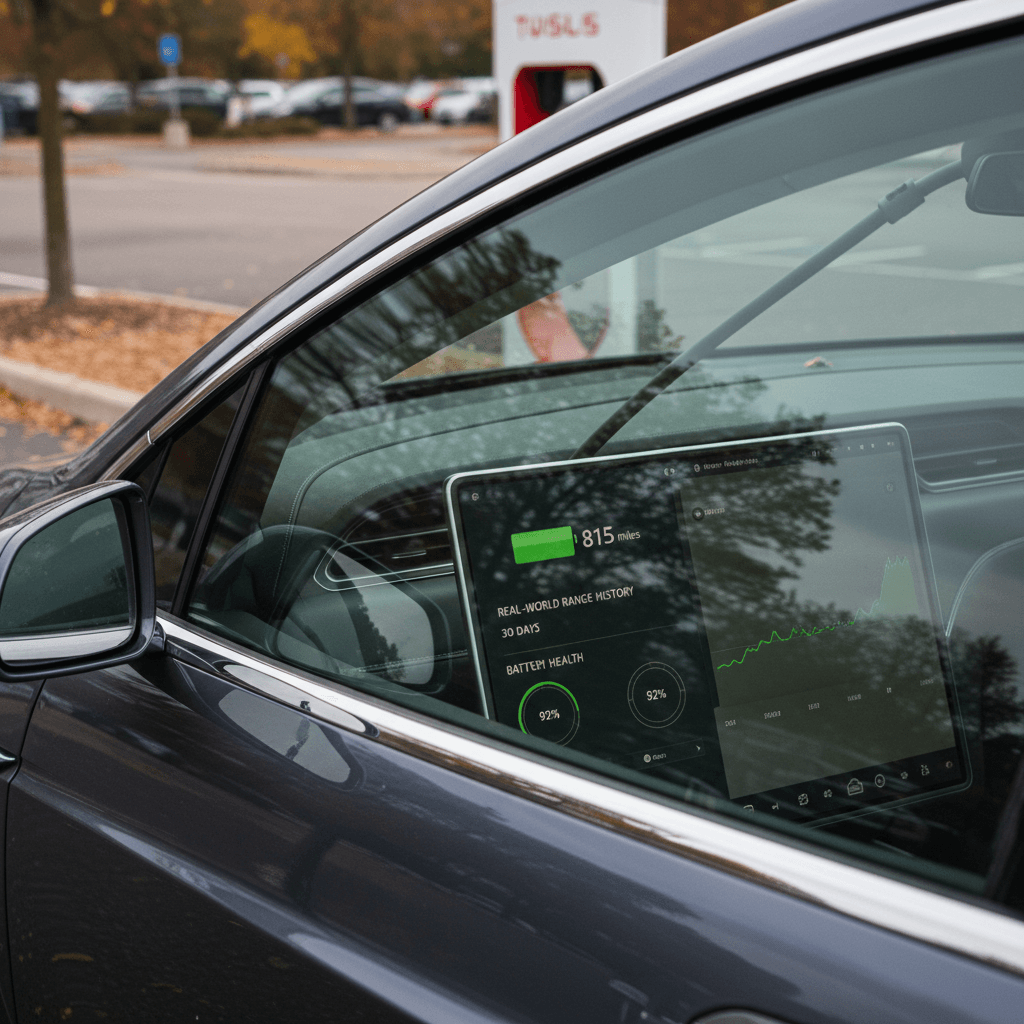
Real‑world range in 2026 isn’t just about conditions, it’s also about **how old the pack is and how it’s been treated**. The good news: Tesla packs in the Model X have generally shown **modest degradation** for the first several years. Many owners see roughly 5–10% loss in the first 100,000 miles, then a slower decline after that, though individual cars vary.
Typical usable range vs age for a late‑model Tesla Model X
High-level expectations for a well‑cared‑for battery. Abuse, fast‑charge patterns, storage, and climate can all move these numbers.
| Vehicle age / mileage | Likely battery health | What that means for real-world highway range* |
|---|---|---|
| New–3 years / <40,000 mi | ~92–98% of original | A 300‑mile highway car when new might still do **275–295 miles** in mild conditions. |
| 3–7 years / 40,000–100,000 mi | ~88–95% of original | Expect **20–30 fewer miles** on a full charge vs new, assuming similar conditions. |
| 7–10+ years / 100,000–200,000+ mi | ~80–90% of original (highly variable) | Plan trips conservatively; a pack that started at 300 miles might consistently give **240–270 miles** when healthy. |
Think of these as ballpark expectations, not guarantees for any specific vehicle.
Why a battery health report matters
Planning road trips with a Model X in 2026
The good news is that road‑tripping a Tesla Model X in 2026 is easier than ever. The Supercharger network is dense on major U.S. routes, the trip planner does a solid job predicting energy use, and the Model X’s large pack size means you can usually drive **2.5–4 hours between stops** in good conditions if you start near full.
Model X road-trip planning checklist
1. Start with realistic legs
On a healthy, newer Dual Motor X, plan **180–240‑mile legs** as your default in mild weather. That keeps charging stops comfortable and leaves a buffer for wind, rain, or traffic.
2. Use the in-car trip planner
Plug your destination into the car, not just your phone. The Tesla trip planner accounts for elevation, temperature, and speed patterns along major routes and suggests optimal Supercharger stops.
3. Charge for the next leg, not to 100% every time
From a time‑efficiency perspective, it’s often faster to charge more often to 50–80% than to sit for the last slow 80–100% stretch, especially on DC fast charging.
4. Adjust speed to protect your buffer
If the Energy app shows you arriving below your target buffer, dropping from 78 mph to 68 mph can quickly claw back several percentage points of state-of-charge on a long leg.
5. Add extra margin in winter & mountains
In cold weather or on routes with long climbs, aim to **arrive with 15–20%**, not 5%. That’s cheap insurance against headwinds or unplanned detours.
6. Know your family’s rhythm
Many families are ready to stop every 2–3 hours anyway. Plan Supercharger stops around meals and breaks so charging feels more like a background task than a delay.
Buying a used Model X: how to judge real-world range
When you’re considering a used Tesla Model X in 2026, you’re buying an energy system as much as you’re buying an SUV. EPA stickers and original window labels are history; what matters is **the pack you’re getting today** and how that translates into real-world range on your routes.
Range questions to ask when shopping used
These questions help you translate specs into day‑to‑day livability.
Model year & configuration
Confirm whether it’s a Dual Motor or Plaid and which wheel size it has. That sets your baseline EPA figure and rough efficiency expectations.
Typical highway range today
Ask the seller what they actually see on a familiar highway route, ideally **from 90% down to 10–20%** at 70–75 mph. That’s your most honest data point.
Battery diagnostics
Look for a recent battery health assessment that translates raw data into a clear estimate of remaining capacity and projected real-world range.
How Recharged helps you shop by real-world range, not guesses
Transparent battery health with the Recharged Score
Every EV on Recharged includes a **Recharged Score battery health report**, based on real diagnostics, not just what the dash says at 100%. You see how much capacity the pack has retained and what that means in miles.
Model- and route-specific context
Our EV specialists understand how a Model X behaves on real U.S. roads. If you tell us your commute or typical trip, say, 85 miles each way in winter, we can help you decide whether a specific X’s range is comfortable or tight.
End-to-end support, including financing and trade-in
Beyond the battery, Recharged offers **financing, trade‑in or consignment options, and nationwide delivery**. You can handle the entire purchase digitally or visit our Experience Center in Richmond, VA if you’d like to see vehicles in person.
FAQ: Tesla Model X real-world range in 2026
Frequently asked questions about Model X range
Bottom line: is the Tesla Model X’s real-world range good enough?
By 2026 standards, the Tesla Model X still sits near the top of the pack for **real-world usable range in a three‑row electric SUV**. You’re not going to see the full EPA number on a windy 80‑mph highway run, but a healthy late‑model Dual Motor X delivering around 280–320 miles per charge in normal driving is more than enough for most families’ daily use and long‑distance trips.
The key is to plan with honest numbers, not brochure figures, and to know exactly what you’re getting if you’re shopping used. That means understanding how wheels, weather, and speed affect range, and, just as importantly, having a clear picture of the **battery’s current health**. If you’re evaluating a used Model X, Recharged’s combination of the **Recharged Score**, fair pricing, EV‑savvy guidance, financing options, and nationwide delivery can make sure the SUV you choose has the range your life actually requires, not just the number printed on an old window sticker.