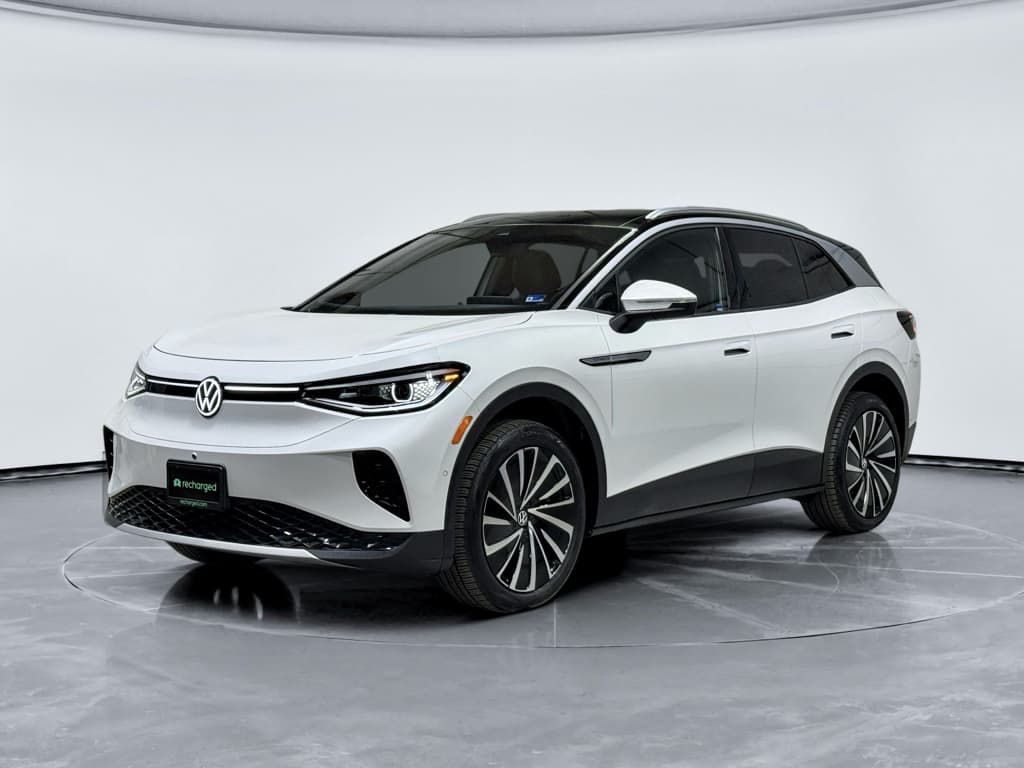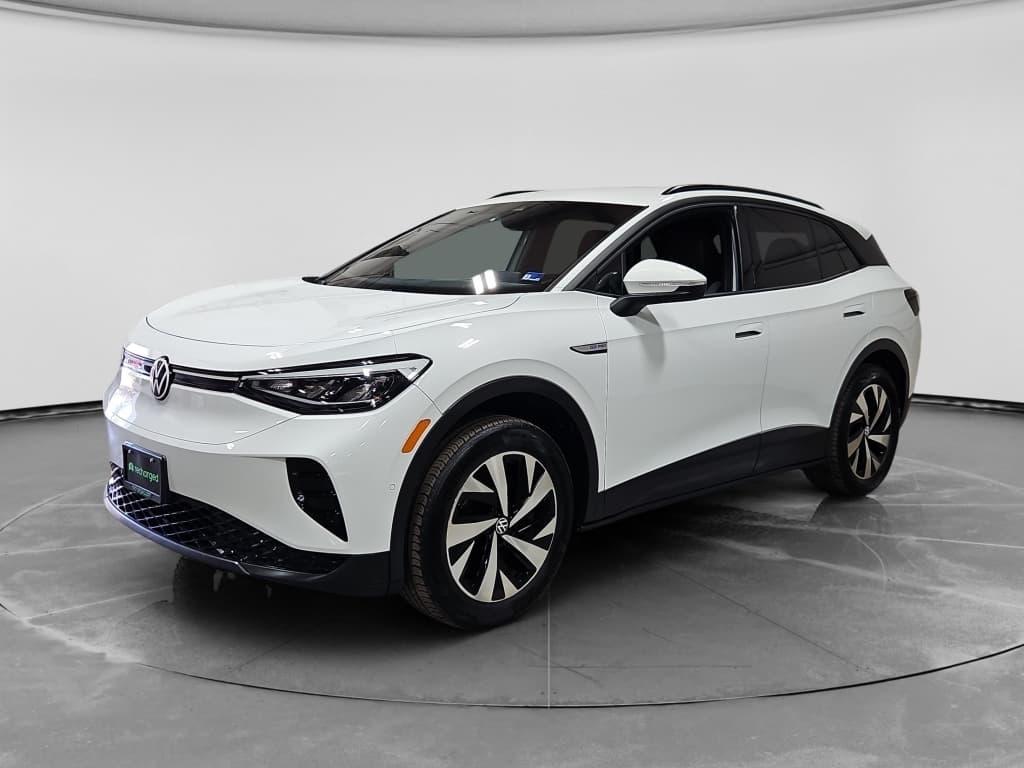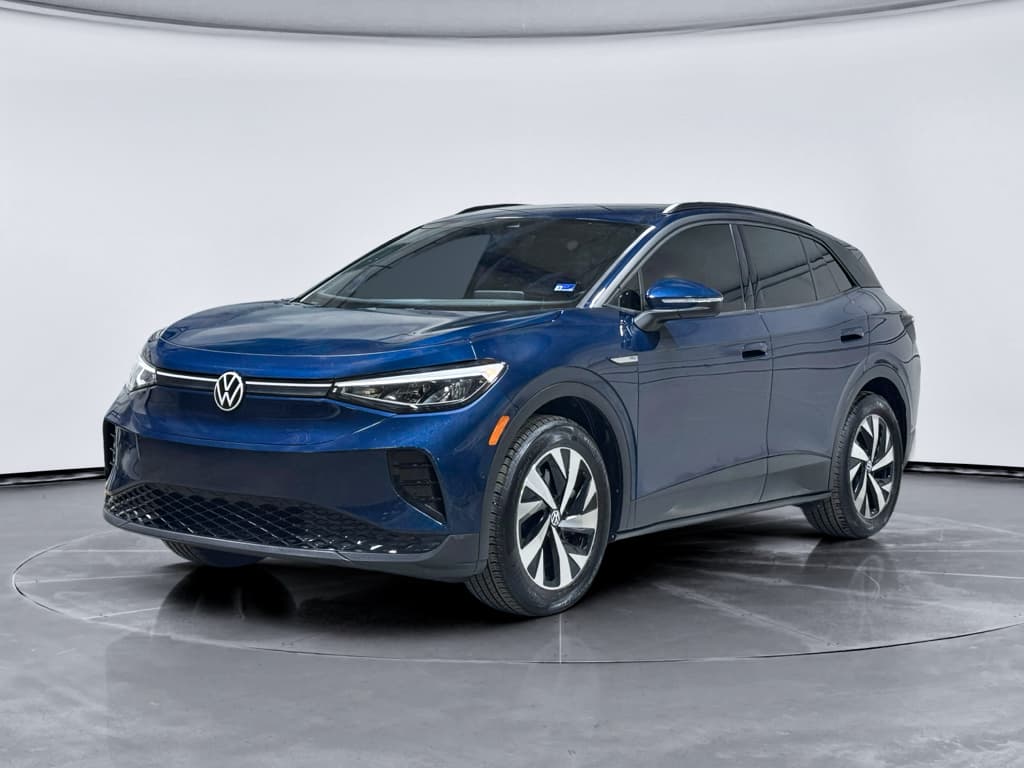
If you own a Volkswagen ID.4, or you’re shopping the used market, the big question is simple: what is a Volkswagen ID.4 worth after 3 years? In today’s EV market, values can move faster than software updates, so you need more than a rule of thumb. Let’s unpack how the ID.4 actually depreciates, what three‑year‑old examples are selling for in 2026, and how to buy or sell one without leaving money on the table.
The short answer
How well does the VW ID.4 hold value after 3 years?
Let’s start with the big picture. Looking at recent pricing data, depreciation studies, and lease residuals, a clear pattern emerges: the Volkswagen ID.4 typically loses roughly 40–45% of its value in the first 3 years, sometimes a bit more on higher‑trim, heavily discounted new models. Over 5 years, total depreciation tends to land closer to 60–66%, right around the middle of the compact electric SUV pack.
VW ID.4 value snapshot (typical US market, 2026)
That might sound steep if you’re coming from gas SUVs, but among modern EVs the ID.4 is right in the middle of the pack. It lags the strongest performers (certain Tesla and Hyundai/Kia models), but it doesn’t fall off a cliff the way some early luxury EVs have.
Three-year VW ID.4 value in dollars and percentages
To make this concrete, let’s translate those percentages into actual dollars. We’ll use ballpark MSRPs and what we’re seeing for 3‑year‑old examples on the used market in 2026. These are typical retail asking prices, not trade‑in offers.
Typical 3‑year VW ID.4 values by original price
Approximate private‑party or dealer retail pricing for average‑mileage, clean‑title ID.4s around 3 years old in 2026.
| Original MSRP (new) | Example trim/year | Typical 3‑year price | % of original price |
|---|---|---|---|
| $42,000 | 2023 ID.4 Pro RWD | $18,000–$21,000 | ≈43–50% |
| $47,000 | 2023 ID.4 Pro S AWD | $20,000–$24,000 | ≈42–51% |
| $50,000+ | 2023–2024 Pro S Plus / loaded AWD | $22,000–$26,000 | ≈40–48% |
Real‑world prices vary by region, but this gives you a realistic range for negotiation.
If you buy a lightly optioned Pro trim and keep miles in check, landing near the upper end of the 40–50% retention band after 3 years is realistic. High‑spec models that were heavily discounted new can sink a little lower because the market doesn’t pay a full premium for every gadget once the car is three birthdays old.
Why “percent of MSRP” can be misleading
Why the ID.4 depreciates the way it does
Four big drivers of 3‑year ID.4 value
Understanding these helps you predict where your car will land.
1. Fast‑moving EV tech
Range and charging speeds are improving every model year. The ID.4’s range is competitive but not class‑leading, and software updates haven’t always kept pace with rivals. A 3‑year‑old ID.4 can feel older than it is when shoppers cross‑shop newer EVs with faster charging or sleeker interfaces.
2. Mixed quality & software reputation
Early ID.4s earned praise for ride comfort but also complaints about infotainment glitches and build quirks. Those stories live forever online, and even as VW fixes many issues, perception still weighs on resale.
3. Heavy new‑car discounts
Big factory incentives and lease cash on new ID.4s reset the market floor. When you can lease or buy new with thousands off plus a tax credit, that drags down what buyers are willing to pay for a 3‑year‑old example.
4. Regional demand swings
In EV‑dense areas (West Coast, Northeast), there’s deeper demand and more price transparency. In regions where charging is sparse, a used ID.4 can be a harder sell, which shows up as lower trade‑in offers.
Add all of that together and you get an EV whose 3‑year value is highly sensitive to the details. The VIN story, trim, options, mileage, battery health, accident history, and where the car has lived, matters as much as any national average.
How 3‑year ID.4 value compares to other EVs
When you zoom out, the ID.4 is neither the star nor the villain of the 3‑year EV resale world. Depreciation studies and market data put it in this rough neighborhood after three years:
3‑year value: VW ID.4 vs other popular EVs
Typical 3‑year value retention for mainstream EVs, using broad 2024–2026 data and forecasts.
| Model | Segment | Typical 3‑yr value retained | Resale strength |
|---|---|---|---|
| Volkswagen ID.4 | Compact electric SUV | ≈40–50% | Average for EVs |
| Tesla Model Y | Compact electric SUV | ≈55–70% | Above average |
| Hyundai Ioniq 5 | Compact electric SUV | ≈45–60% | Solid |
| Kia EV6 | Compact electric SUV | ≈45–60% | Solid |
| Older luxury EV SUVs (e.g., Audi Q8 e‑tron) | Luxury SUV | ≈25–40% | Below average |
These are generalized ranges; individual cars can land above or below based on condition and demand.
So if you’re cross‑shopping used EVs, a 3‑year‑old ID.4 is usually cheaper to buy than an equivalent‑age Model Y or Ioniq 5, but it may also keep a little less of its value as it ages. That’s bad news if you bought new, but potentially great news if you’re stepping into the car at the 3‑year mark.
Why 3‑year‑old ID.4s can be a sweet spot
Real‑world price examples for 3‑year‑old ID.4s
Let’s walk through a few realistic 2026 scenarios. These aren’t quotes; they’re grounded examples to help you sanity‑check offers you see in the wild.
Scenario A: 2023 ID.4 Pro RWD
- Original MSRP: ~$42,000
- Mileage after 3 years: 30,000 miles
- Condition: Clean history, routine service, minor wear
- Expected retail price: ~$19,000–$21,000
- Expected trade‑in: ~$16,000–$18,000
If you see a similar car listed at $24,000, it had better be ultra‑low‑miles and loaded, or you have room to negotiate.
Scenario B: 2023 ID.4 Pro S AWD
- Original MSRP: ~$47,000–$49,000
- Mileage after 3 years: 36,000 miles
- Condition: One owner, no accidents, full records
- Expected retail price: ~$21,000–$24,000
- Expected trade‑in: ~$18,000–$20,000
AWD and higher trims help on the used market, but they don’t command anywhere near the full original price gap versus a base Pro.
In both cases, the spread between what a dealer might pay you and what they list the car for can easily be $3,000–$4,000. That’s why getting multiple offers, and knowing your numbers, matters.
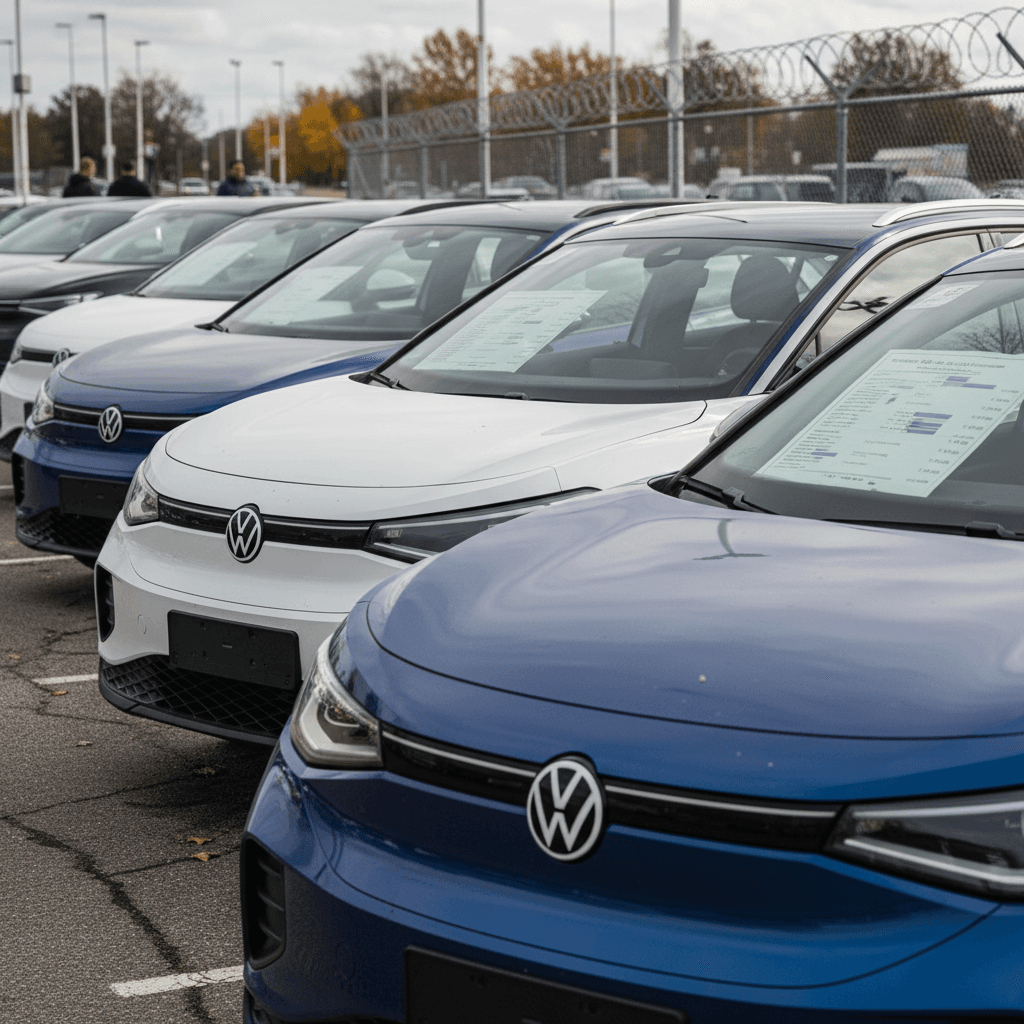
Leasing vs. buying: How it changes 3‑year value
If you leased your ID.4 new, your 3‑year value story looks different from someone who bought it. Instead of thinking like an owner, you need to think like a bank.
Lease residuals vs. real‑world values
Why some ID.4 lessees walk away and others buy out.
Typical lease assumptions
- Many 36‑month leases were written around 50–55% residual value for 7,500–12,000 miles/year.
- That means the bank assumed your ID.4 would still be worth about half its MSRP after 3 years.
Reality in 2026
- Market value for some trims has dipped near or below those residuals.
- If retail pricing is soft, it rarely makes sense to pay a buyout that’s higher than market value.
On the flip side, if your buyout number is noticeably lower than what similar ID.4s are selling for, you may have stumbled into a great deal, buy the car, or buy it and resell it. Either way, always compare your residual (plus fees) to real asking prices for similar 3‑year‑old ID.4s before deciding.
Quick check for lessees
How battery health affects ID.4 value after 3 years
By year three, most modern EV packs, including the ID.4’s, are still in their prime. Typical real‑world degradation is modest, but used‑car shoppers have learned to ask the question: how healthy is the battery? That answer can shift value by thousands of dollars.
Battery condition vs. 3‑year value
1. Healthy pack (90–100% of original capacity)
Range still feels close to new, and DC fast‑charging behavior is normal. This supports higher asking prices and makes your ID.4 easier to sell fast.
2. Mild degradation (80–90% capacity)
You’ll notice some range loss, but for many commuters it isn’t a deal‑breaker. Expect buyers to negotiate more aggressively, especially if they road‑trip often.
3. Abnormal issues (below ~80%, or charging faults)
Here, value can fall sharply. Buyers either walk away or demand a steep discount to price in potential future repairs or warranty hassles.
This is where Recharged leans in. Every vehicle we sell comes with a Recharged Score Report, which includes verified battery health diagnostics. That turns a scary unknown into a concrete data point, good news for both buyers and sellers of 3‑year‑old ID.4s.
Why battery reports boost value
7 ways to protect your ID.4’s value
Whether you’re just hitting year three or you’ve still got time before you get there, you can nudge your Volkswagen ID.4 toward the upper end of the value range with a few smart habits.
Owner playbook: Keeping your ID.4’s value up
1. Stay on top of documented maintenance
Keep digital or paper records of tire rotations, brake inspections, cabin filters, and any warranty work. A fat folder of receipts often translates into more buyer confidence and a higher offer.
2. Mind the miles
Around 10,000–12,000 miles per year is the sweet spot. Push well past that and you start dropping into high‑mileage pricing brackets sooner than you’d like.
3. Protect the interior and bodywork
EV shoppers are picky. Fix curb‑rashed wheels, address windshield chips early, and don’t let stains or tears linger. Small reconditioning steps can pay back 2–3x at sale time.
4. Be smart about charging
Avoid leaving the battery at 100% for days or running it to 0% regularly. Using <strong>40–80% as your daily window</strong> and fast‑charging only when you need to can help preserve long‑term pack health.
5. Keep software up to date
Apply VW’s software updates promptly. Even when they’re subtle, saying “all recalls and software campaigns are complete” reassures buyers and appraisers.
6. Avoid aftermarket mods that polarize
Tasteful tint? Fine. Giant wheels that wreck ride quality or suspension mods? Not so much. The more stock your ID.4 looks and feels, the wider your pool of buyers.
7. Time your sale around season and incentives
In many regions, EV demand perks up in spring and early summer. Also watch for changes in tax credits, when new EVs suddenly get cheaper, used values often soften in the months that follow.
Buying a 3‑year‑old ID.4: smart strategies
From a shopper’s perspective, a 3‑year‑old Volkswagen ID.4 can be an excellent value play, as long as you buy the right car at the right price. Here’s how to stack the odds in your favor.
What to look for in a 3‑year‑old ID.4
These factors move value more than trim badges do.
Low, honest mileage
Something in the 20,000–30,000‑mile range at year three is ideal. Ultra‑low miles can command a justifiable premium, but beware of cars that sat unused for long stretches with no records.
Clean history & records
Walk away from cars with major structural damage or branded titles. Prioritize ID.4s with documented service and any warranty/recall work clearly listed.
Verified battery & charging behavior
On a test drive, pay attention to predicted range at various charge levels and how quickly the car accepts DC fast charge. Better yet, buy from a seller who provides a battery‑health report.
If you’d rather not decode all of that yourself, shopping through Recharged can simplify things. Every used EV on our marketplace, including Volkswagen ID.4s, comes with a Recharged Score battery report, fair‑market pricing, and expert EV specialists who can walk you through what those 3‑year value numbers really mean for your budget.
Consider certified used vs. marketplace
Selling or trading in your 3‑year‑old ID.4
If you’re on the other side of the equation, ready to move on from your ID.4, your decisions in the next few weeks can swing your outcome by thousands of dollars. Here’s how to approach it methodically.
Step 1: Know your real numbers
- Use multiple valuation tools and scan current listings for your year/trim/mileage.
- Identify a realistic private‑party price range and a likely trade‑in range.
- Remember to compare against actual transaction prices where possible, not just ambitious asking prices.
Step 2: Decide how much work you want to do
- Private sale often nets the highest number but requires time, test drives, and paperwork.
- Trade‑in or instant offers are simpler but usually lower. They can make sense if you value time and convenience.
Step 3: Prep the car like a pro
- Address inexpensive reconditioning: a deep interior clean, paintless dent repair for obvious dings, and wheel touch‑up.
- Gather all keys, manuals, and charging cables. Missing equipment dings value.
- Have recent service or battery‑health documentation ready to share with buyers.
Step 4: Shop your offer
- Get at least two or three offers, from dealers, instant‑offer tools, or EV‑focused marketplaces.
- Even if you end up trading in, those quotes give you leverage.
With Recharged, you can request an instant offer or consignment listing for your ID.4. We factor in verified battery health and real market data, then help you decide whether a quick sale, trade‑in, or a retail‑style consignment gets you the best outcome.
Don’t forget about the tax angle
FAQ: Volkswagen ID.4 value after 3 years
Frequently asked questions about 3‑year VW ID.4 value
Three years into its life, a Volkswagen ID.4 is no longer the newest toy on the block, but it doesn’t have to be a financial gut punch either. If you bought new, understanding where your SUV sits in that 40–50% retention band can help you decide whether to hold, trade, or sell. If you’re shopping used, the ID.4’s middling depreciation can work in your favor, delivering a lot of EV for the money. Either way, getting clear on battery health, fair market pricing, and your ownership plans is the surest way to make the numbers work, and that’s exactly where a transparent used‑EV partner like Recharged can help.