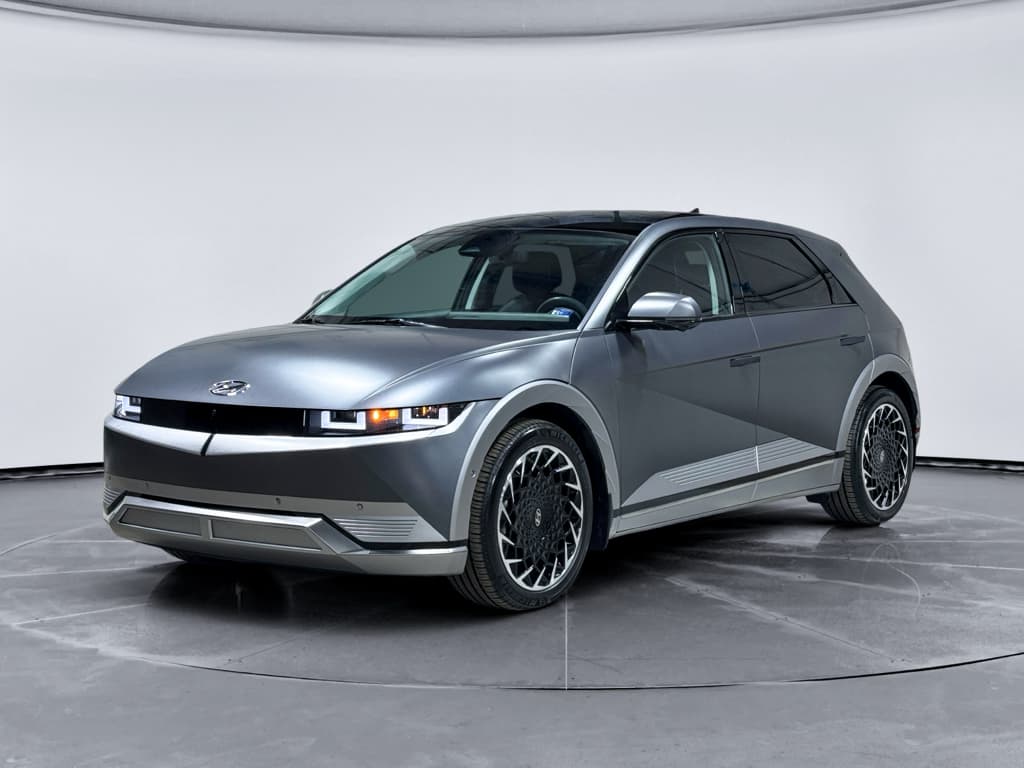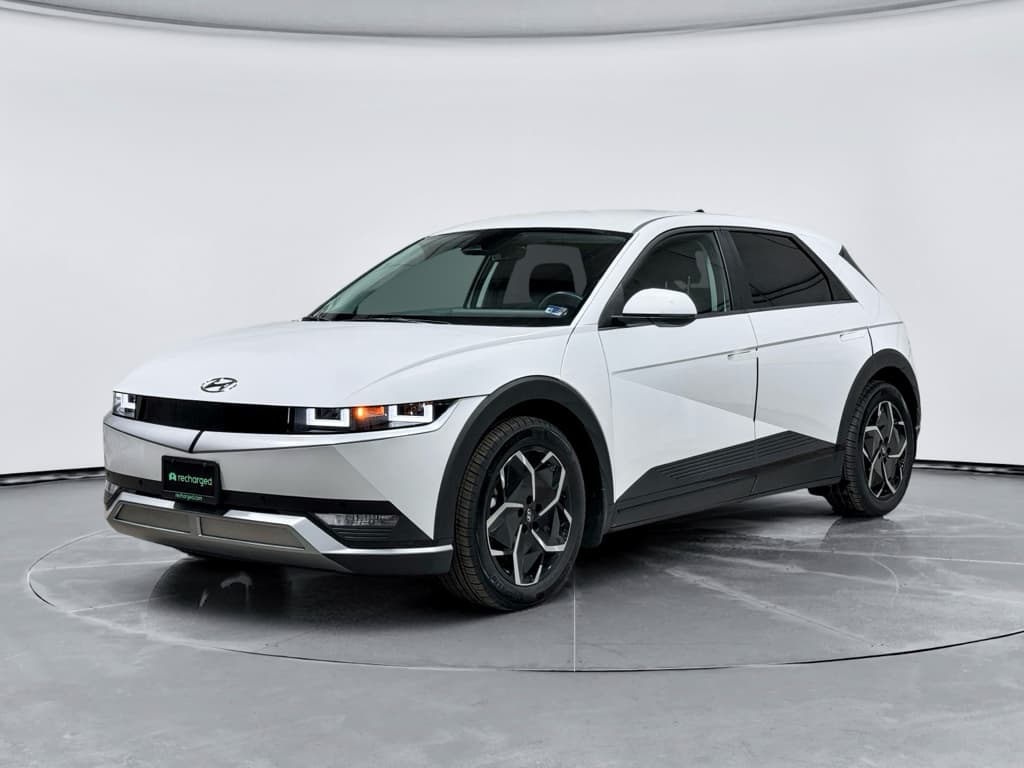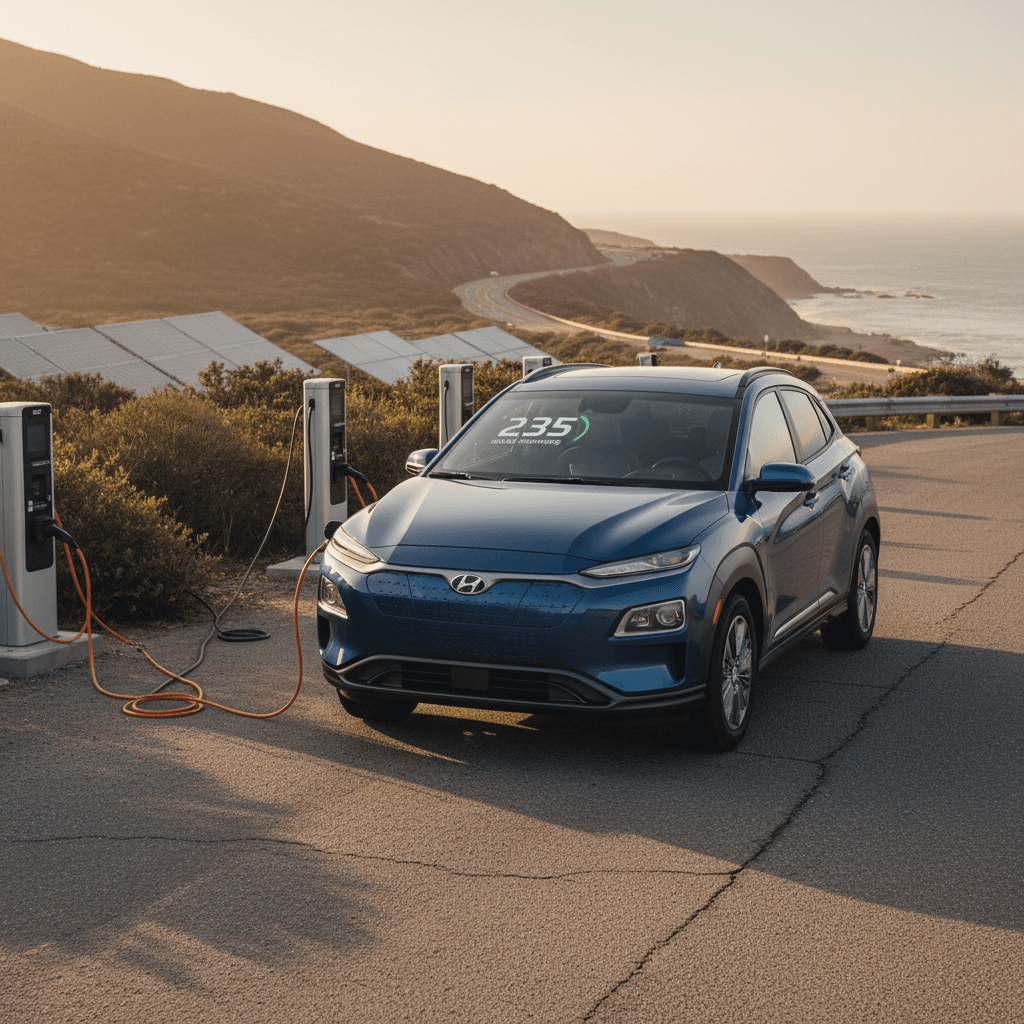
The 2019 Hyundai Kona Electric arrived like a polite little hand grenade. A subcompact crossover with a 64 kWh battery and an EPA‑rated 258 miles of range, it basically told early Tesla Model 3 shoppers: you don’t have to worship at that altar to go the distance. If you’re shopping the used market today, though, what you really care about is simple: how far will a 2019 Kona Electric actually go on a charge, right now?
Key takeaway on 2019 Kona Electric range
Overview: Why the 2019 Kona Electric Still Matters
Hyundai’s first long‑range Kona Electric was a turning point: a small, efficient crossover with genuine road‑trip range and a price that didn’t require an IPO. Under the floor sits a 64 kWh liquid‑cooled lithium‑ion pack powering a 201 hp front motor. In 2019, that made the Kona one of the most efficient EVs on sale, and it still stacks up well against newer metal.
2019 Hyundai Kona Electric key range specs
Those numbers look great on a window sticker, but they’re just the beginning. Real‑world range depends on how and where you drive, how cold or hot it is, and the health of a particular car’s battery after several years and tens of thousands of miles. Let’s dig into what independent tests and owner data suggest you can actually expect from a 2019 Kona Electric today.
EPA rating vs real-world 2019 Kona Electric range
On paper, the 2019 Kona Electric is a range star. The EPA rates it at 258 miles combined on its 64 kWh pack, with 132 MPGe city and 108 MPGe highway. Translated, that’s a theoretical efficiency of around 3.6–3.9 mi/kWh depending on the cycle.
What the lab says
- 258 miles EPA combined range
- City range rated higher than highway
- Energy use around 28 kWh/100 mi combined
- Tested from 100% down to very low state of charge
What road tests report
- Highway‑only instrumented tests at ~75 mph have seen ~160 miles before empty from a full charge.
- Mixed real‑world driving often lands in the 210–240 mile range band.
- Gentle suburban and city use can nudge toward EPA numbers in good weather.
Don’t judge it by a single highway test
City vs highway range tests
Electric cars flip the script on gas logic: they’re often more efficient in town than on the highway. The 2019 Kona Electric is a textbook example. Regenerative braking is your invisible co‑pilot in traffic, feeding electrons back into the pack every time you lift.
How the 2019 Kona Electric behaves in different driving
Approximate real‑world outcomes from testing and owner reports in mild weather with a healthy battery
City & suburban
Think 25–45 mph, lights, stop‑and‑go, suburban sprawl.
- Efficiency: around 4.0–4.5 mi/kWh for careful drivers
- Usable range: 230–260 miles if you run from 100% down to very low
- Best case for matching or beating the EPA rating
Mixed commuting
A blend of surface streets, 55–65 mph stretches, occasional jams.
- Efficiency: roughly 3.6–4.2 mi/kWh
- Realistic range: 210–240 miles
- Where most owners live day‑to‑day
Fast highway driving
Sustained 70–75 mph, climate on, with traffic flow.
- Efficiency can fall toward 2.8–3.2 mi/kWh
- Observed highway range tests have seen around 150–180 miles per full charge
- Plan conservatively for road trips
A simple rule for the highway
How weather and driving style change your range
The 2019 Kona Electric’s range lives at the intersection of physics and your habits. Temperature, speed, tire choice, cargo, even how often you jab the accelerator, everything moves the needle. Hyundai built in good thermal management, but it can’t change the laws of thermodynamics.
- Cold weather (below ~40°F): cabin heating and a colder battery can easily trim 15–30% off your range, especially on short hops where the cabin has to be reheated repeatedly.
- Heat waves (90°F+): A/C is gentler than resistive heat, but you’ll still feel a modest hit, usually in the single‑digit percent range unless you’re preconditioning aggressively.
- Speed: aero drag rises with the square of speed. Going from 65 mph to 80 mph can turn a confident 220‑mile car into a 170‑mile car.
- Driving style: smooth, anticipatory driving and higher regen levels can add 10–15% compared with point‑and‑shoot throttle abuse.
- Wheels & tires: the stock 17‑inch low‑rolling‑resistance tires help efficiency. Stickier, wider aftermarket rubber looks good, costs miles.
The winter‑trip reality check
Battery degradation on 2019 cars: what we’re seeing now
By 2026, a 2019 Kona Electric is seven model years old. The internet loves horror stories about EV batteries, but the Kona has quietly built a reputation as one of the more stable packs in its class, thanks to liquid cooling and conservative tuning.
Typical degradation pattern
- Most well‑cared‑for cars seem to lose roughly 5–10% capacity in the first 5–6 years.
- That turns a theoretical 258‑mile car into something like 230–245 miles when new-ish.
- Abuse, frequent DC fast charging, and extreme climates can push losses higher.
Red flags on a used 2019
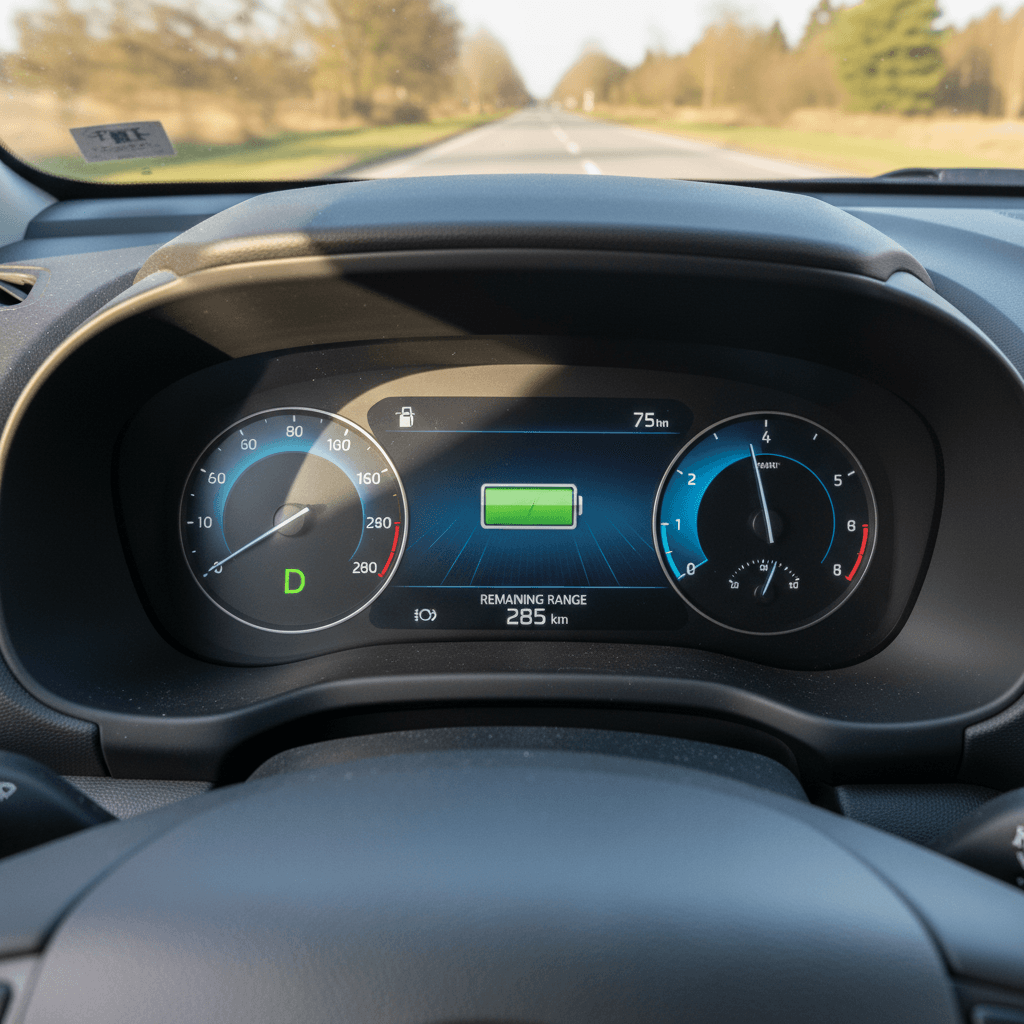
- Displayed full‑charge range that never climbs above the 190–200 mile ballpark in mild weather.
- Noticeable, sudden drops in state‑of‑charge under moderate acceleration.
- Big differences between indicated and actual energy used on a long trip.
Hyundai’s warranty safety net
Range planning for commuting and road trips
The right question isn’t just “what’s the maximum range?” It’s “what kind of range can I count on without babying the car?” Let’s translate test data into practical ownership scenarios.
How the 2019 Kona Electric fits common use cases
1. Urban and suburban commuter
If your daily round‑trip is under 80–100 miles, the 2019 Kona Electric will feel like overkill. You’ll likely charge just a few times a week, even accounting for weather swings and some spirited driving.
2. Long‑distance highway commuter
For a 120–150 mile daily round‑trip heavy on highway, you’re in the Kona’s sweet spot, especially if you can charge at both ends. Factor in winter and high speeds, and you’ll still have a usable buffer.
3. Weekend road‑tripper
On interstates at 70–75 mph, treat the car as a <strong>150–190 mile</strong> machine between fast‑charge stops. Plan your charging network accordingly and you’ll be fine; just don’t hallucinate 258 miles at 78 mph into a headwind.
4. Occasional DC fast‑charging only
If you mostly charge at home or work and only fast‑charge on road trips, the pack should age gracefully. The hit to long‑term range will be more about mileage and climate than charging habits.
Home charging makes range feel bigger
Buying a used 2019 Kona Electric: range checks that matter
Shopping a seven‑year‑old EV is like dating an athlete in their 30s: the stats still look good, but usage history matters. The Kona Electric is fundamentally a solid platform; your job is to make sure you’re not inheriting someone else’s battery abuse.
Quick range checklist for a used 2019 Kona Electric
Use this as a mental scorecard when you test‑drive or review inspection reports.
| Check | What to look for | What it suggests |
|---|---|---|
| Full-charge estimate | In Eco or Normal, at 100% charge, does the guess‑o‑meter show ~220–250 miles in mild weather? | Healthy or mildly degraded pack |
| Short highway test | 15–20 minutes at 65–70 mph, flat-ish road, climate on. Extrapolate from % used. | Using ~10% over 15 highway miles hints at solid capacity. |
| City loop | Light traffic, 30–45 mph. Watch mi/kWh readout. | Consistent 4+ mi/kWh in calm driving shows the car can still hit EPA‑ish numbers. |
| State of charge vs miles | Do miles remaining drop faster than miles driven, even at steady speeds? | If yes, pack may be out of balance or degraded more than average. |
| DC fast‑charge behavior | If you can observe a fast charge, does it ramp smoothly to ~70–80 kW and hold for a bit? | Weird tapering or low peaks might warrant a deeper health check. |
None of these numbers are absolute, climate, tires, and terrain matter, but they’re useful ballparks in mild weather.
Don’t rely only on the range estimate
How Recharged evaluates Kona Electric battery health
Range is the currency of EV ownership, and on a used 2019 Kona Electric it’s the difference between confident daily use and white‑knuckle winter trips. That’s why every EV sold through Recharged comes with a Recharged Score battery health report, not just a cursory range estimate.
What’s behind a Recharged Score on a 2019 Kona Electric
More than just a “feels fine to us” test drive
Data-driven battery diagnostics
- We measure usable capacity versus original spec to estimate real degradation.
- Pack balance and cell behavior are checked under load and during charging.
- We note any irregularities that might hint at abuse or cooling issues.
Real-world range context
- We translate battery health into an estimated practical range band for mixed driving.
- Reports highlight how weather and driving style will affect that specific car.
- You see how the car compares to the average 2019 Kona Electric at similar mileage.
Ready to find your next EV?
Browse VehiclesBecause Recharged specializes in used EVs, our advisors can also help you compare a 2019 Kona Electric’s range to alternatives, like a later‑model Kona, a Chevy Bolt EUV, or a Nissan Leaf, so you’re not buying blind. And if you’re trading in your current EV, we evaluate its battery the same way before making an instant offer or consignment plan.
Talk through your range needs with an EV specialist
FAQ: 2019 Hyundai Kona Electric range
Common questions about 2019 Kona Electric range
Bottom line: Is the 2019 Kona Electric’s range enough today?
The 2019 Hyundai Kona Electric remains one of the quiet heroes of the EV world. On spec, its 258‑mile EPA rating still embarrasses some newer, flashier crossovers. In the real world, a healthy example delivers what matters more: honest, repeatable 200‑plus‑mile usability, especially if you can charge at home and don’t live at 80 mph.
If your life is a typical American mix of commuting, errands, and the occasional road trip, a well‑vetted 2019 Kona Electric is still an excellent range proposition, particularly at used‑EV prices. The trick is knowing which specific car you’re looking at. That’s where tools like a Recharged Score battery health report, expert EV guidance, and transparent, data‑driven range estimates make all the difference. Get that part right, and this unassuming little Hyundai will quietly turn your fuel budget into a rounding error.