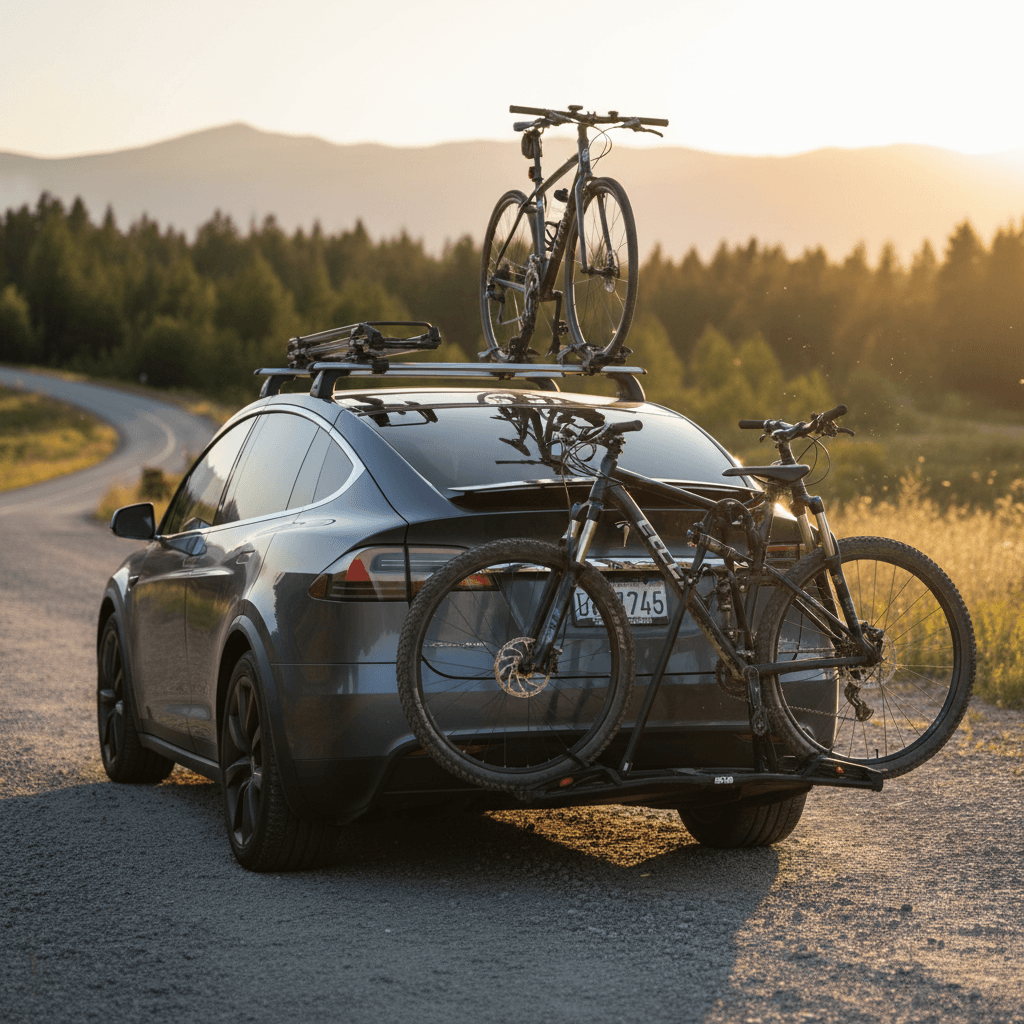
If you own a Tesla Model X and you ride, you’ve probably discovered there’s no perfect way to toss bikes inside without scuffing leather or folding half the cabin. The good news is there are several solid Tesla Model X bike rack options, from Tesla’s own hitch rack to proven third‑party hitch and roof setups, that can turn your X into a capable adventure rig without abusing the air suspension or sensors.
Quick takeaway
Why bike rack choice matters on a Model X
The Model X isn’t a conventional SUV. Between the Falcon Wing doors, glass roof, and integrated 2" receiver, a bike rack that works great on a pickup or crossover can be a bad fit on an X. The wrong rack can overload the hitch, block cameras, confuse Autopilot, or make those big rear doors unusable when you’re loaded up for a trip.
Key differences vs a typical SUV
What makes Model X bike racks a special case
Built‑in 2" receiver
Most recent Model X SUVs with the towing package include a factory 2" receiver integrated into the structure, not an aftermarket bolt‑on. That’s great for strength but comes with Tesla‑specific weight rules.
Falcon Wing doors
Racks that stick up or swing in the wrong direction can interfere with the Falcon Wing arc. Clearance and how the rack folds away matter more than on a traditional SUV.
Sensors & cameras
Hitch racks can block the rear camera and proximity sensors. That can disable or alter Autopilot, parking assist, and rear cross‑traffic alerts while the bikes are on.
Model X hitch basics and weight limits
Before you shop for any hitch bike rack, you need to understand what the factory tow package is rated to do. According to recent Tesla owner documentation, the Model X towing package uses a 2" x 2" receiver and is designed to support an accessory carrier (like a bike rack). Tesla specifies a maximum vertical load of about 120 lbs (54 kg) for loads that extend rearward on a carrier, exactly what a bike rack does.
Model X hitch and accessory basics
Don’t confuse tongue weight with bike‑rack rating
Practically, 120 lbs means something like a 35–45 lb rack plus two 25–35 lb bikes. Once you get into multiple 60‑ to 70‑lb e‑bikes, you can exceed Tesla’s accessory rating quickly, even though many aftermarket racks are individually rated much higher.
Tesla OEM Model X hitch bike rack
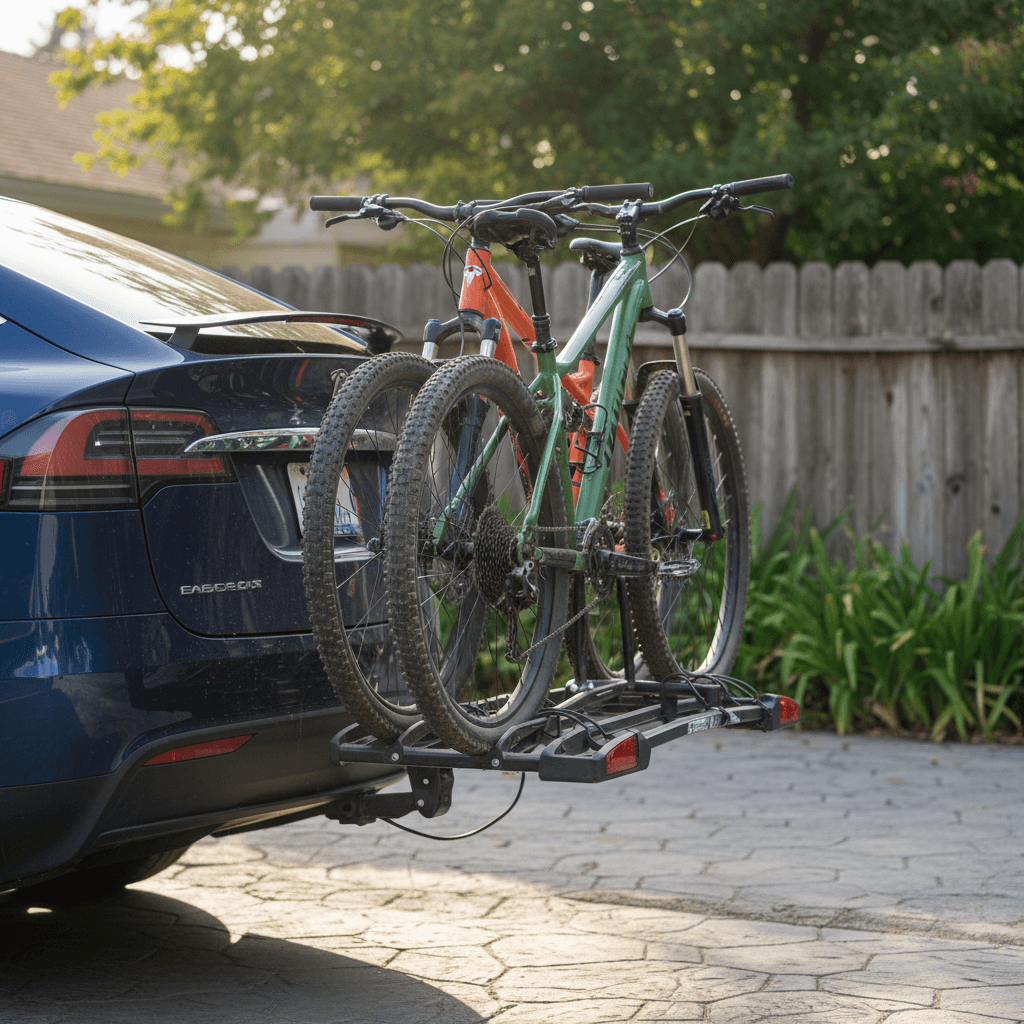
Tesla sells a branded Model X/Y Platform Hitch Rack through its online store. It’s a tray‑style platform rack designed to work with Tesla’s factory 2" receivers on the Model X and Model Y, and it’s sized to fit behind the bumper without clashing with the rear hatch.
Tesla OEM Model X/Y Platform Hitch Rack at a glance
High‑level overview of Tesla’s own hitch‑mount bike rack option for the Model X.
| Feature | Details |
|---|---|
| Rack type | Platform / tray hitch rack |
| Receiver size | 2" (works with factory Model X tow package) |
| Bike positions | Typically 2 bikes (check current listing) |
| Locking | Integrated locking for bikes and rack |
| Compatibility | Designed for Tesla Model X and Model Y |
| Pros | Factory fitment, looks OEM, integrates well with Tesla styling |
| Cons | Limited availability, Tesla‑only purchase, not ideal for very heavy e‑bikes |
Always check Tesla’s current online store listing for the latest specifications and pricing.
Check for VIN‑based fitment
For many owners who want a simple two‑bike setup and prefer an OEM look, the Tesla rack is a clean choice. Where it starts to fall short is versatility, like many factory racks, it’s tuned for standard mountain and road bikes, not oversized e‑MTBs or long‑tail cargo bikes.
Aftermarket hitch bike racks for the Model X
If you want more flexibility than Tesla’s own rack offers, the aftermarket is your friend. The 2" receiver on a Model X means you can use the same premium racks popular with truck and SUV owners, as long as you stay within Tesla’s accessory weight limits and account for door and sensor clearance.
Common hitch rack styles for Model X owners
Match the rack style to how and what you ride
Platform (tray) racks
Best all‑around choice for a Model X. Bikes sit in wheel trays with arms that clamp the tires or frame.
- Easy loading for heavy bikes
- Less sway at highway speeds
- Often e‑bike compatible (within weight limits)
Hanging (mast) racks
Bikes hang from top tubes. Lighter and cheaper, but:
- Can be tricky with step‑through frames
- More sway and potential paint contact
- Less ideal for carbon frames and e‑bikes
Swing‑away & tilt racks
Premium platform racks that tilt or swing away from the hatch.
- Better access to cargo area
- Helpful with tall bikes
- Extra hardware adds weight, watch that 120‑lb limit
Think “rack + bikes,” not just bikes
Checklist for choosing an aftermarket hitch rack for your Model X
1. Confirm the 2" receiver
Most late‑model X SUVs with the tow package use a 2" receiver. If you bought used and aren’t sure, remove the rear cover and verify the receiver size before ordering a rack.
2. Add up total accessory weight
Take the rack’s published weight and add the heaviest bikes you plan to carry. Aim to stay comfortably under 120 lbs to account for measurement error and extra gear.
3. Look for tilt or swing features
A tilting or swing‑away rack makes it much easier to access the Model X cargo area. Just remember the extra hardware adds weight to your total load.
4. Check wheelbase and tire size
Some long‑travel MTBs, fat bikes, and kids’ bikes need specific trays or adapters. Make sure the rack you choose has trays and arms that fit your wheel sizes and frame shapes.
5. Plan for security
Confirm that the rack you buy includes a hitch lock and integrated bike locks, or budget for locking cables. Model X owners are often parking at trailheads far from home.
Roof bike racks for Tesla Model X
Roof racks are less popular on the Model X than on many SUVs, but they can still make sense if you have a very light bike, no tow package, or you want to keep the hitch free for a cargo carrier or small trailer. Options range from traditional bar‑and‑tray systems to modern vacuum‑cup mounts that avoid permanent hardware.
Traditional crossbar + tray racks
This is the classic approach, install roof crossbars, then attach one or more fork‑ or frame‑mount bike trays.
- Pros: Proven, stable, works with many bikes and accessories.
- Cons: Lifting bikes onto the tall glass roof is challenging; risk of scratching glass if you’re not careful.
Vacuum‑cup and specialty mounts
Brands selling vacuum‑cup systems and Tesla‑specific roof mounts offer a cleaner look with easier removal.
- Pros: No permanent hardware, flexible placement.
- Cons: Still require overhead lifting; you must follow cleaning and mounting instructions carefully.
Roof racks hit range harder
If you’re a tall rider lifting a 35‑lb trail bike, a roof rack on a Model X quickly gets old. For most owners with a tow package, a hitch rack is simply the better long‑term solution, with roof racks reserved for special cases or when you absolutely can’t run a hitch.
E‑bike and heavy bike considerations
E‑bikes are where things get tricky. Many popular e‑MTBs and commuter bikes weigh 55–70 lbs before you add accessories. Two of those plus a stout platform rack can easily blow past Tesla’s recommended 120‑lb vertical accessory limit, even when the rack maker says the system is fine.
Safer ways to carry e‑bikes on a Model X
Stay within Tesla’s accessory rating while hauling heavy bikes
Remove batteries and accessories
Take the battery packs, bags, and heavy locks off before loading. Dropping 5–8 lbs per bike is common and buys back some margin under the weight limit.
Prefer short, compact racks
A compact two‑bike platform that keeps bikes closer to the bumper reduces leverage on the hitch compared with long, add‑on‑style racks.
Limit to one e‑bike when in doubt
If your e‑bikes are on the heavy side, you may be better off carrying one on the rack and a lighter analog bike inside, folded down with a blanket or pad.
Overloading the hitch is not worth the risk
Range, safety, and Autopilot impacts
Any external rack will change how your Model X drives and behaves electronically. The good news is that a single hitch rack with two bikes has a modest effect on energy use; you’ll see more of a penalty from driving faster or climbing a long grade. Roof racks are another story, with substantial highway drag. Either way, planning a bit of extra charging into your route is wise.
Range and efficiency
- Hitch racks: Typically small to moderate range impact, especially at city speeds.
- Roof racks: Larger effect at 65–80 mph due to wind drag around the bikes.
- Best practice: Use Trip Planner with some buffer and note your Wh/mi on your first few rack‑equipped trips.
Sensors, cameras, and Autopilot
- Hitch racks often block the rear camera and some ultrasonic sensors.
- Autopilot, parking assist, and rear collision warnings may be partially or completely unavailable.
- Always double‑check clearances and don’t rely on driver‑assist systems when bikes are mounted.
Expect odd parking warnings
How to choose the right bike rack for you
The “best” Tesla Model X bike rack option depends on how many bikes you carry, what they weigh, and how often you’re loading them. The right choice for a parent taking kids’ bikes to a nearby park isn’t the same as for someone hauling one big enduro rig to the mountains every weekend.
Quick profiles: Match yourself to a Model X bike rack
Start with how you ride most of the time
Family rides & kids’ bikes
You mostly carry 1–3 lighter bikes for local rides.
- Compact 2‑bike platform or light hanging rack
- Stay well under the 120‑lb limit
- Look for easy tilt to access the rear hatch
Weekend trail rider
1–2 adult MTBs or gravel bikes on road trips.
- Premium 2‑bike platform rack (Kuat/1Up/Thule class)
- Tilt or swing function for cargo access
- Roof rack only if you lack a tow package
Heavy e‑bike owner
One or more 55–70 lb e‑bikes.
- E‑bike–rated platform rack
- Ideally carry just one heavy e‑bike on the rack
- Consider a different tow vehicle if you routinely haul multiple heavy e‑bikes
When in doubt, keep it simple
Installation and usage tips
Practical tips for living with a bike rack on a Model X
1. Verify the tow package on a used Model X
Some used Model X vehicles change hands without the factory towing package, and retrofitting can be expensive. Before you order a hitch rack, confirm you actually have the 2" receiver under the rear cover.
2. Follow the manual’s accessory weight rules
Look up the latest owner’s manual for your exact model year and wheel size and follow the accessory carrier limit, not just the towing or tongue‑weight spec.
3. Practice loading in your driveway
Before a big trip, practice loading and securing your bikes at home. Learn how far the rack tilts, whether you can still open the rear hatch, and where the cameras are blocked.
4. Secure cables and pedals
Use Velcro straps or bungees to keep pedals, bars, and wheels from moving into the bumper or glass. Check that cables and hoses aren’t rubbing on paint or sharp edges.
5. Re‑torque and re‑check periodically
Bike racks live a hard life. Re‑check the hitch pin, bolts, and wheel straps a few times per season, especially after long highway trips on rough pavement.
6. Remove the rack when not needed
Leaving a rack on full‑time adds length, can confuse park‑assist, and slightly hurts range. Removing it when you’re not riding also reduces salt, dirt, and corrosion on the receiver.
FAQs: Tesla Model X bike rack options
Frequently asked questions
Thinking about a used Model X for adventures?
If your idea of a perfect weekend is a set of bikes on the back and a charging stop near a trailhead, the Tesla Model X can be an outstanding companion, as long as you choose the right bike rack and respect its hitch limits. A well‑matched 2" platform rack and two bikes are squarely in the Model X comfort zone, blending practicality with the quiet, effortless power EVs are known for.
If you’re still shopping and want a Model X that’s ready for bikes, camping gear, and road trips, a used Model X with the factory tow package is worth seeking out. At Recharged, every used EV comes with a Recharged Score battery health report, fair‑market pricing, and EV‑savvy guidance, so you can focus on finding the right hitch rack and your next ride, not worrying whether the battery or tow equipment has had a hard life.