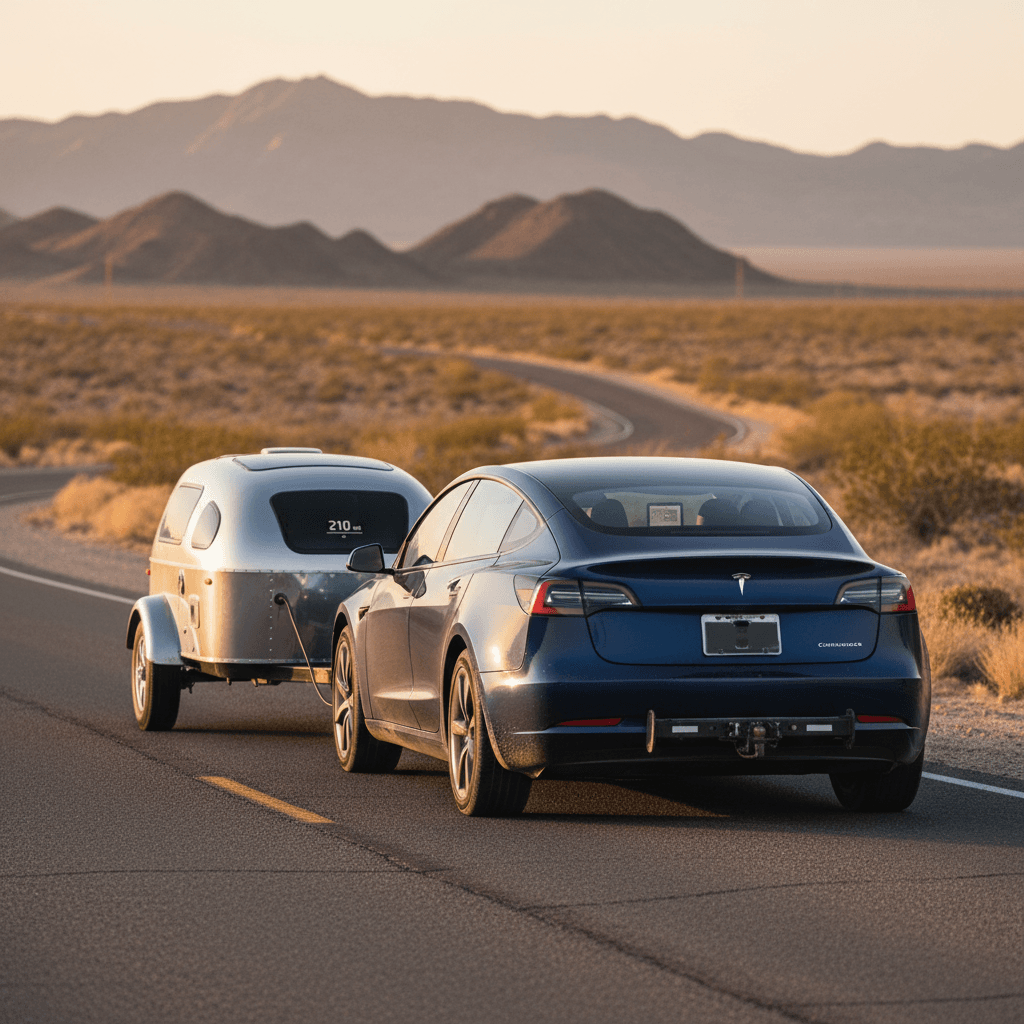
If you’re eyeing a Tesla Model S for road trips or utility duty, you’re probably wondering about towing capacity and range. Can the Model S actually tow a trailer, and if so, how far can you go on a charge once you hook something up behind it, especially if you’re shopping used?
Key takeaway up front
Can a Tesla Model S Tow at All?
Before you start shopping for hitches and trailers, you need to know a crucial fact: not every Tesla Model S is approved for towing, and Tesla’s guidance differs by market and model year.
North America (U.S. & Canada)
For most of the Model S’s life in North America, Tesla has treated it as a performance sedan, not a tow vehicle. Earlier owner’s manuals explicitly state that Model S “does not currently support towing,” and towing could damage the car or affect warranty coverage.
More recent Plaid and Long Range cars have a factory accessory hitch available in some markets, but in North America Tesla has been conservative about officially publishing tow ratings for the Model S compared with Model Y or Model X.
Europe & Other Regions
In Europe and some other markets, Tesla offers a factory towing package for the Model S with an officially rated tow capacity and detailed guidance in the regional owner’s manual. If you see a Model S abroad with a removable tow ball, it’s likely factory‑equipped.
The result is that two visually similar Model S sedans can have very different legal towing status depending on where and how they were originally sold.
Warranty and legal caution
Tesla Model S towing capacity by year and region
Because Tesla has updated the Model S platform and documentation over time, it’s helpful to break towing capacity into two big buckets: cars that are officially rated to tow and cars that officially are not.
Model S towing capacity snapshot
Approximate Tesla Model S towing limits by generation and region. Always confirm against the sticker and owner’s manual for your specific VIN.
| Model year / generation | Region of original sale | Factory tow package available | Max rated trailer weight | Max tongue weight | Notes |
|---|---|---|---|---|---|
| 2012–2021 (pre-refresh) | North America | No | 0 lb (no official rating) | 0 lb | Owner’s manual warns against towing; some owners still add aftermarket hitches at their own risk. |
| 2012–2021 (pre-refresh) | Europe & selected markets | Yes, on some trims | ≈ 3,500 lb (1,600 kg) | ≈ 220 lb (100 kg) | Regional manuals list a 1,600 kg limit with a 100 kg tongue weight when properly equipped. |
| 2022+ Model S (refresh, including Plaid) | North America | Limited / market-dependent | Up to ~3,500 lb in some guidance | ~350 lb | Tesla has gradually enabled towing support on specific builds; check your door jamb and digital owner’s manual. |
| 2022+ Model S (refresh) | Europe & selected markets | Yes | ≈ 3,500 lb (1,600 kg) | ≈ 220–350 lb | Towing package available with a 50 mm ball and detailed trailer guidance in the manual. |
Factory‑approved towing generally requires a Tesla‑installed hitch and regional documentation that lists a tow rating.
How to confirm your exact rating
How towing affects Tesla Model S range
Regardless of the official tow rating, the physics are the same: anything you tow will cost you a lot of range. The two big range killers are aerodynamic drag and weight, and both get worse as speed rises.
Main factors that cut Model S range while towing
If you understand these four, your trip planning gets much easier.
Trailer frontal area & shape
Aerodynamics matter more than weight at highway speeds. A tall, blunt camper acts like a parachute, dramatically increasing drag. A low, narrow utility or boat trailer typically hurts range far less.
Speed you drive
Above ~60 mph, drag rises quickly. The difference between towing at 60 vs. 75 mph can easily be the difference between a 40% and 60% range loss. Slower is almost always better when towing an EV.
Total trailer weight
Weight shows up most during acceleration, hills, and stop‑and‑go driving. Heavier trailers demand more energy to get moving and to climb grades, especially in mountainous terrain.
Temperature & elevation
Cold weather and big elevation changes already dent EV range. Add a trailer and the battery has to work harder, sometimes leading to more frequent Supercharger stops than you might expect.
Rule‑of‑thumb range impact when towing with a Model S
Don’t plan off the EPA number
Real-world range examples while towing
Exact numbers will vary, but some realistic scenarios can help you set expectations. Assume a healthy long‑range Model S battery and relatively flat highway driving.
- Light utility trailer (~1,000 lb) with bikes or cargo: Many owners report their highway consumption rising from ~280 Wh/mi to ~400–450 Wh/mi. That often translates to a 35–45% range hit.
- Small, low‑profile camper (~1,800–2,500 lb): Consumption can jump into the 500–600+ Wh/mi range, especially above 60 mph. You’re likely looking at 50–60% less range than solo driving.
- Tall travel trailer approaching max tow rating: Now aero drag dominates. It’s not unusual to see consumption over 650 Wh/mi at typical interstate speeds, meaning you may only get a third of your solo‑driving range.
- Hills, headwinds, or winter temps: Stack these on top of any of the above, and practical range can shrink even further. Planning short legs and flexible stops becomes essential.
Slow down and smooth out
Planning charging stops when towing with a Model S
Once you attach a trailer, how, and where, you charge matters just as much as how far you can go. The Model S’s strong fast‑charging capability is a big advantage, but most Supercharger sites aren’t designed with long trailers in mind.
Smart charging strategies when towing
These habits make EV towing a lot easier.
Favor pull‑through or edge stalls
When you can, choose end or pull‑through Supercharger stalls where you can stay hitched without blocking lanes. At tight sites, you may need to briefly unhitch.
Plan shorter hops
Use the car’s trip planner or a third‑party app and set a very conservative consumption assumption. Plan for 80–120‑mile legs, not 200‑mile stretches.
Charge in the efficient window
For long days, it’s usually better to charge more often from ~10–60% than to sit for long 80–100% charges, where the charging curve slows dramatically.
Pre‑trip charging checklist for Model S owners who tow
1. Test a local fast‑charge with the trailer
Before a big trip, visit your nearest Supercharger with the trailer attached to practice maneuvering, backing, and dealing with cable reach.
2. Precondition the battery
Use navigation to a Supercharger so the car preconditions the battery. A warmer pack means <strong>faster charge speeds</strong>, which matters when you’re stopping more often.
3. Start early in the day
Morning temperatures are often cooler, traffic is lighter, and you have more margin to add an extra stop if range isn’t behaving the way you expected.
4. Keep an eye on Wh/mi
Watch your real‑time energy usage. If it’s running higher than your trip‑planner assumption, add an earlier charging stop rather than pushing it.
Towing and battery health on a used Model S
A natural concern, especially when you’re buying used, is whether towing will damage the battery. The good news: when done within Tesla’s limits, occasional towing is unlikely to hurt a healthy pack any more than spirited driving does. What matters is heat, repeated deep discharges, and how the car was treated over many years.
How towing stresses the battery
- Higher sustained power draw can raise pack temperatures, especially in hot weather or on long climbs.
- More frequent fast charging while towing means more DC fast‑charge cycles, which are a known source of incremental battery wear.
- Running near empty more often because you mis‑estimate range can strain the pack’s lower state‑of‑charge window.
What to look for on a used Model S
- Compare indicated full‑charge range to the model’s original rating. A modest drop is normal; a severe drop can signal abuse or high mileage.
- Ask the seller how the car was used: frequent towing, high‑miles road‑tripping, or lots of fast‑charging are worth understanding.
- Use a third‑party report like the Recharged Score to see verified battery health rather than guessing from the dash.
How Recharged helps
Ready to find your next EV?
Browse VehiclesModel S towing vs Model 3, Model Y, and Model X
If towing is a core part of how you’ll use your EV, it’s worth comparing the Model S to other Teslas. The sedan can do light to moderate towing when properly equipped, but it isn’t the brand’s towing champion.
How the Model S stacks up against other Teslas
Approximate maximum factory‑rated towing capacities for popular Tesla models (when correctly equipped).
| Model | Max rated tow capacity (approx.) | Max tongue weight (approx.) | Best use case |
|---|---|---|---|
| Model S (properly equipped, non‑NA markets and some 2022+ cars) | ≈ 3,500 lb (1,600 kg) | ≈ 220–350 lb | Occasional towing of small campers, boats, or utility trailers. |
| Model 3 (towing‑equipped) | ≈ 2,000–2,200 lb (≈ 1,000 kg) | ≈ 220 lb | Light trailers, bikes, small utility loads. |
| Model Y (with factory hitch) | ≈ 3,500 lb (1,600 kg) | ≈ 350 lb | Family crossovers with small campers or boats; frequent light towing. |
| Model X (with factory hitch) | Up to 5,000 lb (2,268 kg) | ≈ 500 lb | Heavier trailers, larger campers, and more frequent towing duty. |
If you plan to tow often, Model Y or Model X may be a better fit than Model S.
Choosing the right Tesla for towing
What to check before you tow
If you already own, or are about to buy, a Model S and want to tow with it, treat this as your pre‑flight checklist. It’s especially important if you’re working with a used car whose history you don’t fully know.
Safety and setup checklist for towing with a Model S
1. Confirm the car is actually rated to tow
Verify in the owner’s manual and on the vehicle’s labels that your exact VIN has a listed trailer and tongue weight rating. If it doesn’t, don’t assume an aftermarket hitch makes it legal or safe to tow.
2. Use a factory or Tesla‑approved hitch
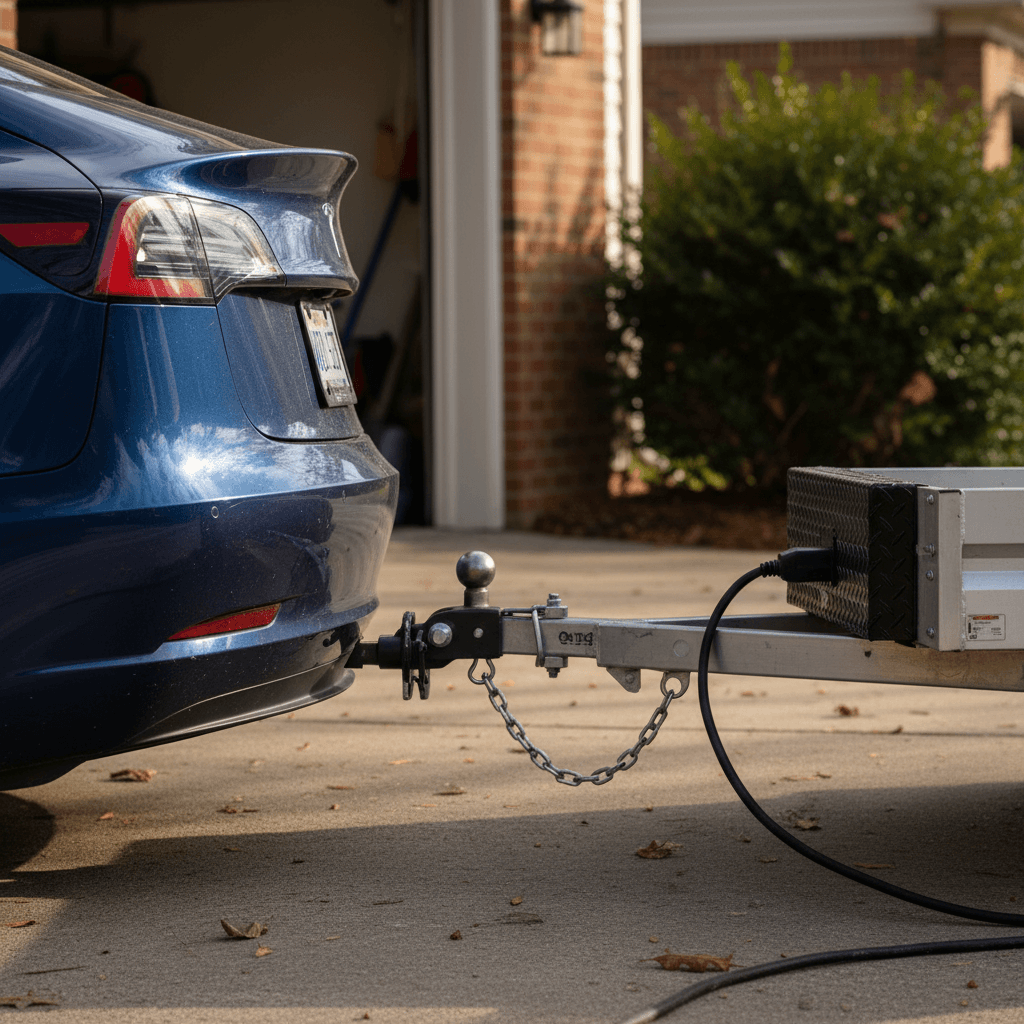
Whenever possible, use a <strong>Tesla‑installed towing package</strong>. Many third‑party hitches can physically bolt on, but that doesn’t mean Tesla supports towing or that your software will enable Trailer Mode features.
3. Respect tongue weight and load balance
Keep trailer tongue weight in the recommended 4–10% range of total trailer weight, without exceeding the published max. An improperly balanced trailer can sway violently and reduce rear tire grip.
4. Check tires and pressures for towing
Follow the towing section of your regional manual. Tesla often specifies higher rear tire pressures when towing, ignore that, and you risk overheating or overloading the rear tires.
5. Test lights and Trailer Mode features
Make sure brake lights, turn signals, and running lights work. On cars with Trailer Mode, verify that it activates, adjusts stability control, and disables rear parking sensors when a trailer is connected.
6. Do a shake‑down run close to home
Before a big trip, spend an hour on familiar roads. Listen for clunks, re‑torque the hitch hardware after a few miles, and watch how energy consumption responds at different speeds.
Respect the limits
FAQ: Tesla Model S towing capacity and range
Frequently asked questions
Should you tow with a Tesla Model S?
A Tesla Model S can be a surprisingly capable tow vehicle in the right configuration: a factory‑equipped hitch, a reasonably light and aerodynamic trailer, and a driver who’s willing to slow down and plan conservative charging stops. But not every Model S is approved for towing, and range will drop far more than it does in solo driving.
If towing is just an occasional weekend chore, hauling a pair of jet skis or a small camper a few times a year, a properly rated Model S can fit the bill. If you’re planning regular long‑distance trailer trips, you may be better served by a Model Y or Model X with higher tow ratings and more space. Either way, when you shop used through Recharged, you’ll see verified battery health and fair, data‑driven pricing, so you can choose the EV that fits both your daily driving and your towing ambitions with confidence.