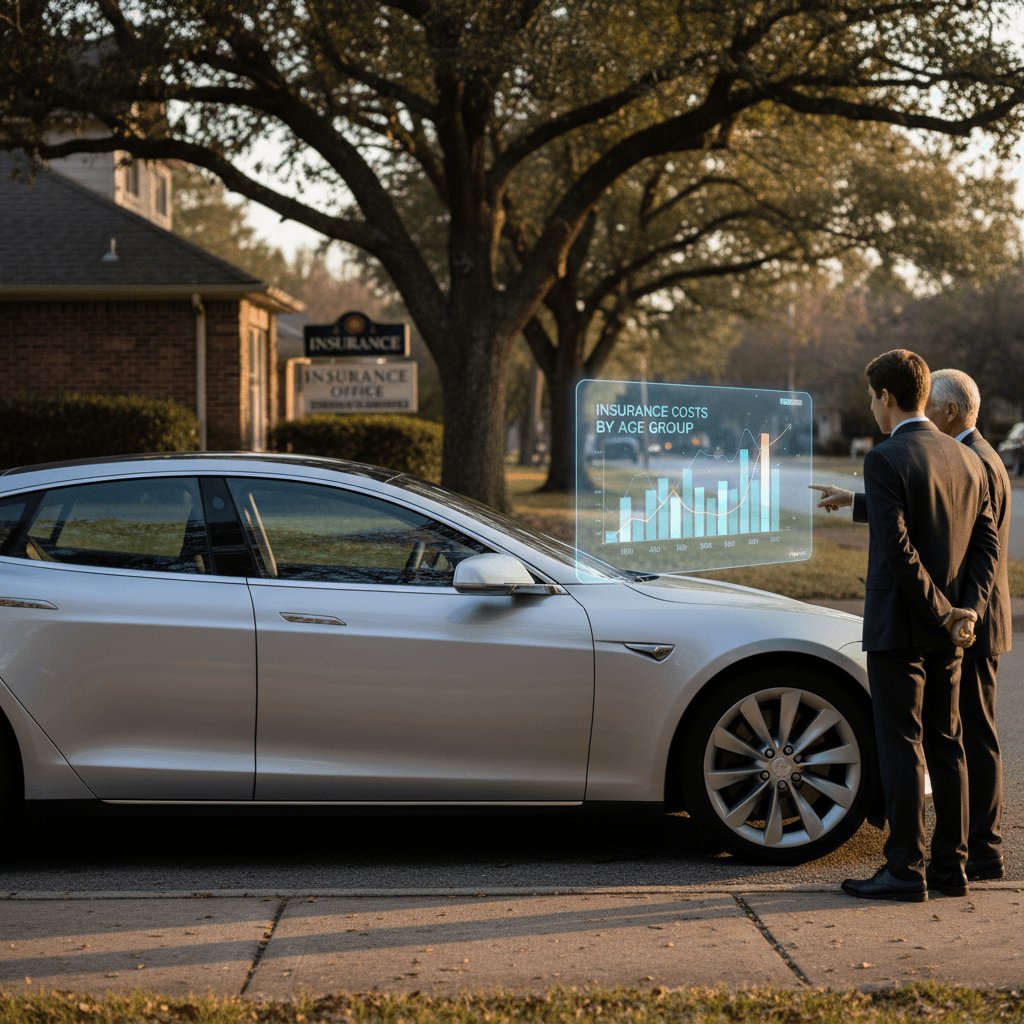
If you’re considering a Tesla Model S, the monthly payment is only part of the story. Insurance is a big line item too, and for a high‑value EV like this, premiums can swing dramatically based on your age and driving history. Understanding typical Tesla Model S insurance rates by age helps you budget realistically and avoid surprises after you fall in love with a car.
Key takeaway on Model S insurance
Why Tesla Model S insurance costs more, and varies so much by age
Even before you factor in age, a Tesla Model S is more expensive to insure than the average vehicle. The car is powerful, expensive to repair, and stuffed with sensors, cameras, and aluminum body panels, great for performance and safety, less great for claim costs. Recent industry analyses have consistently found that EVs cost materially more to insure than gas cars, with Teslas among the priciest within the EV segment.
- High vehicle value: A new or late‑model Model S can still easily run $60,000–$90,000, so collision and comprehensive coverage have more to protect.
- Costly repairs: Aluminum bodywork, proprietary parts, and limited certified shops can mean higher repair bills and longer downtimes.
- Power and performance: Even non‑Plaid trims are very quick. Insurers see higher performance as higher risk, especially for younger drivers.
- EV‑specific risk data: Real‑world claim data for EVs has shown higher average repair costs and sometimes higher total‑loss rates versus similar gas cars.
Sticker shock is normal
Age then stacks on top of all this. Insurers have decades of loss data showing that very young and very old drivers file more frequent and more severe claims. When you combine a high‑risk age band with an expensive, high‑performance EV, the pricing impact can be dramatic.
How age impacts Tesla Model S insurance rates
Across the U.S. market, auto insurance rates tend to follow a predictable curve by age. Teen drivers are the most expensive to insure, costs fall sharply through the mid‑20s, remain relatively low and stable through middle age, and then creep up again for drivers in their 70s and beyond. The same pattern applies to the Tesla Model S, just at a higher baseline price level.
Typical auto insurance cost curve by age
When you bolt those age patterns onto a Model S, the multipliers get bigger. A 21‑year‑old in a Model S might pay two to three times what a 45‑year‑old with the same car, address, and coverage pays. That’s not because the younger driver is being “punished” for driving an EV, insurers are simply pricing in the combination of an expensive car and a riskier driver profile.
Think in relative terms
Estimated Tesla Model S insurance rates by age
Because insurers price on dozens of variables, state, ZIP code, liability limits, credit‑based insurance score (in most states), mileage, prior accidents, no article can tell you exactly what you’ll pay. But we can lay out a reasonable U.S. national ballpark for full‑coverage Tesla Model S insurance by age, assuming:
- Clean driving record (no at‑fault accidents or major violations in the last 3–5 years)
- Good credit‑based insurance score (where allowed)
- 12,000 miles driven per year
- Full‑coverage policy (liability plus comprehensive and collision) with typical limits
- 2020–2024 Tesla Model S Long Range in a suburban ZIP with average repair costs
Approximate Tesla Model S insurance rates by age (U.S. 2026)
Illustrative annual premiums for a full‑coverage policy on a Tesla Model S. Your own quote may be higher or lower based on state, coverage limits, and risk profile.
| Driver age | Approx. annual premium | Approx. monthly premium | How it compares to a typical gas car |
|---|---|---|---|
| 18–20 | $5,000–$7,000+ | $415–$585+ | Often 2–3x a same‑age driver in a modest sedan |
| 21–24 | $3,800–$5,000 | $320–$415 | Roughly 70–120% higher than an average vehicle |
| 25–29 | $3,000–$4,000 | $250–$335 | Still 40–90% higher than a comparable gas car |
| 30–39 | $2,700–$3,500 | $225–$290 | Typically 30–70% higher than average |
| 40–54 | $2,500–$3,300 | $210–$275 | One of the cheapest age bands for a Model S |
| 55–69 | $2,400–$3,200 | $200–$265 | Often similar to 40‑somethings, sometimes slightly lower |
| 70+ | $2,700–$3,700 | $225–$310 | Tends to rise again vs. 50s/60s despite lower mileage |
Use this table as a reference point, not a guarantee. Always get real quotes before you buy.
About these numbers

Beyond age: Other factors that move Model S rates up or down
Age is only one lever. Two 35‑year‑old Model S drivers can see wildly different premiums depending on where they live and how they drive. Insurers build Model S pricing from a mix of driver factors, vehicle factors, and coverage choices.
What insurers care about on a Model S
Age is big, but these often matter just as much.
Location & garaging
Urban drivers in states with high medical costs, lawsuit risk, or repair expenses (think New York, Florida, Michigan, parts of California) often see some of the highest Model S insurance rates. A secure garage can help.
Driving record & mileage
Accidents, speeding tickets, and high annual mileage signal more risk. Some insurers now look at telematics or Tesla’s own safety data to reward smoother driving and fewer hard‑brake events.
Coverage limits & deductibles
Choosing high liability limits and low deductibles is smart protection, but it raises premiums. Opting for a $1,000 comprehensive and collision deductible instead of $500 can often trim costs.
Model year & trim
Newer, higher‑MSRP cars, and especially Plaid trims, cost more to fix or total out. Older Model S examples with more modest values usually cost less to insure, all else equal.
Household & multi‑car
Adding a teen to the policy, or a history of claims on another vehicle in the household, can push rates higher. On the flip side, multi‑car and multi‑policy discounts can offset some of that.
Insurer appetite for EVs
Some carriers have grown wary of EV claim costs and price accordingly. Others (including Tesla’s own program in eligible states) design products specifically around EV risk and sometimes price more competitively.
Watch for coverage cut corners
New vs. used Tesla Model S: How insurance differs
From an insurance standpoint, a gently used Model S can be friendlier to your budget than a brand‑new one. Because collision and comprehensive premiums are tied closely to vehicle value, a $35,000 used Model S will generally be cheaper to insure than a $75,000 new build, even if everything else (age, location, coverage) is the same.
Insuring a new Model S
- Higher MSRP: More expensive to repair or replace, particularly in total‑loss scenarios.
- Loan or lease requirements: Lenders usually require full coverage and may have minimum deductible rules.
- Optional packages: Adding Performance or FSD doesn’t directly show up as a separate line item, but higher values feed into claim severity.
Insuring a used Model S
- Lower replacement cost: More depreciation means collision and comp often cost less.
- Flexibility on coverage: On older, lower‑value cars, some owners raise deductibles or eventually drop comp/coll if the math pencils out.
- More variance by history: Prior accidents, branded titles, or modifications can affect insurability.
How Recharged can help
Ready to find your next EV?
Browse VehiclesHow to lower Tesla Model S insurance at every age
You can’t change your age, but you can control many of the other inputs that go into a Tesla Model S insurance rate. The best levers vary a bit depending on where you are in your driving life.
Targeted strategies to reduce Model S insurance costs
1. Teens & early‑20s: Control the risk narrative
If you’re under 25, look for good‑student discounts, complete a recognized defensive‑driving course, and avoid performance‑oriented Plaid trims. Being added as a secondary driver on a parent’s multi‑car policy can sometimes be far cheaper than a standalone policy on a Model S.
2. Mid‑20s to mid‑30s: Build a spotless record
This is when your rates can drop fastest, if you stay claim‑free. Avoid unnecessary small claims that can reset your “good driver” status, and consider telematics programs that reward low‑risk driving behavior.
3. 35–55: Optimize coverage, not just price
You’re likely in the sweet spot for pricing. Focus on getting high liability limits, sensible deductibles, and extras like rental and OEM‑parts coverage at a fair price rather than simply chasing the cheapest quote.
4. 55–69: Leverage mature‑driver advantages
Many insurers offer discounts for drivers over 55, especially if you complete an approved mature‑driver course. If your annual mileage has fallen, make sure your policy reflects that.
5. 70+: Manage risk perception
If you’re a healthy, low‑mileage driver in your 70s, ask your agent to re‑quote with accurate mileage and any safety features enabled. In some states you can offset age‑based pricing with defensive‑driving courses and pay‑per‑mile options.
6. All ages: Shop at every renewal
Insurers adjust EV pricing rapidly as new loss data comes in. Shopping quotes every 12 months can easily save hundreds per year on a Model S as carriers recalibrate their view of Tesla risk.
Bundle smart, not blindly
Tesla Insurance vs. traditional insurers for a Model S
In states where it’s offered, Tesla Insurance has become a meaningful alternative to traditional carriers for Model S owners. Tesla leans heavily on telematics and its understanding of the vehicle’s safety systems, which can be good news if you’re a calm, low‑risk driver, but not always the cheapest option for everyone.
Potential upsides of Tesla Insurance
- Vehicle‑aware pricing: Tesla can see real‑time driving behavior (hard braking, forward collision warnings, etc.) and, in some states, translate safe driving into lower premiums.
- Simplified claims: Direct relationships with Tesla‑approved repair shops can reduce friction.
- Competitive for some age bands: In owner anecdotes, Tesla Insurance can be especially attractive for 30–60‑year‑old drivers with clean records.
Potential downsides
- Not available everywhere: Tesla Insurance still isn’t in every state, and coverage details vary by location.
- Telematics sensitivity: If you drive aggressively or in dense traffic with lots of alerts, your score, and premiums, may suffer.
- Shop broadly anyway: In some markets, traditional carriers still beat Tesla on price, especially when you bundle other vehicles.
Best practice: Always compare
Shopping for a used Model S? How to budget for insurance
If you’re considering a used Tesla Model S, especially from a dedicated EV retailer like Recharged, you’re in a better position than most shoppers to plan your total cost of ownership. Here’s how to fold insurance into that decision instead of treating it as a surprise bill later.
- Get quotes on a specific VIN and trim. Insurers often price differently by model year and configuration. Once you’ve narrowed your search to a couple of specific cars, run quotes on each VIN so you’re not guessing.
- Decide on coverage based on value and savings goals. A low‑mileage, late‑model Plaid deserves robust coverage and low deductibles. An older, higher‑mileage Model S with a lower market value may justify higher deductibles to keep premiums manageable.
- Ask how prior damage or salvage history affects insurability. Some carriers will not fully cover a rebuilt or branded‑title Tesla; others will, but at higher rates or with limitations.
- Compare payment structure, not just annual cost. If you’re financing, ask how insurance and loan payments fit together so you know your true monthly cash outflow.
- Use Recharged’s EV specialists as a sounding board. Our team can help you interpret quotes, explain why one VIN might cost more to insure than another, and calibrate your budget before you sign anything.
A practical budgeting rule of thumb
FAQ: Tesla Model S insurance rates by age
Frequently asked questions about Tesla Model S insurance by age
Bottom line: Make age work for you, not against you
A Tesla Model S will almost always cost more to insure than a mainstream gas car, and age amplifies that effect. Young drivers pay the steepest premiums, middle‑aged drivers generally get the best deals, and older drivers see modest increases again as insurers price in higher loss trends. The good news is that you’re not powerless: careful shopping, smart coverage choices, and, if you’re going used, selecting the right car at the right price can keep insurance from overwhelming the experience of owning one of the most compelling EVs ever built.
If you’re evaluating a used Model S, folding insurance into your decision from day one is the best way to avoid surprises. Explore vehicles with strong Recharged Score reports, talk with our EV specialists about your driving profile, and get quotes before you sign. With a clear picture of Tesla Model S insurance rates by age, you can choose the car, and coverage, that fits your life and your budget.