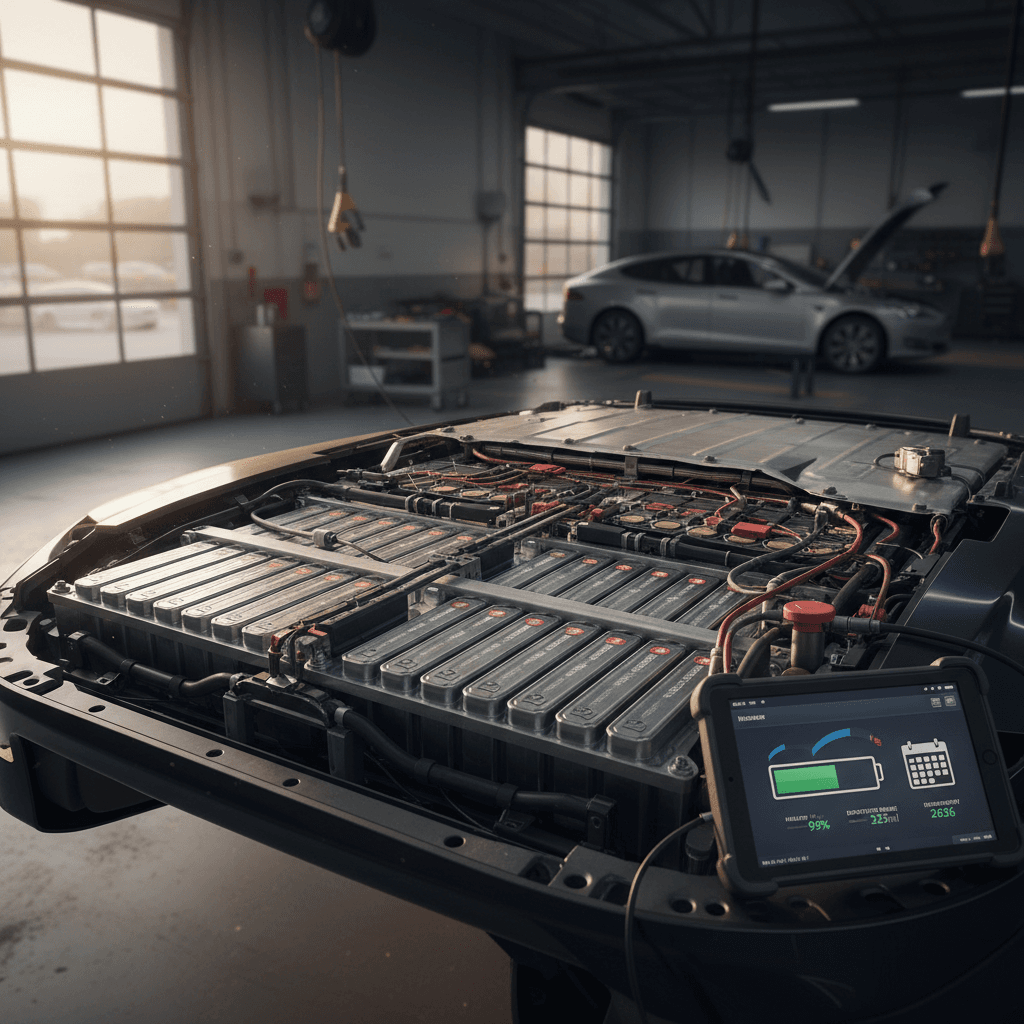
If you’re shopping for a Tesla Model S, especially a used one, the single most important line in the fine print is the battery and drive unit warranty. These are the most expensive components on the car, and understanding the Tesla Model S battery warranty details can be the difference between confident ownership and a five‑figure surprise.
Tesla changed a lot. The warranty didn’t, much.
Tesla Model S battery warranty at a glance
Core Model S battery warranty terms (recent model years)
For current‑generation Model S vehicles, Tesla’s Battery and Drive Unit Limited Warranty covers the high‑voltage battery pack and the drive unit for 8 years or 150,000 miles, whichever comes first, with a minimum 70% retention of battery capacity over that period. That coverage transfers automatically to subsequent owners as long as the car stays in the same region market.
Rule of thumb
How long the Tesla Model S battery warranty lasts
Tesla has offered different battery‑warranty flavors over the Model S’s long life, but late‑2010s through 2026 cars broadly follow one pattern: 8 years of coverage, with the mileage cap depending on when the car was built and which pack it has. For recent Model S and Model X vehicles, Tesla specifies 8 years or 150,000 miles on the battery and drive unit, with the 70% capacity clause baked in.
Approximate Model S battery warranty by build era
Always confirm the exact terms in the original New Vehicle Limited Warranty booklet or Tesla account for the specific VIN, especially on early Model S cars.
| Model year range | Typical battery warranty term | Mileage limit | Capacity guarantee |
|---|---|---|---|
| 2012–2014 (60 kWh) | 8 years | 125,000 mi | No formal 70% clause on early paperwork |
| 2012–2014 (85 kWh) | 8 years | Unlimited mi (early cars) | No formal 70% clause on early paperwork |
| 2015–2019 (70/75/85/90/100 kWh) | 8 years | Most commonly 150,000 mi | Implied or stated 70% capacity on later docs |
| 2020–2026 (Long Range / Plaid) | 8 years | 150,000 mi | Explicit 70% capacity retention guarantee |
Warranty terms here focus on the high‑voltage battery and drive unit, not the basic vehicle warranty.
Early Model S? Read the actual booklet.
What the Model S battery warranty actually covers
Tesla’s Battery and Drive Unit Limited Warranty is narrower than many shoppers assume. It doesn’t promise a new pack the moment range drops a little. Instead, it covers defects in materials or workmanship in the high‑voltage battery and drive unit that cause failure or abnormal loss of capacity (below the 70% threshold on newer vehicles) during the coverage period.
Covered components under the Model S battery & drive unit warranty
Think of it as protection against manufacturing defects, not a lifetime guarantee of new‑car range.
High‑voltage battery pack
The complete HV pack, including modules and internal electronics, is covered if Tesla determines a defect has caused failure or excessive capacity loss within the warranty limits.
Drive unit (motor & inverter)
The electric motor, inverter, and associated internal components that make up the drive unit are included. Failures here are also covered if caused by defects.
Battery management electronics
Onboard systems that manage charging, thermal control, and cell balancing are generally covered when a defect causes pack failure or a safety issue.
How Tesla remedies a covered issue
- Repair: For some failures, Tesla may repair or replace individual modules or components within the pack or drive unit.
- Replacement: In many cases, Tesla swaps in a remanufactured or new battery pack or drive unit that meets or exceeds spec.
- No charge: For in‑warranty repairs, you typically pay nothing for parts or labor (beyond normal taxes or fees).
What you don’t get to choose
- You can’t insist on a brand‑new pack instead of remanufactured, as long as the replacement meets Tesla’s specifications.
- You can’t force Tesla to replace a pack that still delivers above the 70% capacity threshold and isn’t defective.
- You can’t extend the original term; the 8‑year/150k‑mile clock keeps ticking from the first in‑service date.
Transferable protection
What isn’t covered, and how you can void coverage
The uncomfortable truth: the Tesla battery warranty is not a catch‑all for every battery complaint. It mostly protects you from defects, not from wear, abuse, or creative modifications. Tesla is explicit about exclusions in its warranty booklet.
Common Model S battery warranty exclusions
These are the fastest ways to end up paying out of pocket for a battery issue.
Owner‑caused damage
- Damage from collisions, floods, or off‑road use
- Improper lifting or jacking that crushes the pack
- DIY high‑voltage repairs or tampering
Charging misuse & modifications
- Non‑approved high‑voltage modifications or retrofits
- Third‑party bi‑directional adapters or experimental hardware
- Evidence that wiring or chargers were installed unsafely
Normal environmental effects
- Range loss from cold weather
- Charging speed limits to protect pack health
- Expected battery aging that stays above 70% capacity
Odometer & records issues
- Altered or tampered odometer readings
- Incomplete records when Tesla needs history to evaluate a claim
- Non‑Tesla repairs that directly cause HV issues
How to accidentally void coverage
The 70% battery capacity guarantee, explained
On newer Model S vehicles, Tesla states that the battery and drive unit warranty includes a minimum 70% retention of battery capacity over the warranty period. That line is widely misunderstood. It’s not a promise that you’ll only lose 30% range at most, it’s a threshold at which Tesla may consider your battery defective for warranty purposes.
- Capacity is measured against the pack’s original usable capacity, not the nameplate kWh on the brochure.
- Tesla uses its own diagnostic tools and test procedures; a third‑party app’s estimate isn’t enough by itself.
- Dropping just below 70% on a single cold day or bad reading won’t automatically trigger a brand‑new pack.
- If diagnostics confirm sustained capacity below 70% during the warranty window, Tesla may repair or replace the pack.
How to sanity‑check your capacity
Used Model S battery warranty: how much is usually left?
In the 2026 used market, most of the Model S inventory you’ll see falls into three broad buckets: cars that are still deep inside their battery warranty, cars that are getting close to expiration, and a growing number that are already out of coverage on time or miles.
Typical battery warranty status by model year (2026 resale market)
These are patterns, not guarantees, always verify a specific VIN.
2021–2024 Model S
Generally 3–7 years of battery warranty remaining and often under 80,000 miles. Strong overlap between useful life and warranty coverage.
2017–2020 Model S
Often sitting at 6–9 years old with 60,000–120,000 miles. You may have only 1–3 years or 20,000–60,000 miles of coverage left.
2012–2016 Model S
Many early cars are now timing out on the 8‑year limit, even if mileage is low. Don’t assume any battery warranty remains, confirm it.
Tesla CPO vs. independent used
How to check battery warranty status on a used Model S
Battery warranty status shouldn’t be a mystery component of the deal. You can and should verify it before you make an offer. The process isn’t glamorous, but it’s straightforward if you know what to ask for.
Step‑by‑step: verify a Model S battery warranty before you buy
1. Get the full VIN early
Ask the seller for the complete 17‑digit VIN, not just the last six. You’ll need it to look up build date, trim, and service history.
2. Confirm the original in‑service date
The 8‑year battery warranty clock starts when the first owner’s paperwork was signed, not when the car was built. The seller can pull this date from their Tesla account or service records.
3. Ask for Tesla warranty screen or PDF
Owners can usually see warranty details in the Tesla app or their online account. Ask for a screenshot or downloaded New Vehicle Limited Warranty PDF that shows the battery and drive unit terms.
4. Check current odometer mileage
Remember, the earlier of <strong>years or miles</strong> wins. A 6‑year‑old car with 135,000 miles is much closer to the 150,000‑mile cap than a 75,000‑mile example.
5. Review service history for battery work
Look for prior battery repairs or replacements, these are not inherently bad news. A replacement pack installed under warranty can actually be a plus, as long as it’s documented.
6. Get an independent battery health report
Use an EV‑savvy inspection service or a marketplace like <strong>Recharged</strong> that provides a verified battery health score. Raw range screenshots are helpful, but professional diagnostics tell a fuller story.
If the seller won’t share documentation, walk.
Real‑world Model S battery life vs. warranty limits
Here’s the good news: Tesla’s large battery packs tend to age more gracefully than many people fear. Many well‑cared‑for Model S cars show modest degradation in the first 50,000–80,000 miles and then a slower decline. The warranty’s 70% floor is a safety net, not a prediction that your pack will be a brick at year eight.
Factors that help Model S batteries age well
- Charging mostly on Level 2 AC at home rather than constant DC fast charging
- Avoiding habitual 0–100% charge cycles; living between ~10–80% for daily driving
- Parking in garages or shade in very hot climates
- Keeping software up to date so the BMS and thermal management stay optimized
Things that accelerate degradation
- Daily supercharging or heavy DC fast‑charge use on road‑trip patterns
- Leaving the car fully charged at 100% for days at a time
- Frequent deep discharges to near 0%
- Long‑term storage in extreme heat or cold without monitoring charge level
Warranty vs. reality
Model S battery warranty vs. extended coverage options
Tesla offers several extended service products, but as of early 2026, its new High Voltage Battery and Drive Unit Extended Service Agreement is limited to Model 3 and Model Y. Model S owners can’t buy that plan, which means your options for battery‑specific coverage after the 8‑year term are limited.
What protection you have, and don’t have, on a Model S
Think in terms of three phases: basic warranty, battery warranty, and post‑warranty life.
Basic vehicle warranty
4 years / 50,000 miles on the rest of the car when new. This expires well before the battery and drive unit coverage does.
Battery & drive unit warranty
8 years / 150,000 miles protecting the high‑voltage pack and drive unit against defects and severe capacity loss.
Post‑warranty options
No official Tesla battery ESA for Model S. You’re relying on actual battery health, savings vs. gas, and possibly a third‑party warranty, many of which exclude HV packs.
Be skeptical of third‑party “EV warranties”
Buying a used Model S: how Recharged helps
The best “warranty” on a used Model S battery is actually good information before you buy. That’s where a specialist marketplace like Recharged can tilt the odds in your favor.
How Recharged de‑risks a used Model S purchase
Battery health is front and center, not an afterthought in the fine print.
Recharged Score battery health diagnostics
Every vehicle on Recharged includes a Recharged Score Report that quantifies battery health and charging history, so you’re not guessing from a single range screenshot.
Clear warranty status & pricing
Listings surface remaining factory battery and drive unit coverage and factor it into fair market pricing, so a car with two years of battery warranty left is priced differently than one with none.
EV‑specialist guidance & financing
From answering warranty questions to helping you finance a used Model S and arrange nationwide delivery, Recharged gives you a single, EV‑savvy point of contact.
Ready to find your next EV?
Browse Vehicles
Tesla Model S battery warranty FAQ
Frequently asked questions about Model S battery warranty details
Key takeaways for shopping a Model S in 2026
The Tesla Model S remains one of the most compelling long‑range EVs ever built, but its high‑voltage battery is also its single most expensive part. The battery and drive unit warranty gives you meaningful protection, 8 years, 150,000 miles, and a 70% capacity safety net on newer cars, but it’s not a blank check for every lost mile of range or every modified car on the used market.
If you’re evaluating a used Model S, treat battery warranty status and real‑world battery health as first‑class citizens in your decision, right alongside price and appearance. Verify the in‑service date, check the odometer against the 150,000‑mile cap, read service records, and, ideally, rely on a third‑party battery health report instead of gut feel.
Recharged was built for exactly this use case: transparent, data‑backed used EV shopping. With Recharged’s battery diagnostics, fair‑market pricing, financing and trade‑in options, and nationwide delivery, you can step into Model S ownership knowing both what the warranty will cover, and just as importantly, what it won’t.