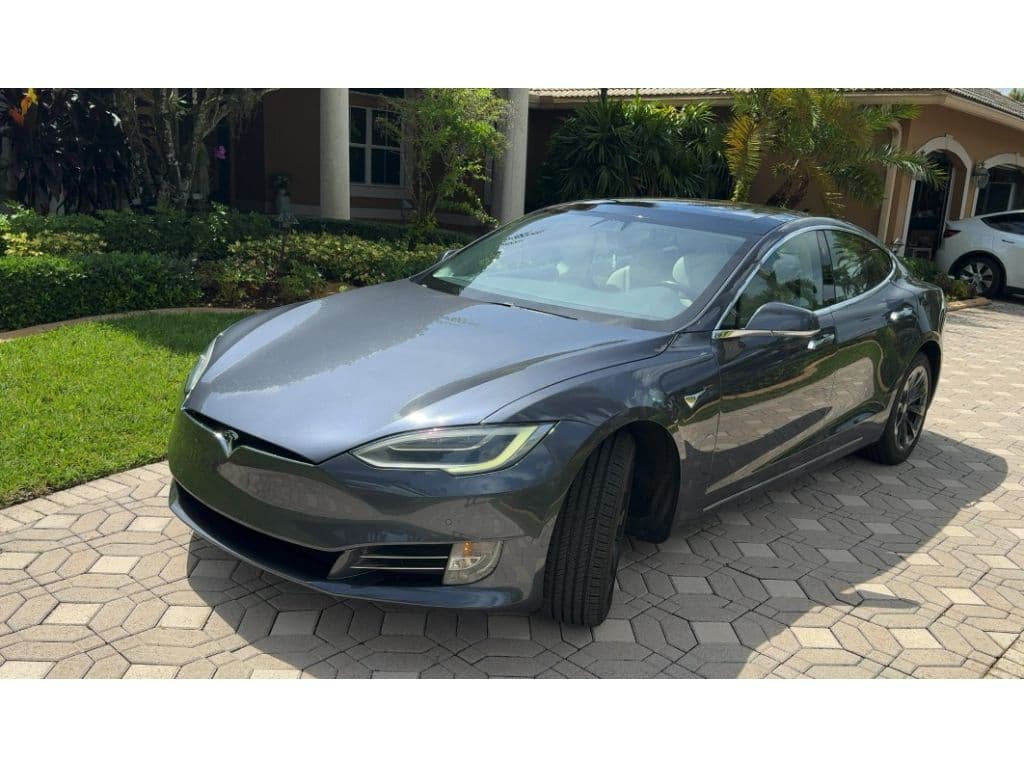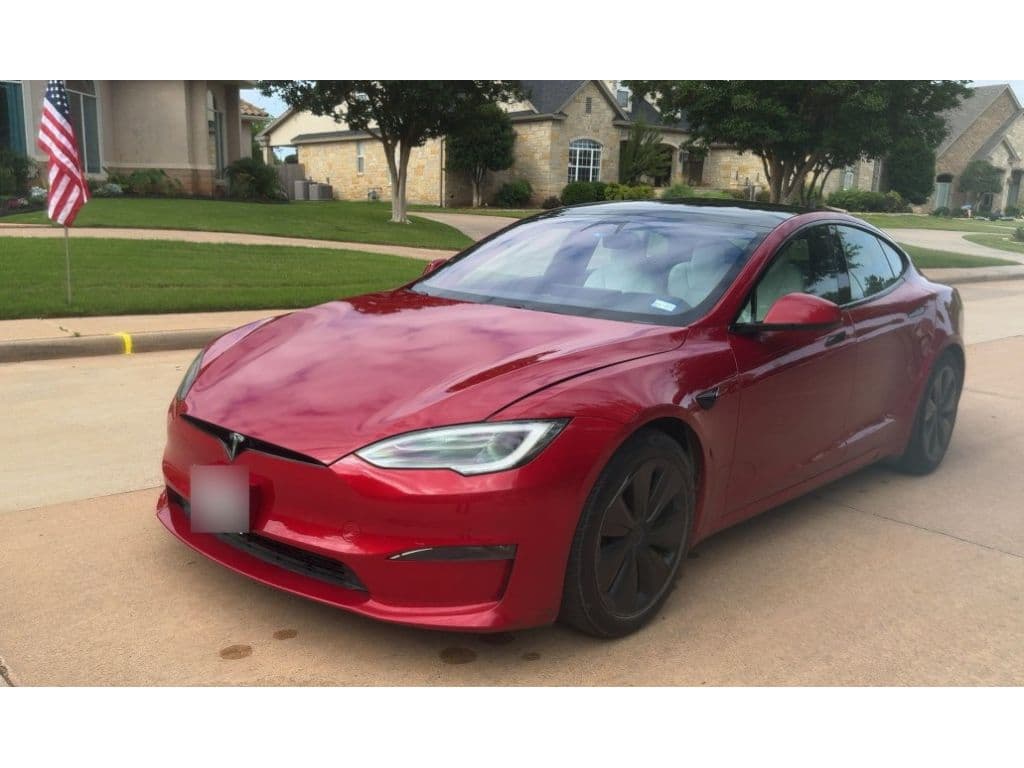
If you’re looking at a Tesla Model S, especially a used one, the first question you should ask isn’t about 0–60 times. It’s **“how long will the battery last?”**. The good news: real‑world data now gives us a pretty clear picture of Tesla Model S battery lifespan in both miles and years, and it’s far better than the early EV doom scenarios suggested.
Quick answer
Tesla Model S battery lifespan at a glance
Model S battery lifespan snapshot
It’s important to separate **Tesla’s warranty language** from **what actually happens in the wild**. Tesla’s battery warranty for modern Model S vehicles promises at least **70% capacity within 8 years or 150,000 miles**, whichever comes first. That’s the minimum they’re willing to put in writing, not a prediction that the pack “dies” the day the warranty ends.
Think in capacity, not just years
Warranty vs real-world battery lifespan
Tesla has tweaked Model S battery warranties over the years, but for most late‑2010s through current cars, the pattern is similar: **8 years of coverage with a mileage cap and a 70% capacity floor**. Earlier cars may lack the explicit 70% clause but still have 8‑year coverage on the pack and drive unit.
Approximate Model S battery warranty by era
Always confirm the exact battery warranty for a specific VIN in the original warranty booklet or Tesla account, but this table shows the general pattern.
| Model year / pack | Typical battery warranty | Mileage limit | Capacity guarantee noted? |
|---|---|---|---|
| 2012–2014 60 kWh | 8 years | 125,000 mi | Usually no 70% clause in paperwork |
| 2012–2014 85 kWh | 8 years | Unlimited miles on many early cars | Usually no 70% clause |
| 2015–2019 (70/75/85/90/100 kWh) | 8 years | Commonly 150,000 mi | 70% capacity clause appears on later docs |
| 2020–present Long Range / Plaid | 8 years | 150,000 mi | Explicit 70% capacity minimum |
Battery warranty is a minimum standard, not a prediction of failure at the end date.
Two key takeaways for lifespan: 1. **The warranty is a floor, not a ceiling.** Tesla isn’t saying the battery will abruptly fail at 8 years/150,000 miles, only that if it dips below 70% capacity before then, they’ll repair or replace it. 2. **Real‑world data shows far slower degradation** than that worst‑case threshold. Many Model S and X vehicles are still above ~85–90% of original capacity even at 100,000–150,000 miles.
Don’t confuse warranty expiry with end of life
How Tesla Model S batteries actually degrade
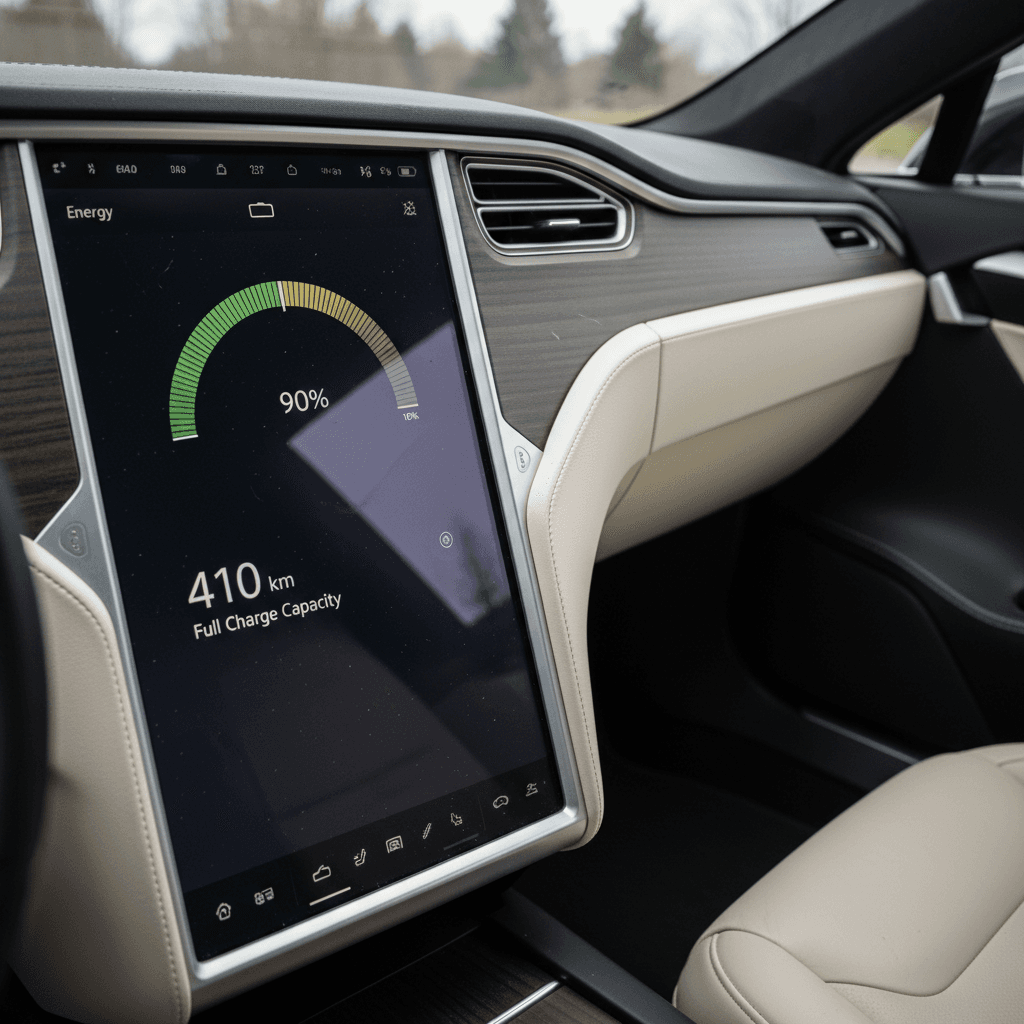
Lithium‑ion EV batteries don’t lose range in a straight line. For the Model S, the pattern that emerges from fleet data and owner logs looks like this: - **Faster drop in the first 1–2 years or ~20,000–30,000 miles**, often around 3–5% capacity loss. - **Much slower, almost flat degradation after that**, with capacity stair‑stepping down gradually over the next 8–10+ years. - **Temperature, fast‑charging habits, and high‑speed driving** can tilt that curve up or down, but the shape stays similar.
- Around 50,000 miles: many Model S packs are still near **92–95%** of original capacity.
- Around 100,000 miles: **roughly 8–12%** loss is typical for Model S/X packs.
- Around 200,000 miles: Tesla’s own impact report data suggests roughly **88% capacity remaining** on average for Model S/X vehicles.
Why the “knee” matters
Miles, years, and how you drive: what matters most
When we talk about Tesla Model S battery lifespan, we’re really talking about three overlapping lifetimes: 1. **Calendar life** – how the pack ages just sitting as years go by. 2. **Cycle life** – how many charge–discharge cycles it can handle. 3. **Usable life** – how much capacity loss you personally can tolerate before the car no longer fits your needs.
What actually wears a Model S battery
Your habits matter more than a magic mileage number.
Heat and climate
High heat accelerates chemical aging, especially if the car sits at high state of charge in the sun. Mild climates are easiest on the pack.
Fast-charging behavior
Regular DC fast charging isn’t a death sentence, but living at Superchargers, especially to 100%, will age the pack faster than slow home charging to 60–80%.
Depth of discharge
Big swings from near 0% to 100% every day are harder on the battery than cycling in the middle (say 20–80%). Shallow cycles over many years are surprisingly gentle.
How many miles is "a lot" for a Model S battery?
For a gasoline car, 150,000 miles often feels like the edge of its prime. For a Model S battery, that’s usually just the end of the warranty window. Many packs appear capable of **300,000–500,000 miles** before they reach 70% of original capacity, depending on use and climate.
What about years?
With typical U.S. driving (12,000–15,000 miles per year), those mileage numbers translate to roughly **15–20+ years** before hitting that 70% mark. Some owners will move on from the car for other reasons long before the battery becomes the limiting factor.
Good news for used buyers
Early vs newer Model S batteries
Not all Model S packs are created equal. Tesla has iterated battery chemistry, pack design, and software over more than a decade. That evolution matters when you’re trying to estimate how long a specific car’s battery will last.
How Model S battery generations compare
Broad patterns in how early and newer Model S battery packs behave over time.
| Era | Typical pack sizes | Real‑world pattern | What it means for lifespan |
|---|---|---|---|
| 2012–2014 early cars | 60 & 85 kWh | A few early‑pack failures, some replacements; many surviving cars show moderate degradation but are still usable. | Expect more variation; great if pack is strong, but check history and degradation carefully. |
| 2015–2016 transition | 70/75/85/90 kWh | Improved reliability; degradation typically in line with later cars if well cared for. | Good balance of price and pack durability when battery health looks solid. |
| 2017–2020 75/100 kWh | 75 & 100 kWh | Most cars show ~8–12% loss by ~100,000 miles with no major drama. | Strong candidates in the used market; plenty of range margin even with modest degradation. |
| 2021–present Long Range/Plaid | ~100 kWh | Latest chemistry, thermal management, and software; many still low‑mileage in 2026. | Too early for long‑term data, but early signs are excellent. Expect **the strongest lifespan** of the group. |
Patterns vary car‑to‑car; always evaluate an individual vehicle’s pack, not just its model year.
Don’t overgeneralize from early failures
Battery replacement, repair options, and costs
Even if most Model S batteries will never suddenly “die,” it’s smart to understand **what happens if you do need major pack work**, especially once the 8‑year warranty is over.
- **Full pack replacement at Tesla:** Historically, invoices have ranged from roughly **$12,000–$20,000+** in the U.S. depending on pack size, configuration, and labor. Prices can change, so treat this as an order‑of‑magnitude, not a quote.
- **Remanufactured / refurbished packs:** Third‑party specialists sometimes offer repairs or refurbished packs at lower cost, but availability varies by region and shop quality matters a lot.
- **Module‑level repairs:** In some cases, an independent EV shop can replace bad modules, contactors, or BMS components rather than the whole pack. That’s cheaper but not always possible, and compatibility with Tesla diagnostics/support can get complicated.
Battery replacement isn’t routine maintenance
If you’re shopping used, the more realistic scenario isn’t budgeting proactively for a pack replacement; it’s **choosing a car with a healthy battery today** so that you’re unlikely to face that decision during your ownership window. That’s exactly what Recharged’s **Recharged Score battery health diagnostics** are built to measure and communicate.
How to make your Model S battery last longer
You can’t change the chemistry inside your Model S pack, but you can absolutely influence **how quickly it ages**. The habits that matter most are simple and don’t require babying the car.
Everyday habits that extend Model S battery life
1. Live in the middle of the pack
For daily driving, avoid sitting at 0% or 100% for long periods. Charging to **60–80% for normal use** is a great baseline; save 90–100% for road trips where you’ll start driving soon after you reach full.
2. Favor home or Level 2 charging
Fast charging is a powerful convenience tool, not a daily lifestyle. If most of your energy comes from **home Level 2 charging**, you’ll generally see slower degradation than if you fast‑charge every day.
3. Avoid extreme heat plus high state of charge
Parking a fully charged Model S in the sun on a hot day is hard on the pack. If you live in a hot climate, try to park in shade or a garage and schedule charging to finish near your departure time.
4. Don’t obsess over 100% range estimates
The range number on the dash can drift due to software calibration and usage patterns. A few miles of apparent range loss isn’t automatically true degradation. Look at trends over time rather than one reading.
5. Keep software up to date
Tesla continually refines charging, thermal management, and range estimation. Staying current on software updates helps the battery management system protect the pack more effectively over the long haul.
6. Drive smoothly when you can
Hard launches and sustained high‑speed driving heat the pack and consume more energy. Enjoy the performance, but recognize that calmer driving is friendlier to the battery, and your range.
Treat it like any long‑term asset
Buying a used Model S? How to check battery health
If you’re shopping the used market, your goal isn’t to find a unicorn with 0% degradation. It’s to find a **car with a healthy, well‑behaved pack** whose future degradation is likely to stay slow and predictable.
Four ways to size up a used Model S battery
You don’t need lab equipment, just a structured approach.
1. Look at indicated range at known SOC
Ask the seller (or check yourself) what range the car shows at **100% and 80–90% charge**. Compare that to the original EPA rating for that trim. A loss of roughly 5–15% over ~100k miles is normal; numbers well outside that range warrant deeper investigation.
2. Review service and charging history
Frequent DC fast charging, repeated deep discharges, or a record of pack‑related service could all be clues. A car that mostly charged at home on Level 2 and hasn’t needed pack work is generally a safer bet.
3. Use objective diagnostics
Tools that read pack health directly from the car’s systems are far more reliable than guesses based on a single trip. Every vehicle sold through Recharged includes a Recharged Score Report with verified battery health and degradation insights.
4. Compare pricing to battery condition
A Model S with slightly more degradation but a lower price and strong overall condition might be a better value than a low‑mileage car that’s priced like new. Make sure the price reflects the real battery story.
Why a structured inspection matters
“Used EV buyers don’t need to fear batteries, they just need better information. When you make pack health and pricing transparent, EVs become one of the least risky powertrains you can buy.”
FAQ: Tesla Model S battery lifespan
Frequently asked questions about Model S battery lifespan
Bottom line: how long a Model S battery lasts
When you strip away the myths, the Tesla Model S battery story is surprisingly boring in a good way. Most packs lose a small chunk of capacity early on, then settle into a **slow, predictable decline** that supports hundreds of thousands of miles of real‑world driving. The 8‑year/150,000‑mile warranty is a safety net, not a doomsday clock.
For you as a buyer, the key questions aren’t “Will the battery explode in year nine?” but rather **“How much range do I need, what’s this particular car’s battery health today, and is the price aligned with that reality?”**. If you answer those honestly, and lean on tools like Recharged’s **Recharged Score battery health diagnostics, fair‑market pricing, and EV‑specialist support**, a used Model S can be one of the most durable long‑range EV bets you can make.