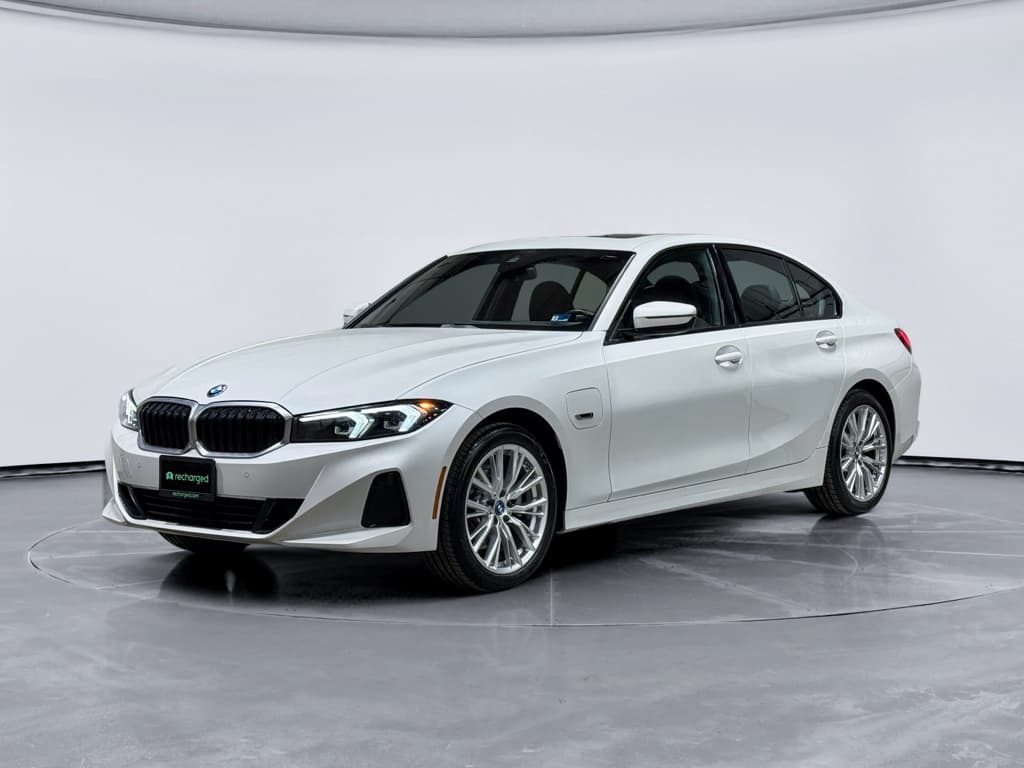
If you’re looking at a 2023 BMW i4, you’ve probably heard two very different stories: some owners rave about rock-solid reliability and sports-sedan dynamics, while others complain about software bugs, warning lights, or charging quirks. This guide pulls together real-world data, owner reports, and recall information so you understand the most common 2023 BMW i4 problems, and how to protect yourself, especially if you’re shopping used.
Quick take
2023 BMW i4 reliability at a glance
Reliability snapshot for the BMW i4
Consumer review data for the 2023 i4 skews very positive, with owners frequently giving 4.5–5.0 stars for reliability and build quality, and many reporting thousands of essentially trouble‑free miles. At the same time, forums and owner communities highlight a familiar EV pattern: the hardware is generally robust, but software and electronics can be finicky.
Used EV reality check
Most common 2023 BMW i4 problems
Common 2023 BMW i4 problems owners report
Not every car will see these issues, but they’re the patterns that keep surfacing.
1. Software & warning-light glitches
Random warnings (like “Drivetrain malfunction”), driver-assistance features greyed out or disappearing, and over-the-air (OTA) updates that stall or refuse to install.
2. Level 2 charging annoyances
Some owners report finicky behavior with certain Level 2 EVSEs, slower-than-expected charge rates, or charging sessions that stop unexpectedly until software is updated.
3. Range and efficiency complaints
Owners who drive fast highway miles, run large wheels, or live in cold climates can see real‑world range fall closer to 200 miles, especially in M50 trims.
4. Climate & comfort quirks
Occasional glitches with climate control, heated seats, or app‑based preconditioning that fails to start or doesn’t hit the requested temperature.
5. Infotainment lag or freezes
The large curved display is impressive, but some drivers see laggy responses, CarPlay/Android Auto dropouts, or the navigation system “re-learning” preferences after updates.
6. Driver-assistance feature issues
Lane change assist or other assistance features sometimes remain greyed out, disappear after updates, or require dealer intervention to restore.
None of these issues are unique to BMW, every modern EV is effectively a rolling software platform, but they’re the things i4 owners talk about most. The good news is that they’re usually fixable with software updates or warranty work. The bad news is that when an update fails or a module misbehaves, you can end up with a very expensive computer that temporarily can’t drive.
Battery and charging issues
When shoppers ask about “2023 BMW i4 problems,” they’re often really asking one thing: Is the high‑voltage battery safe and durable? Overall, the i4’s battery pack has not developed a reputation for widespread failure, but there are a few patterns worth understanding.
- Isolated high‑voltage or “drivetrain malfunction” warnings that temporarily disable the car until it’s towed and diagnosed, sometimes traced to individual battery modules or control software.
- Charging sessions on some public or home Level 2 chargers that start and then stop unexpectedly, especially before key software updates are installed.
- Real‑world range coming in significantly below EPA ratings on performance‑oriented trims, in cold weather, or at sustained highway speeds above 70 mph.
- Owner anxiety around long‑term battery degradation, even if early‑life data so far suggests relatively modest loss of capacity in the first few years.
How Recharged de-risks i4 battery concerns
Level 2 charging quirks
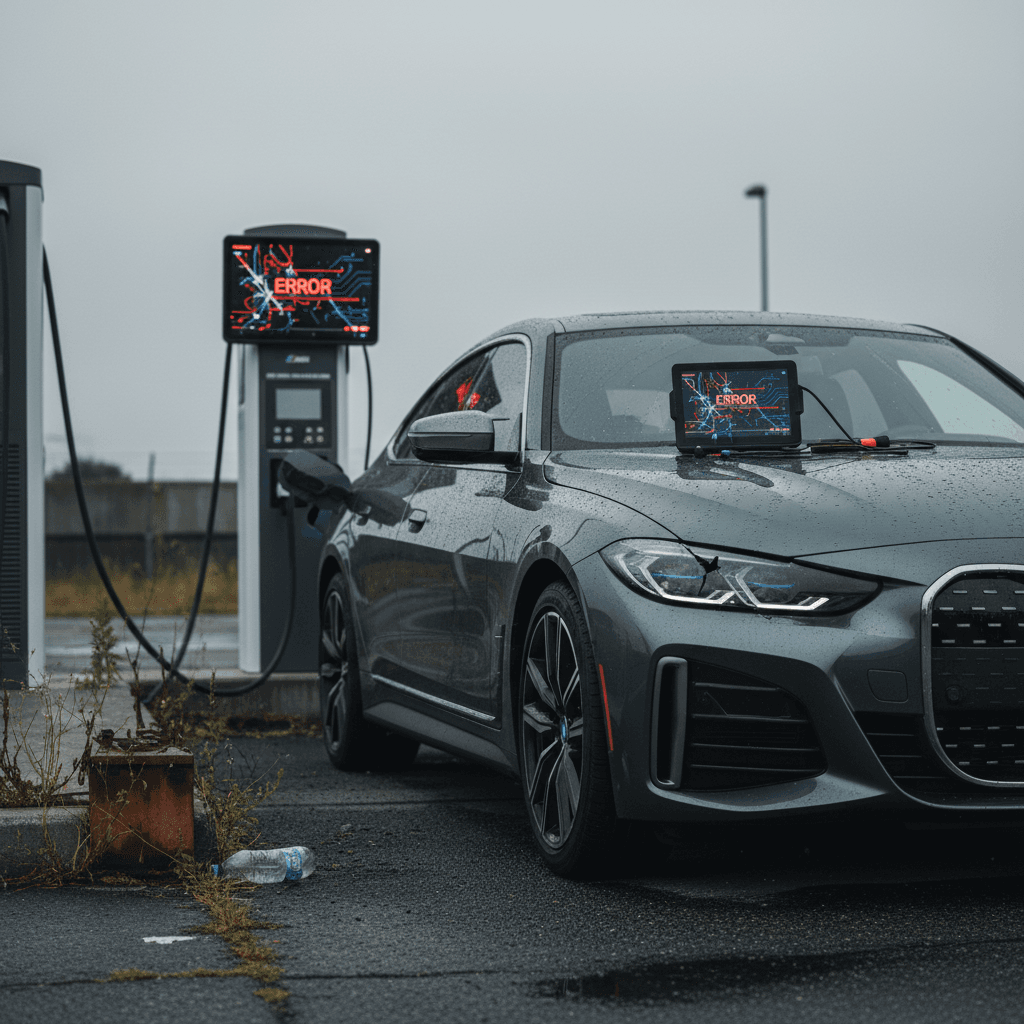
One of the more annoying 2023 BMW i4 problems has nothing to do with batteries themselves and everything to do with how the car talks to certain home and public chargers. Owners have reported slower‑than‑expected Level 2 speeds, charge sessions that stop mid‑stream, or chargers that work flawlessly with other EVs but throw errors with the i4 until software is updated.
Practical charging tips
Range expectations vs reality
Owner reviews consistently praise the i4’s efficiency for a heavy, premium EV, with some reporting 4 mi/kWh in mild weather when driven gently. But you should treat EPA numbers as a ceiling, not a promise. The 2023 eDrive40 can realistically deliver around 260–300 miles in mixed driving when driven sensibly, while the M50 often lives closer to 200–230 miles on the highway, especially on larger wheels or winter tires.
Range is a use‑case question
Software and infotainment glitches
By far the most persistent category of 2023 BMW i4 problems involves software, OTA updates, and driver‑assistance features. This is where BMW’s ambition to ship a tech‑forward, always‑connected EV collides with the reality of complex code running across dozens of control units.
OTA update headaches
- Some owners report updates that download but never install, or appear to install and then roll back.
- In rare cases, failed updates have left cars undriveable until a dealer performs a manual software flash.
- Because key fixes (including for charging issues) often arrive via OTA, delayed or stuck updates can keep you on buggy software longer than you’d like.
In-car glitches & assistance quirks
- Certain driver-assistance features like lane change assist may remain greyed out or even disappear after an update.
- Owners describe infotainment lag, map guidance that reverts to a “learning” mode after updates, and settings that don’t stay saved between profiles.
- Voice control for climate and comfort features occasionally ignores commands, forcing manual adjustments.
The upside of software-centric cars
Safety recalls you should know about
Because recalls change over time, you should always run any specific 2023 i4’s VIN through official channels. That said, there are a few important patterns to be aware of if you’re evaluating the car’s risk profile.
Key recall themes affecting BMW i4 models
Exact campaigns vary by VIN. Always verify with official BMW or NHTSA tools before purchase.
| Issue type | What it affects | Risk | Typical remedy |
|---|---|---|---|
| Electric motor software | Certain 2022–2025 BMW EVs including i4 | Possible loss of drive power if software mismanages motor control | Dealer or OTA software update to motor control module |
| Battery module manufacturing defect | Small number of i4s across 2022–2023 model years | Potential for high‑voltage shutdown or, in rare cases, thermal event | Inspection and replacement of affected battery modules |
| Charging / control unit logic | Charging behavior and communication with EVSEs | Unexpected charging interruptions or warning messages | Updated charging and battery management software |
Use this as a high‑level orientation, not a substitute for a VIN-specific recall check.
Never skip a VIN check
If you’re buying through Recharged, your advisor will walk you through any open or completed recalls on a specific car. Vehicles with unresolved safety‑critical campaigns don’t move forward until the work can be completed.
What problems show up on test drives?
Some 2023 BMW i4 problems won’t show themselves in a 10‑minute spin around the block. You want to deliberately provoke the kinds of conditions that trigger common owner complaints.
Test-drive checklist for a 2023 BMW i4
1. Start with a cold boot
Unlock the car and let it “wake up” fully. Watch for any <strong>warning messages</strong>, especially drivetrain, battery, or driver-assistance errors, before you even shift into gear.
2. Exercise one‑pedal driving
Drive in the most aggressive regen mode and verify that lift‑off braking feels smooth and predictable. Sudden changes or inconsistent behavior can hint at software or sensor issues.
3. Test driver-assistance features
On a clearly marked highway, check that lane‑keeping, adaptive cruise, and lane change assist (if equipped) all engage properly and don’t mysteriously grey out.
4. Use navigation and voice control
Set a destination, use voice commands for climate or seat heaters, and watch for freezes, lag, or incorrect responses from the infotainment system.
5. Perform a DC fast‑charge test (if possible)
Even 10–15 minutes at a DC fast charger can reveal whether the car ramps up to expected speeds, holds them, and avoids error messages or unexpected cutoffs.
6. Let the car sleep and re‑wake
If you have time, park for 15–20 minutes, lock it, and then return. Confirm that previously seen warnings don’t reappear and that profiles and settings persist.
What does it cost to fix common i4 issues?
While exact costs depend on your dealer, region, and warranty status, it’s useful to understand how expensive different categories of 2023 BMW i4 problems can be. The short version: software and minor electronics are annoying but not ruinous; high‑voltage components are eye‑wateringly expensive out of warranty.
Ballpark cost ranges for typical 2023 BMW i4 fixes (out of warranty)
These are broad, indicative ranges for planning purposes, not quotes. Warranty coverage, goodwill assistance, and independent specialists can reduce your actual costs.
| Issue | Typical impact | Rough cost range |
|---|---|---|
| Infotainment or software glitch | Lag, freezes, missing features | $0–$400 (software updates or minor module resets) |
| Driver-assistance sensor or camera fault | Lane-keeping or cruise issues | $300–$1,200 depending on component and calibration |
| Onboard charger / charging control fault | Slow or interrupted AC charging | $800–$2,500 if hardware is replaced |
| High-voltage battery module replacement | Capacity loss or module fault | $2,000–$8,000+ depending on number of modules and labor |
| Complete traction battery replacement (rare) | Severe battery failure | $15,000+; typically handled under warranty in early years |
Always get a written estimate from a qualified BMW EV technician for your specific car and issue.
Why used can be safer than new
2023 BMW i4 vs other EVs for reliability
So where does the 2023 i4 sit in the broader EV landscape? Independent reliability surveys and owner forums paint a picture that’s more nuanced than simple “good” or “bad.”
Where the i4 does well
- Powertrain robustness: Compared with some early‑generation EVs, the i4 hasn’t developed a reputation for widespread motor or inverter failures.
- Build quality: Owners often praise interior materials, assembly quality, and resistance to rattles or squeaks over time.
- Battery durability: Early data suggests relatively modest capacity loss in the first few years when charged and stored sensibly.
Where it’s merely average
- Software stability: Roughly in line with other premium EVs, better than some, but not immune to glitches or frustrating UX decisions.
- Charging ecosystem: CCS reliability in the U.S. is more about the charger network than BMW, but the i4 still inherits that variability.
- Cost of repairs: Premium German badge equals premium pricing for diagnostics, parts, and labor once you’re outside warranty.
The i4 is a telling example of where the EV market is today: the batteries and motors are increasingly bulletproof, while the real ownership story plays out in software updates, charging infrastructure, and how much support you get when something digital misbehaves.
Buying a used 2023 BMW i4: checklist
Because depreciation on premium EVs is steep, a used 2023 i4 can be a compelling value, if you’re systematic about how you evaluate it. Here’s a practical checklist you can walk through with any seller or dealer.
Used 2023 BMW i4 pre‑purchase checklist
1. Run a full VIN history and recall check
Confirm accident history, mileage consistency, and that all safety recalls are completed. Ask for documentation of recall work and any warranty repairs.
2. Get independent battery health data
Don’t rely solely on the dashboard state of charge. Use a third‑party battery health scan (like the <strong>Recharged Score</strong>) to understand usable capacity, cell balance, and fast‑charging performance.
3. Review software and service records
Ask which software version the car is on, what problems it has previously logged, and whether any modules (onboard charger, battery modules, control units) have been replaced.
4. Inspect tires and brakes closely
Performance‑oriented trims like the M50 eat through tires quickly, especially if driven hard. Worn tires and pads can hint at aggressive use even if the mileage is low.
5. Check all keys, profiles, and app access
Make sure both keys work, driver profiles behave as expected, and that the seller properly transfers or removes access in the MyBMW app.
6. Budget for a post‑purchase baseline service
Even if everything checks out, plan for a baseline inspection and software check with a qualified BMW EV shop so you start ownership from a known‑good state.
How Recharged approaches used i4s
Ready to find your next EV?
Browse VehiclesFAQ: 2023 BMW i4 problems & ownership
Frequently asked questions about 2023 BMW i4 problems
Bottom line: Should 2023 BMW i4 problems scare you off?
The 2023 BMW i4 is not a perfect EV, but it’s far from a problem child. Most owners experience a fast, refined electric BMW with only occasional software annoyances, while a small minority end up wrestling with stubborn warning lights, charging quirks, or recall logistics. If you go in with clear eyes, checking battery health, software status, and recall completion, a used 2023 i4 can be a smart, enjoyable way into premium electric ownership.
If you’d like help shortlisting, inspecting, or financing a 2023 BMW i4, Recharged can streamline the entire process. Our Recharged Score Report verifies battery health and market‑fair pricing, and our EV‑specialist advisors walk with you from online search to delivery. That way, you spend less time worrying about hidden problems and more time enjoying the car.