If you’re shopping for a used **Tesla Model S**, chances are a lot of the cars on your short list sit right around **50,000 miles**. That’s when the basic warranty is ending, battery health becomes a bigger question, and you’re deciding whether you’re getting a bargain luxury EV or someone else’s problem. This 50,000‑mile review pulls together real‑world data and owner experience so you know what to expect from a Model S at this mileage, and how to shop smart.
Who this 50k‑mile review is for
Why 50,000 Miles Is a Sweet Spot for the Model S
On most Tesla Model S vehicles, the **Basic Vehicle Limited Warranty** runs **4 years or 50,000 miles**, whichever comes first. Once you cross that line, you’re more exposed to out‑of‑pocket repair costs, even though the separate **Battery and Drive Unit Limited Warranty** usually continues for **8 years and 100,000–150,000 miles** depending on variant. That’s why many owners sell right before or after 50k, creating opportunity for buyers who understand what they’re getting.
Tesla Model S Around 50,000 Miles at a Glance
Why used buyers like 50k–70k miles
Tesla Model S Battery Health at 50,000 Miles
Battery health is the number‑one question for any **Tesla Model S 50,000‑mile review**. The data is encouraging: owner datasets and independent analysis show **roughly 5–8% capacity loss by about 50,000 miles**, with degradation slowing significantly after that. In other words, if a long‑range Model S started life around 265–370 miles of rated range, many cars are still sitting comfortably in the mid‑200s after 50k miles, assuming normal use.
Typical Tesla Model S Battery Degradation vs. Mileage
Approximate battery capacity and range for a well‑cared‑for long‑range Model S. Individual cars will vary, but this is what large datasets tend to show.
| Odometer | Est. capacity remaining | Example rated range* | What it feels like day‑to‑day |
|---|---|---|---|
| 0 miles | 100% | 265–370 mi | What you saw on the window sticker when new. |
| 30,000 miles | ~93–95% | 245–350 mi | Slight reduction in displayed range; most owners barely notice. |
| 50,000 miles | ~92–95% | 240–345 mi | You may see 10–20 fewer rated miles than new at 100% charge. |
| 100,000 miles | ~88–92% | 230–335 mi | You might add one extra charge stop on a long road trip. |
| 150,000 miles | ~85–90% | 220–320 mi | Still usable, but planning becomes a bit more important on long drives. |
Battery degradation is steeper in the first 30,000–50,000 miles, then flattens out.
When 50k miles is a red flag
What actually hurts a Model S battery by 50,000 miles?
- **Frequent DC fast charging to 100%** – Occasional Supercharging is fine; making it your daily habit, especially to full, is not.
- **Living at high or low state of charge** – Parking at 100% or near 0% for days accelerates wear.
- **Extreme heat or cold** – Hot climates plus outdoor parking are tougher on the pack than a mild garage‑kept life.
- **Aggressive performance driving** – Hard launches and track days generate more heat, especially on Performance and Plaid variants.
Good signs when you’re shopping
Real‑World Range You Can Expect Around 50,000 Miles
On paper, a 50,000‑mile Model S may have lost a few percentage points of capacity. On the road, that often translates into **a modest but very livable range hit**. For most owners, the bigger story by 50k miles is how they use the car, short commutes, cold winters, high speeds, rather than the battery itself.
Typical 50k‑Mile Model S Range in the Real World
Ballpark numbers for a healthy long‑range battery at about 92–95% of original capacity.
City + Suburban Driving
200–260 miles between charges at 70–80% charge limits.
Stop‑and‑go traffic lets regen work in your favor and often beats highway efficiency.
Highway at 70–75 mph
180–230 miles from roughly 90% down to 10–15% state of charge.
Higher speeds and cold weather can knock another 10–20% off in winter.
Road‑Trip & Mountain Driving
150–210 miles usable between fast‑charge stops in tough conditions.
Steep grades and heavy loads mean you’ll charge more often, just like a gas car towing a trailer.
Cold‑weather reality check
Charging Experience and Network Access
At 50,000 miles, a Model S should feel well "broken in" with charging, any quirks or slow‑charging issues usually show up long before this point. For most owners, the bigger question in 2026 is **how easily they can mix Tesla Superchargers with other public networks**, especially as more non‑Tesla EVs join the party.
Home & Workplace Charging
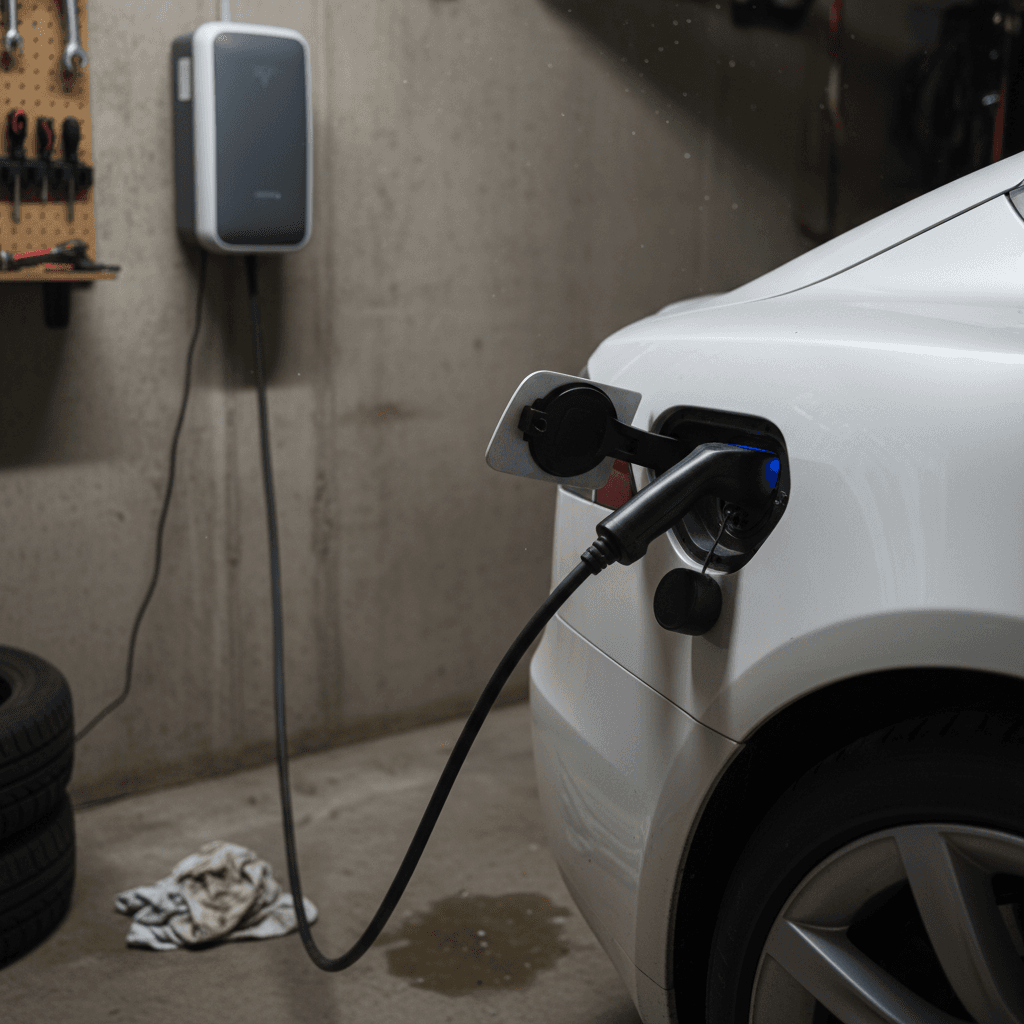
- Best case is a 240V Level 2 charger in your garage or driveway, adding 25–35 miles of range per hour for a Model S.
- Charging mostly at home is easier on the battery than constant DC fast charging.
- If you’re buying used, ask how the previous owner charged the car, "mostly at home" is exactly what you want to hear.
On‑the‑Road Charging
- The Tesla Supercharger network remains one of the Model S’s biggest advantages, especially for long‑distance driving.
- By 50,000 miles, most owners have a good sense of their favorite, reliable stations and how long typical stops take.
- Adding other networks with adapters is possible, but for a used‑car buyer the real value is that Superchargers just work with minimal fuss.
How Recharged helps here
Ready to find your next EV?
Browse VehiclesMaintenance, Repairs, and Running Costs by 50,000 Miles
Compared with a German luxury sedan, a Tesla Model S around 50,000 miles is often **cheaper to maintain**. There’s no engine oil, spark plugs, or multi‑speed transmission to service. Still, this is a heavy, high‑performance car, it eats **tires and suspension components** faster than an economy hatchback, and those parts aren’t cheap.
Typical Maintenance Touchpoints by ~50,000 Miles
What a careful owner is likely to have already done, or soon needs to do, on a Model S at this mileage.
| Component / Service | Typical interval | What to expect by 50k miles | Cost ballpark |
|---|---|---|---|
| Tire rotation & inspection | Every ~6,000–7,500 mi | 6–8 rotations; uneven wear if skipped | $50–$100 per visit |
| Tire replacement | 20,000–35,000 mi | Often 1 full set by 50k on 19–21" wheels | $1,200–$1,800 for 4 quality tires installed |
| Brake pads & rotors | Often 80,000+ mi | Light wear thanks to regen; usually original at 50k | Similar to other big luxury sedans if replaced |
| Cabin air filter | Every 2–3 years | At least one replacement; due again on older cars | $25–$150 depending on HEPA option |
| Brake fluid check | Every 4 years | May have had first check/flush around year 4 | $100–$200 |
| Suspension components | Varies with roads & wheels | Some early signs of wear on older, heavy‑wheel cars | Individual components in low hundreds plus labor |
Service intervals are mileage‑ and time‑based; a lightly‑driven car may hit the time limits first.
Pay attention to suspension and tires
Ownership cost advantage vs. gas luxury sedans
Ride Quality, Comfort, and Interior Wear
By 50,000 miles any luxury car starts to show how it’s been treated. The Model S is no exception. The good news: **seats, dashboards, and door panels generally hold up well** when owners avoid harsh cleaners and sun damage. The bad news: heavily used cars often show wear on **driver’s seat bolsters, steering‑wheel leather, and soft‑touch buttons** right around this mileage.
What a 50k‑Mile Model S Usually Feels Like
How to separate a well‑cared‑for car from a tired one in minutes.
Seats & Upholstery
- Look for sagging cushions, cracked bolsters, or shiny, worn leather on the driver’s seat.
- White interiors show dirt and blue‑jean transfer; black hides it but may show creasing.
Steering & Ride
- On a healthy car, the steering should feel precise with no clunks over bumps.
- Excessive harshness or rattles may signal tired dampers or worn bushings.
Noise & Rattles
- Electric powertrains are quiet, so cabin squeaks stand out more.
- Light trim noises are normal; persistent buzzes over rough pavement warrant a closer look.
Software, Tech, and Driver Assistance Over Time
One of the biggest advantages of a 50,000‑mile Model S versus an older luxury car is how **modern the software still feels**. Over‑the‑air updates have added features, refined interfaces, and improved energy management across the fleet. But not all tech ages equally, and not all Model S variants get the same hardware.
- Earlier cars may have older infotainment and Autopilot hardware; some have been upgraded, others not.
- Touchscreens can show yellowing or delamination on abused cars, an expensive fix if out of warranty.
- Check that all cameras, parking sensors, and driver‑assist systems are working smoothly on your test drive.
- Make sure you understand which driver‑assistance package you’re buying, basic Autopilot, Enhanced Autopilot, or Full Self‑Driving capability, and what transfers with the car.
Use the software to your advantage
Is a 50,000‑Mile Tesla Model S a Smart Used Buy?
If the battery is healthy and the suspension hasn’t been ignored, a 50,000‑mile Model S can be **one of the best values in the EV world**. You’re getting a quick, quiet, long‑range luxury sedan that’s already absorbed a steep chunk of depreciation, with a battery and drive unit still under warranty on many trims.
Upside of a 50k‑Mile Model S
- Major early bugs and recalls tend to be addressed by this point.
- Battery typically shows modest, predictable degradation.
- Plenty of real‑world owner experience and data to benchmark against.
- Price often undercuts a new mid‑range luxury sedan while offering more performance and tech.
Potential Downsides
- Basic warranty is ending or has just expired, repairs are more on you.
- Suspension wear and cosmetic issues vary wildly based on prior owner.
- Out‑of‑network repairs can be pricey if you’re not near a Tesla Service Center.
- Feature set (Autopilot hardware, infotainment) may lag the latest Model S unless upgraded.
How Recharged de‑risks a used Model S
50,000‑Mile Model S Inspection Checklist
What to Check Before You Buy a 50k‑Mile Model S
1. Verify displayed range vs. original spec
Fully charge the car (or check recent 90–100% charges) and compare displayed rated range to what the car offered when new. A loss in the **5–10%** range is typical; much more deserves extra scrutiny.
2. Review charging habits and locations
Ask how the car was used: mostly home charging or daily Supercharging? Road‑trip warrior or commuter? A car that primarily AC‑charged at home generally has a happier battery.
3. Inspect tires and alignment
Uneven wear, shoulder scrub, or mismatched tire brands can hint at poor alignment or suspension issues. Budget for a fresh set of quality tires if the current ones are near the wear bars.
4. Listen for suspension noise
On a test drive, go over speed bumps and rough pavement. Clunks, knocking, or wandering steering may point to worn control arms, links, or bushings, common items on older, heavier EVs.
5. Test all screens and controls
Check for laggy touch response, stuck pixels, or yellowing around the display edges. Make sure window switches, door handles, and steering‑wheel controls work smoothly.
6. Confirm warranty status and service history
Check the in‑car screen or Tesla account for remaining **battery and drive‑unit warranty** and review any past repairs. A clean history with regular service and software updates is ideal.
FAQ: Tesla Model S at 50,000 Miles
Frequently Asked Questions About a 50,000‑Mile Model S
A **Tesla Model S with 50,000 miles** sits at an inflection point: past the brand‑new honeymoon, not yet into true high‑mileage territory. If the battery checks out, the software is current, and the suspension hasn’t been neglected, it can deliver years of quiet, quick, low‑maintenance driving for far less than the cost of a comparable new luxury sedan. Take the time to inspect carefully, lean on objective battery data rather than guesses, and don’t be afraid of a few digits on the odometer, on the right Model S, 50k miles is just getting started.
If you’d like a second set of expert eyes, shopping through Recharged means every used EV comes with a **Recharged Score Report**, EV‑specialist guidance, and flexible options for financing, trade‑in, and nationwide delivery. That way, your 50,000‑mile Model S feels less like a gamble and more like a smart, informed decision.