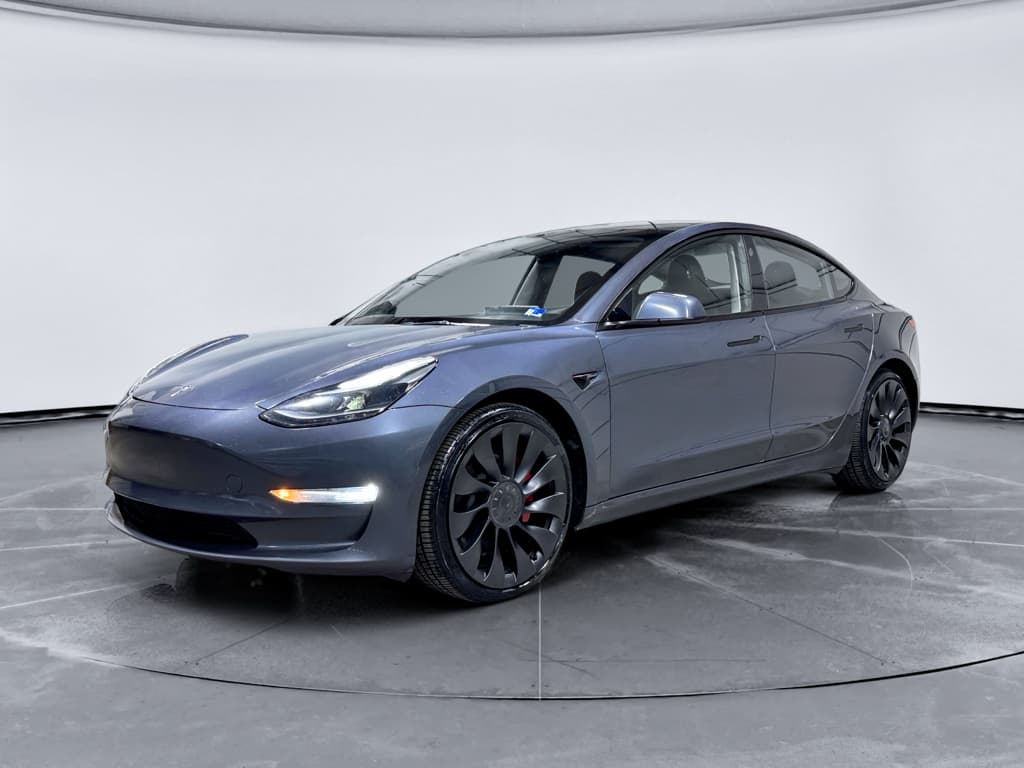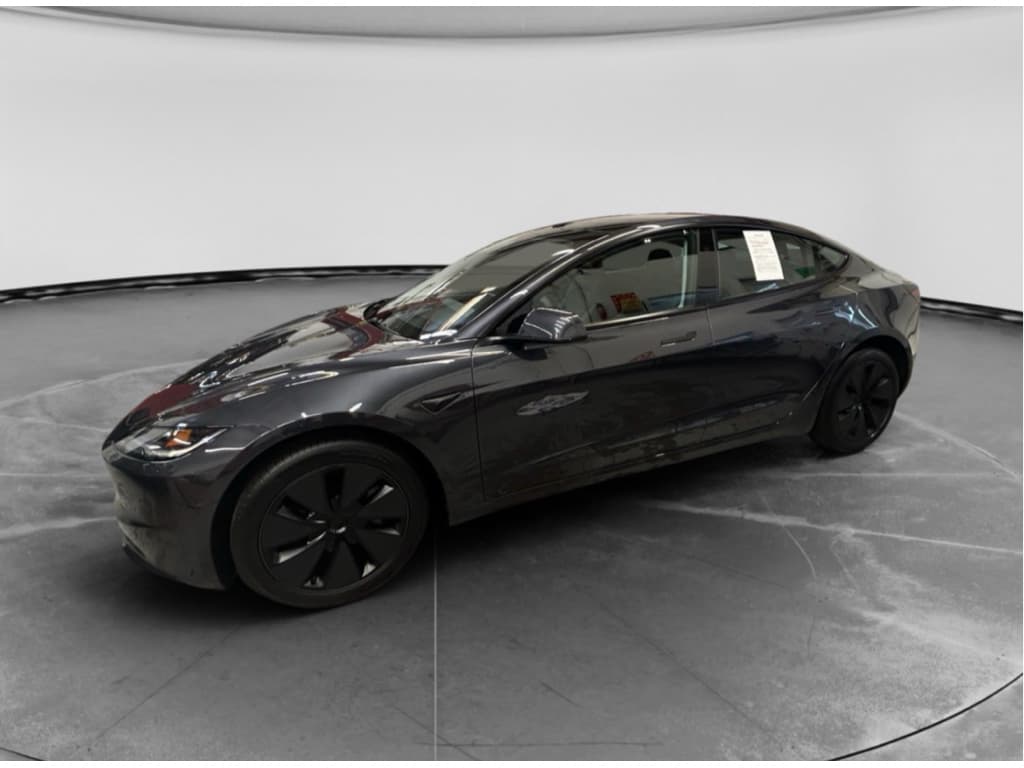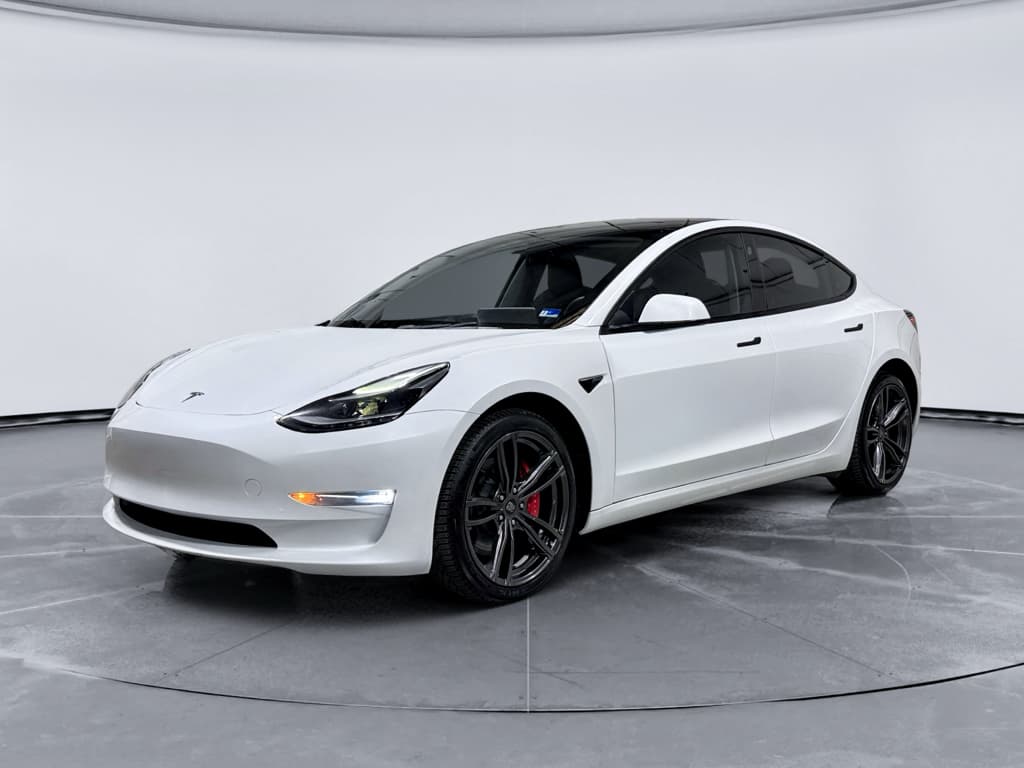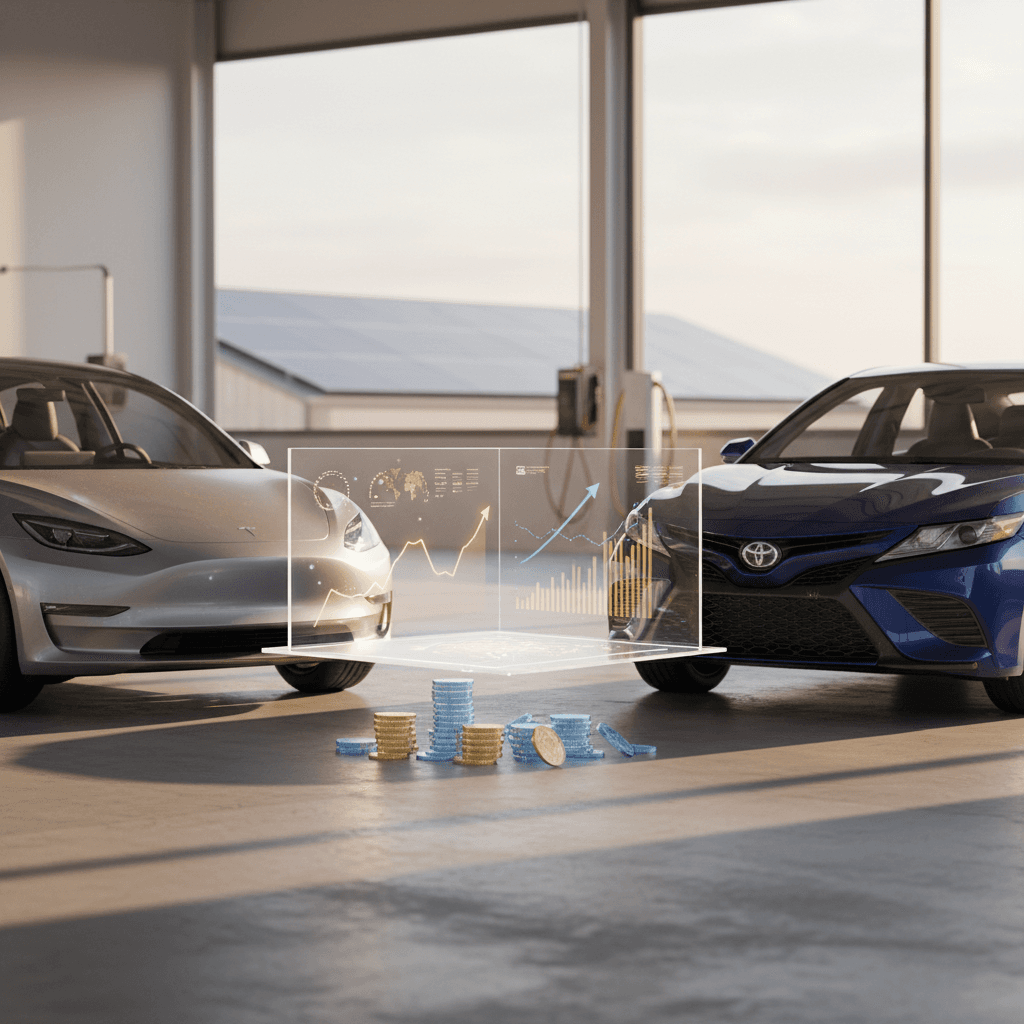
If you’re cross‑shopping a Tesla Model 3 against a Toyota Camry Hybrid, you’re not just choosing between vibes. You’re choosing between two very different fuel systems, maintenance profiles, and resale curves. The question isn’t “which is cooler,” it’s “which has the lower total cost of ownership for the way you actually drive?”
Reader’s Digest version
Why this comparison matters more than spec sheets
On paper, comparing a compact premium EV sedan to a mainstream hybrid family sedan looks odd. In reality, this is exactly how a lot of shoppers think today: “Do I buy one very good hybrid and stay in the gas world, or do I jump to my first EV?” Both the Model 3 and Camry Hybrid promise low running costs and high efficiency; they just take different roads to get there.
What the Tesla Model 3 offers
- All‑electric driving, no gasoline stops
- Access to Tesla’s Supercharger network plus growing public options
- Higher tech content: over‑the‑air updates, big touchscreen, advanced driver assistance
- Different maintenance profile (tires and brake fluid instead of oil and spark plugs)
What the Camry Hybrid offers
- No need to think about charging or range planning
- Excellent fuel economy with a familiar ownership experience
- Massive dealer network and a long track record for durability
- Lower entry price and easier comparison to other sedans
How to read this guide
Assumptions and baseline numbers
To compare total cost, we need a common set of assumptions. You can mentally tweak these for your own situation, but having a baseline keeps the Model 3 vs Camry Hybrid debate from turning into a shouting match at the dinner table.
- Time horizon: 5 years of ownership
- Annual mileage: 12,000 miles (close to the U.S. average)
- Location: typical U.S. driver, using national‑average fuel and electricity prices
- Financing: 10% down, 60‑month loan, 5.5% APR (we’ll focus on cash‑equivalent totals, not monthly payments)
- Trim levels: value‑oriented, not fully loaded tech toys
Key cost assumptions (national averages, early 2026)
Your local reality may differ
Purchase price, incentives, and financing
Let’s start with what you actually write the first check for. New prices move constantly, but as of model‑year 2024–2025, a sensible comparison looks like this:
Typical new purchase prices
Approximate starting prices for popular trims, excluding state‑level incentives and dealer markups.
| Model | Example trim | Approx. MSRP (new) | Notes |
|---|---|---|---|
| Tesla Model 3 RWD | Base/RWD | $40,000 | Price fluctuates; destination & fees vary by region |
| Toyota Camry Hybrid | LE or SE | $30,000 | 2024 Camry Hybrid LE starts just under $30k including destination |
Think of these as realistic ballpark MSRPs, not best‑case negotiated deals.
Right away, the Camry Hybrid undercuts the Tesla by roughly $10,000 on new sticker price. That gap matters; even stretched over five years of financing, it’s real money. But EV incentives and fuel savings claw back some of that difference.
How incentives tilt Model 3 vs Camry Hybrid pricing
Federal rules change often, always confirm current eligibility before you sign.
Federal EV tax credit
Depending on current Treasury guidance and where the Model 3 is built, you may qualify for up to a $7,500 federal EV tax credit. Not every trim or buyer will qualify, and rules continue to evolve.
Hybrids like the Camry generally do not qualify for federal credits anymore, though some plug‑in hybrids do.
State and local incentives
Many states, utilities, and cities offer EV incentives: purchase rebates, reduced registration fees, or home charger rebates. Hybrids might get HOV access or modest local perks, but the big money usually flows to full EVs.
These can easily add or subtract $1,000–$2,000 from your real net price.
Think in “effective” price, not MSRP
Fuel vs electricity: real‑world energy costs
This is where the EV is supposed to shine. But because the Camry Hybrid is so efficient, the Tesla’s advantage is smaller than the memes would have you believe.
Energy use and cost per mile
Using national‑average prices and typical efficiency for each vehicle.
| Model | Energy use | Energy price assumption | Cost per mile (energy only) |
|---|---|---|---|
| Tesla Model 3 RWD | ~25 kWh / 100 miles | $0.18 / kWh at home | $0.045 / mile |
| Toyota Camry Hybrid | ~52 miles / gallon | $3.00 / gallon gas | $0.058 / mile |
If your personal gas or electricity rates differ a lot, run these with your own numbers.
On home charging, a Model 3 comes out a little cheaper per mile than a Camry Hybrid, even though the Toyota posts heroic MPG. The spread here, about 1.3 cents per mile, adds up with mileage.
5‑year energy costs at 12,000 miles/year
Public DC fast charging changes the math
Maintenance, repairs, and battery anxiety
EV fans love to say “no oil changes,” as if that were the entire story. It isn’t, but it’s a good place to start. The Model 3 and Camry Hybrid save money in different places.
Tesla Model 3 maintenance profile
- No engine oil, spark plugs, timing belt, or transmission fluid service
- Fewer moving parts, but heavier car and instant torque means faster tire wear
- Brake pads typically last a long time thanks to regenerative braking
- Recommended items: cabin air filters, brake fluid checks, occasional coolant service for the battery system
For a typical driver, day‑to‑day maintenance costs are relatively low, but out‑of‑warranty repairs (screens, drive units, suspension bits) can be expensive if they crop up.
Toyota Camry Hybrid maintenance profile
- Regular oil changes, engine air filters, spark plugs, coolant, transmission fluid over time
- Toyota’s hybrid system is famously robust; taxi fleets have tortured Priuses for decades
- Brake wear is reduced vs a non‑hybrid thanks to some regeneration
- Parts and labor are widely available at independent shops
Over five years, routine service adds up, but big surprise failures are relatively rare if you maintain it on schedule.
Typical 5‑year maintenance spend
The elephant in the room: battery health

Insurance, taxes, and fees
You don’t drive spec sheets; you drive registration stickers and insurance cards. Both the Model 3 and Camry Hybrid are among the cheaper vehicles to run in their respective categories, but EVs and hybrids are treated differently by insurers and tax offices.
Where the hidden costs live
These numbers vary wildly by state and driver profile, treat them as trends, not promises.
Insurance premiums
The Model 3 is often more expensive to insure than a Camry Hybrid, thanks to higher parts costs and more complex electronics. Think in the ballpark of $150–$300 more per year for many drivers.
Registration and taxes
Some states charge extra registration fees on EVs to make up for lost gas taxes. Others discount registration for hybrids or high‑MPG cars. Over 5 years, this can swing total cost by several hundred dollars either way.
Local policy wildcards
Urban drivers may pay less for EVs in congestion zones or enjoy cheaper parking. In a rural county with no local EV perks, the Camry Hybrid might be the cheaper bureaucratic date.
Call your insurer before you fall in love
Depreciation and resale value
This is where the story gets spicy. Hybrids like the Camry have historically aged like oak barrels: slowly and gracefully. EVs, including the Model 3, have been more like smartphones, great early, fast‑moving tech, and sensitive to price cuts on new models.
Camry Hybrid depreciation
- Strong reputation for reliability and low running costs
- Fleet and retail demand keeps used prices buoyant
- After 5 years / 60,000 miles, many Camry Hybrids still fetch 50–60% of original MSRP depending on market conditions
This is the car your accountant would buy: boringly predictable, easy to sell, and easy to value.
Model 3 depreciation
- Early Model 3s held value shockingly well, then took a hit when new‑car prices dropped and more competition arrived
- Battery and software condition matter more than model year alone
- After 5 years / 60,000 miles, recent resale data often shows values around 45–55% of original MSRP, but swings are larger than with the Camry
This is the car your tech‑savvy friend buys: big upside in enjoyment, a little more volatility on the balance sheet.
Why used EV inspections matter more
5‑year Tesla Model 3 vs Camry Hybrid cost comparison
Let’s put it all in one place. Using the assumptions above, 12,000 miles per year, mostly home charging for the Tesla, national‑average prices, and no catastrophic repair events, here’s a directional 5‑year cost comparison for new purchases:
Illustrative 5‑year total cost of ownership (new, 12,000 mi/year)
Directionally compares a new Tesla Model 3 RWD vs a new Toyota Camry Hybrid LE/SE over 5 years. All numbers rounded.
| Cost element (5 yrs) | Tesla Model 3 RWD* | Toyota Camry Hybrid |
|---|---|---|
| Effective purchase price after incentives | $31,000 (assumes $9k net incentives) | $30,000 |
| Financing interest (approx.) | $4,000 | $3,500 |
| Energy (fuel/electricity) | $2,700 | $3,480 |
| Maintenance & minor repairs | $1,800 | $2,200 |
| Insurance (5‑year total) | $7,500 | $6,000 |
| Registration/taxes/fees | $2,000 | $1,800 |
| Estimated 5‑yr depreciation | $17,000 | $15,000 |
| Estimated 5‑yr total cost | ~$66,000 | ~$61,000 |
| Cost per mile (60,000 mi) | ~$1.10 | ~$1.02 |
Your real‑world totals will vary; this is a framework, not a quote.
What this table is really saying
The used market angle, and where Recharged fits in
Everything changes when you shop used. Depreciation has already eaten its slice of the cake, and now you’re left deciding whether you want a lightly seasoned Camry Hybrid or a Model 3 that’s already taken its first‑owner hit.
Used Tesla Model 3 vs used Camry Hybrid: cost dynamics
This is where smart shoppers can tilt the economics in their favor.
Used Tesla Model 3
A 3–5‑year‑old Model 3 can be dramatically cheaper than new, sometimes undercutting a new Camry Hybrid while still offering the EV driving experience.
The catch is uncertainty: you need to know the battery’s health, fast‑charging history, and whether software and safety systems are working as they should.
Used Toyota Camry Hybrid
A 3–5‑year‑old Camry Hybrid is the poster child for dependable used metal. You save thousands off MSRP, yet maintenance and fuel costs stay low and predictable.
There’s still value in a pre‑purchase inspection, but the risk of a single huge repair bill is generally lower than with an out‑of‑warranty EV battery pack.
How Recharged de‑risks used EV ownership
Ready to find your next EV?
Browse VehiclesBecause depreciation is already baked in, a well‑priced used Model 3 with a healthy battery can undercut the 5‑year cost of a new Camry Hybrid, especially if you finance smartly and mostly charge at home. That’s the sweet spot Recharged is designed to help you find, whether you’re trading in, getting an instant offer, or having us consign your current car while you step into your first EV.
Who should choose which: quick recommendations
Tesla Model 3 vs Toyota Camry Hybrid: which fits you?
Choose a Tesla Model 3 if…
You can reliably charge at home or work, drive at least 12,000–15,000 miles per year, and can access strong EV incentives. You value the EV driving experience, tech, and Supercharger access as much as pure dollars and cents.
Choose a Camry Hybrid if…
You want low hassle, nationwide serviceability, and minimal lifestyle change. You drive average or below‑average miles, live where electricity is expensive or unreliable, or simply want the most predictable 5‑year cost with no charging learning curve.
Consider a used Model 3 from Recharged if…
You like the Tesla idea but not the new‑car price. You want independent battery‑health verification and expert EV guidance to keep the long‑term risk manageable.
Consider waiting or cross‑shopping other used EVs if…
You’re flexible on brand and want to maximize EV value. The used market is full of compelling alternatives, Bolt, Ioniq, Leaf, Mach‑E, that Recharged can help you compare using a consistent battery‑health and pricing framework.
Run your own numbers in 10 minutes
FAQ: Tesla Model 3 vs Toyota Camry Hybrid total cost
Frequently asked questions
When you strip away the hype, the Tesla Model 3 and Toyota Camry Hybrid are two answers to the same question: how do I drive a lot for not a lot of money? The Camry Hybrid is the safe, fiscally conservative choice; the Model 3 is the higher‑tech, higher‑variance play that can absolutely make financial sense in the right conditions, especially used, with the right data. If you’re ready to explore that path, starting with a battery‑verified used EV from Recharged is one of the smartest ways to keep both your total cost of ownership and your blood pressure in check.