If you’re eyeing a used Tesla Model 3, what you really want is a brutally honest Tesla Model 3 owner review after 1 year. Not a showroom spin, but what life with the car actually looks like once the new‑car smell wears off: range, charging, comfort, software quirks, and real money out of your pocket.
How we built this 1‑year review
Why this 1‑year Tesla Model 3 review matters
Unlike many long‑term reviews that still feel like road tests, a true 1‑year ownership review focuses on what starts to show up only after thousands of miles: battery behavior, daily charging routines, small rattles, tire wear, insurance surprises, and how often you’re actually using Autopilot or Full Self‑Driving (FSD). That’s exactly the window most used‑Tesla shoppers are shopping in right now.
- Most 1‑year‑old Model 3s have 8,000–18,000 miles on the odometer.
- Battery degradation is measurable but still modest in year one.
- Warranty coverage is essentially intact, which is a huge plus for used buyers.
- Software and UI have usually seen multiple updates, so the car doesn’t feel "old" in tech terms.
We’ll walk through year‑one ownership from a typical U.S. commuter’s perspective, then translate that into clear advice if you’re buying a used Model 3 through a private seller, dealer, or a curated marketplace like Recharged.
The typical 1‑year Tesla Model 3 owner profile
Who this 1‑year review is really about
Most owners fall into one of these camps after 12 months
Daily commuter
Drives 30–60 miles per weekday, mostly suburban/highway.
- Home Level 2 charging.
- Supercharger use mainly on trips.
- 8,000–15,000 miles in year one.
Road-trip curious
Takes a few long drives per year.
- Has tested the Supercharger network.
- Uses Tesla navigation for charger planning.
- May pay more attention to range and degradation.
Urban apartment dweller
Limited home charging, relies on public options.
- Higher Supercharger usage.
- More parking wear (curbed wheels, dings).
- Range comfort depends heavily on local infrastructure.
Used‑buyer tip
Real‑world range and battery health after 1 year
What most Model 3 owners see by the end of year one
Owner data across tens of thousands of Teslas shows a consistent pattern: a noticeable but not scary 5–8% range drop in the first year, followed by much slower degradation. A big chunk of that early drop is the battery‑management system learning how to estimate your pack more accurately, not the cells "dying."
In real terms, that means a Model 3 Long Range that started at 333 miles of EPA‑rated range might show 305–315 miles on a full charge after 12 months. Standard Range/LFP models typically lose a bit less early on and are happier being charged to 100% regularly.
Don’t judge by one number
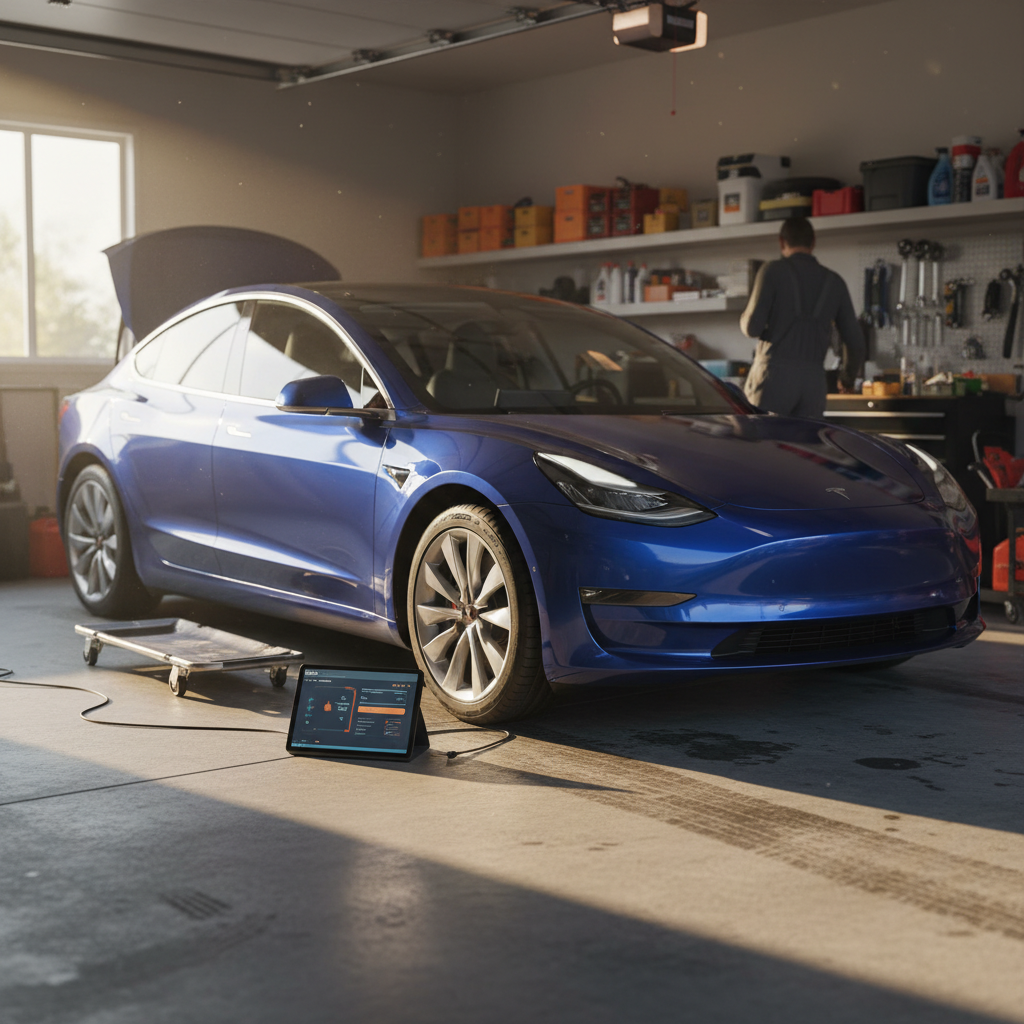
How to quickly check battery health on a 1‑year‑old Model 3
- Charge the car to 100% once (on a warm day) and note the rated miles displayed.
- Compare that number to the original EPA rating for that trim, a ~5–8% difference is normal in year one.
- Use the built‑in energy app or a third‑party logging tool to look at your long‑term efficiency (Wh/mi).
- If you’re buying used, ask for recent photos or a screen recording of the charge screen at 90–100%.
Where Recharged adds value
Charging habits: home vs. Supercharging
By the end of year one, most owners have settled into a predictable charging rhythm. That rhythm has a major influence on convenience, cost, and long‑term battery health, and it’s one of the biggest differences between a "happy" and a frustrated Tesla owner.
Home or workplace Level 2 (ideal case)
- Car plugs in most nights, charges to 70–90%.
- Owner rarely thinks about range day‑to‑day.
- Electricity cost is often equivalent to paying $1–$1.50 per gallon of gas, depending on rates.
- Battery sees gentler, slower charging that’s easier on cell longevity.
Heavy Supercharger reliance
- Common for apartment dwellers or rideshare drivers.
- Charging is fast and convenient but more expensive per kWh.
- Frequent high‑power charging keeps the pack hotter, which can accelerate wear over many years.
- Owner spends more time planning around charger availability and pricing.
Owner habit that pays off long‑term
Ride comfort, noise, and interior wear
The Tesla Model 3 has evolved since its early, harsher‑riding years. The latest "Highland" refresh brought revised bushings, subframe mounting, suspension tuning, and 360‑degree acoustic glass to tame wind and road noise. Earlier cars are a bit louder and firmer, but even they tend to feel more planted and responsive than many compact sedans.
What most 1‑year owners report about comfort
Highland vs. earlier Model 3s
Cabin noise
- Highland (2024+): Noticeably quieter thanks to extra sound insulation, revised seals, and acoustic glass all around.
- Pre‑refresh: Some wind noise at highway speeds, especially on older tires.
Ride & seats
- Suspension: Newer cars add softer‑feeling tires and retuned dampers for a more premium ride.
- Seats: Perforated and better shaped in newer cars; earlier seats can feel firm on long trips.
Interior wear after one year is usually minimal: the synthetic leather holds up well, and the minimalist cabin doesn’t have a lot of buttons to fail. The most common signs of use are glossy patches on soft‑touch surfaces, light seat creasing, and wheel rash from tight city parking.
Known early‑life complaints
Software, Autopilot, and FSD after a year
Tesla’s software story is a big reason many owners say they’d struggle to go back to a "normal" car. Over‑the‑air updates in year one can change everything from UI layout and energy graphs to Autopilot behavior and entertainment apps, sometimes for better, occasionally for worse, depending on your preferences.
- Autopilot (standard): Used heavily for highway commuting. Most 1‑year owners trust it for lane‑keeping and traffic‑aware cruise but still babysit lane changes and cut‑ins.
- Enhanced Autopilot/FSD: Some owners lean hard on advanced driver‑assist features for long road trips and dense traffic. Others feel the price premium isn’t worth it and stick with basic Autopilot.
- UI changes: Tesla routinely moves controls around the main screen. Weather, new features, and regulatory changes can all drive updates, which means a 1‑year‑old car may feel different than it did on delivery.
A plus for used‑Tesla shoppers
True ownership costs in year one
Year one is when the cost picture of a Tesla Model 3 really comes into focus. You avoid oil changes and most traditional maintenance, but you pick up higher insurance and the need to think more carefully about tires and alignment.
Typical year‑one Tesla Model 3 costs (U.S. owner)
Approximate ranges for a mainstream Model 3 driver in the U.S. Your numbers will vary by state, mileage, and driving style.
| Category | What to expect in year one | Typical cost range |
|---|---|---|
| Electricity | 10,000–15,000 miles, mix of home and some Supercharging. | $400–$800 |
| Insurance | Model 3 often insures higher than a comparable gas sedan. | $2,800–$3,500 per year for many drivers |
| Tires | Most sets last 25,000–40,000 miles; minimal impact in year one unless you drive heavily. | $0–$1,000 (rotation vs. full replacement) |
| Maintenance | Tire rotation, wipers, maybe a cabin filter. | $100–$250 |
| Software add‑ons | FSD subscription or premium connectivity if you choose to pay. | $0–$2,400 (optional) |
Use this as a directional guide, not a quote.
Where EV savings start to show
Issues and annoyances that show up in year one
No car is perfect, and by the end of year one, most Model 3 owners can rattle off at least a few quirks. The key is knowing which ones are minor annoyances, and which should give you pause as a used‑car shopper.
Common 1‑year Tesla Model 3 complaints
What owners actually talk about
Fit & finish nitpicks
- Slight misalignment of panels or trunk.
- Wind noise from a seal that needs adjustment.
- Minor interior squeaks over rough roads.
Tires wear faster than expected
- High torque + heavy curb weight chew through tires faster than many compact sedans.
- Skipping rotations can show up quickly on the edges.
Service and recall experiences
- Service is done at Tesla centers or mobile techs, not local shops.
- Occasional recalls require service‑center visits rather than over‑the‑air fixes.
Safety and recall check for used buyers
Checklist: Buying a used Tesla Model 3 around 1 year old
If you’re shopping a 6–18‑month‑old Model 3, you’re trying to capture the best of both worlds: major savings off MSRP while staying squarely inside the battery and drivetrain warranties. Here’s what to examine closely.
1‑year‑old Tesla Model 3 inspection checklist
1. Verify build, trim, and options
Confirm exact trim (Standard Range/LFP, Long Range, Performance), drive configuration, and whether the car has options like upgraded wheels or Enhanced Autopilot/FSD. Features affect both value and efficiency.
2. Check battery health and charging history
Look at current full‑charge range, how often the car was Supercharged, and whether it routinely charged to 100%. Aim for modest degradation and a mix of home charging when possible.
3. Inspect tires, wheels, and alignment
Uneven wear, inner‑edge bald spots, or heavy curb rash can signal hard use or missed rotations. Budget for a new set if tread is already low around 15,000 miles.
4. Drive over rough roads and at highway speed
Listen for rattles, suspension clunks, and wind noise. Try a few different surfaces; some issues only show up at certain speeds or over expansion joints.
5. Test every software feature
Pair your phone, test Bluetooth, run navigation, try Autopilot on a safe stretch of road, and sample the cameras and parking sensors. Make sure all cameras are clear and the steering wheel doesn’t vibrate excessively under lane‑keeping.
6. Confirm warranty status and recall completion
Ask for service records, check recall status, and confirm remaining battery and drivetrain warranty in the Tesla app or with documentation.
Bring documentation home
How Recharged evaluates used Tesla Model 3s
Buying a used EV can feel opaque if you’re used to listening for misfires and checking oil. With a Tesla Model 3, the battery, charging history, and software matter as much as tires and paint. That’s where purpose‑built EV diagnostics help.
Inside a Recharged Tesla Model 3 evaluation
What’s behind the Recharged Score you see on each listing
Battery health scan
We run an in‑depth scan of pack capacity, voltage balance, and thermal performance to estimate remaining life beyond the simple on‑screen range number.
Charging & usage profile
Where possible, we analyze how the car was charged (home vs. fast charging), typical state of charge, and average energy use to flag hard usage patterns.
Mechanical & cosmetic inspection
Specialists inspect tires, brakes, suspension, glass, bodywork, and interior wear, catching issues that might turn into rattles, leaks, or unexpected costs later.
Every Tesla listed on Recharged comes with a transparent Recharged Score report, fair‑market pricing, and optional financing, trade‑in, and nationwide delivery. If you’re near Richmond, VA, you can also see select vehicles in person at our Experience Center, but the entire process can be fully digital if you prefer.
FAQ: Tesla Model 3 owner review after 1 year
Common questions about 1‑year‑old Tesla Model 3s
Is a 1‑year‑old Tesla Model 3 worth it?
For many buyers, a 1‑year‑old Tesla Model 3 hits the EV sweet spot. You sidestep the steepest new‑car depreciation, land well inside the battery and drivetrain warranty window, and still enjoy modern software, range, and charging speeds that feel thoroughly up to date. The ownership reality after a year is mostly positive: low day‑to‑day running costs, strong performance, and a driving experience that still feels future‑leaning compared with many new gas sedans.
The trade‑offs are manageable if you go in with open eyes: potentially higher insurance, faster tire wear, and the occasional software or service annoyance. Focus your search on cars with clean charging histories, modest degradation, and solid inspection reports. And if you’d rather not decode battery data and service records yourself, browsing Recharged’s curated Tesla Model 3 inventory, each with a Recharged Score battery health report, fair market pricing, financing, trade‑in options, and nationwide delivery, can make that first year of ownership feel a lot more predictable.