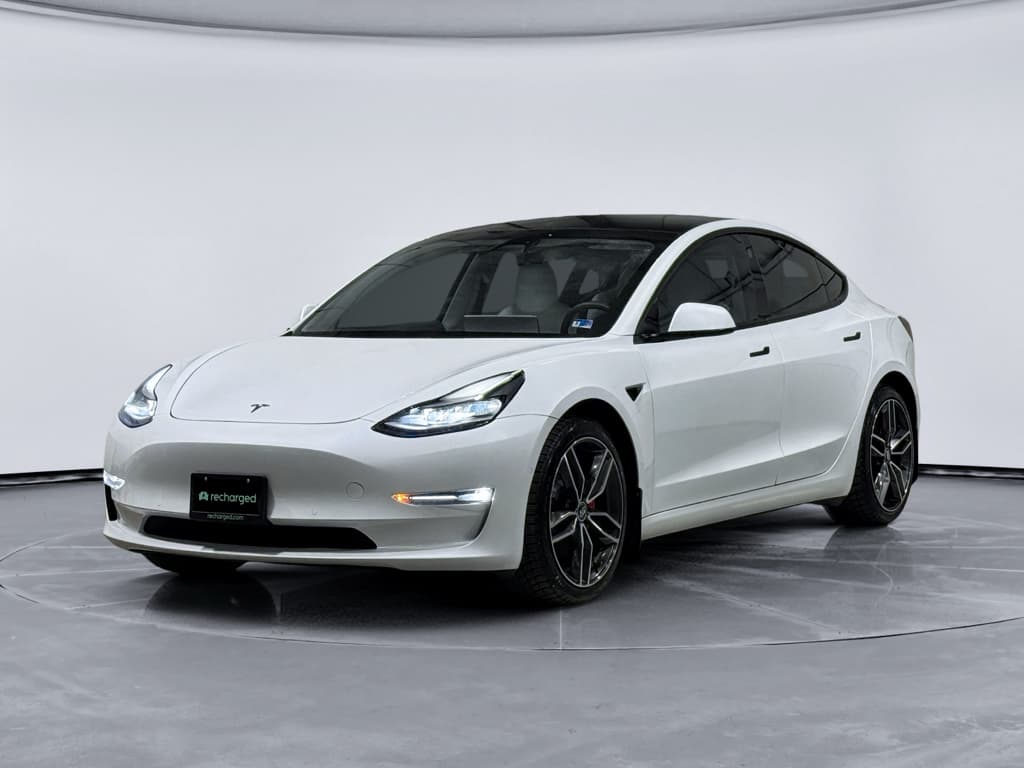
If you’re eyeing a Tesla Model 3 in 2026, you’ve probably heard that EVs are cheaper to maintain than gas cars. That’s true, but it doesn’t mean maintenance is free. Understanding real Tesla Model 3 maintenance costs in 2026 will help you set a realistic budget, especially if you’re looking at a used Model 3 from a marketplace like Recharged.
Quick answer
Why Tesla Model 3 maintenance costs look different from gas cars
Traditional maintenance schedules are built around oil changes, transmission fluid, spark plugs, belts, and dozens of moving parts in a gas engine. A Model 3 simply doesn’t have most of that hardware. There’s no engine oil to change, no transmission service, and far fewer wear items in the powertrain. That’s why broad industry studies now show many EVs landing around 3–6 cents per mile in maintenance and repair, roughly one‑third to one‑half less than similar gas cars over time.
- No oil changes or transmission services
- Far fewer moving parts in the drivetrain
- Regenerative braking reduces brake wear
- Software can diagnose issues before they become failures
- Over‑the‑air updates can fix minor bugs without a shop visit
Think in miles, not months
How much does a Tesla Model 3 cost to maintain in 2026?
Typical Tesla Model 3 Maintenance Costs in 2026
Tesla’s own published guidance pegs Model 3 annual maintenance in the $250–$500 range for a relatively new car driven normal U.S. mileage. Independent cost‑to‑own tools (like Edmunds) often land in a similar ballpark, around $200–$350 per year on a 5‑year, 15,000‑mile‑per‑year assumption. Real owners who rotate tires, replace cabin filters, and stay ahead of alignment issues typically report all‑in, routine maintenance in the $500–$650 per year band once you blend in tires over several years.
Tires are the wild card
Tesla Model 3 maintenance items and schedule
Tesla doesn’t publish a traditional “every 15,000 miles do X” maintenance booklet anymore. Instead, the Model 3 touchscreen and app tell you when specific items are due. That said, there’s a predictable rhythm to what you’ll see over the first 5–6 years.
Core Tesla Model 3 Maintenance Items (Typical Intervals)
These are the routine jobs most Model 3 owners will see in the first 5–6 years. Costs are typical 2026 U.S. ballpark numbers, not Tesla quotes.
| Item | Typical Interval | Estimated Cost (2026) | Notes |
|---|---|---|---|
| Tire rotation | Every 6,250–7,500 miles | $80–$140 | Many shops include alignment check; DIY possible if you have a jack and stands. |
| Wheel alignment | As needed; inspect yearly or after pothole hits | $150–$250 | Poor alignment will chew through expensive tires quickly. |
| Cabin air filter | Every 2 years (Model 3) | $120–$200 | Can be DIY with patience; parts are inexpensive, labor is most of the bill. |
| Wiper blades | 1–2 years | $40–$80 | More often in harsh climates. |
| Brake fluid check | Every 2 years, replace only if needed | $150–$250 | EVs don’t use brakes as hard, but fluid can still absorb moisture over time. |
| A/C service (desiccant bag, inspection) | ~6 years | $200–$400 | Less frequent but shows up on older cars. |
| Brake caliper cleaning/lube (road salt regions) | Every 12 months | $150–$250 | Important if you live where salt is used in winter. Prevents sticking calipers. |
Actual pricing varies by region and whether you use Tesla Service or an independent EV‑savvy shop.
What about battery and drive unit service?
Big-ticket items: tires, brakes, and random repairs
Once you get past cabin filters and wiper blades, the real money in Model 3 maintenance is in tires, brakes, and the occasional out‑of‑warranty repair. This is where your driving style, climate, and wheel selection make a noticeable difference.
Where Tesla Model 3 Owners Spend the Most on Maintenance
Plan for these categories, and you’ll avoid most surprises.
Tires
Most Model 3s run staggered or low‑profile performance tires, especially on 19" or 20" wheels. Expect:
- $900–$1,400 for a quality set installed
- 25,000–40,000 miles life with careful driving
- Faster wear on performance trims and heavy highway use
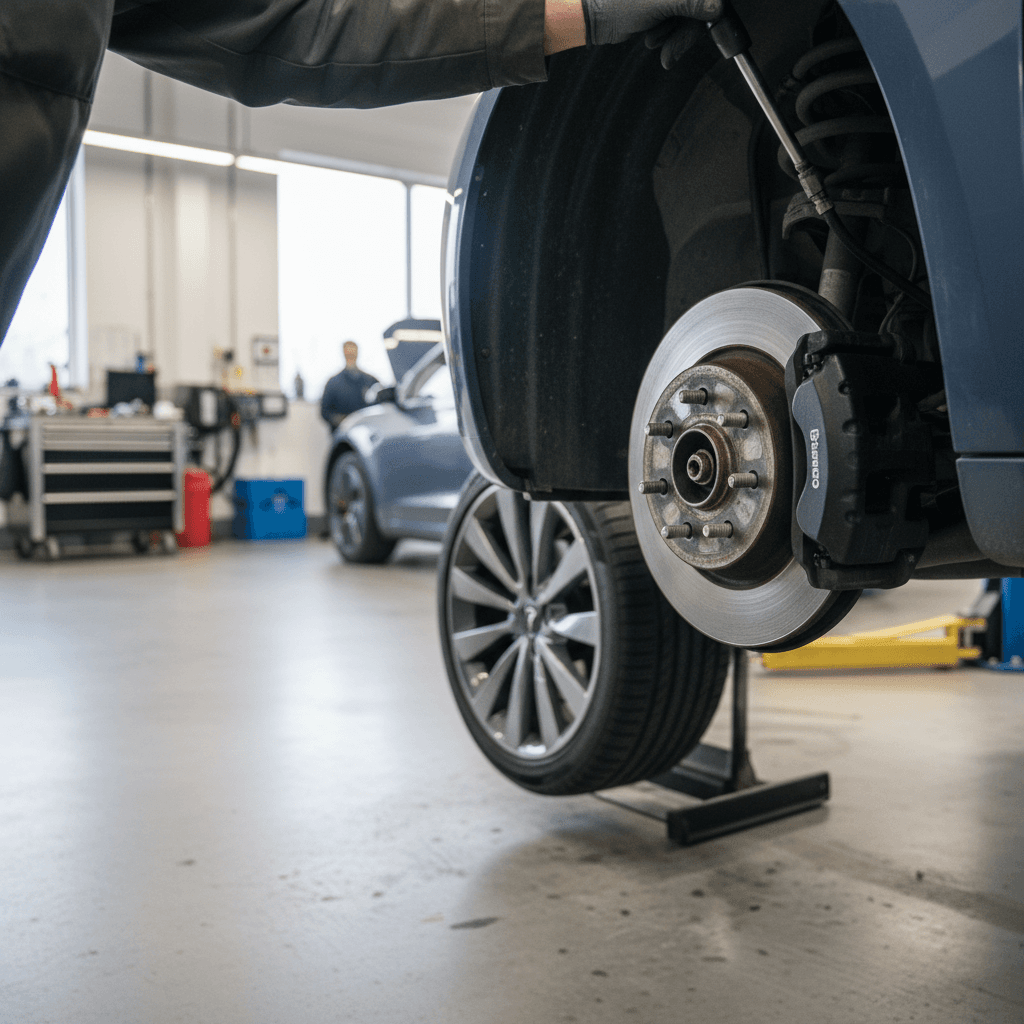
Brakes
Regenerative braking lets pads and rotors last a long time, often 80,000+ miles. But:
- Salt states may need earlier rotor work
- Sticking calipers can appear on rarely driven cars
- Budget $400–$900 per axle when you finally do brakes
Repairs & wear items
Door handles, trunk struts, sensors, and 12‑V (or low‑voltage) batteries can fail over time.
- Many small jobs land in the $200–$600 range
- Collision repairs can be pricey due to aluminum and sensors
Don’t ignore weird noises or warning lights
5‑year Tesla Model 3 maintenance cost breakdown
Let’s put some realistic numbers to this. Assume you buy a 2022–2024 Tesla Model 3 in 2026, drive 12,000–15,000 miles per year, and keep up with basic care using a mix of Tesla Service and a trusted EV‑savvy shop.
Sample 5‑Year Tesla Model 3 Maintenance Plan (Starting in 2026)
Approximate, assuming 60,000–75,000 miles over 5 years in mixed driving.
| Year | What You’ll Likely Do | Estimated Annual Spend |
|---|---|---|
| Year 1 | 1 tire rotation + alignment check, maybe wiper blades | $150–$250 |
| Year 2 | Tire rotation, cabin filter, brake fluid check, wipers | $250–$400 |
| Year 3 | Tire rotation, alignment, possible minor repair (sensor, trim) | $250–$500 |
| Year 4 | New set of tires, alignment, cabin filter, wipers | $1,100–$1,600 |
| Year 5 | Tire rotation, brake inspection, possible minor repair | $250–$500 |
This is a planning tool, not a quote. Real costs depend on your car, location, and how you drive.
Add that up and you land in the neighborhood of $3,000–$3,500 over 5 years, or roughly $600–$700 per year once you blend in that big tire year. That’s comfortably in line with both Tesla’s own estimates and real‑world cost‑to‑own data.
Maintenance costs: new vs used Tesla Model 3
Buying new in 2026
- Years 1–3 are usually very cheap: mostly tire rotations and alignment checks.
- Basic defects are handled under the new vehicle warranty.
- You’ll hit things like cabin filters and brake‑fluid checks on the schedule, but big surprises are rare.
Budgeting $300–$500 per year for routine service (plus a tire set every 3–4 years) is typically sufficient on a new Model 3.
Buying used in 2026
- You may be stepping into a car that’s just about due for tires, cabin filters, and A/C service.
- Some or all of the original battery and drive‑unit warranty may still be left, but bumper‑to‑bumper coverage could be over.
- Wear items (control arms, door handles, interior bits) are more likely to appear.
For a 4‑ to 7‑year‑old Model 3, planning $600–$800 per year in maintenance and small repairs is more realistic, especially if you’re catching up on deferred service from a previous owner.
How Recharged helps with used Model 3 costs
How Tesla Model 3 maintenance compares to a gas sedan
If you’re cross‑shopping a Model 3 with a popular gas sedan, the question isn’t just “How much will I spend?” It’s “How much will I save?” Over the last few years, large studies have consistently found that EV owners spend roughly half as much on routine maintenance and repairs as gas owners, thanks to fewer moving parts and no oil changes.
Typical Annual Maintenance Costs: Tesla Model 3 vs Gas Sedan (2026 Planning Numbers)
Ballpark numbers for a mainstream gas sedan versus a Tesla Model 3, driven ~15,000 miles per year.
| Vehicle Type | Routine Maintenance | Repairs & Wear Items | Estimated Annual Total |
|---|---|---|---|
| Mainstream gas sedan | $600–$800 | $300–$600 | $900–$1,400 |
| Tesla Model 3 | $300–$500 | $200–$300 (averaged over several years) | $500–$800 |
Fuel savings are a separate (and often bigger) win for EVs, this table focuses just on maintenance and repairs.
The longer you own it, the more it pays off
7 ways to keep your Model 3 maintenance costs low
Practical tips to minimize Tesla Model 3 maintenance costs
1. Rotate tires on schedule
Set a reminder every 6,250–7,500 miles. Keeping wear even can easily give you an extra 5,000–10,000 miles out of a set of tires, which adds up fast on a Model 3.
2. Watch alignment after potholes
If the steering wheel isn’t straight or the car drifts, get an alignment. Spending $150–$250 now is cheaper than burning through $1,200 worth of rubber later.
3. Replace cabin filters before they smell
A clogged filter makes your HVAC work harder and can create funky odors. It’s a modest cost, and many owners choose to DIY with parts ordered online.
4. Don’t ignore brake service in salty climates
Even if you barely touch the brake pedal thanks to regen, salt can seize calipers. Have them cleaned and lubricated yearly if you live where roads are salted.
5. Use the app for early warnings
The Tesla app and touchscreen will flag low tire pressure, service alerts, and software‑tracked issues. Taking care of problems when they’re small is almost always cheaper.
6. Consider an EV‑savvy independent shop
Outside warranty, a good independent shop that understands Teslas can often save you money on tires, suspension, and basic repairs without sacrificing quality.
7. Buy the right car up front
A clean history, healthy battery, and good tire life at purchase time do more to control long‑term ownership costs than any hack. That’s where a verified report from Recharged helps.
When a Recharged used Model 3 makes financial sense
In 2026, the used EV market has finally grown up. You can choose from early‑build Model 3s with six‑figure odometer readings or nearly new cars coming off lease. The trick is knowing which cars still have low, predictable maintenance ahead of them, and which ones are about to need tires, brakes, or more serious work.
How Recharged Helps You Predict Model 3 Maintenance
More transparency means fewer surprise bills later.
Verified battery health
Every Recharged vehicle comes with a Recharged Score Report that includes a detailed look at battery health, so you’re not guessing about range or long‑term performance.
Clear pricing & inspection
Fair market pricing, plus a deep inspection, makes it easier to see what’s due soon, like tires or cabin filters, so you can plan your first year of ownership.
Digital buying & delivery
Shop, finance, and arrange nationwide delivery online, or visit the Recharged Experience Center in Richmond, VA if you prefer to see a car in person.
Ready to find your next EV?
Browse VehiclesLeverage expert guidance
Tesla Model 3 maintenance FAQ (2026)
Frequently asked questions about Tesla Model 3 maintenance in 2026
Bottom line: Is a Tesla Model 3 cheap to maintain?
If you’re coming out of a gas sedan, a well‑chosen Tesla Model 3 in 2026 will almost certainly be cheaper to maintain over the long haul. There’s less hardware to service, fewer fluids to change, and the car itself is constantly monitoring its own health. You still need to budget for tires, alignment, cabin filters, and the odd repair, but if you plan on $500–$650 per year on average, you’ll be in the right neighborhood.
Where you really win is predictability. With good records and a clear picture of battery health, you can see most big costs coming. That’s exactly what Recharged was built for: pairing you with a used Model 3 whose maintenance future is as transparent as its digital history. Get the right car, care for it reasonably, and a Model 3 can be one of the most affordable ways to drive electric for years to come.