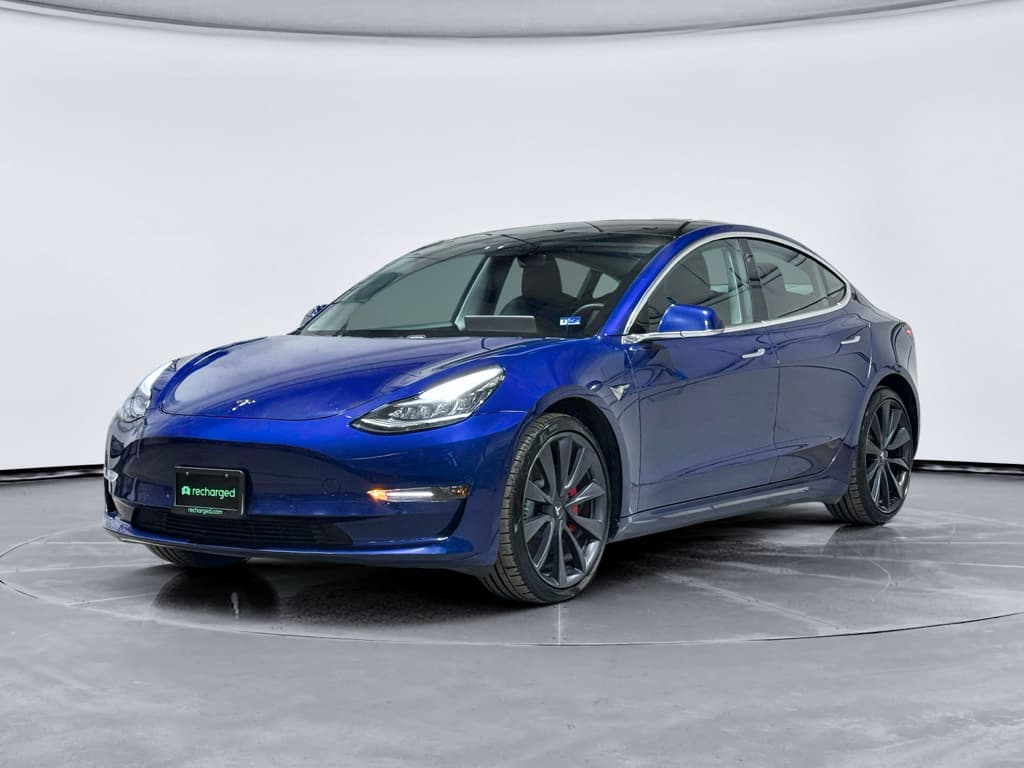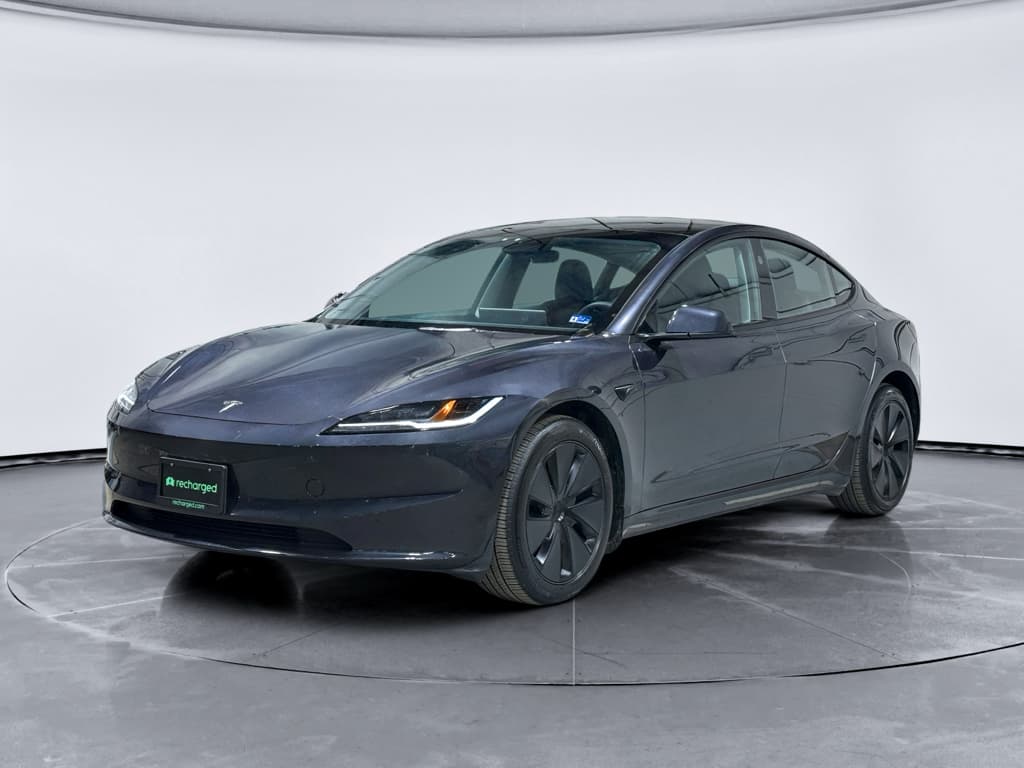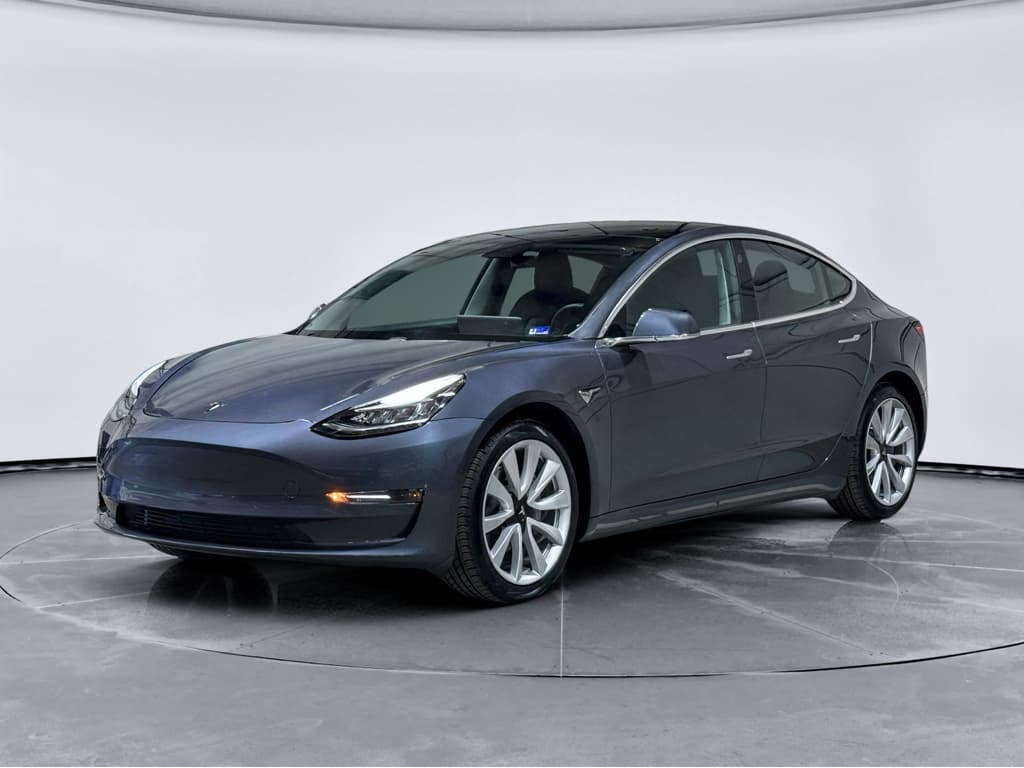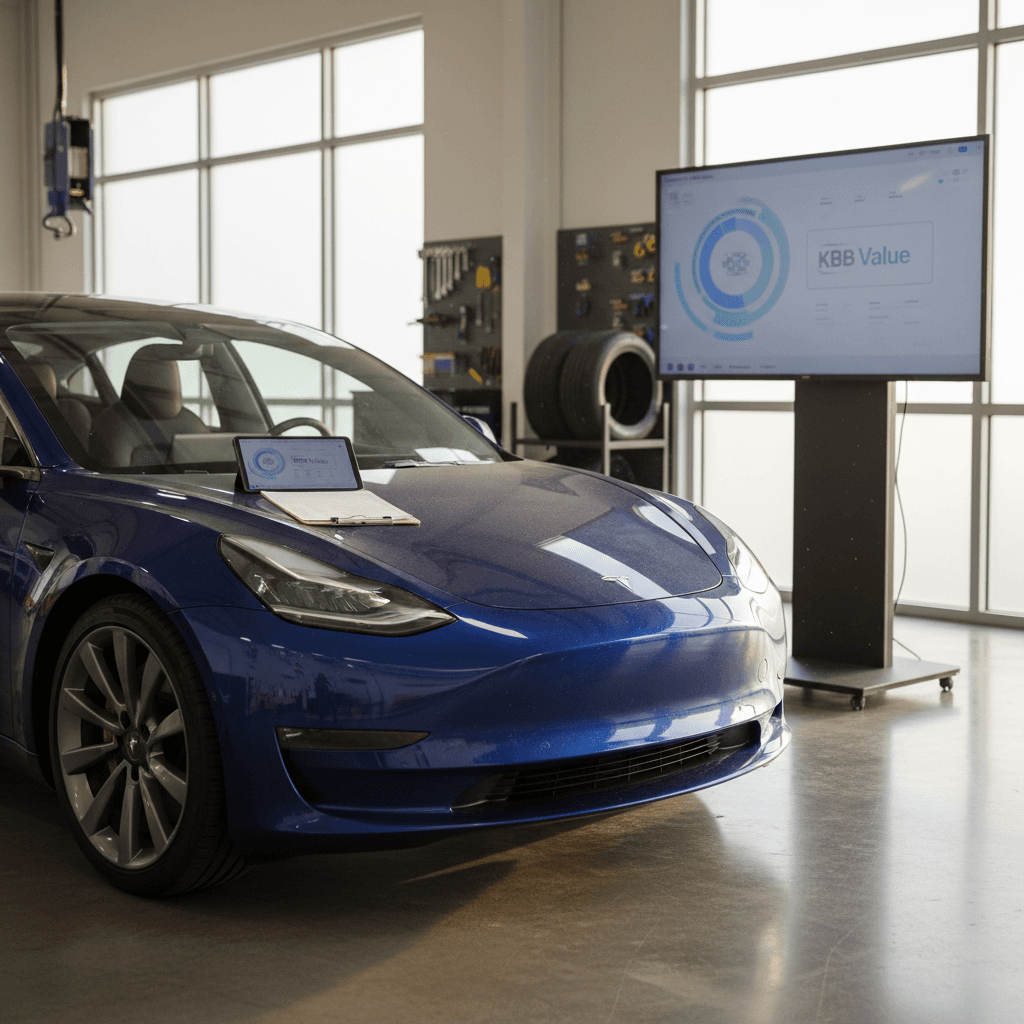
If you’re thinking about selling, trading, or refinancing your Tesla Model 3, you’ve probably plugged it into Kelley Blue Book and stared at that number. The Tesla Model 3 KBB value feels like it should be the final word on what your car is worth, but it’s really just the starting point. Understanding how that value is built, and where it misses the mark for EVs, is the key to getting a fair price.
Quick definition: KBB value
Why KBB value matters for Tesla Model 3 owners
For decades, shoppers and dealers have used KBB as a neutral referee. With the Tesla Model 3, it plays the same role, but in a much faster‑moving market. New‑car price cuts, shifting sentiment around Tesla, and a flood of used EVs have all tugged values up and down in the last few years, so having a trusted baseline matters more than ever.
Who actually uses your Model 3’s KBB value?
It’s not just you with a browser tab open.
Owners & private sellers
Dealers & online buyers
Banks & insurers
KBB is a guide, not a guarantee
How Kelley Blue Book calculates Tesla Model 3 value
KBB doesn’t have a room full of people guessing what a 2019 Model 3 is worth. It ingests millions of transactions and adjusts in real time. For a Tesla, the engine (or rather, the motor) looks roughly like this:
- Recent sales and listing data for Tesla Model 3s by year, trim, and region
- Auction results, especially for cars dealers are wholesaling instead of retailing
- Original MSRP and factory options (Long Range vs. Standard Range, Performance package, FSD, etc.)
- Mileage bands, KBB assumes around 12,000 miles per year unless you tell it otherwise
- Condition inputs you provide (Excellent, Very Good, Good, Fair, or Poor)
- Zip code and local demand for EVs in your market
From there, KBB spits out several values for your Tesla Model 3: Trade‑In (what a dealer might pay), Private Party (what you might get selling it yourself), and sometimes Suggested Retail (what a dealer might list it for).
KBB value vs. real‑world offers on a Tesla Model 3
What KBB is good at
- Capturing big trends: when used EV prices slide, KBB eventually reflects it.
- Normalizing by age and mileage, so a 2020 Model 3 with 40,000 miles isn’t compared to a 2018 car with 90,000.
- Providing a shared reference point so you and a buyer aren’t arguing in a vacuum.
Where it struggles with EVs
- Battery health is largely invisible unless someone feeds in diagnostic data.
- It can lag when Tesla slashes new‑car prices or runs big incentives.
- It doesn’t see every instant‑offer or wholesale deal that happens quietly behind the scenes.
Use KBB as your “comp check,” not your asking price
What a current Tesla Model 3 KBB value actually looks like
KBB values change daily, and you’ll only see exact numbers once you enter your VIN or year, mileage, and zip code. But you can get a feel for the ballpark by looking at related pricing sources that track the same market.
Example value ranges for a 2024 Tesla Model 3 in early 2026
These aren’t your specific KBB numbers, but they show the neighborhood KBB is modeling around for a fairly new car.
| Source | Scenario | Approximate Range |
|---|---|---|
| KBB (example from 2024 Tesla Model 3 page) | Two‑year‑old Model 3, typical mileage, national average | Around low‑to‑mid $30,000s resale, slightly less for trade‑in |
| Edmunds appraisal | 2024 Model 3, 12,000 miles/year, trade‑in values | Roughly mid‑$20,000s to high‑$30,000s depending on trim and condition |
| CarMax instant offers | 2024 Model 3, recent real‑world offers | About $27,000–$31,000 for low‑mileage examples |
Always plug your own details into KBB for precise values.
Why your value might be higher or lower
7 factors that move your Model 3’s KBB value up or down
The biggest levers on your Tesla Model 3’s value
- Model year & trim: Early Standard Range models price differently than newer Long Range and Performance trims. KBB separates these, but buyers may care even more than the model guide does.
- Mileage: A 2019 Model 3 with 30,000 miles looks very different from the same car with 110,000 miles. High mileage usually pushes offers below KBB; low mileage can justify pushing higher.
- Accident & title history: Clean Carfax and no paintwork? That supports the top of the KBB range. Structural damage, airbag deployment, or a salvage/rebuilt title can sink value below what KBB anticipates.
- Cosmetic condition: Wheel rash, rock chips, cracked glass, worn seats, none of these are uniquely “EV” problems, but they absolutely affect where you land in the KBB range.
- Options & software: Larger wheels, premium paint, and especially software like Enhanced Autopilot or Full Self‑Driving can affect desirability, even if they don’t move KBB as much as they once did.
- Local market: A Model 3 in a dense, EV‑friendly metro may sell quicker and closer to KBB than the same car in an area with sparse charging and lukewarm demand.
- Macro Tesla trends: Aggressive new‑car price cuts or softening sentiment around Tesla as a brand can drag down used prices temporarily, no matter what KBB said last month.
Battery health: the piece KBB doesn’t fully see
The elephant in the room for any used EV, especially a Tesla, is the battery pack. KBB assumes an average outcome. But in the real world, two otherwise identical Model 3s can behave very differently at 80,000 miles.

Why battery health is so important
- It controls your real‑world range, especially in cold weather.
- It influences whether you’ll face a costly repair or replacement outside warranty.
- It affects how confident the next owner (or lender) feels at your asking price.
What KBB can’t see well yet
- Your daily charging habits (DC fast vs. home Level 2).
- How often the pack sat at 100% or near empty.
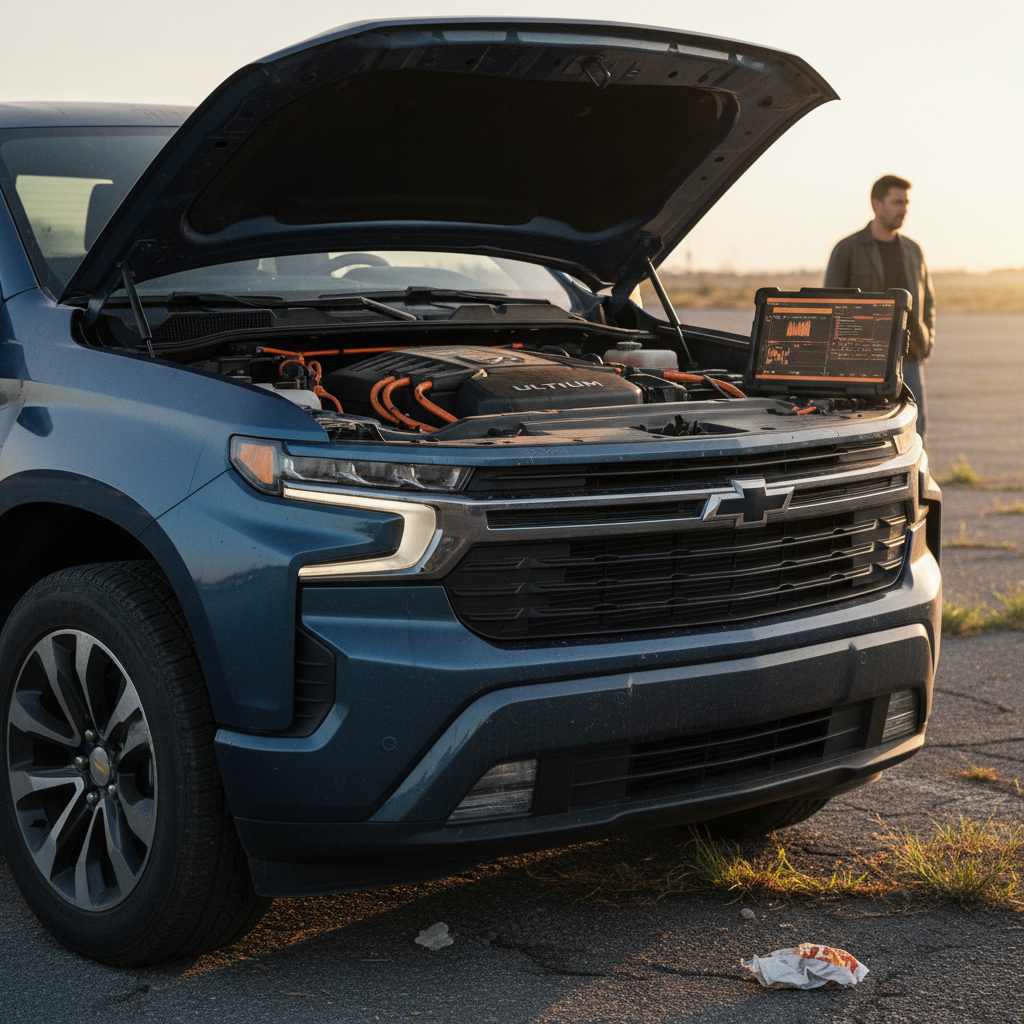
- Any early signs of module problems a scan tool might catch.
Where Recharged comes in
How to use KBB value when you sell or trade in your Model 3
Once you’ve looked up your Tesla Model 3 KBB value, the question becomes: what do you do with it? The answer depends on how you plan to move the car, trade‑in, instant cash offer, or private sale.
Turn your KBB result into a realistic plan
1. Pull KBB values for multiple conditions
Run your Model 3 through KBB as both “Excellent” and “Good.” Many owners over‑rate condition; seeing the spread helps you anticipate what dealers will argue for.
2. Compare KBB to instant‑offer tools
Get online offers from a dealer, CarMax‑style buyer, or EV‑specialist marketplace. If they’re consistently thousands below KBB, that’s the market talking, use it as leverage to negotiate, but don’t ignore it.
3. Look at local listings, not just guides
Search for comparable Model 3s within 100 miles: same year, similar miles and trim. Asking prices above KBB that sit unsold for weeks tell you more than a theoretical number.
4. Adjust your strategy by channel
A trade‑in offer will usually come in under KBB Private Party but close to KBB Trade‑In. A well‑presented private sale can land at or slightly above KBB if your car and photos are strong.
5. Document battery health
Screenshots of remaining range, recent service records, and, ideally, a third‑party battery health report can justify asking for the top of the KBB range, or help you avoid overpaying as a buyer.
How Recharged handles value and offers
Ready to find your next EV?
Browse VehiclesKBB value vs. Recharged Score: smarter shopping for used Model 3s
If you’re shopping for a used Tesla Model 3 rather than selling one, KBB is still helpful, but it only gets you halfway there. It tells you what the market usually pays for a generic car. Recharged Score tells you what’s going on with this specific Model 3.
Two tools, two different jobs
Use them together to avoid surprises.
KBB value
- Good for: sanity‑checking asking prices and dealer offers.
- Shows: expected range for year, trim, mileage, and condition.
- Limits: doesn’t see pack‑level battery data or detailed charging history.
Recharged Score
- Good for: comparing two specific Model 3s side‑by‑side.
- Shows: verified battery health, range projections, and pricing vs. fair market.
- Bonus: EV‑specialist guidance, financing options, and nationwide delivery if you buy through Recharged.
Model 3 depreciation: what to expect over time
Tesla built its reputation on strong resale value, and for a while the Model 3 was the poster child: it held value better than many other EVs and plenty of gas cars. The story since 2023 has been bumpier. Aggressive new‑car price cuts and a wave of used supply pushed values down faster than a lot of owners expected.
Big‑picture look at Tesla Model 3 value retention
These are broad averages from industry studies and price‑tracking data, not a prediction for your exact car.
| Timeframe | Typical pattern for Model 3 | What it means for KBB value |
|---|---|---|
| 0–2 years | Can lose roughly 20–30% from original MSRP if new‑car prices are stable; more if Tesla cuts prices on new inventory. | KBB values for nearly‑new cars track new‑car incentives closely, expect bigger swings. |
| 3–5 years | Many studies show the Model 3 retaining around half of its original value in this window, still ahead of many EV peers but lately under the industry average. | KBB moderates depreciation but still reflects a clear step‑down versus year‑one pricing. |
| 5+ years | Battery reputation, software support, and maintenance costs start to matter more than badge prestige alone. | Well‑cared‑for cars can outperform KBB; neglected ones can fall below it. |
Real‑world depreciation will depend heavily on mileage, battery condition, and future Tesla pricing moves.
Watch out for "perfect" appreciation stories
Checklist: steps to maximize your Tesla Model 3 KBB value
Before you list or accept an offer
1. Get your paperwork straight
Have your title (or payoff info), service records, and any repair invoices ready. A complete file helps justify the high end of the KBB range.
2. Detail the car inside and out
Professional or DIY, a clean Model 3 photographs better and signals that you’ve cared for it. Don’t forget door jambs, glass, and wheel faces.
3. Fix inexpensive cosmetic issues
Curb rash repair, a rock‑chipped windshield, or a missing charge‑port door can cost less to fix than the discount a buyer will demand.
4. Capture clear photos and range info
Take photos in good light, show the touchscreen with remaining range at a typical state of charge, and photograph any flaws honestly.
5. Pull KBB values and local comps
Run your KBB numbers, then check local listings for similar Model 3s. Price within that overlap, adjusting for your car’s strengths and weaknesses.
6. Get a battery health report
If you’re selling privately, a third‑party battery report is a powerful trust builder. If you’re selling through Recharged, your Model 3’s Recharged Score does this automatically.
FAQ: Tesla Model 3 KBB value
Frequently asked questions about Tesla Model 3 KBB value
Bottom line on Tesla Model 3 KBB value
When you’re dealing with an electric car, especially a Tesla Model 3, the traditional KBB playbook only gets you so far. The KBB value for your Model 3 is a smart starting point, not the final verdict. It reflects the average story, not your car’s specific battery health, history, or the quirks of your local EV market.
If you’re selling, use KBB to frame your expectations, then let real‑world offers, battery data, and condition fine‑tune the number. If you’re buying, let KBB keep you out of the worst overpricing traps, then lean on tools like the Recharged Score battery health report and EV‑specialist support to decide which particular Model 3 is actually worth the money. That’s how you turn a blue‑book estimate into a deal you feel good about years down the road.