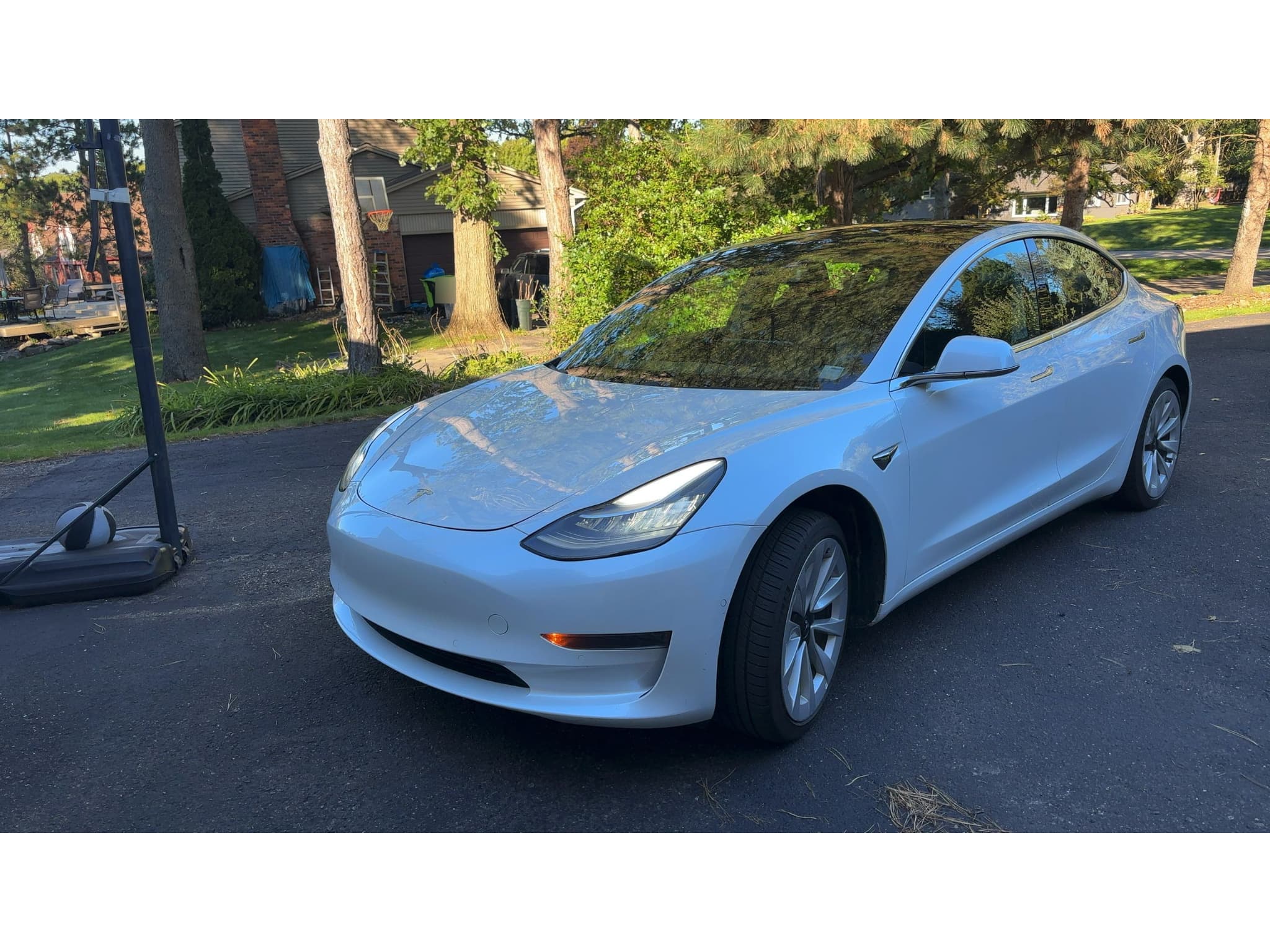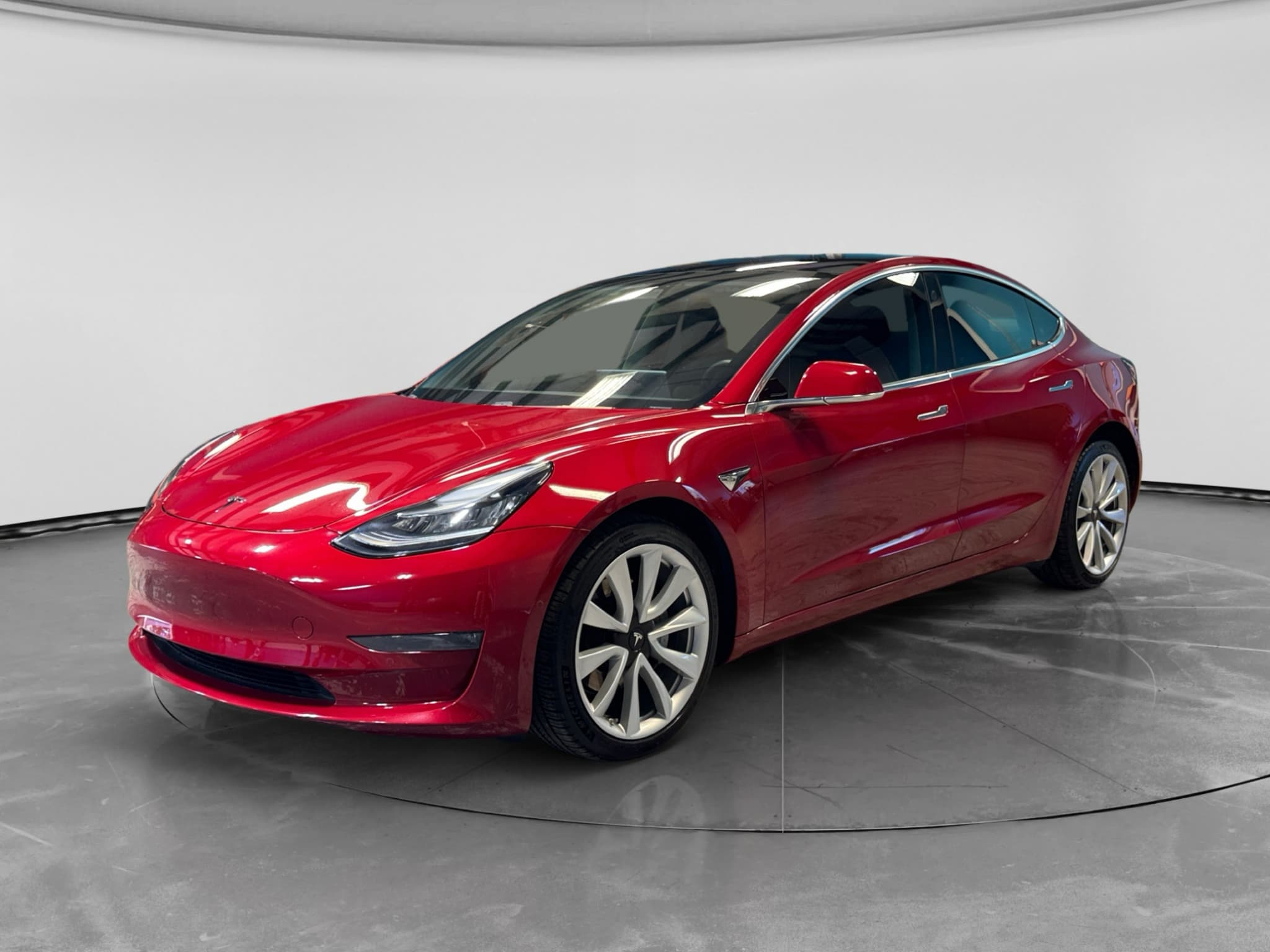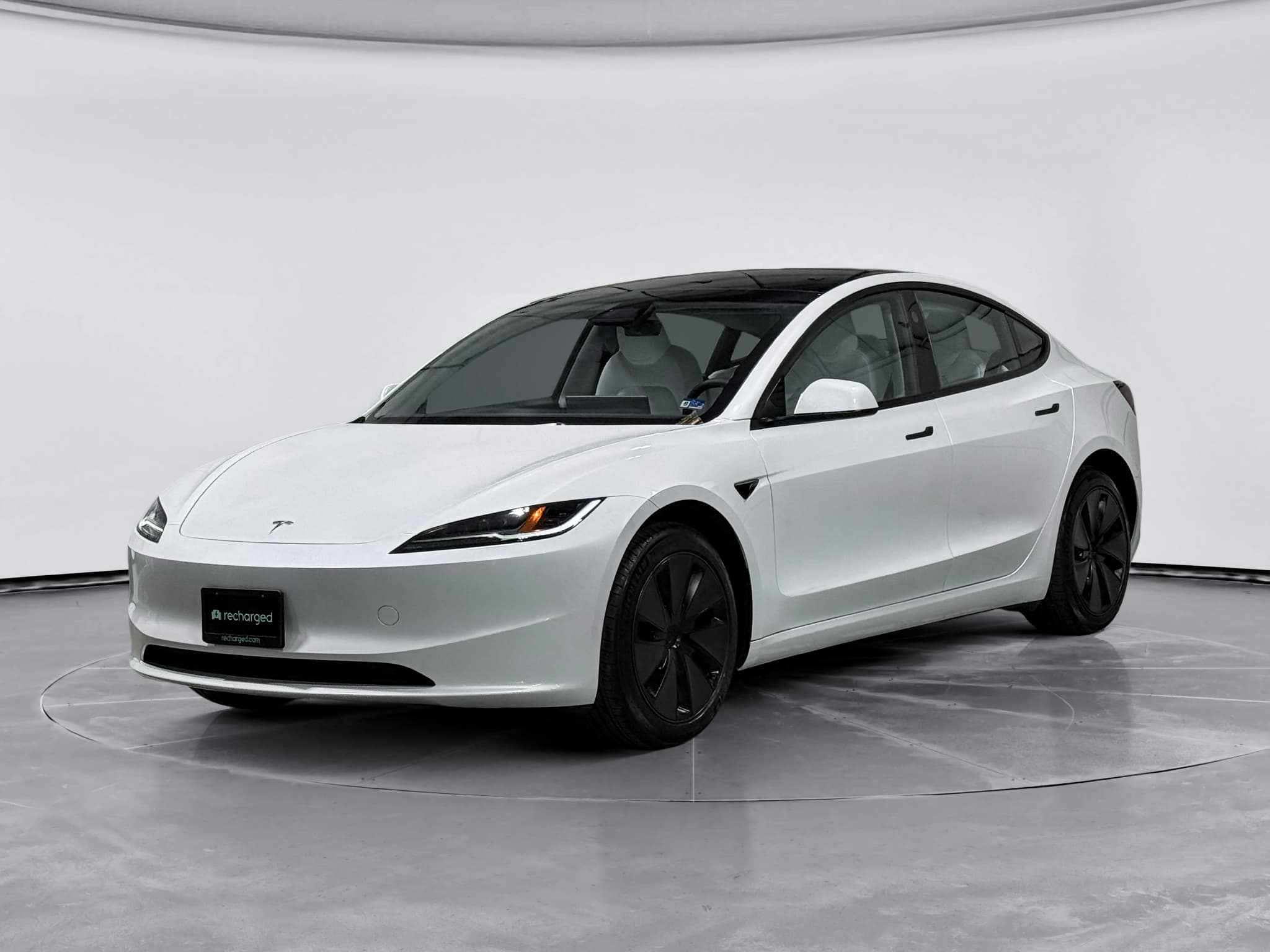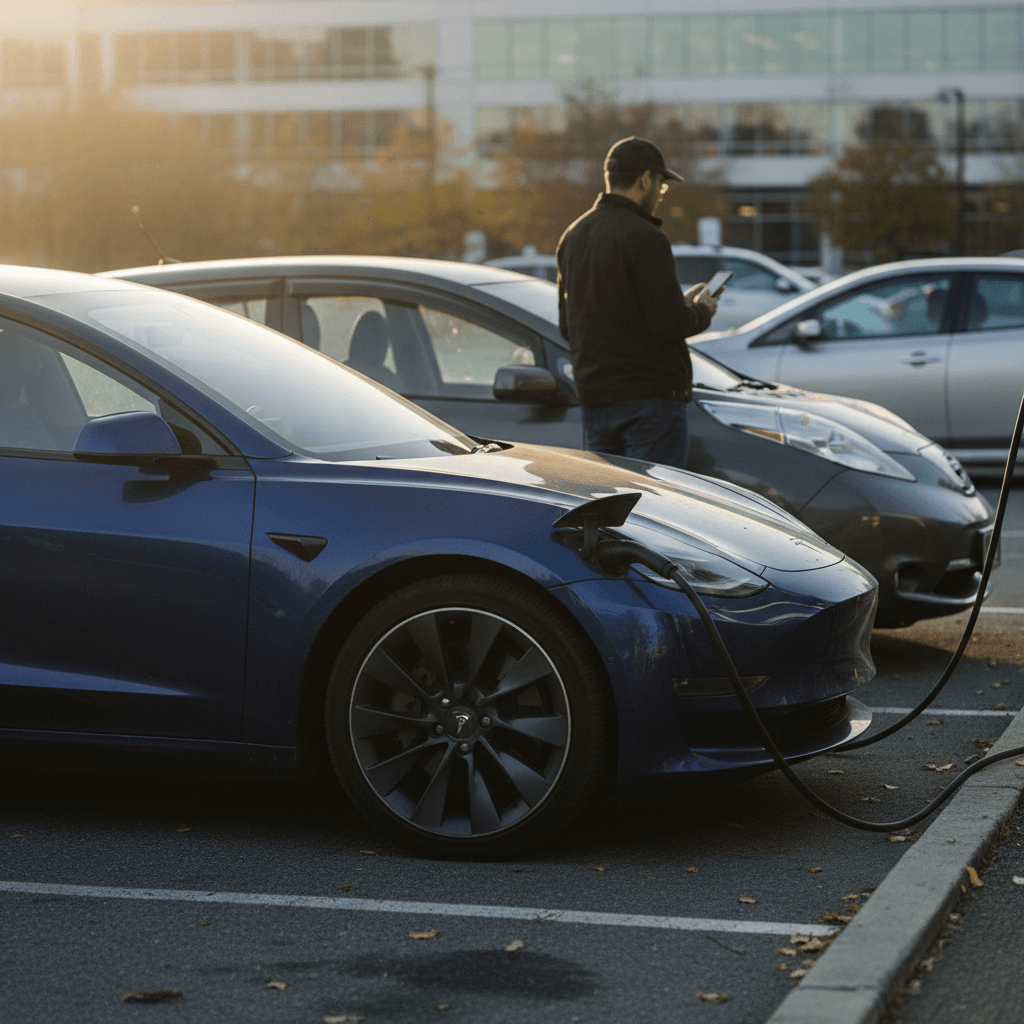
Color can influence how many shoppers stop on a listing, but it rarely determines a Model 3’s value by itself. A familiar factory finish in excellent condition usually creates less friction than a polarizing shade, visible repaint, or badly installed wrap. If you’re estimating what your Tesla is worth, consider color alongside mileage, configuration, cosmetic condition, accident history, and verified EV battery health.
Neutral factory colors are the safest resale bet
Neutral factory finishes are generally the lowest-risk choice because they’re familiar and unlikely to eliminate a large group of shoppers. Blue can still be an appealing middle ground between neutral and conspicuous; the Recharged team has specifically seen buyer interest in a blue Model 3 with a white interior. Red can attract an enthusiastic buyer, but its stronger visual character may produce a narrower audience.
The following comparison is a qualitative resale guide, not a claim that one color earns a specific premium. Tesla’s available paint names and shades can also vary by model year, so confirm the original factory color for the vehicle you’re valuing.
Model 3 color choices at a glance
How broad appeal, upkeep, and modification risk can affect resale.
| Color choice | Buyer appeal | Main concern | Resale outlook |
|---|---|---|---|
| Neutral light | Broad audience | Chips and stains | Safest general choice |
| Neutral dark | Familiar, sporty | Swirls show easily | Strong when clean |
| Blue | Distinct but approachable | Smaller audience | Good if well kept |
| Red | Standout appeal | More polarizing | Buyer dependent |
| Custom wrap | Highly personal | Quality and hidden paint | Highest resale risk |
Resale outlook assumes comparable mileage, equipment, history, and condition.
Blue with a white interior can be a great combination for buyers, but the color still has to sit on top of a well-kept, well-evaluated car.
Condition matters more than the color name
Paint and wrap condition usually matter more than whether the car is blue, red, light, or dark. Scratches, curb rash, mismatched panels, overspray, fading, and obvious repairs give buyers reasons to lower their offers. Dark paint can make swirl marks and washing scratches easier to notice, while a light finish may reveal stains, chips, or contaminated paint in different lighting.
A vinyl wrap doesn’t automatically increase resale value. Recharged inspected one wrapped Model 3 whose original red paint remained visible around the mirrors, handles, door openings, and damaged edges; the contrasting colors made the workmanship difficult to ignore. A prospective buyer must then evaluate both the exposed wrap and the unknown condition of the paint underneath.
A poorly executed wrap isn’t a selling point. If the factory color shows through at every seam and nick, buyers start wondering what else they’ll find underneath.
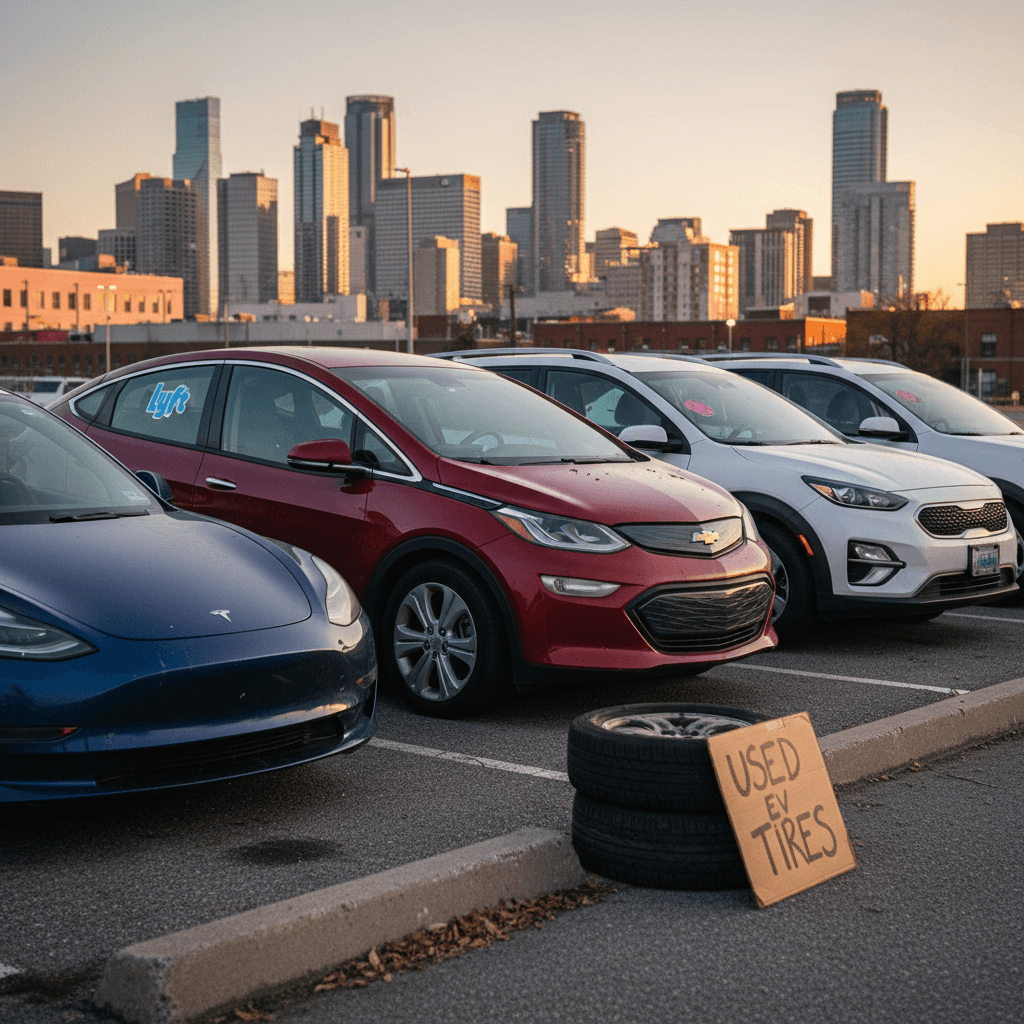
Don’t remove a wrap without checking the paint
What Recharged data can, and can’t, tell you
Recharged’s data shows a broad used Model 3 market, but it doesn’t establish a price premium for any exterior color. In the current snapshot of 31 matching Model 3 listings on Recharged, asking prices range from $20,000 to $51,597, with an average of $34,304 and a median of $36,997. Those are retail asking prices, not estimates of what a seller will receive; an instant offer or trade-in will be below retail, typically by several thousand dollars.
The battery data also shows why you shouldn’t value a Model 3 by paint alone. Across 303 Recharged Score battery inspections, tested remaining capacity averaged 87.8% of original capacity, and tested real-world range averaged 280 miles. The inspected cars ranged from 73% to 100% tested remaining capacity and from 182 to 358 miles of tested real-world range, illustrating how substantially the underlying vehicle can differ even before color enters the conversation.
The takeaway is straightforward: color can shape buyer interest, but a defensible valuation needs the whole car. A used Model 3 evaluation should weigh verified battery condition, mileage, configuration, cosmetic quality, vehicle history, and current market positioning together.
Recharged data
Used Tesla Model 3 battery health
88%
avg remaining capacity
From Recharged battery inspections, not manufacturer estimates.
- Lowest
- 73%
- Median
- 88%
- Highest
- 100%
- Est. range
- 280 mi avg
- Cell balance pass
- 100%
- Quick charges
- 23 avg
- Slow charges
- 75 avg
Average cell imbalance: 5.5 mV
Based on vehicles Recharged tested
Recharged data
Used Tesla Model 3 prices at Recharged
$36,997
median list price
Current list prices for matching inventory at Recharged.
- Lowest
- $20,000
- Average
- $34,304
- Highest
- $51,597
Average Recharged Score on these listings
4.7 / 5
Range
4.3 – 4.9
Based on available listings
Every EV is battery-tested with a Recharged Score. Nationwide delivery.
How do you protect your Model 3’s resale value?
You protect resale value by preserving the factory finish, documenting professional work, and fixing presentation issues before shoppers see the car. The goal isn’t to make an older Model 3 appear untouched; it’s to remove uncertainty about its condition. If you’re planning to sell your electric car, use this checklist before requesting a valuation.
Model 3 resale preparation checklist
Confirm the factory color
Check the original specification rather than assuming a wrap or repaint matches the factory finish.
Inspect in direct light
Look for swirl marks, chips, fading, overspray, panel mismatch, and evidence of body repair.
Evaluate any wrap
Check seams, edges, mirrors, handles, door openings, lifting material, and the paint visible underneath.
Document professional work
Keep invoices for paint correction, ceramic coatings, body repairs, and professionally installed or removed wraps.
Avoid cosmetic shortcuts
Poor touch-up paint and rushed wrap removal can create more questions than the original blemish.
Get an EV-specific appraisal
Combine cosmetic condition with mileage, configuration, history, and verified battery health.
Instant offer, trade-in, or consignment. Pickup available.
Tesla Model 3 color and value FAQ
The bottom line
Choose a clean factory finish over a fashionable but questionable modification if resale value is your priority. Neutral colors generally create the least buyer resistance, blue can remain broadly attractive, and red may need the right shopper, but none automatically overcomes weak battery health, damage, excessive mileage, or poor presentation. For a realistic valuation, assess the color as one part of the car rather than the headline feature.