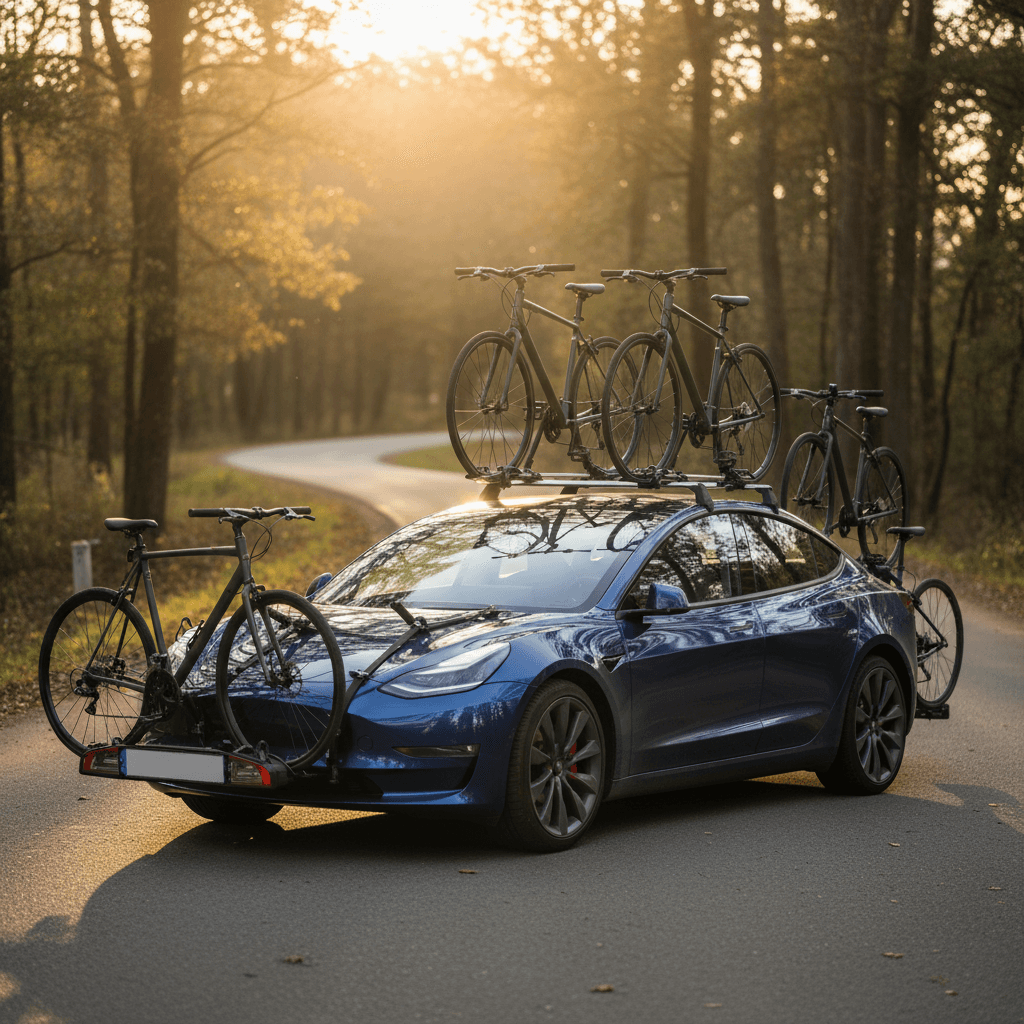
If you own a Tesla Model 3 and love to ride, you’ve probably discovered that fitting bikes **inside** the car gets old fast. The good news is there are several solid Tesla Model 3 bike rack options, hitch, roof, and trunk, but each one has trade-offs for cost, convenience, range, and even paint protection. This guide walks you through the choices so you can carry your bikes safely without compromising the reasons you bought an EV in the first place.
Quick answer
Why bike rack choice matters for the Model 3
On a gasoline car, the wrong bike rack is mostly an annoyance. On a **Tesla Model 3**, the wrong setup can hurt efficiency, stress the suspension, or even damage the glass roof and paint. The Model 3 rides low, has a large, fixed glass roof panel, and uses a relatively light trunk lid, so you can’t just bolt on any rack that worked on your old crossover and call it a day.
Model 3 quirks that affect bike rack choice
A few design details make this EV different from your last gas sedan.
Low ride height
Slippery aerodynamics
Glass & paint protection
Check your manual first
The 3 main Tesla Model 3 bike rack options
- Hitch-mounted bike racks – attach to a 1.25" or 2" receiver behind the bumper. Easiest to load, least risk to paint and glass, typically the best choice if you can install a hitch.
- Roof-mounted bike racks – clamp to the factory Tesla roof rack or compatible crossbars. Great if you already use a roof rack for skis or cargo.
- Trunk-mounted bike racks – strap-on racks that hook to the rear deck and bumper. Cheapest and don’t require a hitch or roof bars, but they’re the touchiest to fit correctly on a Model 3.
Let’s walk through each choice in detail so you understand how they’ll work with your Model 3 and your cycling habits.
Hitch-mounted bike racks: best overall choice
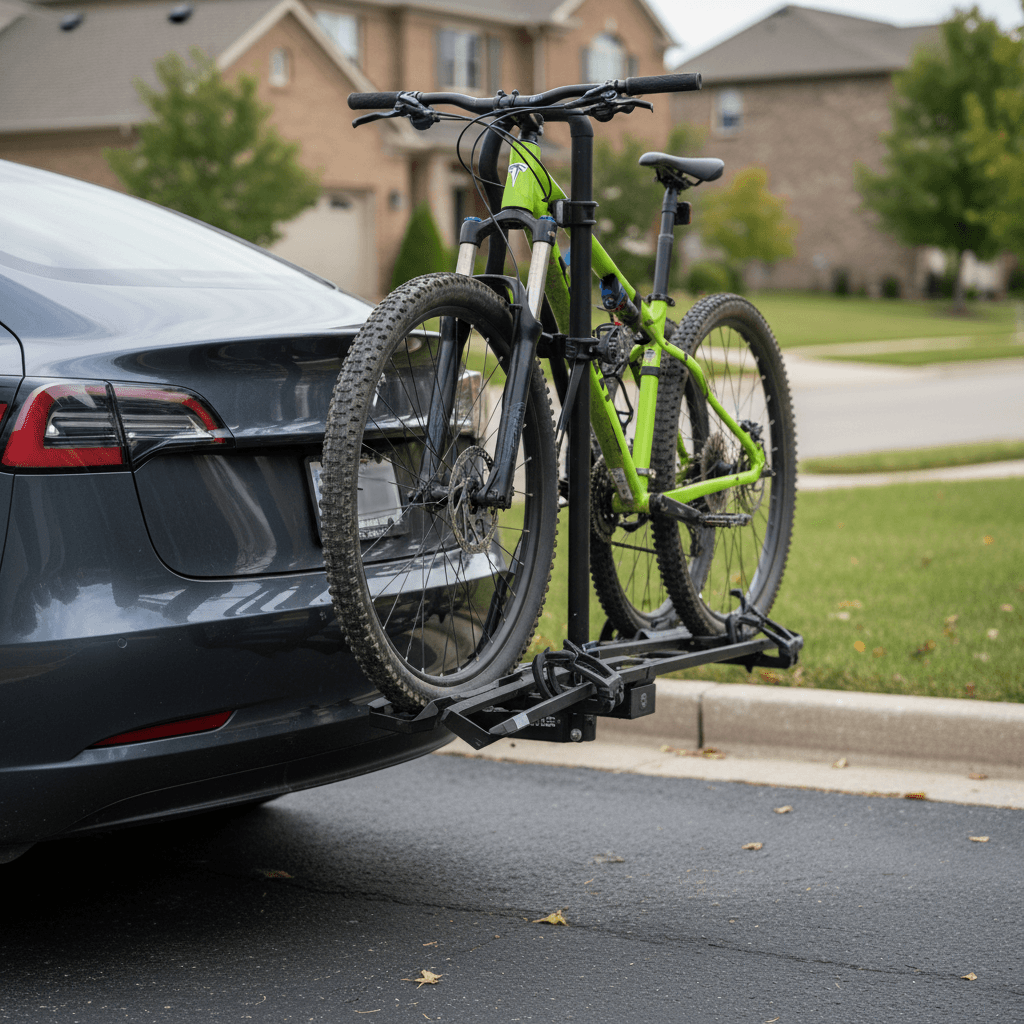
If you’re serious about riding, a **hitch rack on a properly installed receiver** is the gold standard. You keep bikes out of the airflow on the roof, you avoid straps on the paint, and loading is easier, especially with heavier e‑bikes or mountain bikes.
Why hitch racks work so well on the Model 3
Receiver sizes and Model 3 compatibility
Most modern hitch racks are built for a **2-inch receiver**, though quite a few offer 1.25-inch versions or a dual-size shank. Aftermarket hitches for the Tesla Model 3, like EcoHitch and Stealth Hitches, are available in both 1.25" and 2" sizes depending on year and trim. Many owners choose **2-inch** because it gives you the widest choice of bike racks and accessories, and typically higher weight ratings.
Future-proof your receiver
Platform vs. hanging hitch racks
Platform-style hitch racks
- Support bikes by the wheels with trays.
- Usually use an arm that clamps the front wheel or frame.
- Great for carbon frames, mixed bike sizes, and e‑bikes.
- Heavier and more expensive, but ultra‑stable.
- Often rated for 2 bikes at 60–80 lb each, depending on model.
For most Model 3 owners, a quality 2‑bike platform rack is the sweet spot between stability, protection, and capacity.
Hanging-style hitch racks
- Support bikes by the top tube.
- Lighter, cheaper, and usually simpler to store.
- Can work for hardtails and road bikes with traditional frames.
- Less friendly to step‑through frames and some full‑suspension MTBs.
- Often rated for 3–4 lighter bikes, but watch tongue weight limits on the Model 3.
Choose a hanging rack only if your bikes fit easily and you’re staying well within the car’s accessory weight rating.
Respect accessory weight limits
Roof-mounted bike racks: when the roof makes sense
If your Model 3 already has the **factory Tesla roof rack** or quality aftermarket crossbars, adding one or two rooftop bike trays can be a clean solution. You keep the rear camera and trunk fully usable, and if you’re carrying just one lightweight road or gravel bike, the drag penalty is manageable for shorter trips.
Pros and cons of roof-mounted bike racks on Model 3
Great for some owners, a headache for others.
Why you might like roof racks
- Keep the **rear bumper clear** for parking or a cargo carrier.
- Work even if your car has **no hitch**.
- Many trays lock the bike and the rack to the car for security.
- Mix-and-match: carry bikes plus a cargo box or skis.
What to watch out for
- Noticeable **range hit at highway speeds**, especially with multiple bikes.
- Requires lifting bikes over your head, tough with e‑bikes or heavy MTBs.
- Low garage doors and drive‑thrus become potential **collision hazards**.
- Wind noise can increase even with no bikes loaded.
Check roof rack compatibility
Trunk-mounted bike racks: read this before you buy
Trunk racks are attractive because they’re inexpensive and don’t require a hitch or crossbars. But on the Tesla Model 3, they’re **the fussiest option**. The combination of a large glass rear window, a relatively small trunk edge, and slick paint means strap placement has to be spot‑on to avoid slipping or chafing.
Potential upsides
- Lower upfront cost than hitch + rack.
- Good for occasional riders who only carry bikes a few times a year.
- Easy to transfer between different vehicles in your household.
Key drawbacks on Model 3
- Straps and hooks can rub **paint and glass**, especially in dusty conditions.
- Most designs partially block the rear camera and can interfere with trunk opening.
- Fit guides don’t always keep up with Tesla’s frequent trim updates.
- Some experienced owners avoid trunk racks entirely on the Model 3 because of damage risk.
If you must go trunk-mount
Factory vs aftermarket hitches for the Model 3
Earlier Model 3s shipped without a factory tow package in North America, so owners turned to aftermarket hitches specifically engineered for bike racks and light towing. Newer model years, including 2024–2026 refresh cars, offer **Tesla’s factory hitch package** in some markets, which is approved for towing and accessory carriers like bike racks.
Common hitch options for Tesla Model 3
What most owners choose when they want to run a hitch-mounted bike rack.
| Option | Receiver size | Typical use | Pros | Considerations |
|---|---|---|---|---|
| Tesla factory tow package (where available) | 2" (ball-style accessory interface) | Towing + accessory carriers | Designed and warranted by Tesla; integrates with vehicle software; clear published limits. | Availability varies by region and trim; upfront cost higher than some aftermarket options. |
| Stealth-style aftermarket hitch | 2" rack receiver | Bike racks, cargo carriers (no towing on some versions) | Hidden design; receiver can be removed when not in use; preserves clean look and ground clearance. | Professional installation recommended; may require bumper removal during install. |
| EcoHitch-style aftermarket hitch | 1.25" or 2" receiver | Bike racks + light towing (where rated) | Receiver size choice; vehicle-specific engineering; strong owner community feedback. | Install complexity varies; may slightly affect rear crush structure, so use reputable installers. |
Always confirm exact fitment and ratings for your model year before you buy or install a hitch.
Have a pro do the install
How many bikes can a Tesla Model 3 safely carry?
The realistic answer is: **two bikes is the sweet spot** for most setups, especially if you’re using heavier mountain bikes or e‑bikes. Yes, you’ll see 3‑ and 4‑bike racks rated for higher capacities, but the limiting factor on a Model 3 is often the vehicle’s accessory weight rating and tongue weight rather than the rack itself.
Typical weights to keep in mind
Do the math
Step-by-step: choosing the right bike rack for you
Model 3 bike rack decision checklist
1. Decide how often you’ll carry bikes
If you’re strapping bikes on every weekend, a **hitch + quality platform rack** quickly pays for itself in convenience and reduced hassle. If you ride a few times a year, a trunk rack or borrowing a rack may be enough.
2. Confirm whether you have, or want, a hitch
Look under the rear bumper: if you see a removable cover or receiver, you may already have a factory or aftermarket hitch. If not, price out a **professional hitch install** and compare that to the cost of roof bars + trays or a high-end trunk rack.
3. Count bikes and note their weights
List how many bikes you’ll carry most often and their approximate weights. If you own heavy e‑bikes, focus on **short, stout platform racks** that explicitly support that weight and stay well within the Model 3’s limits.
4. Think about parking and garage clearance
If you have a low garage door or frequent drive‑thru visits, roof‑mounted bikes may be more stress than they’re worth. Conversely, if you parallel park in tight city spaces, a long hitch rack that sticks out could be a nuisance.
5. Consider your future needs
Planning to upgrade to a Model Y or add a second EV later? That argues even more strongly for a **2-inch receiver and a modern platform rack** you can move between vehicles.
6. Set a realistic budget
Install costs add up: a quality hitch, rack, and locks can rival a month or two of car payments. But they also protect bikes that often cost thousands of dollars. Spend where it keeps your bikes, and your Model 3, safe.
Protecting your paint, battery, and range
No matter which Tesla Model 3 bike rack option you choose, a little attention to detail goes a long way. You want to protect three things: **your finish, your battery pack, and your day‑to‑day driving comfort and range**.
Smart protection tips for rack-equipped Model 3s
Simple steps that pay you back every trip.
Guard the paint
Manage range loss
Secure everything
Charging with a rack installed
FAQ: Tesla Model 3 bike rack options
Frequently asked questions
Final thoughts and how Recharged can help
The Tesla Model 3 may not be a big SUV, but with the right bike rack setup you can turn it into a capable weekend adventure machine. For most owners, that means investing once in a **proper hitch and a quality platform-style rack**. If you already have a roof rack, one or two rooftop trays can make sense, and trunk racks remain a budget‑minded option if you’re meticulous about protection and fit.
If you’re shopping for a **used Model 3**, it can be worth seeking out a car that already has a professionally installed hitch and roof system. At Recharged, every vehicle includes a detailed Recharged Score Report with verified battery health, so you can be confident that hauling bikes hasn’t come at the expense of the pack. Our EV specialists can help you understand charging, accessory loads, and daily usability before you ever sign paperwork, and we can coordinate financing, trade‑in, and even nationwide delivery so you’re ready for your first road trip, bikes included.