If you own or are shopping for a 2024 Genesis GV60, it’s smart to get up to speed on its recalls. By early 2026, the 2024 GV60 has been the subject of five NHTSA safety recall campaigns, covering power-loss issues, electrical/software faults, camera and back-up system behavior, and exterior trim that can detach at speed. This guide walks through the 2024 Genesis GV60 recalls list in plain English, shows you how each one might affect you, and helps you shop or own a GV60 with your eyes open.
Quick takeaway
Overview: How many recalls does the 2024 Genesis GV60 have?
2024 Genesis GV60 safety snapshot
Multiple data aggregators and owner reports point to five NHTSA recalls for the 2024 Genesis GV60. Some are carryover fixes from 2023 model-year vehicles built into 2024 production; others are model-year agnostic campaigns that sweep in 2022–2024 Hyundai/Genesis E‑GMP platform EVs, including the GV60. For shoppers, the volume of recalls is less important than how serious they are, whether they’ve been fixed, and how transparent the service history is.
Stop-sale vs. recall
2024 GV60 recall summary table
Known 2024 Genesis GV60 recall campaigns (high-level)
This table simplifies the main recall campaigns that include 2024 GV60s. Exact campaign numbers and in‑service dates can vary, so always confirm with an official VIN lookup.
| Focus area | Typical NHTSA campaign pattern | Likely symptom for owners | Risk if ignored | Typical fix |
|---|---|---|---|---|
| ICCU / power loss | 2024–2025 campaigns covering 2023–2024 GV60 and related Hyundai/Kia EVs | Sudden loss of power, reduced-power “limp mode,” or no-start after charging | Stalling or severe power reduction while driving, risk of crash | ICCU software update and, in some cases, hardware replacement and fuse/relay updates |
| Electrical / software integration | Follow‑on campaign to earlier ICCU recall | Warning lights, reduced charging performance, intermittent DTCs | Potential repeat power-loss behavior or unexpected shutdowns | Revised software plus additional component checks |
| Back-up camera / back-over prevention | Camera or parking sensor calibration recall that includes 2024 GV60 | Camera image not displaying, laggy or frozen image when reversing | Reduced rear visibility when backing, increased risk of collision | Infotainment or camera module software update, reprogramming |
| Smart parking / driver-assist logic | Advanced driver-assistance system (ADAS) behavior campaign | Unexpected system disengagement, incorrect warnings, or failure to alert | Driver confusion or delayed reaction in edge cases | ADAS software reprogramming and calibration |
| Windshield upper molding | Mid‑2025 campaign covering 2023–2025 GV60 trim pieces | Wind noise, visible loosening of stainless trim at top of windshield | Trim can detach and become road debris for following traffic | Replace upper windshield molding with improved part |
Summary only – use NHTSA.gov or a Genesis dealer for VIN-specific status.
Why exact campaign numbers aren’t listed here
ICCU power-loss recall: sudden loss of drive or no-start
The most serious and widely discussed Genesis GV60 recall involves the Integrated Charging Control Unit (ICCU). This module manages DC‑DC conversion and interfaces between the high-voltage battery, onboard charger, and 12‑volt system. On affected E‑GMP vehicles, including the 2024 GV60, the ICCU can overheat internally and fail over time, leading to a low‑12‑volt condition and eventual loss of motive power.
- Warning lights for the EV system or 12‑volt battery, sometimes with beeping or messages about reduced power
- Vehicle dropping into a reduced-power “limp” mode while driving
- Complete loss of drive power, typically after charging or while cruising at moderate speeds
- No-start condition: GV60 appears to power on but won’t shift into gear
Safety stakes are real
Genesis’s remedy has evolved. Early campaigns focused on software updates that reduce ICCU stress and monitor for impending failure. Follow‑on bulletins have added hardware checks and replacement for units showing specific fault codes, along with updated fusing and wiring where necessary. Owners who had only early software updates may later find their VIN pulled into a superseding recall that requires more extensive work.
If you suspect ICCU-related issues on your GV60
1. Stop driving if power loss is severe
If the car is struggling to maintain speed or throws multiple high‑voltage system warnings, get safely off the road and arrange a tow rather than trying to limp home.
2. Check for open recalls immediately
Use NHTSA.gov or the Genesis owner portal to run your VIN. If any ICCU or “low 12‑volt” recall appears, note the campaign ID before you call the dealer.
3. Ask for a tow and loaner
When scheduling recall work, ask the Genesis dealer about <strong>complimentary towing and a loaner</strong>, especially if the vehicle won’t start or is unsafe to drive. Many GV60 owners report concierge‑style service when recalls are involved.
4. Keep all paperwork
File away final repair orders listing campaign numbers, parts replaced, and software versions. This documentation helps if you pursue buyback/LEM options later or sell the vehicle privately.
Other electrical and software-related recalls
Beyond the core ICCU campaign, at least one additional electrical-system software recall sweeps in 2024 GV60s. These follow‑on recalls typically refine charging and power-management logic or address corner‑case bugs discovered once thousands of vehicles are in the field.
What these recalls usually target
- Improper detection of ICCU or inverter faults
- Charging behavior with certain public DC fast chargers
- Edge cases where warning lights or messages don’t appear early enough
- Coordination between the high‑voltage battery and 12‑volt system
How owners tend to experience them
- Occasional warning lights that clear after a restart
- Charging sessions that terminate unexpectedly
- Intermittent no‑start that resolves after waiting or rebooting
- Dealer visits where techs mention “new software” or “updated calibration”
Bundle software work when you can
Windshield molding recall: flying trim risk
In late 2025, Genesis launched a recall covering roughly 7,800 GV60s from the 2023–2025 model years for an issue that sounds trivial until you picture it at 70 mph: the stainless-steel upper molding at the top of the windshield may have insufficient adhesive. Over time, the trim can loosen, creating wind noise and, in extreme cases, detaching and entering the roadway.
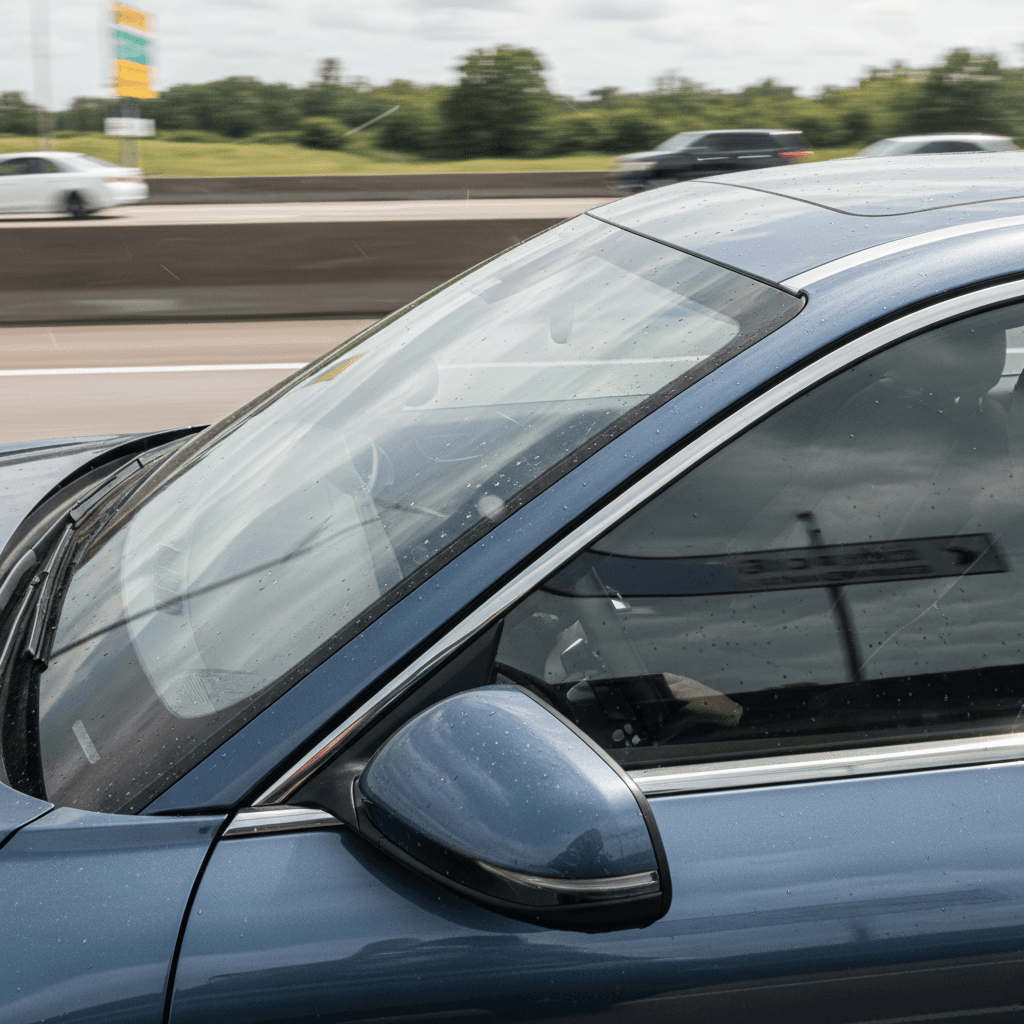
- New or increasing wind noise from the top of the windshield, especially at highway speeds
- Visible gap, lifting, or movement in the stainless trim where the glass meets the roof
- In rare cases, reports of trim pieces separating at speed
The remedy here is straightforward: dealers replace the upper windshield molding with a revised part that uses proper adhesion. The windshield glass itself is not typically replaced unless there’s separate damage.
Don’t brush this off
Camera and back-over prevention recalls
Like most modern luxury EVs, the 2024 GV60 leans heavily on cameras and ultrasonic sensors for its back-up camera, parking assist, and rear cross‑traffic alerts. At least one recall campaign focuses on back-over prevention performance and/or rear camera behavior across multiple Hyundai and Genesis EVs, including 2024 GV60s.
- Rear camera image intermittently fails to appear when you shift into Reverse
- Camera view appears but freezes or shows outdated imagery
- Parking sensors or cross‑traffic alerts fail to sound in obvious situations
- System warnings about camera calibration or surround‑view malfunction
The fix is generally software-based: dealers reflash the infotainment or camera control module, then verify correct operation. In some cases, additional calibration steps are required, especially on vehicles with surround‑view or smart parking features.
Document behavior with video
How to check your 2024 GV60 for open recalls
Because recalls can be superseded, expanded, or newly issued, any static list will go stale over time. The safest move is to treat this article as a roadmap to the types of issues the 2024 GV60 has seen, then use official tools to confirm what applies to your specific vehicle.
Step-by-step: verify open recalls on a 2024 GV60
1. Locate your VIN
Your 17‑digit VIN is visible at the base of the windshield on the driver’s side and on your registration or insurance card.
2. Use the federal VIN lookup
Go to the National Highway Traffic Safety Administration’s VIN lookup tool, enter your VIN, and review any <strong>open safety recalls</strong>. Closed or completed recalls won’t appear there.
3. Create or log into a Genesis owner account
Genesis’s owner portal and mobile app can show <strong>campaigns that aren’t strictly safety recalls</strong>, such as service actions or quality updates that still matter for reliability.
4. Call a Genesis EV-certified dealer
Ask the service department to run your VIN in the Genesis system and email you a list of <strong>all open and completed campaigns</strong>, including dates and mileage of any past recall work.
5. For used vehicles, compare to paperwork
Ask the seller for service records and make sure recall repair orders line up with what the dealer and NHTSA tools show. Any gaps are a negotiation lever, or a reason to walk.
Good news for owners
What current GV60 owners should do next
If you already own a 2024 Genesis GV60, the recalls landscape can feel a little overwhelming. The key is to treat it like long‑term EV maintenance, not a crisis. Once the major campaigns are done, especially the ICCU/power-loss fixes, most owners report that the GV60 settles into the role Genesis intended: a quiet, quick, nicely finished luxury EV.
Prioritize your next steps by risk level
Address safety‑critical recalls first, then quality-of-life updates.
High priority: power & safety
- ICCU / sudden power loss campaigns
- Any recall mentioning stalling or no‑start
- Windshield molding recall (road debris risk)
Medium: vision & driver assist
- Back-up camera or surround‑view behavior
- Parking sensor or back-over prevention updates
- Smart parking or ADAS calibration recalls
Lower: refinement & UX
- Infotainment or navigation bugs
- Charging screen glitches without safety impact
- Comfort or convenience feature updates
Create a simple recall tracker
Buying a used 2024 Genesis GV60: recall checklist
For used shoppers, the 2024 GV60’s recall history is a double‑edged sword. On one hand, multiple recalls and spotty dealer communication have dented confidence and helped push transaction prices down compared with some rival luxury EVs. On the other, you don’t want to inherit someone else’s unfinished recall saga or intermittent power‑loss gremlins.
Recall-focused checklist for used GV60 shoppers
1. Run the VIN before you ever test drive
Use NHTSA’s VIN tool to confirm there are <strong>no open safety recalls</strong>. If there are, don’t panic, but do factor in the time and logistics of getting them done quickly after purchase.
2. Ask for full service and recall records
You’re looking for repair orders that list campaign IDs, especially for <strong>ICCU-related recalls and windshield molding replacement</strong>. Gaps or vague descriptions (“performed recall”) are a sign to ask more questions.
3. Test-drive with recalls in mind
On the road, pay close attention to <strong>smooth power delivery</strong>, stable charging behavior at Level 2, and any odd noises from the windshield area at highway speeds. Sudden power reductions, warnings, or wind noise deserve inspection before you sign anything.
4. Have an EV-experienced inspector review it
A pre‑purchase inspection from a technician who actually understands EVs is invaluable. Ask them to scan for stored fault codes, check underbody components, and review the HV and 12‑volt systems, not just tires and brakes.
5. Negotiate based on recall completion
If major recalls are still open, or if paperwork is thin, <strong>that’s leverage</strong>. You can ask the seller to have recalls completed before sale, reduce the price, or agree in writing on who will handle logistics.
Watch out for auction flips
How Recharged helps you de-risk a used GV60 purchase
If you like the way the 2024 GV60 drives, and many owners do, there’s no reason recalls have to scare you away. The real problem is information asymmetry: buyers and even some non‑Genesis dealers don’t always know what’s been done, what’s still open, or how healthy the battery and charging system really are.
What Recharged checks on a GV60
- Verifies open vs. completed recalls against official databases.
- Uses our Recharged Score battery health diagnostics to measure usable capacity and charging behavior.
- Reviews service history for repeat ICCU or electrical complaints.
- Test-drives for subtle symptoms like intermittent power loss or windshield noise.
Why that matters for you
- You see a transparent report rather than guessing from a Carfax blurb.
- Fair market pricing that reflects real-world recall and reliability data.
- Optional financing, trade‑in, and nationwide delivery so you can shop beyond your local Genesis dealer.
- Access to EV‑specialist support if you have questions about recalls, charging, or long‑term ownership costs.
Try a GV60 the low‑stress way
Ready to find your next EV?
Browse Vehicles2024 Genesis GV60 recalls FAQ
Frequently asked questions about 2024 GV60 recalls
The bottom line on the 2024 Genesis GV60 recalls list is not that the GV60 is uniquely flawed, but that it’s a technically ambitious EV built on a new platform. That combination almost always produces a flurry of early recalls as real‑world data exposes edge cases lab testing missed. If you approach the GV60 like an informed owner or shopper, verify ICCU and molding campaigns, confirm software is current, and demand documentation, there’s no reason recalls have to spoil the experience. And if you’d rather have an expert do that homework for you, Recharged was built precisely for that job.